Critical Education Policy and Politics – serie
Visar alla böcker i serien Critical Education Policy and Politics. Handla med fri frakt och snabb leverans.
9 produkter
9 produkter
1 276 kr
Skickas inom 10-15 vardagar
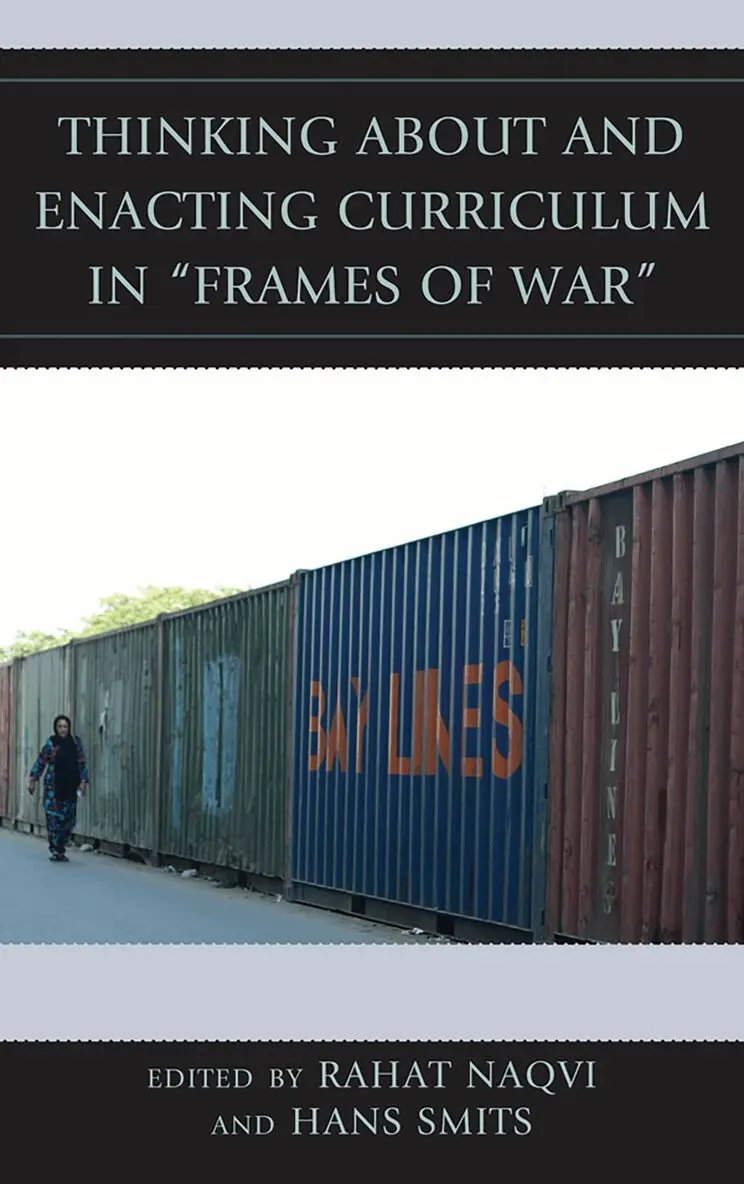
Thinking about and Enacting Curriculum in “Frames of War”, edited by Rahat Naqvi and Hans Smits, responds to the challenges Judith Butler posed about the precariousness of life and questions about how we apprehend, and take up ethically, our responsibilities for those who are considered “Other.” The notion of enframing asks us to consider what conditions our understanding of others, and how we open up what curriculum concepts and theories mean in the contexts of complex conditions for educational practices, such as recent wars, which have brought to forefront critical questions of human recognition and the precariousness of the conditions in which human flourishing is possible. An overarching objective of this book is the meaning of a call to ethics, and how discussion of framing and frames is a provocation to think about our responsibilities as curriculum scholars and practitioners. The authors take up the limits of knowledge, and present the challenge to curriculum theory to think in terms of not just understanding the frames through which we apprehend the Other, but also how we might re-frame our thinking as a radical call to responsibility. Each chapter in Smits and Naqvi’s Thinking about and Enacting Curriculum in “Frames of War” illustrates these concepts in diverse ways, but with common interest and concern, considering how curriculum is and ought to be fundamentally engaged with re-thinking our frames of apprehension.
1 520 kr
Skickas inom 10-15 vardagar
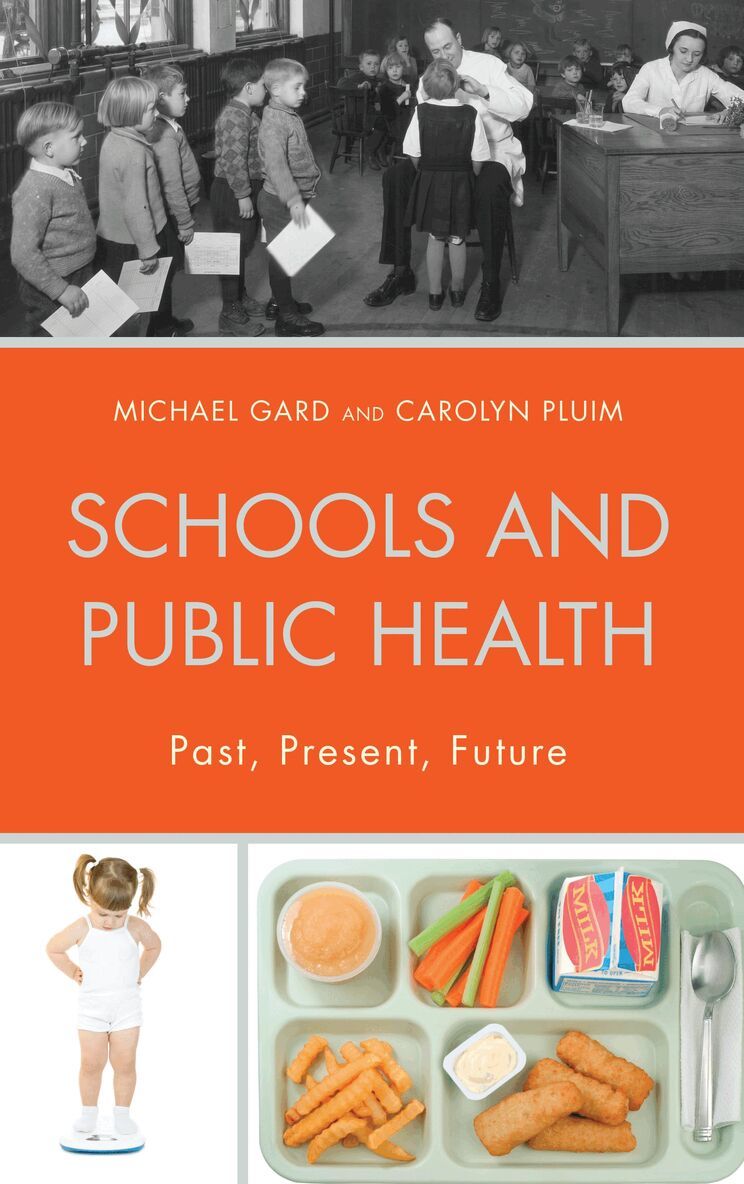
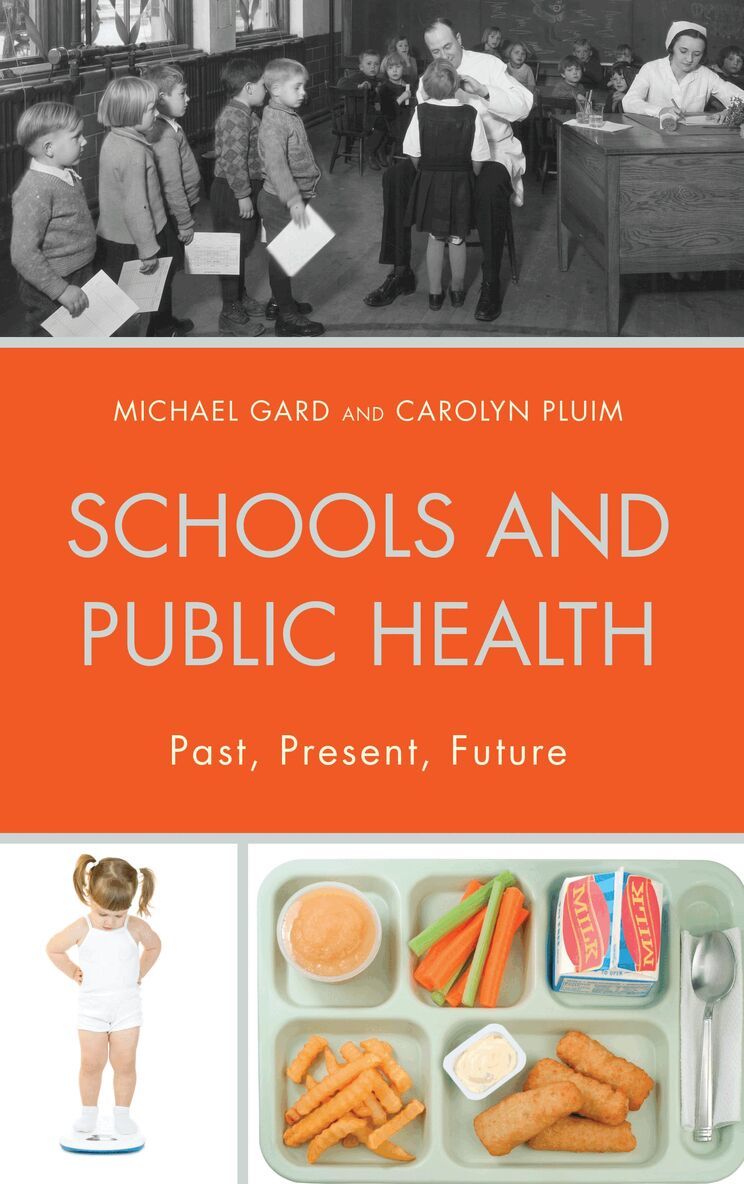
Schools and Public Health is a meditation on the past, present, and future of the relationship between public health and American public schools. Gard and Pluim begin by developing a historical account of the way schools have been used in the public health policy arena in America. They then look in detail at more contemporary examples of school-based public health policies and initiatives in order to come to a judgment about whether and to what extent it makes sense to use schools in this way. With this is as the foundation, the book then offers answers to the question of why schools have so readily been drawn into public health policy formulations. First, seeing schools as a kind of ‘miracle factory’ is a long standing habit of mind that discourages careful consideration of alternative public health strategies. Second, schools have been implicated in public health policy in strategic ways by actors often with unstated political, cultural, ideological, and financial motivations. Finally, the authors call for a more sophisticated approach to public health policy in schools and suggest some criteria for judging the potential efficacy of school-based interventions. In short, the potential effectiveness of proposed interventions needs to be assessed not only against existing historical evidence, but also against the competing roles society expects schools to play and the working-life realities for those charged with implementing public health policies in schools.
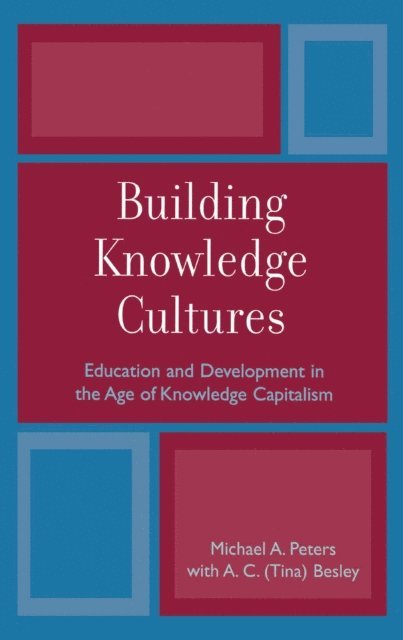
Building Knowledge Cultures
Education and Development in the Age of Knowledge Capitalism
Inbunden, Engelska, 2006
1 476 kr
Skickas inom 10-15 vardagar
This book develops the notion of 'knowledge cultures' as a basis for understanding the possibilities of education and development in the age of knowledge capitalism. 'Knowledge cultures' refers to the cultural preconditions in the new production of knowledge and their basis in shared practices, embodying preferred ways of doing things often developed over many generations. These practices also point to the way in which cultures have different repertoires of representational and non-representational forms of knowing. The book discusses knowledge cultures in relation to claims for the new economy, as well as cultural economy and the politics of postmodernity. It focuses on national policy constructions of the knowledge economy, 'fast knowledge' and the role of the so-called 'new pedagogy' and social learning under these conditions.
Building Knowledge Cultures
Education and Development in the Age of Knowledge Capitalism
Häftad, Engelska, 2006
528 kr
Skickas inom 10-15 vardagar
This book develops the notion of 'knowledge cultures' as a basis for understanding the possibilities of education and development in the age of knowledge capitalism. 'Knowledge cultures' refers to the cultural preconditions in the new production of knowledge and their basis in shared practices, embodying preferred ways of doing things often developed over many generations. These practices also point to the way in which cultures have different repertoires of representational and non-representational forms of knowing. The book discusses knowledge cultures in relation to claims for the new economy, as well as cultural economy and the politics of postmodernity. It focuses on national policy constructions of the knowledge economy, 'fast knowledge' and the role of the so-called 'new pedagogy' and social learning under these conditions.
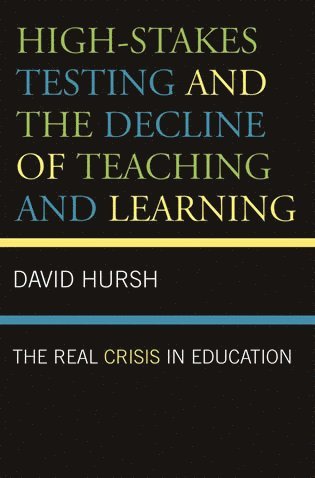
High-Stakes Testing and the Decline of Teaching and Learning
The Real Crisis in Education
Inbunden, Engelska, 2008
1 175 kr
Skickas inom 10-15 vardagar
This book examines the changes in educational policy in the U.S. and Britain over the last twenty-five years. Hursh argues that education in the States and Britain has been radically transformed, first through efforts to create curricular standards, more recently through an emphasis on accountability measured by standardized tests, and currently, efforts to introduce market competition and private services into educational systems. Hursh offers an alternative to the neoliberal conception of society and education complete with examples of parents who reject the current emphasis on individual success and schools that promote civic-mindedness.
High-Stakes Testing and the Decline of Teaching and Learning
The Real Crisis in Education
Häftad, Engelska, 2008
500 kr
Skickas inom 10-15 vardagar
This book examines the changes in educational policy in the U.S. and Britain over the last twenty-five years. Hursh argues that education in the States and Britain has been radically transformed, first through efforts to create curricular standards, more recently through an emphasis on accountability measured by standardized tests, and currently, efforts to introduce market competition and private services into educational systems. Hursh offers an alternative to the neoliberal conception of society and education complete with examples of parents who reject the current emphasis on individual success and schools that promote civic-mindedness.
980 kr
Skickas inom 10-15 vardagar
Early childhood education in Western society has come under increasing scrutiny by governments that see early education as an important factor in economic growth and development. Thus, social traditions in the field are increasingly giving way to an intensified focus on marketization and regulation, but with a corresponding diminishing concern for ethics and social participation. Drawing on the work of contemporary French philosopher Paul Ricoeur, Sandy Farquhar analyzes the problematic way in which we become who we are and the discourse that surrounds that learning. The book explores the ethical basis of identity formation in early childhood education and seeks fresh alternatives to commonly accepted perspectives on social policy, education, and the nature of our 'selves.' Farquhar uses Aotearoa New Zealand bicultural curriculum and policy context as examples for developing the theme of curriculum as a contest of ideas and a powerful form of resistance. Promoting the importance of narrative in understanding identity formation, the book elaborates on contemporary themes of difference, ethics, and social justice, calling for a revitalized sense of liberalism and social democracy.
591 kr
Skickas inom 10-15 vardagar
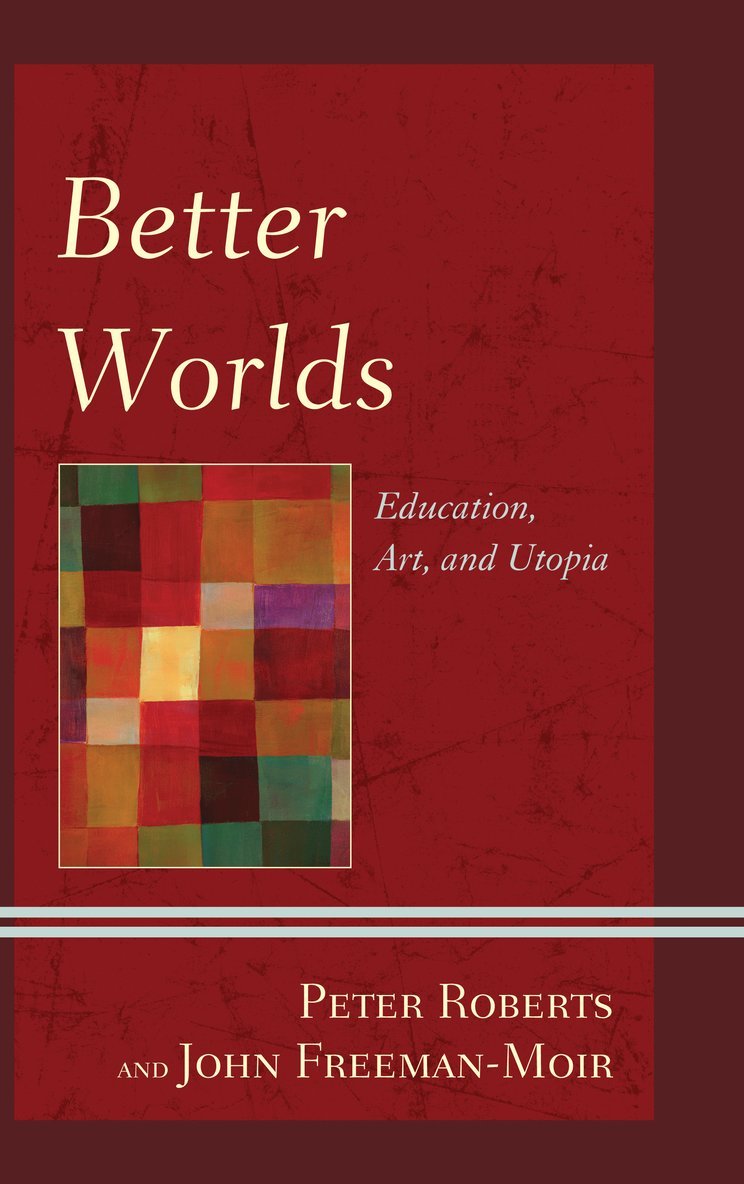
Better Worlds: Education, Art, and Utopia provides a fresh examination of utopia and education. Adopting an interdisciplinary approach and drawing on literature and the visual arts as well as traditional non-fiction sources, the authors explore utopia not as a model of social perfection but as the active, imaginative building of better worlds. Utopian questions, they argue, lie at the heart of education, and addressing such questions demands attention not just to matters of theoretical principle but to the particulars of everyday life and experience. Taking utopia seriously in educational thought also involves a consideration of that which is dystopian. Utopia, this book suggests, is not something that is fixed, final, or ever fully realized; instead, it must be constantly recreated, and education, as an ongoing process of reflection, action, and transformation, has a central role to play in this process.
695 kr
Skickas inom 10-15 vardagar
Schools and Public Health is a meditation on the past, present, and future of the relationship between public health and American public schools. Gard and Pluim begin by developing a historical account of the way schools have been used in the public health policy arena in America. They then look in detail at more contemporary examples of school-based public health policies and initiatives in order to come to a judgment about whether and to what extent it makes sense to use schools in this way. With this is as the foundation, the book then offers answers to the question of why schools have so readily been drawn into public health policy formulations. First, seeing schools as a kind of ‘miracle factory’ is a long standing habit of mind that discourages careful consideration of alternative public health strategies. Second, schools have been implicated in public health policy in strategic ways by actors often with unstated political, cultural, ideological, and financial motivations. Finally, the authors call for a more sophisticated approach to public health policy in schools and suggest some criteria for judging the potential efficacy of school-based interventions. In short, the potential effectiveness of proposed interventions needs to be assessed not only against existing historical evidence, but also against the competing roles society expects schools to play and the working-life realities for those charged with implementing public health policies in schools.