Critical University Studies - Böcker
Visar alla böcker i serien Critical University Studies. Handla med fri frakt och snabb leverans.
14 produkter
14 produkter
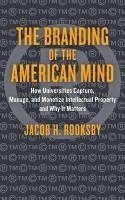
Branding of the American Mind
How Universities Capture, Manage, and Monetize Intellectual Property and Why It Matters
Inbunden, Engelska, 2017
325 kr
Skickas inom 7-10 vardagar
Universities generate an enormous amount of intellectual property, including copyrights, trademarks, patents, Internet domain names, and even trade secrets. Until recently, universities often ceded ownership of this property to the faculty member or student who created or discovered it in the course of their research. Increasingly, though, universities have become protective of this property, claiming it for their own use and licensing it as a revenue source instead of allowing it to remain in the public sphere. Many universities now behave like private corporations, suing to protect trademarked sports logos, patents, and name brands. Yet how can private rights accumulation and enforcement further the public interest in higher education? What is to be gained and lost as institutions become more guarded and contentious in their orientation toward intellectual property? In this pioneering book, law professor Jacob H.Rooksby uses a mixture of qualitative, quantitative, and legal research methods to grapple with those central questions, exposing and critiquing the industry's unquestioned and growing embrace of intellectual property from the perspective of research in law, higher education, and the social sciences. While knowledge creation and dissemination have a long history in higher education, using intellectual property as a vehicle for rights staking and enforcement is a relatively new and, as Rooksby argues, dangerous phenomenon for the sector. The Branding of the American Mind points to higher education's love affair with intellectual property itself, in all its dimensions, including newer forms that are less tied to scholarly output. The result is an unwelcome assault on the public's interest in higher education. Presuming no background knowledge of intellectual property, and ending with a call to action, The Branding of the American Mind explores applicable laws, legal regimes, and precedent in plain English, making the book appealing to anyone concerned for the future of higher education.
362 kr
Tillfälligt slut
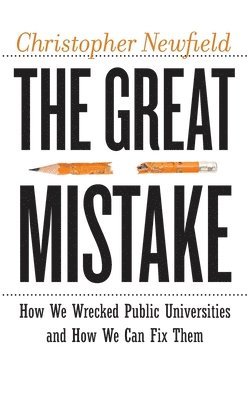
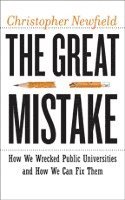
Higher education in America, still thought to be the world leader, is in crisis. University students are falling behind their international peers in attainment, while suffering from unprecedented student debt. For over a decade, the realm of American higher education has been wracked with self-doubt and mutual recrimination, with no clear solutions on the horizon. How did this happen? In this stunning new book, Christopher Newfield offers readers an in-depth analysis of the "great mistake" that led to the cycle of decline and dissolution, a mistake that impacts every public college and university in America. What might occur, he asserts, is no less than locked-in economic inequality and the fall of the middle class. In The Great Mistake, Newfield asks how we can fix higher education, given the damage done by private-sector models. The current accepted wisdom-that to succeed, universities should be more like businesses-is dead wrong.Newfield combines firsthand experience with expert analysis to show that private funding and private-sector methods cannot replace public funding or improve efficiency, arguing that business-minded practices have increased costs and gravely damaged the university's value to society. It is imperative that universities move beyond the destructive policies that have led them to destabilize their finances, raise tuition, overbuild facilities, create a national student debt crisis, and lower educational quality. Laying out an interconnected cycle of mistakes, from subsidizing the private sector to "the poor get poorer" funding policies, Newfield clearly demonstrates how decisions made in government, in the corporate world, and at colleges themselves contribute to the dismantling of once-great public higher education. A powerful, hopeful critique of the unnecessary death spiral of higher education, The Great Mistake is essential reading for those who wonder why students have been paying more to get less and for everyone who cares about the role the higher education system plays in improving the lives of average Americans.
579 kr
Skickas inom 7-10 vardagar
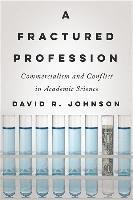
The commercialization of research is one of the most significant contemporary features of US higher education, yet we know surprisingly little about how scientists perceive and experience commercial rewards. A Fractured Profession is the first book to systematically examine the implications of commercialization for both universities and faculty members from the perspective of academic scientists. Drawing on richly detailed interviews with sixty-one scientists at four universities across the United States, sociologist David R. Johnson explores how an ideology of commercialism produces intraprofessional conflict in academia. The words of scientists themselves reveal competing constructions of status, conflicting norms, and divergent career paths and professional identities. Commercialist scientists embrace a professional ideology that emphasizes the creation of technologies that control societal uncertainties and advancing knowledge toward particular-and financial-ends. Traditionalist scientists, on the other hand, often find themselves embattled and threatened by university and federal emphasis on commercialization.They are less concerned about issues such as conflicts of interest and corruption than they are about unequal rewards, unequal conditions of work, and conflicts of commitment to university roles and basic science. Arguing that the division between commercialists and traditionalists represents a new form of inequality in the academic profession, this book offers an incisive look into the changing conditions of work in an era of academic capitalism. Focusing on how the profit motive is reshaping higher education and redefining what faculty are supposed to do, this book will appeal to scientists and academics, higher education scholars, university administrators and policy makers, and students considering a career in science.
398 kr
Skickas inom 5-8 vardagar
A remarkable indictment of how misguided business policies have undermined the American higher education system.Winner of the CHOICE Outstanding Academic Title of the Choice ACRLHigher education in America, still thought to be the world leader, is in crisis. University students are falling behind their international peers in attainment, while suffering from unprecedented student debt. For over a decade, the realm of American higher education has been wracked with self-doubt and mutual recrimination, with no clear solutions on the horizon. How did this happen? In this stunning new book, Christopher Newfield offers readers an in-depth analysis of the “great mistake” that led to the cycle of decline and dissolution, a mistake that impacts every public college and university in America. What might occur, he asserts, is no less than locked-in economic inequality and the fall of the middle class. In The Great Mistake, Newfield asks how we can fix higher education, given the damage done by private-sector models. The current accepted wisdom—that to succeed, universities should be more like businesses—is dead wrong. Newfield combines firsthand experience with expert analysis to show that private funding and private-sector methods cannot replace public funding or improve efficiency, arguing that business-minded practices have increased costs and gravely damaged the university’s value to society. It is imperative that universities move beyond the destructive policies that have led them to destabilize their finances, raise tuition, overbuild facilities, create a national student debt crisis, and lower educational quality. Laying out an interconnected cycle of mistakes, from subsidizing the private sector to “the poor get poorer” funding policies, Newfield clearly demonstrates how decisions made in government, in the corporate world, and at colleges themselves contribute to the dismantling of once-great public higher education. A powerful, hopeful critique of the unnecessary death spiral of higher education, The Great Mistake is essential reading for those who wonder why students have been paying more to get less and for everyone who cares about the role the higher education system plays in improving the lives of average Americans.
302 kr
Tillfälligt slut
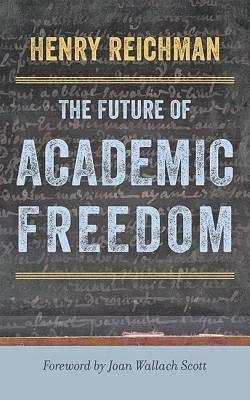
Few issues are as hotly debated or misunderstood as academic freedom. Reichman's book sheds light on and brings clarity to those debates.Winner of the Eli M. Oboler Memorial Award by the American Library AssociationAcademic freedom—crucial to the health of American higher education—is threatened on many fronts. In The Future of Academic Freedom, a leading scholar equips us to defend academic freedom by illuminating its meaning, the challenges it faces, and its relation to freedom of expression.In the wake of the 2016 election, challenges to academic freedom have intensified, higher education has become a target of attacks by conservatives, and issues of free speech on campus have grown increasingly controversial. In this book, Henry Reichman cuts through much of the rhetoric to issue a clarion call on behalf of academic freedom as it has been defined and defended by the American Association of University Professors (AAUP) for over a hundred years. Along the way, he makes it clear that this is the issue of our day.Over the course of ten audacious essays, Reichman explores the theory, history, and contemporary practice of academic freedom. He pays attention to such varied concerns as the meddling of politicians and corporate trustees in curriculum and university governance, the role of online education, the impact of social media, the rights of student protesters and outside speakers, the relationship between collective bargaining and academic freedom, and the influence on research and teaching of ideologically motivated donors. Significantly, he debunks myths about the strength of the alleged opposition to free expression posed by student activism and shows that the expressive rights of students must be defended as part of academic freedom.Based on broad reading in such diverse fields as educational theory, law, history, and political science, as well as on the AAUP's own investigative reporting, The Future of Academic Freedom combines theoretical sweep with the practical experience of its author, a leader and activist in the AAUP who is an expert on campus free speech. The issues Reichman considers—which are the subjects of daily conversation on college and university campuses nationwide as well as in the media—will fascinate general readers, students, and scholars alike.
322 kr
Skickas inom 7-10 vardagar
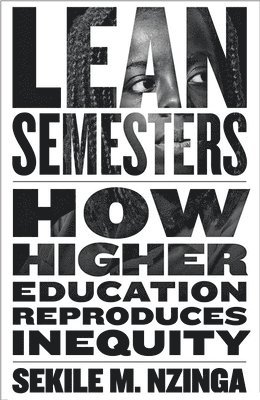
Addressing in depth the reality that women of color, particularly Black women, face compounded exploitation and economic inequality within the neoliberal university.More Black women are graduating with advanced degrees than ever before. Despite the fact that their educational and professional opportunities should be expanding, highly educated Black women face strained and worsening economic, material, and labor conditions in graduate school and along their academic career trajectory. Black women are less likely to be funded as graduate students, are disproportionately hired as contingent faculty, are trained and hired within undervalued disciplines, and incur the highest levels of educational debt. In Lean Semesters, Sekile M. Nzinga argues that the corporatized university—long celebrated as a purveyor of progress and opportunity—actually systematically indebts and disposes of Black women's bodies, their intellectual contributions, and their potential en masse. Insisting that "shifts" in higher education must recognize such unjust dynamics as intrinsic, not tangential, to the operation of the neoliberal university, Nzinga draws on candid interviews with thirty-one Black women at various stages of their academic careers. Their richly varied experiences reveal why underrepresented women of color are so vulnerable to the compounded forms of exploitation and inequity within the late capitalist terrain of this once-revered social institution.Amplifying the voices of promising and prophetic Black academic women by mapping the impact of the current of higher education on their lives, the book's collective testimonies demand that we place value on these scholars' intellectual labor, untapped potential, and humanity. It also illuminates the ways past liberal feminist "victories" within academia have yet to become accessible to all women. Informed by the work of scholars and labor activists who have interrogated the various forms of inequity produced and reproduced by institutions of higher education under neoliberalism, Lean Semesters serves as a timely and accessible call to action.
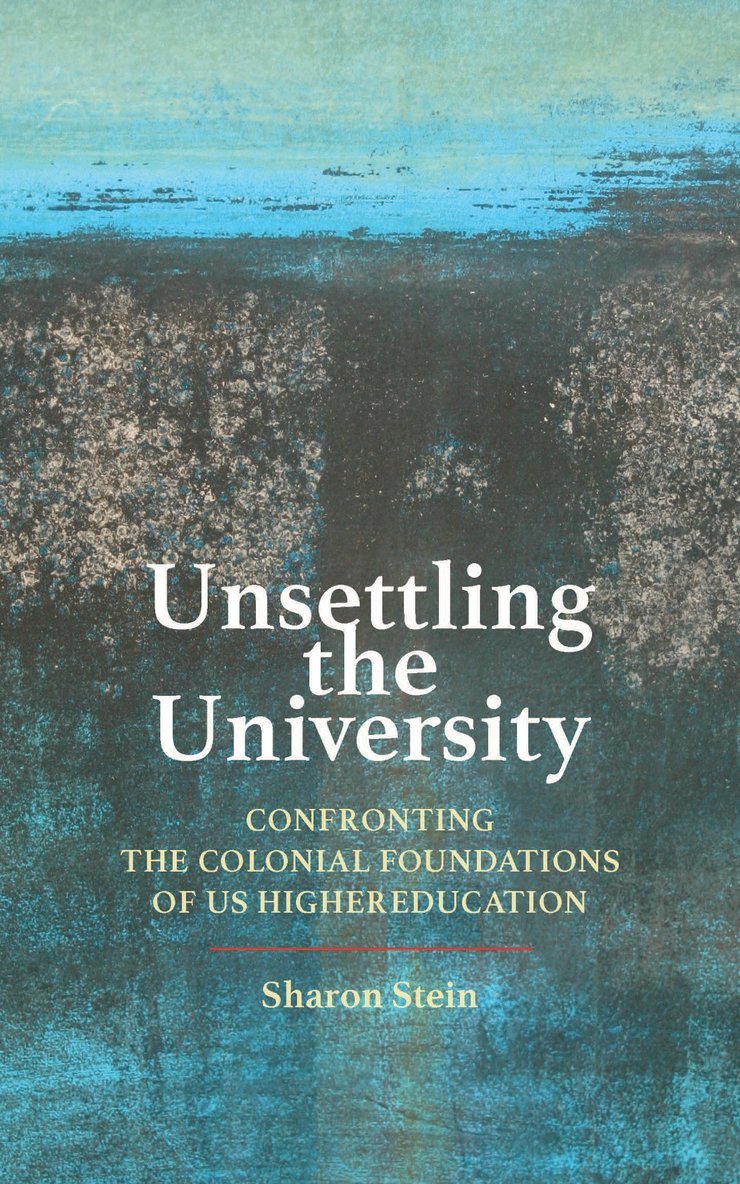
Unsettling the University
Confronting the Colonial Foundations of US Higher Education
Inbunden, Engelska, 2023
475 kr
Skickas
Shifts the narrative around the history of US higher education to examine its colonial past.Over the past several decades, higher education in the United States has been shaped by marketization and privatization. Efforts to critique these developments often rely on a contrast between a bleak present and a romanticized past. In Unsettling the University, Sharon Stein offers a different entry point—one informed by decolonial theories and practices—for addressing these issues.Stein describes the colonial violence underlying three of the most celebrated moments in US higher education history: the founding of the original colonial colleges, the creation of land-grant colleges and universities, and the post–World War II "Golden Age." Reconsidering these historical moments through a decolonial lens, Stein reveals how the central promises of higher education—the promises of continuous progress, a benevolent public good, and social mobility—are fundamentally based on racialized exploitation, expropriation, and ecological destruction.Unsettling the University invites readers to confront universities' historical and ongoing complicity in colonial violence; to reckon with how the past has shaped contemporary challenges at institutions of higher education; and to accept responsibility for redressing harm and repairing relationships in order to reimagine a future for higher education rooted in social and ecological accountability.
455 kr
Skickas inom 7-10 vardagar
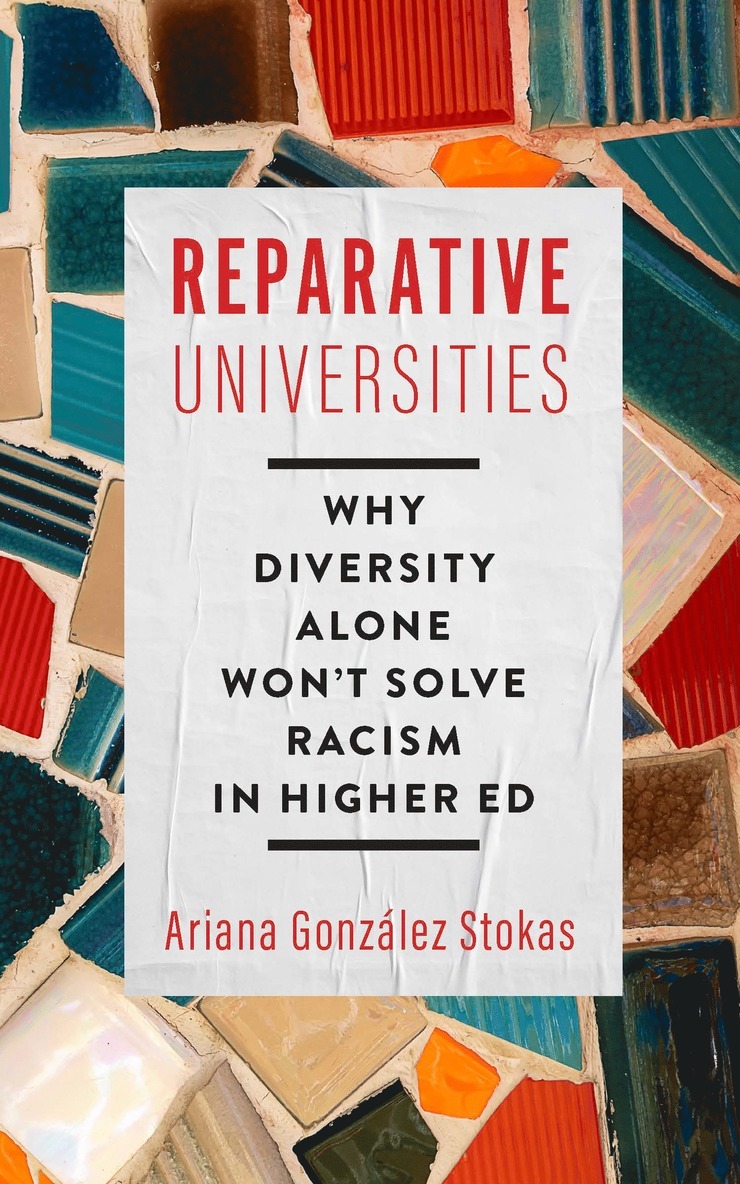
A timely investigation of why diversity alone is insufficient in higher education and how universities can use reparative actions to become anti-racist institutions.As institutions increasingly reckon with histories entangled with slavery and Indigenous dispossession, diversity, equity, and inclusion (DEI) efforts occupy a central role in the strategy and resources of higher education. Yet reparation is rarely offered as a viable strategy for institutional transformation. In Reparative Universities, Ariana González Stokas undertakes a critical and decolonial analysis of DEI work, linking contemporary practices of diversity to longer colonial histories. González Stokas argues that diversity is an insufficient concept for efforts concerned with anti-oppression, anti-racism, equity, and decolonization. Given its historical ties to colonialism, can higher education foster reconciliation and healing?Reparation is offered as a pathway toward untangling higher education from its colonial roots. González Stokas develops the term "epistemic reparation" to describe a mode of social-historical accountability that can already be seen at work in historical examples, as well as current events in the United States, South Africa, and Canada. Recent legal decisions by Georgetown University and the Princeton Theological seminary to enact economic recompense for buying and selling human beings are evidence of attempts to redress higher education's violent histories and the colonial structures they reproduce every day on college campuses. Engaging with a broad range of theories from decolonial philosophy to organizational psychology, González Stokas offers a pathway—guided by reparative activities—for institutional workers frustrated by what often feels, as Sara Ahmed describes, like "banging one's head against a brick wall." Reparative Universities offers insight into why DEI efforts have been disconnected from past injustices and why unsettling diversity and engaging meaningful repair are critical for the future of higher education.
343 kr
Skickas inom 7-10 vardagar
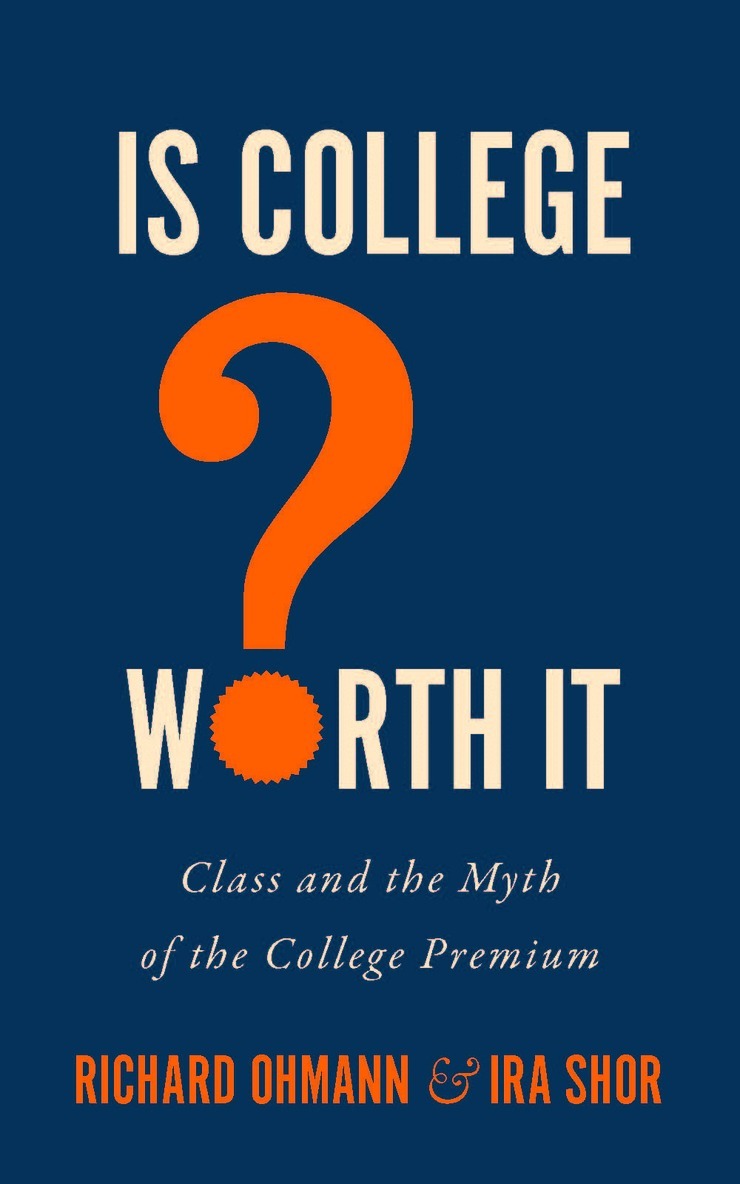
What is the true value of a college education?In this thought-provoking book, acclaimed cultural critic and professor of literature Richard Ohmann and noted critical scholar and pedagogue Ira Shor challenge the widely accepted notion of the "college premium": the economic advantage associated with obtaining a college degree. The authors show how the idea of a college premium is often merely a myth that furthers the commercialization of education. Drawing on historical analysis and keen insights, they expose the underlying neoliberal ideology that has transformed universities into vehicles for profit-driven corporations. They argue that the college premium confirms class hierarchies in the United States while claiming to apply to everyone. This compelling narrative uncovers the reshaping of our perception of the value of higher education. From the casualization of academic labor to the mounting burden of student debt, from the erosion of academic freedoms to the rise of vocational curricula, Ohmann and Shor connect the dots to illustrate how economic imperatives have influenced university life. Is College Worth It? is a must-read for students, parents, policymakers, and anyone concerned with the future of education. Ohmann and Shor's erudite analysis challenges conventional wisdom and offers a fresh perspective on the true meaning and worth of a college education.
321 kr
Skickas inom 7-10 vardagar
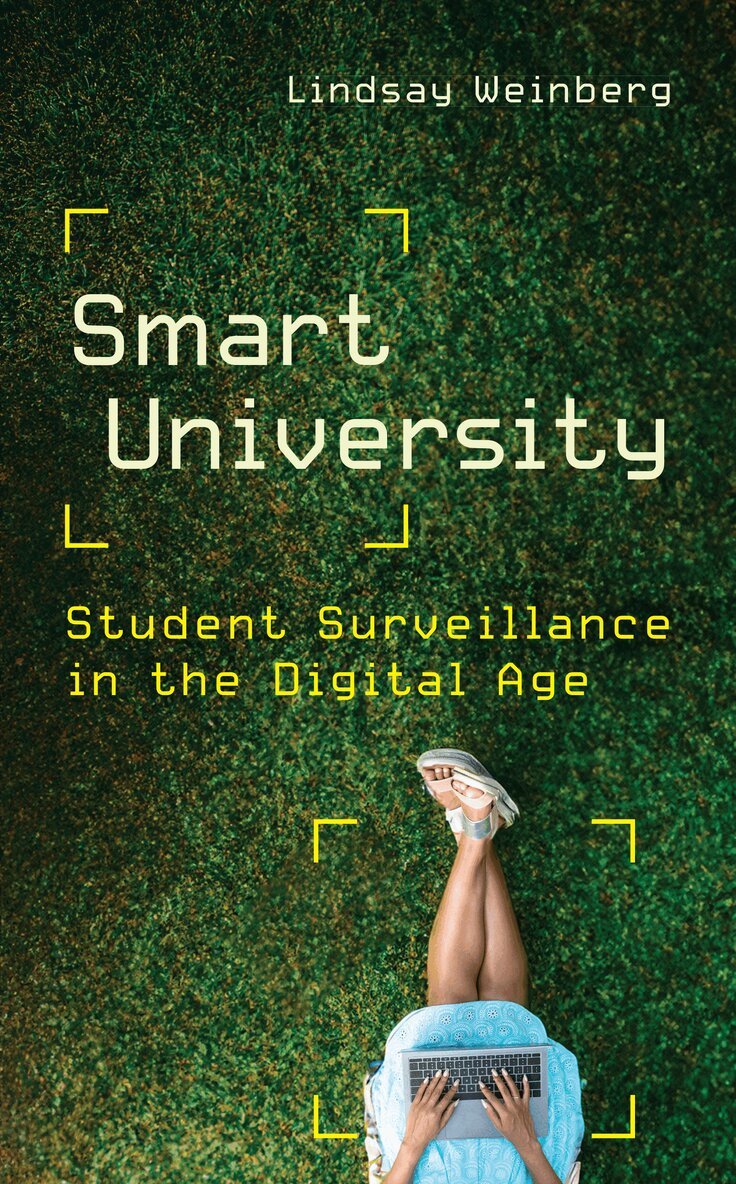
How surveillance perpetuates long-standing injustices woven into the fabric of higher education.Higher education increasingly relies on digital surveillance in the United States. Administrators, consulting firms, and education technology vendors are celebrating digital tools as a means of ushering in the age of "smart universities." By digitally monitoring and managing campus life, institutions can supposedly run their services more efficiently, strengthen the quality of higher education, and better prepare students for future roles in the digital economy. Yet in practice, these initiatives often perpetuate austerity, structural racism, and privatization at public universities under the guise of solving higher education's most intractable problems. In Smart University, Lindsay Weinberg evaluates how this latest era of tech solutions and systems in our schools impacts students' abilities to access opportunities and exercise autonomy on their campuses. Using historical and textual analysis of administrative discourses, university policies, conference proceedings, grant solicitations, news reports, tech industry marketing materials, and product demonstrations, Weinberg argues that these more recent transformations are best understood as part of a longer history of universities supporting the development of technologies that reproduce racial and economic injustice on their campuses and in their communities. Aimed at anyone concerned with the future of surveillance on higher education, Smart University empowers readers with the knowledge, tools, and frameworks for contesting and reimagining the role of digital technology on university campuses.
395 kr
Skickas inom 7-10 vardagar
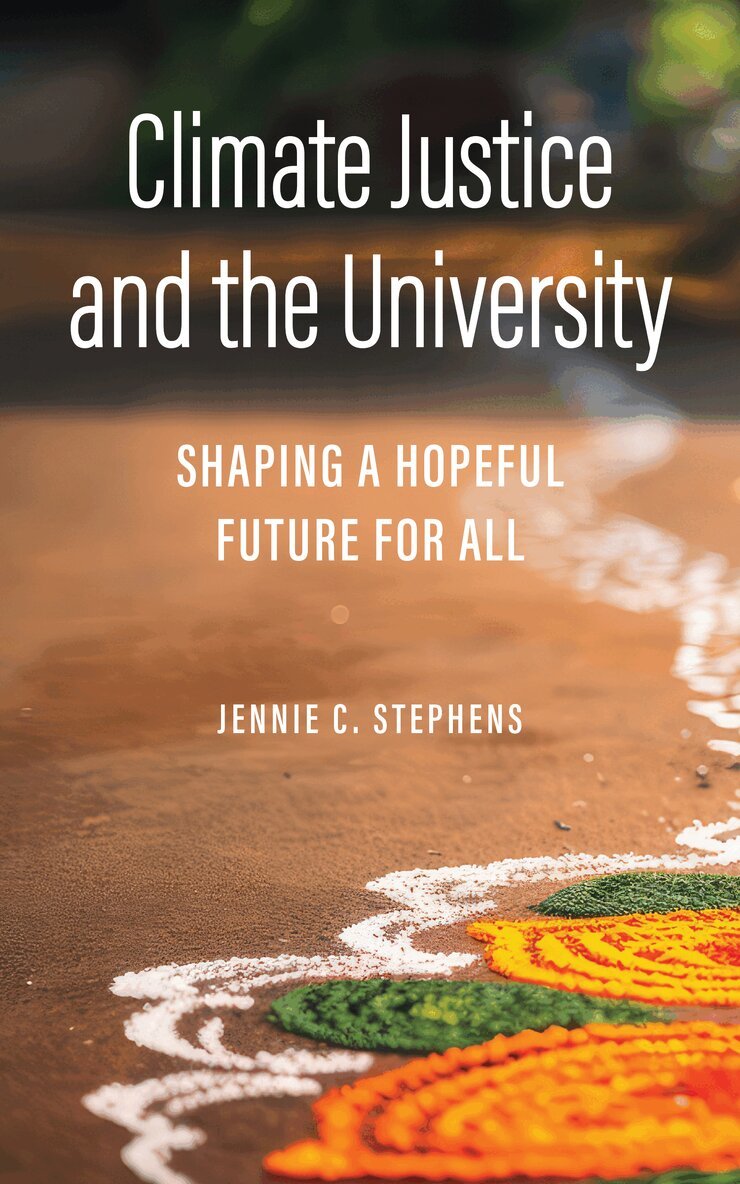
A radical exploration of how higher education can advance transformative climate justice.Amid the worsening climate crisis and intensifying inequities, higher education can play a powerful role in addressing the intersecting crises facing humanity. Institutions of higher education hold untapped potential to advance social justice and reduce climate injustices. However, universities are not yet structured to accelerate social change for the public good. In Climate Justice and the University, Jennie Stephens reimagines the potential of higher education to advance human well-being and promote ecological health. Drawing on over thirty years of experience working on the climate crisis within higher education, Stephens offers a provocative and pathbreaking vision of how higher education can accelerate the shift toward more equitable, healthy, and stable futures for all. Building on a US and European context, she integrates examples from the innovative landscape of transformative education initiatives around the world. With climate chaos exacerbating instability of all kinds, reimagining the transformative power of higher education is hopeful and empowering. By inviting readers to collectively reimagine different priorities and structures within higher education, Stephens disrupts long-held assumptions about how universities advance learning and research, suggesting possibilities to shape a more equitable future for all.
Policing Higher Education
The Antidemocratic Attack on Scholars and Why It Matters
Inbunden, Engelska, 2025
343 kr
Skickas inom 7-10 vardagar
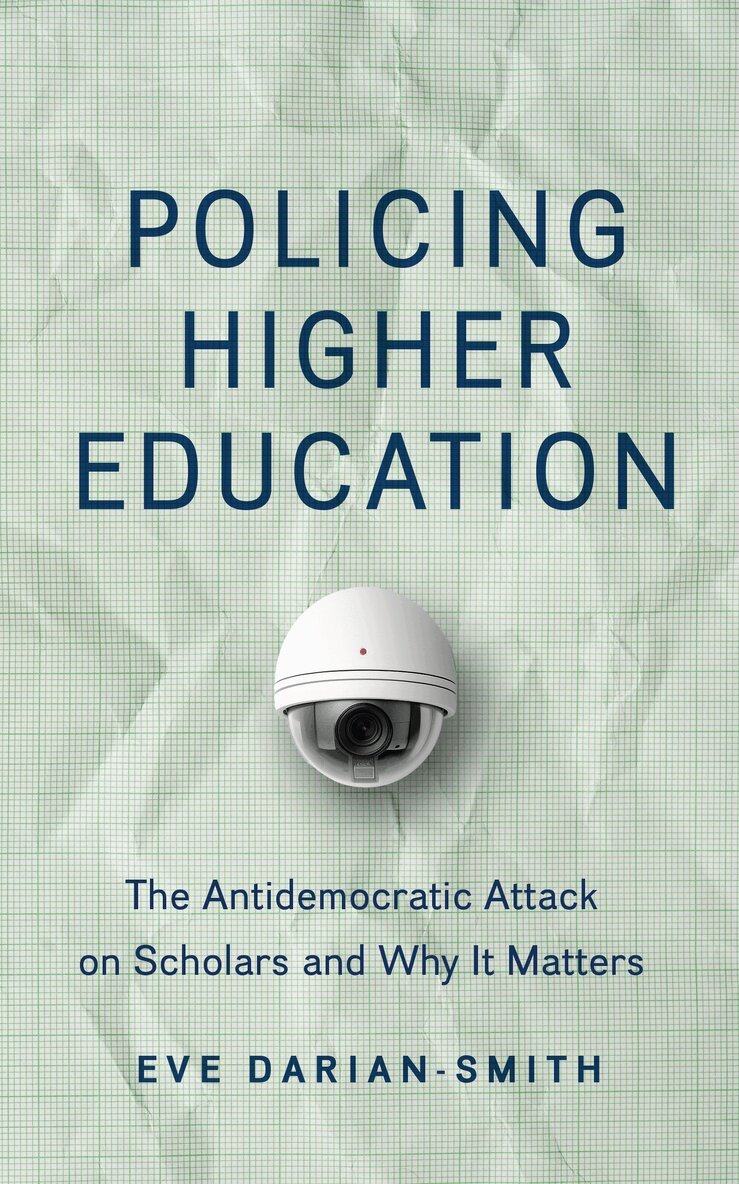
On the essential role of higher education and academic freedom in thriving democracies.Finalist of the 2025 Foreword INDIES Award, Education Category, by the FOREWORD Reviews, Winner of the 2026 Society of Professors of Education Outstanding Book AwardHigher education is facing an existential crisis. Students and staff are surveilled with cameras and facial recognition software. Police zip-tie and arrest students during protests. As universities across the United States become epicenters of ideological warfare, Policing Higher Education contextualizes these skirmishes within a broader global framework. From the contentious debates surrounding free speech and curriculum control to the denial of tenure for outspoken faculty, Eve Darian-Smith examines the myriad ways higher education has become a battleground.Darian-Smith highlights the intersecting global trends of rising authoritarianism and declining academic freedom, revealing how the United States is part of a larger pattern seen in democracies worldwide, including in Brazil, Hungary, Germany, India, and the Philippines. This book challenges readers to view educational conflicts not merely as culture wars but as intense and connected struggles over economic, political, and social power. Drawing from extensive scholarship, Darian-Smith humanizes the impacts of these attacks on scholars and students, offering poignant stories of persecution and resilience. With a critical eye on the historical and structural drivers of antidemocracy, this book pushes for new, meaningful conversations about academic freedom that transcend national borders. It emphasizes the vital role of universities in fostering social responsibility and combating the global drift toward authoritarianism.
363 kr
Skickas inom 7-10 vardagar
How American universities operate as social and economic engines that shape society beyond their traditional educational roles.University Keywords gathers, contextualizes, and develops original understandings of 27 key terms that define the study and operation of the American university today. Editor Andy Hines and the book's contributors invite readers to rethink the university beyond its public image as a space of learning and understand how it also operates as a real estate powerhouse, a hedge fund, a debt machine, and even a crisis-producing entity embedded in the broader American economy.Through essays written by over thirty contributors from a variety of disciplines, this book examines the university's intersecting functions, from its financial entanglements to its often-contradictory roles in society. Contributors illustrate how universities simultaneously link and separate communities—faculty, students, nurses, janitors, and the surrounding public—through administrative processes that promote a sense of isolation and division, even within shared spaces. By defining and expanding the terms that drive public and scholarly conversations about postsecondary education, University Keywords situates what appear to be auxiliary aspects of colleges and universities as directly impacting and at times displacing the central academic mission of these institutions.In its role as a crucible for societal hierarchies and economic interests, the university both drives and reflects major shifts in social structure, labor practices, and economic power. The book's exploration of key terms like "debt," "police," and "union" offers readers a new framework for understanding the university's transformation into an instrument of capital accumulation, as well as its ongoing relevance in the fight for a world where education, labor, and social justice converge.
415 kr
Kommande
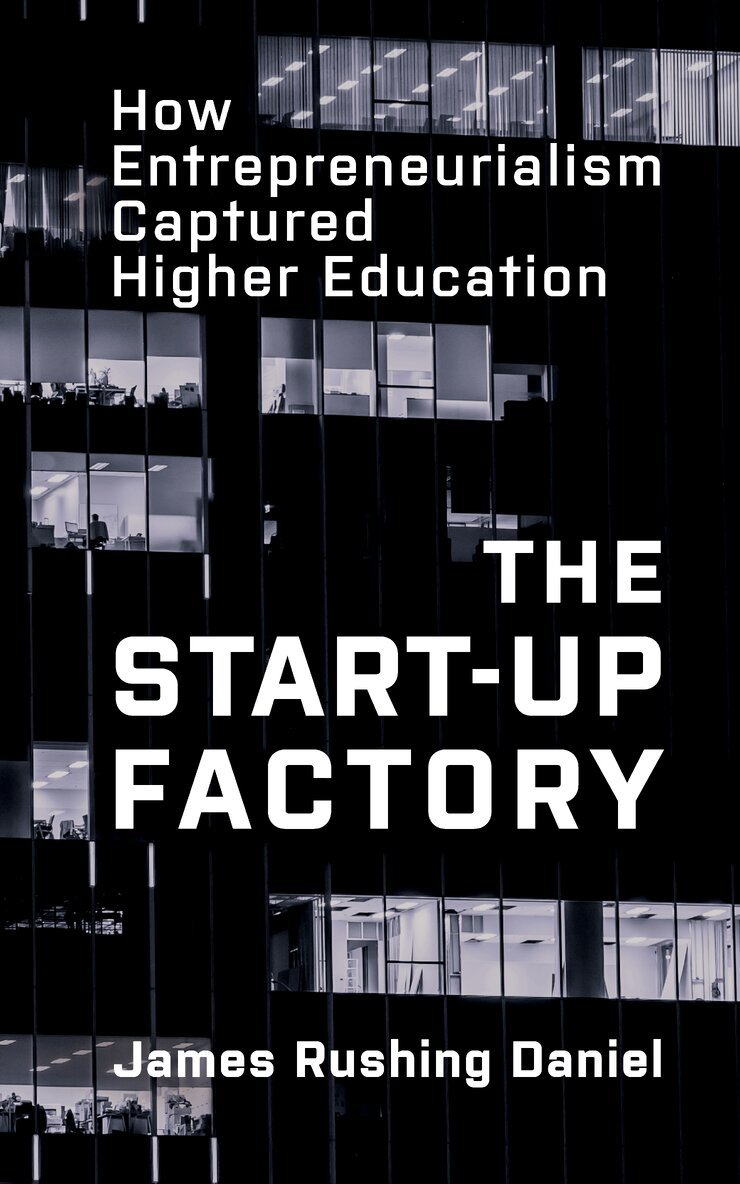
How the cult of capitalism reshaped the American university—and hollowed it out from within.Over the past several decades, American universities have been remade as engines of entrepreneurial ambition. Technology transfer offices, business incubators, pitch competitions, innovation hubs, and leadership centers now sit at the heart of campus life, radically altering how institutions describe their purpose, structure curricula, and imagine student success. The Start-Up Factory argues that this shift has come at a steep cost.James Rushing Daniel traces the rise of entrepreneurialism in higher education and shows how universities came to embrace the figure of the founder as both ideal and benefactor. Business leaders—many of them major donors—are celebrated as singular visionaries, their values imported into academic life and framed as models for intellectual work. This reverence, Daniel argues, has narrowed the university's sense of public responsibility for distorted academics, and transformed institutions into finishing schools for aspiring entrepreneurs. Moving across policy and historical documents, institutional rhetoric, teaching materials, site visits, and interviews, The Start-Up Factory documents how entrepreneurial thinking has reshaped the pedagogy, culture, and mission of the American university.The consequences of this entrepreneurial focus extend far beyond campuses. By promoting the myth of the self-made billionaire, universities help legitimize extreme inequality and normalize forms of power that undermine democratic life. At a moment of deep institutional crisis, when the influence of the billionaire class on college campuses is increasingly absolute and the future of higher education is uncertain, The Start-Up Factory offers a clear-eyed account of how universities arrived here—and why reclaiming their autonomy has become an urgent task.