Cultural Heritage Law and Policy – Serie
Visar alla böcker i serien Cultural Heritage Law and Policy. Handla med fri frakt och snabb leverans.
11 produkter
11 produkter
2 801 kr
Skickas inom 3-6 vardagar
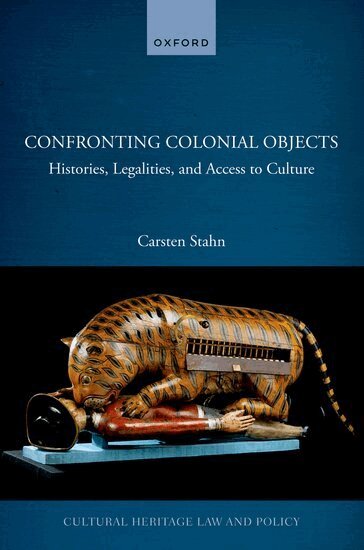
The treatment of cultural colonial objects is one of the most debated questions of our time. Calls for a new international cultural order go back to decolonization. However, for decades, the issue has been treated as a matter of comity or been reduced to a Shakespearean dilemma: to return or not to return. Confronting Colonial Objects seeks to go beyond these classic dichotomies and argues that contemporary practices are at a tipping point. The book shows that cultural takings were material to the colonial project throughout different periods and went far beyond looting. It presents micro histories and object biographies to trace recurring justifications and contestations of takings and returns while outlining the complicity of anthropology, racial science, and professional networks that enabled colonial collecting. The book demonstrates the dual role of law and cultural heritage regulation in facilitating colonial injustices and mobilizing resistance thereto. Drawing on the interplay between justice, ethics, and human rights, Stahn develops principles of relational cultural justice. He challenges the argument that takings were acceptable according to the standards of the time and outlines how future engagement requires a re-invention of knowledge systems and relations towards objects, including new forms of consent, provenance research, and partnership, and a re-thinking of the role of museums themselves.Following the life story and transformation of cultural objects, this book provides a fresh perspective on international law and colonial history that appeals to audiences across a variety of disciplines. This is an open access title available under the terms of a CC BY-NC-ND 4.0 International licence. It is free to read on the Oxford Academic platform and offered as a free PDF download from OUP and selected open access locations.
1 333 kr
Skickas inom 5-8 vardagar
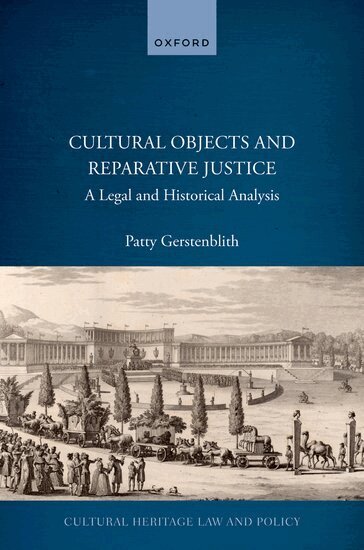
Cultural Objects and Reparative Justice provides a comprehensive legal and historical analysis surrounding a highly debated current question: Where should cultural objects that were removed without consent be located? This book follows an innovative, interdisciplinary approach based in law, history, art history, anthropology, and archaeology and proposes a paradigm for reparations.Tracing the historical foundations of the current legal framework, the work closely examines three factors that heavily informed the cultural heritage debate since the late eighteenth century: the rise of the encyclopaedic museum, the development of archaeology as a science, and the appropriation of objects in the context of armed conflict and colonialism. Each of these explorations is enriched by examples from around the globe and assessed on the international, national, and local level. Subjecting contested objects -such as the Parthenon Sculptures, those from the Yuanmingyuan Palace, the Benin artifacts, looted archaeological artefacts and human remains, and artwork stolen during the Holocaust - to this holistic approach enables a contextualisation of the unique history of appropriation of these objects. Cultural Objects and Reparative Justice outlines how current cultural heritage laws and ethical guidelines with respect to cultural heritage derive from a background of imperialism and colonialism. The book advocates for a new structure based on reparation, restitution, repatriation, compensation, and market regulation to cease perpetuating past harms and to disincentivize new ones.
2 218 kr
Skickas inom 5-8 vardagar
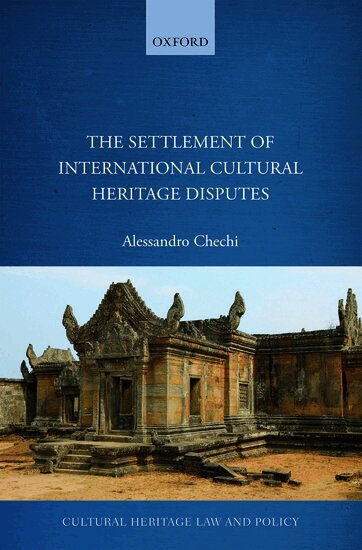
The past forty years have seen a wide proliferation of disputes under international law concerning cultural heritage. These have included the restitution of stolen art objects or the protection of monuments. Unlike other fields of international law, international cultural heritage law does not have an ad hoc mechanism of dispute settlement. As a result, controversies are to be settled through negotiation or, if it fails, through existing dispute resolution means. This can result in similar cases being settled in different ways, thereby bringing about an incoherent and fragmentary enforcement of the law. This book offers a comprehensive and innovative analysis of the settlement of cultural heritage disputes. This examination is two-fold. First, it assesses the existing legal framework and the available dispute settlement means. Second, it explores the feasibility of two solutions for overcoming the lack of a specialized forum. The first is the establishment of a new international court. The second concerns existing judicial and extra-judicial fora and their interaction through the practice of 'cross-fertilization'. The book focuses on the substance of such interaction, and identifies a number of culturally-sensitive parameters (the 'common rules of adjudication'). It argues that existing judicial and non-judicial fora should adopt a cross-fertilizing perspective to use and disseminate jurisprudence containing these common rules of adjudication. It sets out how such an approach would enhance the effectiveness and coherence of decision-making processes and would be conducive to the development of a lex culturalis. This can be defined as a composite body of rules designed to protect cultural heritage by excluding the mechanical application of the norms established for standard business transactions of ordinary goods.
2 018 kr
Skickas inom 5-8 vardagar
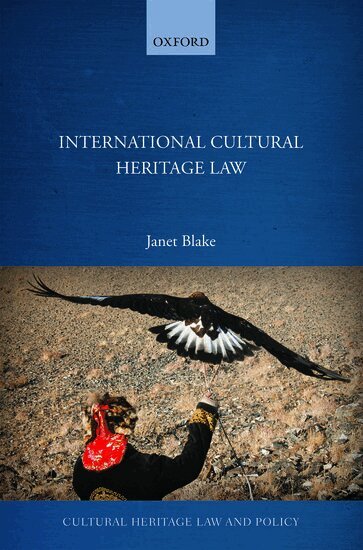
This book provides a comprehensive overview of the development of international cultural heritage law and policy since 1945. It sets out the international (including regional) law currently governing the protection and safeguarding of cultural heritage in peace time, as well as international cultural policy-making. In addition to analysing the relevant legal frameworks, it focuses on the broader policy and other contexts within which and in response to which this law has developed. Following this approach, attention is paid to: introducing international cultural heritage law and its place in international law generally; illicit excavation and the illegal trade in archaeological finds; protection of underwater cultural heritage; the relationship between cultural heritage and the environment; intangible aspects of heritage and their safeguarding; cultural heritage as traditional knowledge and creativity; regional approaches to protection; and human rights issues related to cultural heritage. In addition, newly-emerging topics and challenges are addressed, including the relationship between cultural heritage and sustainable development and the gender dynamics of cultural heritage. Providing both a perfect introduction to cultural heritage law and deeper reflection on its challenges, this book should be invaluable for students, scholars, and practitioners in the field.
2 310 kr
Skickas inom 3-6 vardagar
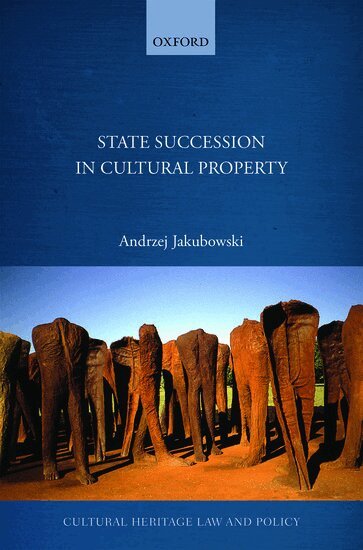
The demise and rebirth of states brings with it a set of very complicated legal issues, among which is the question of how to deal with that state's cultural heritage, whether within its boundaries or not. Through a historical analysis of state dissolution and succession and its impact on cultural heritage from 1815 to present day, the work will identify guiding principles to facilitate the conclusion of agreements on the status of cultural property following the succession of states. Studying primary materials and evidence of state practice that has not been available before, the work will propose a novel approach to state succession from the perspective of the emerging interest of the international community to safeguard cultural heritage. State succession is one of the most obscure areas of international law since its rules are characterized either by their absence or their inconsistency.This book explores to what extent the principles and practice of state succession correspond to the evolution of the concept of cultural heritage in international law. It provides an extensive analysis of the alternations of the international practice and legal doctrine of state succession to tangible cultural heritage since the formation of the European nation-states in the nineteenth century - through the experience of decolonization to the post-Cold War dissolution of multinational states. The book has been awarded Prize of the Professor Manfred Lachs Foundation and Kozminski University in Warsaw for the best monograph in public international law published by a Polish author in 2015, in the category of debuts. On 24 November 2016, the book State Succession in Cultural Property by Andrzej Jakubowski was awarded the Prize of the Professor Manfred Lachs Foundation and Kozminski University in Warsaw for the best monograph in public international law published by a Polish author in 2015, in the category of debuts.
1 717 kr
Skickas inom 5-8 vardagar
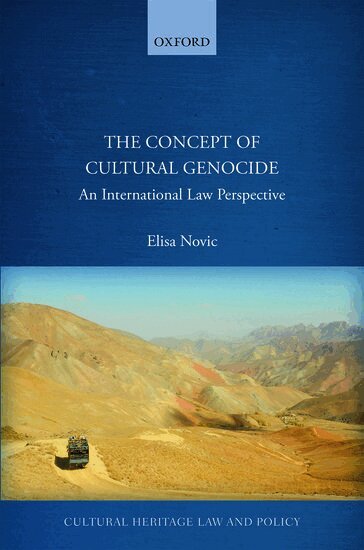
Cultural genocide is the systematic destruction of traditions, values, language, and other elements that make one group of people distinct from another.Cultural genocide remains a recurrent topic, appearing not only in the form of wide-ranging claims about the commission of cultural genocide in diverse contexts but also in the legal sphere, as exemplified by the discussions before the International Criminal Tribunal for the Former Yugoslavia and also the drafting of the UN Declaration on the Rights of Indigenous Peoples. These discussions have, however, displayed the lack of a uniform understanding of the concept of cultural genocide and thus of the role that international law is expected to fulfil in this regard. The Concept of Cultural Genocide: An International Law Perspective details how international law has approached the core idea underlying the concept of cultural genocide and how this framework can be strengthened and fostered. It traces developments from the early conceptualisation of cultural genocide to the contemporary question of its reparation. Through this journey, the book discusses the evolution of various branches of international law in relation to both cultural protection and cultural destruction in light of a number of legal cases in which either the concept of cultural genocide or the idea of cultural destruction has been discussed. Such cases include the destruction of cultural and religious heritage in Bosnia and Herzegovina, the forced removals of Aboriginal children in Australia and Canada, and the case law of the Inter-American Court of Human Rights in relation to Indigenous and tribal groups' cultural destruction.
1 671 kr
Skickas inom 3-6 vardagar
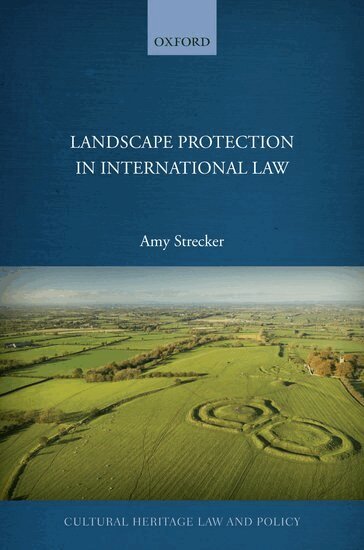
Once the exclusive prerogative of domaine réservé, landscape has gained increasing importance in international law in recent years. Since the introduction of cultural landscapes within the UNESCO World Heritage Convention, and particularly since the adoption of the European Landscape Convention (ELC), emphasis has shifted beyond a scenic, preservationist approach towards a more dynamic, human-centred one. The focus is not only on outstanding landscapes, but also on the everyday and degraded landscapes where most people live and work. Landscape is land shaped by people, after all, and its protection, management and planning have a number of implications for democracy, human rights and spatial justice. Despite these links, however, there has been little legal scholarship on the topic. How does international law, which deals for the most part with universality, deal with something so region-specific and particular as landscape? What is the legal conception of landscape and what are the various roles played by international law in its protection? Amy Strecker assesses the institutional framework for landscape protection, analyses the interplay between landscape and human rights, and links the etymology and theory of landscape with its articulation in law.
1 360 kr
Skickas inom 5-8 vardagar
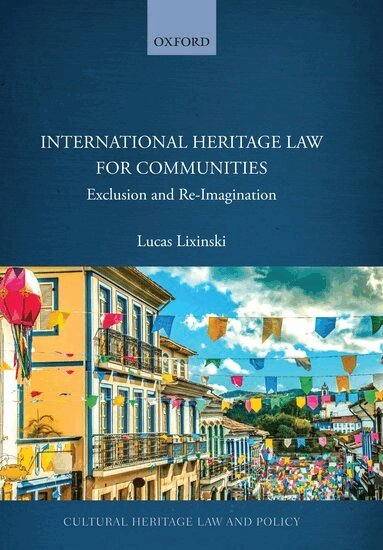
This book critically engages the shortcomings of the field of international heritage law, seen through the lenses of the five major UNESCO treaties for the safeguarding of different types of heritage. It argues that these five treaties have effectively prevented local communities, who bear the brunt of the costs associated with international heritage protection, from having a say in how their heritage is managed. The exclusion of local communities often alienates them not only from international decision-making processes but also from their cultural heritage itself, ultimately meaning that systems put in place for the protection of cultural heritage contribute to its disappearance in the long term. International Heritage Law for Communities adds to existing literature by looking at these UNESCO treaties not as isolated regimes, but rather as belonging to a discursive continuum on cultural heritage. In doing so, the book focuses on themes that cut across the relevant UNESCO regimes like the use of expert rule in international heritage law, economics, the relationship between heritage and the environment, among others, rather than the regimes themselves. It uses this mechanism to highlight the blind spots and unintended consequences of UNESCO treaties and how choices made in their drafting have continuing and potentially negative impacts on how we think about and safeguard heritage.
2 183 kr
Skickas inom 3-6 vardagar
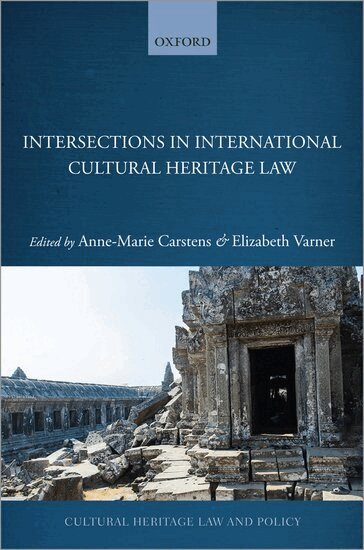
The recent spate of threats to cultural heritage, including in Iraq, Mali, Nepal, Syria, and Yemen, has led to increased focus on the sources of international cultural heritage law. This edited volume shows that international cultural heritage law is not a discrete and contained body of law, but one whose component parts are drawn from diverse fields of public international law. It shows how cultural heritage law has been shaped by its interaction with other areas of international law, and how it has contributed to international law in turn. In this volume, scholars and practitioners explore some of the primary points of intersection between international cultural heritage law and public international law. Chapters explore instersections with the law of armed conflict, international and transnational criminal law, international human rights, the international movement, regulation, and restitution of cultural artefacts, and the UN system. The result is a cohesive collection that not only explores many facets of the intersections of cultural heritage law and public international law, but also examines how the regimes operate together and how the relationship between them largely facilitates, but also sometimes hinders, the development of international law governing the protection of cultural heritage.
1 553 kr
Skickas inom 5-8 vardagar
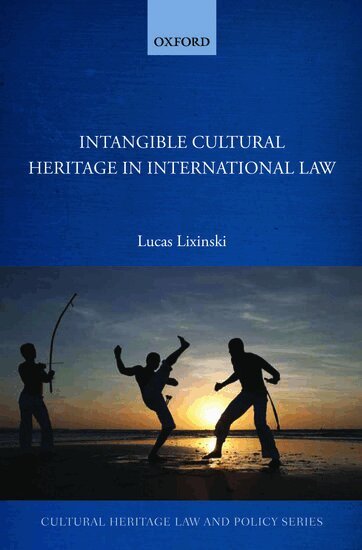
This book offers a comprehensive analysis of the legal issues around intangible cultural heritage (also known as traditional cultural expressions or folklore). It explores both institutional and substantive responses the law offers to the safeguarding of intangible heritage, relying heavily on critiques internal and external to the law. These external critiques primarily come from the disciplines of anthropology and heritage studies.Intangible cultural heritage is safeguarded on three different levels: international, regional, and national. At the international level, the foremost instrument is the specific UNESCO Convention for the Safeguarding of the Intangible Cultural Heritage (2003). At the regional level, initiatives are undertaken both in schemes of political and economic integration, a common thread being that intangible cultural heritage helps promote a common identity for the region, becoming thus a desirable aspect of the integration process. Domestically, responses range from strong constitutional forms of protection to rather weak policy initiatives aimed primarily at attracting foreign aid.Intangible heritage can also be safeguarded via substantive law, and, in this respect, the book looks at the potential and pitfalls of human rights law, intellectual property tools, and contractual approaches. It investigates how the law works and ought to work towards protecting communities, defined as those from where intangible cultural heritage stems, and to whom benefits of its exploitation must return. The book takes the critiques from anthropological and heritage studies into account in order to posit a re-shaped law, offering tools that can be valuable to both scholars and practitioners when understanding how to safeguard intangible heritage.
1 553 kr
Skickas inom 5-8 vardagar
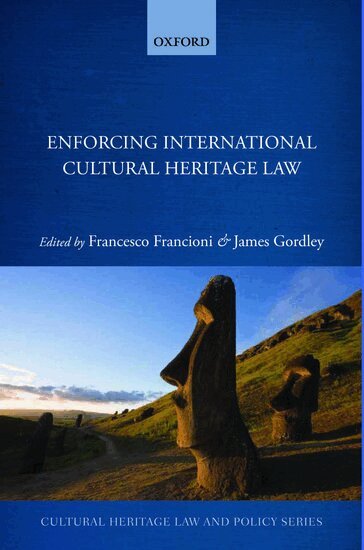
The idea of cultural heritage as an 'international public good' can be traced back to the Preamble of the 1954 Hague Convention for the Protection of Cultural Property in the Event of Armed Conflict, according to which "damage to cultural property belonging to any people whatsoever means damage to the cultural heritage of all mankind". How this idea of cultural heritage as a global public good can be reconciled with the effective enforcement of protection norms is the subject of this study. Bringing together world experts in protecting cultural heritage, Enforcing International Cultural Heritage Law examines the different ways that cultural heritage property can be protected, including protection at the international level, enforcement in domestic courts, and the role of alternative dispute resolution mechanisms. The book is divided into three sections. The first section assesses international law and analyses the interaction between international and domestic norms of public and private law. It discusses the different methods of international enforcement, the role of international and mixed criminal tribunals and courts, and the means for protecting cultural heritage in times of armed conflict. The second section addresses the role of national courts, discussing such topics as: barriers to domestic enforcement of international norms, the refusal to enforce foreign law, the difficulty of territorial boundaries in relation to underwater heritage, and the application of criminal sanctions by domestic courts. The final section of the book surveys alternatives to the legal enforcement of the norms protecting cultural heritage, including arbitration, soft law, and diplomacy.