Lucas Lixinski – författare
799 kr
Läs direkt efter köp
1 106 kr
Läs direkt efter köp
2 323 kr
Läs direkt efter köp
2 323 kr
Läs direkt efter köp
1 359 kr
Läs direkt efter köp
1 359 kr
Läs direkt efter köp
2 384 kr
Skickas inom 5-8 vardagar
1 341 kr
Skickas inom 5-8 vardagar
1 531 kr
Skickas inom 5-8 vardagar
3 134 kr
Skickas inom 10-15 vardagar
657 kr
Skickas inom 10-15 vardagar
627 kr
Läs direkt efter köp
In an age when everyone aspires to teach critical thinking skills in the classroom, what does it mean to be a subversive law teacher? Who or what might a subversive law teacher seek to subvert – the authority of the law, the university, their own authority as teachers, perhaps? Are law students ripe for subversion, agents of, or impediments to, subversion? Do they learn to ask critical questions? Responding to the provocation in the classic book Teaching as a Subversive Activity, by Postman and Weingartner, the idea that teaching could, or even should, be subversive still holds true today, and its premise is particularly relevant in the context of legal education. We therefore draw on this classic book to discuss, in the present volume, the consideration of research into legal education as lifetime learning, as creating meaning, as transformative and as developing world-changing thinking within the legal context. The volume offers research into classroom experiences and theoretical and historical interrogations of what it means to teach law subversively. Primarily aimed at legal educators and doctoral students in law planning careers as academics, its insights speak directly to tensions in higher education more broadly.
627 kr
Läs direkt efter köp
In an age when everyone aspires to teach critical thinking skills in the classroom, what does it mean to be a subversive law teacher? Who or what might a subversive law teacher seek to subvert – the authority of the law, the university, their own authority as teachers, perhaps? Are law students ripe for subversion, agents of, or impediments to, subversion? Do they learn to ask critical questions? Responding to the provocation in the classic book Teaching as a Subversive Activity, by Postman and Weingartner, the idea that teaching could, or even should, be subversive still holds true today, and its premise is particularly relevant in the context of legal education. We therefore draw on this classic book to discuss, in the present volume, the consideration of research into legal education as lifetime learning, as creating meaning, as transformative and as developing world-changing thinking within the legal context. The volume offers research into classroom experiences and theoretical and historical interrogations of what it means to teach law subversively. Primarily aimed at legal educators and doctoral students in law planning careers as academics, its insights speak directly to tensions in higher education more broadly.
776 kr
Läs direkt efter köp
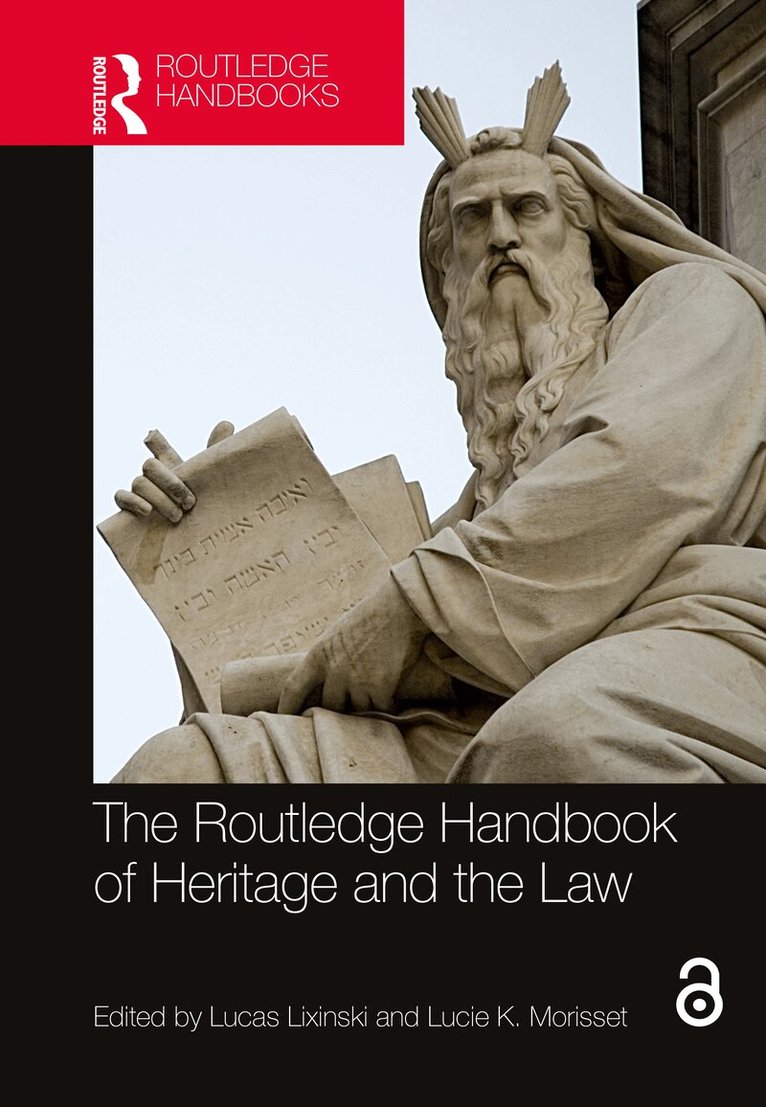
The Routledge Handbook of Heritage and the Law sheds light on the relationship between the two fields and analyses how the law shapes heritage and heritage practice in both expected and unexpected ways.
Including contributions from 41 authors working across a range of jurisdictions, the volume analyses the law as a transnational phenomenon and uses international and comparative legal methodologies to distil lessons for broad application. Demonstrating that the law is fundamentally a language of power and contestation, the Handbook shows how this impacts our views of heritage. It also shows that, to understand the ways in which the law impacts key aspects of heritage practice, it is important to tap into the possibilities of heritage as points of convergence of identity, struggles over resources, and the distribution of power. Framing heritage as a driver for legal engagement rather than a passive regulatory object, the book first reviews the legal fields or mechanisms that can shape action in the heritage field, then questions how these enable authority and give power to those who seize heritage, and finally envisions how the discussion between heritage and the law can lay new grounds in both those fields. Lifting the mists that often render the law opaque in heritage studies, the Handbook showcases the law as a medium through which the culture and the power of heritage are expressed and might be shared.
The Routledge Handbook of Heritage and the Law presents a view of the law that is aimed at those who wish to reflect on how law has changed, or could change, what heritage is and how it can support social, cultural, local, or other development. It will be of interest to scholars, students, policymakers, and practitioners working in the areas of museum studies, heritage studies, and urban studies, as well as in cultural intervention and planning.
Chapter 8 of this book is freely available as a downloadable Open Access PDF at http://www.taylorfrancis.com under a Creative Commons Attribution-Non Commercial-No Derivatives (CC-BY-NC-ND) 4.0 license.
Chapter 18 of this book is freely available as a downloadable Open Access PDF at http://www.taylorfrancis.com under a Creative Commons Attribution-Non Commercial-No Derivatives (CC-BY-NC-ND) 4.0 license.
Chapter 34 of this book is freely available as a downloadable Open Access PDF at http://www.taylorfrancis.com under a Creative Commons (CC-BY) 4.0 license.
The Routledge Handbook of Heritage and the Law | Lucas Lixinski, Lucie (taylorfrancis.com)
776 kr
Läs direkt efter köp
The Routledge Handbook of Heritage and the Law sheds light on the relationship between the two fields and analyses how the law shapes heritage and heritage practice in both expected and unexpected ways.
Including contributions from 41 authors working across a range of jurisdictions, the volume analyses the law as a transnational phenomenon and uses international and comparative legal methodologies to distil lessons for broad application. Demonstrating that the law is fundamentally a language of power and contestation, the Handbook shows how this impacts our views of heritage. It also shows that, to understand the ways in which the law impacts key aspects of heritage practice, it is important to tap into the possibilities of heritage as points of convergence of identity, struggles over resources, and the distribution of power. Framing heritage as a driver for legal engagement rather than a passive regulatory object, the book first reviews the legal fields or mechanisms that can shape action in the heritage field, then questions how these enable authority and give power to those who seize heritage, and finally envisions how the discussion between heritage and the law can lay new grounds in both those fields. Lifting the mists that often render the law opaque in heritage studies, the Handbook showcases the law as a medium through which the culture and the power of heritage are expressed and might be shared.
The Routledge Handbook of Heritage and the Law presents a view of the law that is aimed at those who wish to reflect on how law has changed, or could change, what heritage is and how it can support social, cultural, local, or other development. It will be of interest to scholars, students, policymakers, and practitioners working in the areas of museum studies, heritage studies, and urban studies, as well as in cultural intervention and planning.
Chapter 8 of this book is freely available as a downloadable Open Access PDF at http://www.taylorfrancis.com under a Creative Commons Attribution-Non Commercial-No Derivatives (CC-BY-NC-ND) 4.0 license.
Chapter 18 of this book is freely available as a downloadable Open Access PDF at http://www.taylorfrancis.com under a Creative Commons Attribution-Non Commercial-No Derivatives (CC-BY-NC-ND) 4.0 license.
Chapter 34 of this book is freely available as a downloadable Open Access PDF at http://www.taylorfrancis.com under a Creative Commons (CC-BY) 4.0 license.
The Routledge Handbook of Heritage and the Law | Lucas Lixinski, Lucie (taylorfrancis.com)
1 794 kr
Skickas inom 10-15 vardagar
543 kr
Skickas inom 10-15 vardagar
593 kr
Skickas inom 10-15 vardagar
2 222 kr
Skickas inom 10-15 vardagar
1 561 kr
Skickas inom 5-8 vardagar
395 kr
Läs direkt efter köp
This Research Agenda recasts cultural heritage law, emphasising the importance of developing rigorous and socially engaged scholarly research in the field. It analyses tensions and methodologies, using the return of colonial cultural objects as a key case study.
Building on empirical insights as well as current legal scholarship, this book challenges assumptions about the role of cultural heritage law. Dissecting binaries such as international versus national, public versus private, and tangible versus intangible, Lucas Lixinski questions the foundations of the field before examining it through different theoretical lenses such as historicisation and pragmatism. He engages with broader concerns in the legal discipline including human rights and the interests of local communities, and considers arguments in favour of and against cultural restitution. Ultimately, Lixinski argues that critical heritage law research must focus on interculturality and redistribution, and inspires the reader to leverage these ideas and tools for social justice.
Engaging and innovative, this book is a valuable resource for PhD researchers looking to take their studies beyond the status quo. Its novel reflections will also engage established academics in cultural heritage and art law, intellectual property law, public international law and critical heritage studies.
665 kr
Läs direkt efter köp
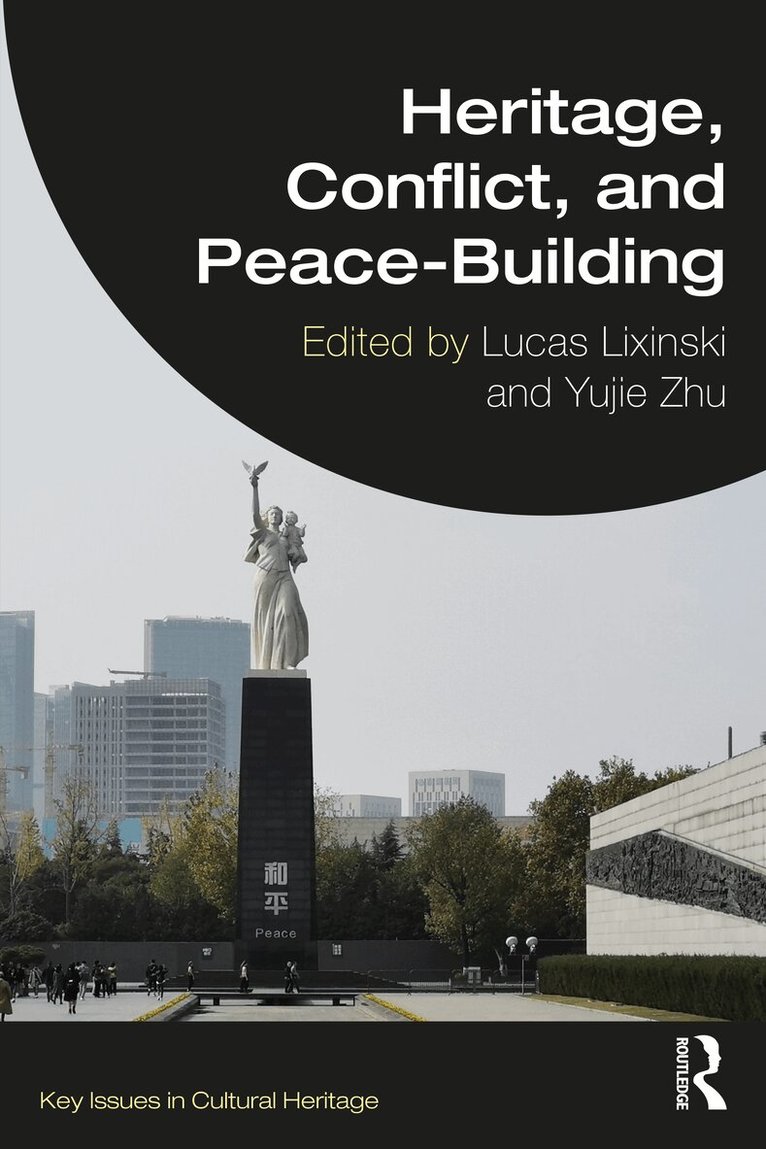
Heritage, Conflict, and Peace-Building examines the possibilities arising from, and challenges associated with, transforming heritage from a casualty of conflict into an opportunity for peacebuilding.
The contributors to this book, who hail from academia and practice, present case studies that shed light on the multifaceted factors and conditions influenced by diplomacy, nationalism, victimhood, and the roles of diverse institutional actors in fostering peace. They demonstrate the possibilities and pitfalls of the work heritage does for local communities, the nation-state, and the international community, when these different actors and their peace aspirations and agendas intersect. Looking at heritage and peace processes on all continents, the contributions in this volume amount to a compelling analytical account of how the discourses of heritage and peace connect, overlap, and diverge. They also emphasise that our shared aspiration for peace should not be taken for granted in a heritage context, and that it is incumbent upon heritage scholars and practitioners to be more intentional about the work they wish to do to promote peace.
Heritage, Conflict, and Peace-Building will be of interest to scholars and practitioners working in heritage studies, transitional justice, museum studies, international relations, education, history, and law.
665 kr
Läs direkt efter köp
Heritage, Conflict, and Peace-Building examines the possibilities arising from, and challenges associated with, transforming heritage from a casualty of conflict into an opportunity for peacebuilding.
The contributors to this book, who hail from academia and practice, present case studies that shed light on the multifaceted factors and conditions influenced by diplomacy, nationalism, victimhood, and the roles of diverse institutional actors in fostering peace. They demonstrate the possibilities and pitfalls of the work heritage does for local communities, the nation-state, and the international community, when these different actors and their peace aspirations and agendas intersect. Looking at heritage and peace processes on all continents, the contributions in this volume amount to a compelling analytical account of how the discourses of heritage and peace connect, overlap, and diverge. They also emphasise that our shared aspiration for peace should not be taken for granted in a heritage context, and that it is incumbent upon heritage scholars and practitioners to be more intentional about the work they wish to do to promote peace.
Heritage, Conflict, and Peace-Building will be of interest to scholars and practitioners working in heritage studies, transitional justice, museum studies, international relations, education, history, and law.
1 308 kr
Skickas inom 7-10 vardagar
365 kr
Skickas inom 7-10 vardagar
422 kr
Läs direkt efter köp
422 kr
Läs direkt efter köp
672 kr
Läs direkt efter köp
672 kr
Läs direkt efter köp
633 kr
Skickas inom 10-15 vardagar