Current Topics in Infectious Disease - Böcker
Visar alla böcker i serien Current Topics in Infectious Disease. Handla med fri frakt och snabb leverans.
10 produkter
10 produkter
876 kr
Skickas inom 10-15 vardagar
2 180 kr
Skickas inom 10-15 vardagar
Research on cholera has contributed both to knowledge of the epidemic in particular, and to a broader understanding of the fundamental ways in which cells communicate with each other. This volume presents current knowledge in historical perspective to enable the practitioner to treat cholera in a more effective manner, and to provide a comprehensive review for the researcher.
550 kr
Skickas inom 10-15 vardagar
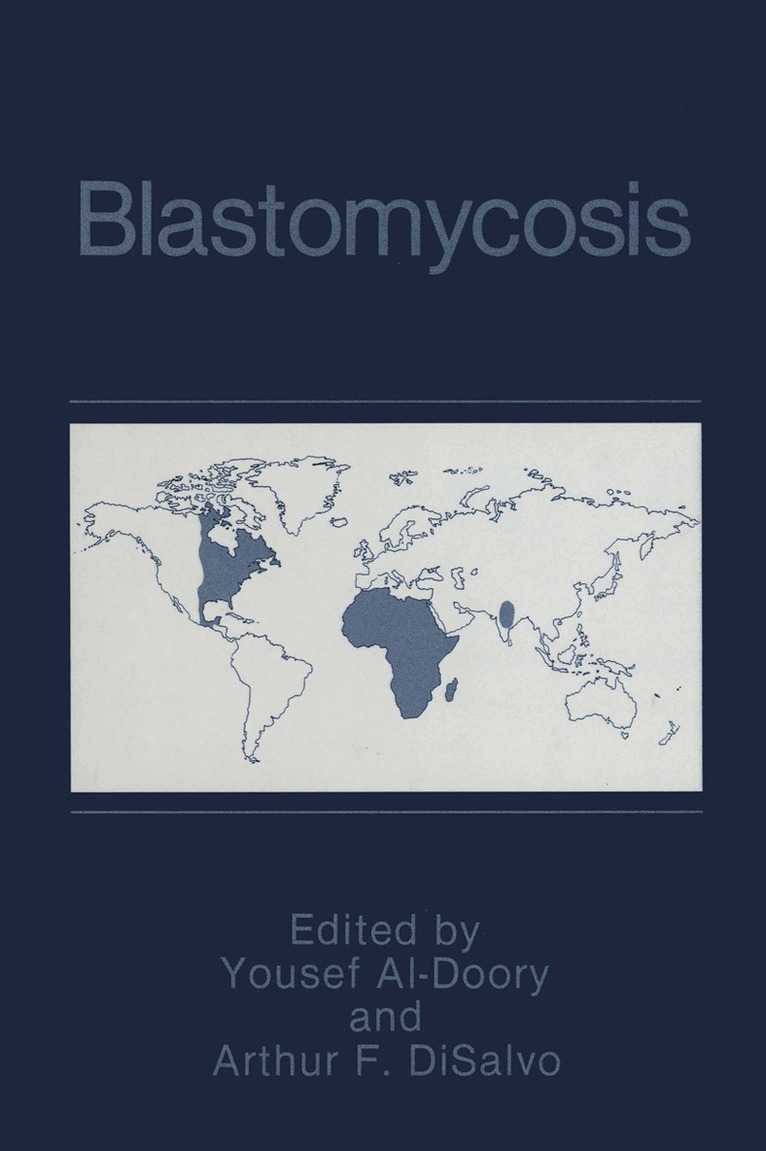
Blastomycosis remains the most enigmatic of human mycotic infections. The enigmas encompass the natural habitat of the etiologic agent, extent of exposure and subclinical infections in endemic areas, distribution of en demic foci throughout the world, inconsistency of serologic evaluation of infected patients, and varying response of such patients to standard treat ment regimens. In spite of diligent investigations by many competent investigators, we still do not know the ecological niche inhabited by the etiologic agent. We have many tantalizing clues but no definite answers. Nor do we know the extent of the endemic areas in the world for this disease. Skin testing, so useful in defining the distribution of histoplasmosis and coccidioidomycosis, has been of no value in mapping endemic areas for blastomycosis. Even the serologic evaluation of known cases of the disease has been too erratic in results to be useful as a diagnostic or prognostic procedure. The enigmas of blastomycosis go straight to the disease itself. There is an extensive literature on the debate concerning the presence and extent of subclinical infections. Case report series demonstrate that such transient infections do occur but, unlike other mycoses, the extent to which this phe nomenon is common in the general population still cannot be assessed. Even the diagnosis of established disease is a major clinical problem.
550 kr
Skickas inom 10-15 vardagar
Nearly twenty years ago a symposium convened at Dallas, Texas, to con sider the place of atypical mycobacteria among agents of human disease. An edited and condensed version of that symposium was subsequently published and since that time has constituted the only bound source of infor mation covering broad aspects of mycobacterial disease. In the years since a vast amount of information has accumulated in periodical literature, some of which is not readily accessible. The time seems suitable for a comprehensive collection of this scattered material into a single book. The aim has not been to produce an exhaustive account of mycobacteria and mycobacterioses, but rather to concentrate on salient points and particularly on those most generally useful to a diverse group of interests: mycobacteriology, pathology, epidemiology, and, of course, clinical fields. In Appendix A there appear in summary form manifestations of myco bacteria as they have occurred among clinical specialities, such as ortho pedic surgery, dermatology, and urology. These summaries are designed to serve as guides to more probable infections and to lead to more extensive reading with respect to the specific organism encountered. Appendix C presents, also in summary form, drugs, regimens, duration of treatment, and toxicities to permit ready reference to less familiar anti microbial agents. These are suggestive only, useful when the general nature of the organism is known but not the specific susceptibility of the individual strain.
Infections of the Gastrointestinal Tract
Microbiology, Pathophysiology, and Clinical Features
Häftad, Engelska, 2012
1 094 kr
Skickas inom 10-15 vardagar
Enteric infection has played an important role in the majority of the world's populations, including children (particularly those under four years of age), the aged, the malnourished, military populations, and per sons from industrialized regions traveling to developing areas. The magni tude of the problem has been profound in areas of the world with reduced economic development, where there exists a greater reservoir of entero pathogens and a larger susceptible population with nutritional deficits. Morbidity from enteric infection in developing areas exceeds that seen in industrialized countries by severalfold, with the problem being most seri ous in infants who are bottle-fed and other infants and young children soon after being weaned from the breast ("weanling diarrhea"). Of greater significance than the inverse relationship of diarrhea morbidity with levels of industrial development is the relationship of death from intestinal infection and socioeconomic advancement. Mortality rate from diarrhea is 10 to 100 times greater in developing areas. In many parts of the third world, diarrhea, resultant dehydration, and associated malnutri tion are the leading causes of death in infants and young children and account for as great as one-third of pediatric deaths.
1 094 kr
Skickas inom 10-15 vardagar
Although there are a number of excellent current reviews on one or another aspect of cytomegalovirus, the last comprehensive treatment of this subject was that of Krech et al. (1971a). In view of the amazing advances in the virological, epidemiologic, and clinical knowledge of cytomegaloviruses, an up-to-date book is needed. Such a work should cover many areas of expertise and a voluminous technical literature. Each area might have been reviewed and analyzed by workers more expert than myself. However, I have embarked on the entire venture alone in order to attain unity and continuity in this book, characteristics that are not easily achieved in the more popular multiauthored works. I have tried to review the literature and to provide a critical summary for each area discussed. To do this, I provide as much of the primary data of the relevant works as needed and not just the qualitative conclusions. Inevitably, the flow of the narrative may be interrupted by dry facts and figures. However, such information is essential to make this a meaningful reference work. But for those not interested in such details, I have provided at what I hope are crucial points critiques and summaries. This book is not an exhaustive review of all the literature. This is probably no longer possible or even desirable. By selection, however, one runs the risk of having missed or ignored important papers. I am keenly aware of this, and I wish to apologize for such oversight, if that is possible.
1 094 kr
Skickas inom 10-15 vardagar
The most important example of intravascular infection is infective endocarditis (IE), a common and serious disorder in man. In the past, these infections were uniformly fatal, but since the development of potent antimicrobial agents, bac teriological cure has become practical and predictable. So, for a while, it seemed that intravascular infection would diminish in importance and be relegated to the stockpile of illnesses which physicians, one or two generations earlier, used to see frequently. In recent years, however, spectacular technological advances (cardiac surgery, intravascular devices, hemodialysis), accompanied by profound social deterioration (intravenous drug usage), have provided new breeding grounds for the development of these infections. So it is that a large percentage of intravascular infections may be looked upon today as one of the diseases of medical progress and social evolution. This "progress," however, has not only contributed to the encouragement of the disease; there is another side to the coin: the same technological advances that have served to increase the frequency of infection (e. g. , intravascular plastic catheters) have also led to the first simple, easily reproducible laboratory animal model for the study of the disease, thus advancing our understanding of the prophylaxis, treatment, and general biology of these infections (Figures 1 and 2). Similarly, whereas the insertion of prosthetic heart valves has created a new group of patients with endocarditis, these same surgical techniques are lifesaving to patients with endocarditis whose aortic valves have perforated.
1 094 kr
Skickas inom 10-15 vardagar
During the past decade, plague infections have persisted with undiminished importance in foci of the Americas, Africa, and Asia, while infections caused by the other yersiniae were recognized only during this decade as important agents of diarrheal and appendicitislike outbreaks in Europe, North America, and Japan. The dramatic rise of plague was abetted by the military conflict in Vietnam in the latter 1960s and persisted into the 1970s. During these years more Vietnamese people probably died of plague than American ser- vicemen died of combat injuries. In the United States during these same years, the numbers of human cases of plague increased severalfold owing to well- entrenched endemic foci in the sylvatic rodent species of the southwestern states. , In the latter 1960s, microbiologists had changed the name of the plague bacillus from Pasteurella pestis to Yersinia pestis. The other two pathogenic species, Yersinia enterocolitica and Yersinia pseudotuberculosis, were known causes of mesenteric lymphadenitis and were believed to be rare. However, there originated a strong interest in these diseases in the European countries of Sweden, Finland, Belgium, and France.Yersiniae were frequently dis- covered in persons with diarrhea and acute abdominal pain simulating ap- pendicitis. This discovery sparked a worldwide surge of scientific interest in the genus Yersinia. Previous writings about the yersiniae have rarely considered plague and nonplague yersiniae together. Diseases caused by these bacteria, although their epidemiological patterns and clinical pictures are very different, have some striking similarities.
550 kr
Skickas inom 10-15 vardagar
The idea for compiling a book on coccidioidomycosis first began to take shape in my mind in 1976 at an annual meeting of the Coccidioidomycosis Study Group (see Chapter 23) in Palo Alto. In my discussions with the chairman, Demosthenes Pappagianis, we agreed that considerable data had accumulated in the almost 20 years since the publication of Marshall Fiese's landmark book, Coccidioidomycosis (Charles C Thomas, Spring field, Ill. , 1958). Pappagianis encouraged me to consider writing a new book. Also about this time, my Stanford colleague Tom Merigan was collaborating in assembling a series of texts on infectious diseases, and he added his encouragement to that of Pappagianis. I planned to enlist the collaboration of my colleagues for the multiauthored work I had conceived to encompass the various facets of coccidioidomycosis. The more I worked, the more I appreciated the effort that had gone into the Fiese book. I hope the final product is a useful, readable, and comprehensive text and reference source for this disease and a worthy successor to the Fiese book. This volume places greater emphasis on the basic science background of present clinical experience and attempts to examine critically the data base and how it fits with recommendations made in the clinical literature. In some of the contributed chapters, I made virtually no changes; in others, I battered them to fit my preconceptions.
2 180 kr
Skickas inom 10-15 vardagar
Research on cholera has contributed both to knowledge of the epidemic in particular, and to a broader understanding of the fundamental ways in which cells communicate with each other. This volume presents current knowledge in historical perspective to enable the practitioner to treat cholera in a more effective manner, and to provide a comprehensive review for the researcher.