Debates and Documents in Ancient History - Böcker
Visar alla böcker i serien Debates and Documents in Ancient History. Handla med fri frakt och snabb leverans.
10 produkter
10 produkter
1 692 kr
Skickas inom 7-10 vardagar
This book aims to make accessible the sources and controversies concerning a key period in the history of the Roman Empire – the reign of Diocletian and its immediate aftermath. Diocletian was an emperor of unusual ambition, and his reign saw considerable military success, an experiment in collegiate government, a move towards provincial capitals away from Rome, a reorganisation of the administrative machinery of empire and its finances, and a committed project to persecute the Christians. In Part I, an introduction to Diocletian and the world of the late third century is followed by six thematic chapters covering a range of aspects of government and society under this emperor, including military, economic, religious and administrative affairs. These chapters discuss the original sources, highlight their strengths and weaknesses, and consider the main scholarly approaches to them. Throughout Part I there are regular cross references to the source material which is presented in Part II – this includes literary, archaeological, artistic, legal, and documentary evidence, as well as coins and inscriptions. All texts are in English, and there is a guide to further reading, a full bibliography, some questions for consideration, a glossary of technical terms, and a brief list of relevant online resources.
697 kr
Skickas inom 3-6 vardagar
This book aims to make accessible the sources and controversies concerning a key period in the history of the Roman Empire – the reign of Diocletian and its immediate aftermath. Diocletian was an emperor of unusual ambition, and his reign saw considerable military success, an experiment in collegiate government, a move towards provincial capitals away from Rome, a reorganisation of the administrative machinery of empire and its finances, and a committed project to persecute the Christians. In Part I, an introduction to Diocletian and the world of the late third century is followed by six thematic chapters covering a range of aspects of government and society under this emperor, including military, economic, religious and administrative affairs. These chapters discuss the original sources, highlight their strengths and weaknesses, and consider the main scholarly approaches to them. Throughout Part I there are regular cross references to the source material which is presented in Part II – this includes literary, archaeological, artistic, legal, and documentary evidence, as well as coins and inscriptions. All texts are in English, and there is a guide to further reading, a full bibliography, some questions for consideration, a glossary of technical terms, and a brief list of relevant online resources.
414 kr
Skickas inom 11-20 vardagar
This new study of the last pagan Roman emperor provides remarkable insight into the man and his times.The figure of Julian demands the attention of historians. As the last pagan Roman Emperor, he provides a focus for studying the religious transformations that were taking place in the empire in the fourth century. Further, his secular policies and concerns concentrate attention on other transformations – social and political – within the period.Notably, Julian elicited sharply divided opinion from his contemporaries, which is largely polarised between pagan supporters and Christian opponents. Such division of opinion is also matched by the modern literature on him. Was he the prospective saviour of the Roman Empire, or was he out-of-touch and living in the past? Was he an evangelist for Mithraism, or an altogether more traditional pagan? Was he a shrewd military man, or a rash risk-taker whose luck spectacularly ran out on his Persian expedition? These questions and more are asked and discussed, allowing students to reach their own verdict on this exciting and controversial emperor.Key Features:*Issues of historical significance are identified and discussed*Key passages of text are gathered and accessible in one volume*Modern interpretations of Julian are presented and considered
697 kr
Skickas inom 3-6 vardagar
This book examines the course and nature of Roman expansion during the Republic and Early Empire, focusing on the impact of Roman rule on the subject, and the effect of empire on the imperial power. These are topics which have long generated considerable controversy among modern scholars. The study and judgement of Roman imperialism have always been informed by contemporary perceptions of international power relations and this is one reason students engage with the subject so readily.Part II of the book lays out the evidence and the circumstances in which texts were written so that the student can use this material to consider and evaluate the debates about Roman imperialism, then and since, presented in Part I. This volume is a valuable guide to a central aspect of the classical world.
1 245 kr
Tillfälligt slut
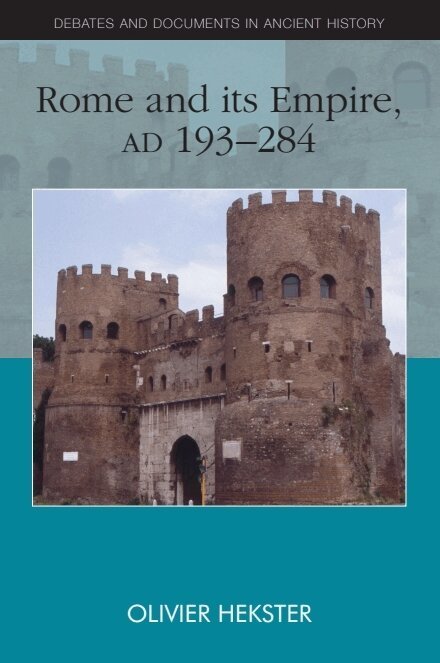
This was a time of civil war, anarchy, intrigue, and assassination.Between 193 and 284 the Roman Empire knew more than twenty-five emperors, and an equal number of usurpers. All of them had some measure of success, several of them often ruling different parts of the Empire at the same time. Rome’s traditional political institutions slid into vacuity and armies became the Empire’s most powerful institutions, proclaiming their own imperial champions and deposing those they held to be incompetent. Yet despite widespread contemporary dismay at such weak government this period was also one in which the boundaries of the Empire remained fairly stable; the rights and privileges of Roman citizenship were extended equally to all free citizens of the Empire; in several regions the economy remained robust in the face of rampant inflation; and literary culture, philosophy, and legal theory flourished. Historians have been discussing how and why this could have been for centuries. Olivier Hekster takes you to the heart of these debates and illustrates the arguments with key contemporary documents. His compelling account will engage students at all levels of study.Key Features • issues of historical significance are identified and thematically discussed • important modern debates are placed together and explored• key passages of text along with key images are gathered and accessible in one volume• includes essay questions, chronology, further reading, bibliography, and useful website resources
697 kr
Skickas inom 3-6 vardagar
This was a time of civil war, anarchy, intrigue, and assassination.Between 193 and 284 the Roman Empire knew more than twenty-five emperors, and an equal number of usurpers. All of them had some measure of success, several of them often ruling different parts of the Empire at the same time. Rome’s traditional political institutions slid into vacuity and armies became the Empire’s most powerful institutions, proclaiming their own imperial champions and deposing those they held to be incompetent. Yet despite widespread contemporary dismay at such weak government this period was also one in which the boundaries of the Empire remained fairly stable; the rights and privileges of Roman citizenship were extended equally to all free citizens of the Empire; in several regions the economy remained robust in the face of rampant inflation; and literary culture, philosophy, and legal theory flourished. Historians have been discussing how and why this could have been for centuries. Olivier Hekster takes you to the heart of these debates and illustrates the arguments with key contemporary documents. His compelling account will engage students at all levels of study.Key Features • issues of historical significance are identified and thematically discussed • important modern debates are placed together and explored• key passages of text along with key images are gathered and accessible in one volume• includes essay questions, chronology, further reading, bibliography, and useful website resources
697 kr
Skickas inom 3-6 vardagar
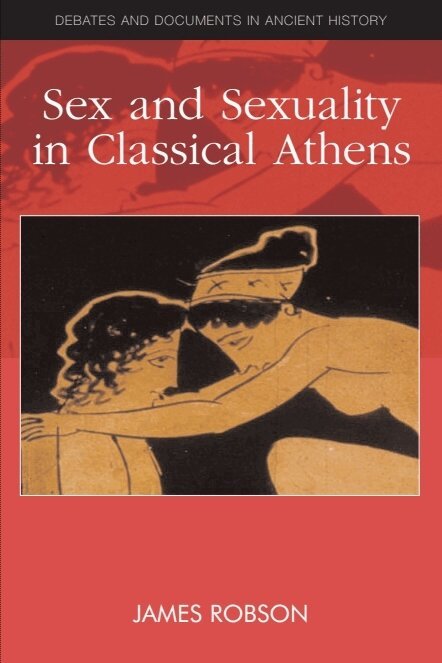
A broad look at the sex lives and sexual beliefs of ancient AtheniansThis book aims to make accessible the evidence for - and the controversies surrounding - the sexual behaviour and social attitudes of classical Athenians. Key areas such as marriage, same-sex relationships, prostitution, sexual fantasy, rape, adultery and sexual attraction are dealt with in chapters which discuss the original sources, highlight their strengths and weaknesses as evidence, and consider the main scholarly approaches to them. Throughout Part I there are regular cross references to the source material presented in Part II - which includes a wide range of literary, philosophical, archaeological, artistic and legal evidence.Key features:" A concise and lively introduction to this field of study" Major areas of debate are explored and trends in scholarship are reflected" Readers are encouraged to be active cultural historians through the presentation of the sources" Includes Further Reading, Essay Questions, a Glossary of Technical Terms and useful website sources
2 157 kr
Skickas inom 3-6 vardagar
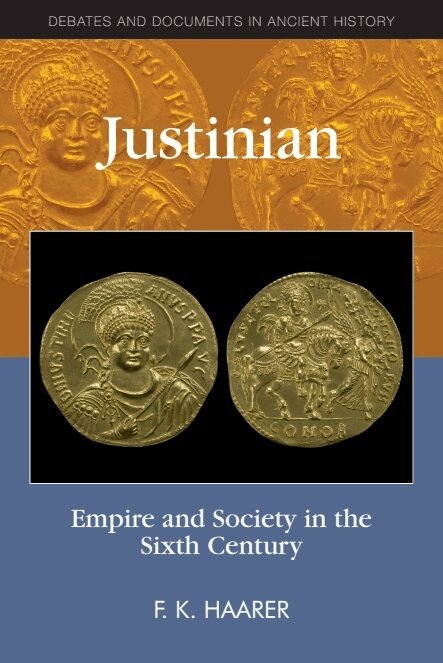
The Emperor Justinian had a long and influential reign, from AD 527 to 565, in which he dominated the sixth-century. This was an important period in the transition between the classical and Byzantine worlds, and one which saw significant territorial changes and religious developments. Many of Justinian's other reforms, such as those in the governance of the empire and his codification of its laws, also had a long-lasting influence.The first section of this book outlines the current questions we are asking about Justinian today. Five chapters explore his rise to power and the role of the colourful Theodora, foreign policy on the eastern frontier and the recovery of the western provinces, religious policy and governance of the empire. The sixth chapter considers the role of culture and society in the sixth century. Justinian's reign is documented through a wide range of contemporary written sources, as well as numismatic and epigraphic evidence and images of the imperial couple. The second section contains over eighty examples of these records, including English translations of the sources and images of coins and other objects.
402 kr
Skickas
The Emperor Justinian had a long and influential reign, from AD 527 to 565, in which he dominated the sixth-century. This was an important period in the transition between the classical and Byzantine worlds, and one which saw significant territorial changes and religious developments. Many of Justinian's other reforms, such as those in the governance of the empire and his codification of its laws, also had a long-lasting influence.The first section of this book outlines the current questions we are asking about Justinian today. Five chapters explore his rise to power and the role of the colourful Theodora, foreign policy on the eastern frontier and the recovery of the western provinces, religious policy and governance of the empire. The sixth chapter considers the role of culture and society in the sixth century. Justinian's reign is documented through a wide range of contemporary written sources, as well as numismatic and epigraphic evidence and images of the imperial couple. The second section contains over eighty examples of these records, including English translations of the sources and images of coins and other objects.
697 kr
Skickas inom 3-6 vardagar
Explores Achaemenid kingship and argues for the centrality of the royal court in elite Persian societyThe first Persian Empire (559-331 BCE) was the biggest land empire the world had seen, and seated at the heart of its vast dominions, in the south of modern-day Iran, was the person of the Great King. Hidden behind the walls of his vast palace, and surrounded by the complex rituals of court ceremonial, the Persian monarch was undisputed master of his realm, a god-like figure of awe, majesty, and mystery.Yet the court of the Great King was no simple platform for meaningless theatrical display; at court, presentation mattered: nobles vied for position and prestige, and the royal family attempted to keep a tight grip on dynastic power - in spite of succession struggles, murders, and usurpations, for the court was also the centre of political decision-making and the source of cultural expression. Key features:Draws on rich Iranian and Classical sourcesExamines key issues such as royal ideology, court structure, ceremony and ritual, royal migrations, gender, hierarchy, architecture and space and cultural achievementsAccesses the rarefied but dangerous world of Persian palace lifeIncludes guides to further reading and web resources to encourage research