Developing Child - Böcker
Visar alla böcker i serien Developing Child. Handla med fri frakt och snabb leverans.
14 produkter
14 produkter
297 kr
Skickas inom 7-10 vardagar
Our journey to language begins before birth, as babies in the womb hear clearly enough to distinguish their mother's voice. Canvassing a broad span of experimental and theoretical approaches, this book introduces new ways of looking at language development.A remarkable mother-daughter collaboration, Pathways to Language balances the respected views of a well-known scholar with the fresh perspective of a younger colleague prepared to challenge current popular positions in these debates. The result is an unusually subtle, even-handed, and comprehensive overview of the theory and practice of language acquisition, from fetal speech processing to the development of child grammar to the sophisticated linguistic accomplishments of adolescence, such as engaging in conversation and telling a story. With examples from the real world as well as from the psychology laboratory, Kyra Karmiloff and Annette Karmiloff-Smith look in detail at the way language users appropriate words and grammar. They present in-depth evaluations of different theories of language acquisition. They show how adolescent usage has changed the meaning of certain phrases, and how modern living has led to alterations in the lexicon. They also consider the phenomenon of atypical language development, as well as theoretical issues of nativism and empiricism and the specificity of human language. Their nuanced and open-minded approach allows readers to survey the complexity and breadth of the fascinating pathways to language acquisition.
321 kr
Skickas inom 10-15 vardagar
What do infants know? What do they feel, and how do they come to understand what’s happening around them? How do they begin to construe others as persons with feelings and intentions? These questions inspire this remarkable new look at the infant’s world. The short answer? Infants are much more sophisticated perceivers, feelers, and thinkers of their world than we may think.In this lively book, Philippe Rochat makes a case for an ecological approach to human development. Looking at the ecological niche infants occupy, he describes how infants develop capabilities and conceptual understanding in relation to three interconnected domains: the self, objects, and other people. Drawing on the great body of contemporary “competent infant” research, Rochat offers a thoughtful overview of many current, controversial topics, from neonatal imitation to early numeracy, to the development of self-awareness. In a provocative conclusion, he describes infancy as a series of key transitions—so dramatic that they are sometimes called “revolutions”—and maps out the processes that impel development.Offering a unifying theoretical vision of the vast research of recent years, The Infant’s World is an inspiring introduction to the liveliest area of modern psychology.
300 kr
Skickas inom 10-15 vardagar
Now in the midst of the largest wave of immigration in history, America, mythical land of immigrants, is once again contemplating a future in which new arrivals will play a crucial role in reworking the fabric of the nation. At the center of this prospect are the children of immigrants, who make up one fifth of America's youth. This book, written by the codirectors of the largest ongoing longitudinal study of immigrant children and their families, offers a clear, broad, interdisciplinary view of who these children are and what their future might hold.For immigrant children, the authors write, it is the best of times and the worst. These children are more likely than any previous generation of immigrants to end up in Ivy League universities--or unschooled, on parole, or in prison. Most arrive as motivated students, respectful of authority and quick to learn English. Yet, at the same time, many face huge obstacles to success, such as poverty, prejudice, the trauma of immigration itself, and exposure to the materialistic, hedonistic world of their native-born peers.The authors vividly describe how forces within and outside the family shape these children's developing sense of identity and their ambivalent relationship with their adopted country. Their book demonstrates how "Americanization," long an immigrant ideal, has, in a nation so diverse and full of contradictions, become ever harder to define, let alone achieve.
1 174 kr
Skickas inom 10-15 vardagar
Nearly three-quarters of American mothers work full- or part-time--usually out of financial necessity--and require regular child care. How do such arrangements affect children? If they are not at home with their mothers, will they be badly behaved, intellectually delayed, or emotionally stunted? Backed by the best current research, Alison Clarke-Stewart and Virginia Allhusen bring a reassuring answer to parents' fears and offer guidance for making difficult decisions. Quality child care, they show, may be even more beneficial to children than staying at home. Although children who spend many hours in care may be unruly compared with children at home, those who attend quality programs tend to be cognitively ahead of their peers. They are just as attached to their mothers and reap the additional benefits of engaging with other children. Ultimately, it's parents who matter most; what happens at home makes the difference in how children develop. And today's working mothers actually spend more time interacting with their children than stay-at-home mothers did a generation ago.
321 kr
Skickas inom 10-15 vardagar
What can the study of young monkeys and apes tell us about the minds of young humans? In this fascinating introduction to the study of primate minds, Juan Carlos Gómez identifies evolutionary resemblances—and differences—between human children and other primates. He argues that primate minds are best understood not as fixed collections of specialized cognitive capacities, but more dynamically, as a range of abilities that can surpass their original adaptations.In a lively overview of a distinguished body of cognitive developmental research among nonhuman primates, Gómez looks at knowledge of the physical world, causal reasoning (including the chimpanzee-like errors that human children make), and the contentious subjects of ape language, theory of mind, and imitation. Attempts to teach language to chimpanzees, as well as studies of the quality of some primate vocal communication in the wild, make a powerful case that primates have a natural capacity for relatively sophisticated communication, and considerable power to learn when humans teach them.Gómez concludes that for all cognitive psychology’s interest in perception, information processing, and reasoning, some essential functions of mental life are based on ideas that cannot be explicitly articulated. Nonhuman and human primates alike rely on implicit knowledge. Studying nonhuman primates helps us to understand this perplexing aspect of all primate minds.
351 kr
Skickas inom 10-15 vardagar
A window on the insular world of autism, this book offers a rare close look at the mysterious condition that afflicts approximately 350,000 Americans and affects millions more. As they make sense of the many features of autism at every level of intellectual functioning across the life span, Marian Sigman and Lisa Capps weave together clinical vignettes, research findings, methodological considerations, and historical accounts. The result is a compelling, comprehensive view of the disorder, as true to human experience as it is to scientific observation.Children with Autism is unique in that it views autism through the lens of developmental psychopathology, a discipline grounded in the belief that studies of normal and abnormal development can inform and enhance one another. Sigman and Capps conduct readers through the course of development from infancy to adulthood, outlining the differences between normal and autistic individuals at each stage and highlighting the links between growth in cognitive, social, and emotional domains. In particular, Sigman and Capps suggest that deficits in social understanding emerge in the early infancy of autistic children, and they explore how these deficits organize the development of autistic individuals through the course of their lives. They also examine the effects certain characteristics can have on an autistic person's adjustment over time. Their book concludes with an overview of existing interventions and promising avenues for further research.
289 kr
Skickas inom 10-15 vardagar
Much of this century’s empirical research in the social sciences has been devoted to understanding the causes and contributing factors of antisocial behavior. In studies of children’s moral reasoning and conduct, developmental psychologists have probed the cognitive and social bases of aggression, conflict, delinquency, and prejudice. In contrast to psychology’s lengthy preoccupation with negative behavior in children, the study of children’s altruistic, cooperative, and sharing behavior has a relatively short history.The Caring Child provides the most up-to-date account of our current understanding of the motivations behind prosocial behaviors and how these motives develop and are elicited in various situations. When do children first exhibit prosocial behavior, particularly altruism? How do helping, sharing, and comforting behaviors change with age? Why are some children more caring than others? Are differences among children’s prosocial behaviors a result of hereditary factors, of how children are raised, or both? Can prosocial tendencies be enhanced by parents’ and educators’ deliberate attempts to instill altruistic motives and to teach caring behaviors?Nancy Eisenberg broadens our concept of the moral potential of children as she shifts the focus from censoring antisocial behaviors to the active promotion of kindness and caring in children.
300 kr
Skickas inom 10-15 vardagar
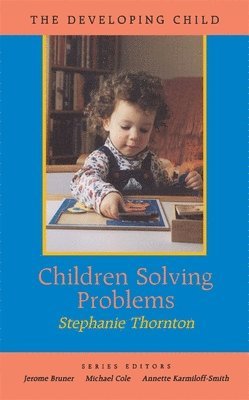
A one-year-old attempting to build a tower of blocks may bring the pile crashing down, yet her five-year-old sister accomplishes this task with ease. Why do young children have difficulty with problems that present no real challenge to older children? How do problem-solving skills develop? In Children Solving Problems, Stephanie Thornton surveys recent research from a broad range of perspectives in order to explore this important question.What Thornton finds may come as a surprise: successful problem-solving depends less on how smart we are—or, as the pioneering psychologist Jean Piaget claimed, how advanced our skill in logical reasoning is—and more on the factual knowledge we acquire as we learn and interpret cues from the world around us.Problem-solving skills evolve through experience and dynamic interaction with a problem. But equally important—as the Russian psychologist L. S. Vygotsky proposed—is social interaction. Successful problem-solving is a social process. Sharing problem-solving tasks—with skilled adults and with other children—is vital to a child’s growth in expertise and confidence. In problem-solving, confidence can be more important than skill.In a real sense, problem-solving lies at the heart of what we mean by intelligence. The ability to identify a goal, to work out how to achieve it, and to carry out that plan is the essence of every intelligent activity. Could it be, Thornton suggests, that problem-solving processes provide the fundamental machinery for cognitive development? In Children Solving Problems she synthesizes the dramatic insights and findings of post-Piagetian research and sets the agenda for the next stage in understanding the varied phenomena of children’s problem-solving.
289 kr
Skickas inom 10-15 vardagar
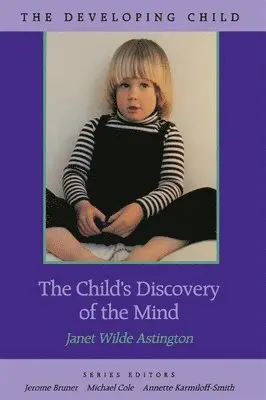
Three-year old Emily greets her grandfather at the front door: “We’re having a surprise party for your birthday! And it’s a secret!” We may smile at incidents like these, but they illustrate the beginning of an important transition in children’s lives—their development of a “theory of mind.” Emily certainly has some sense of her grandfather’s feelings, but she clearly doesn’t understand much about what he knows, and surprises—like secrets, tricks, and ties all depend on understanding and manipulating what others think and know.Jean Piaget investigated children’s discovery of the mind in the 1920s and concluded that they had little understanding before the age of six. But over the last twenty years, researchers have begun to challenge his methods and revise his conclusions. In The Child’s Discovery of the Mind, Janet Astington surveys this lively area of research in developmental psychology. Sometime between the ages of two and five, children begin to have insights into their own mental life and those of others. They begin to understand mental representation—that there is a difference between thoughts in the mind and things in the world, between thinking about eating a cookie and eating a cookie. This breakthrough reflects their emerging capacity to infer other people’s thoughts, wants, feelings, and perceptions from words and actions. They come to understand why people act the way they do and can predict how they will act in the future, so that by the age of five, they are knowing participants in social interaction. Astington highlights how crucial children’s discovery of the mind is in their social and intellectual development by including a chapter on autistic children, who fail to make this breakthrough.“Mind” is a cultural construct that children discover as they acquire the language and social practices of their culture, enabling them to make sense of the world. Astington provides a valuable overview of current research and of the consequences of this discovery for intellectual and social development.
455 kr
Skickas inom 3-6 vardagar
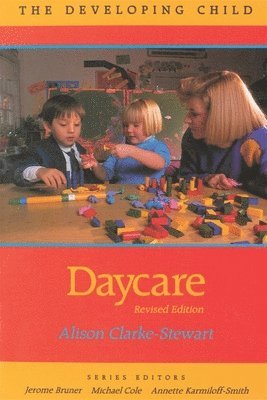
There are eight million preschoolers whose mothers now work, most of them because of economic necessity. For these mothers the question is not whether to use daycare, but how to choose among the available options in a way that is best for the child. These are just the questions taken up in Daycare, a brief and readable summary of the best information modern “baby science” has to offer about how daycare affects young children and how to tell the difference between daycare that helps and daycare that hurts.On the basis of her own research and a complete review of the most recent daycare studies, Alison Clarke-Stewart concludes that good daycare definitely does not impair the child's development either emotionally or intellectually. Fears that daycare children will fail to develop proper parental attachments and will cling instead to their peers are unfounded; so too are fears that mental growth will be slowed. In fact, there is some evidence that social and intellectual development can be facilitated in good daycare environments. The real question is just what these environments are made of, and here Daycare provides a complete discussion of the necessary ingredients, including a checklist that parents can use to make their own evaluation of any daycare arrangement.This is a book that covers all the practical problems daycare parents must face and suggests ways to solve them that are based not on psychological theory or political conviction but on the facts as we now know them.
289 kr
Skickas inom 10-15 vardagar
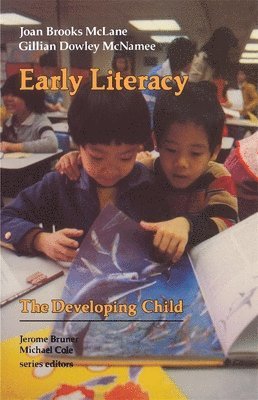
Four-year-old Joshua challenges his father to a game: Can he come downstairs before Joshua writes the word to? Rachel, two and a half, makes a series of wavy lines on a piece of paper and calls it a “thank-you letter to Grandma.” In Early Literacy Joan McLane and Gillian McNamee explore the ways young children like Joshua and Rachel begin to learn about written language. Becoming literate requires mastering a complex set of skills, behaviors, and attitudes that makes it possible to receive and communicate meaning through the written word. McLane and McNamee provide a fresh examination of this process in light of recent research.The authors look closely at what young children do with writing and reading. As children play with making marks on paper and listen to stories being read aloud, they begin to discover uses and purposes for written language. They learn that they can use writing to communicate with people they care about and that reading story books opens up new ideas and experiences. As children experiment with writing and reading in their talking, drawing, and pretend play, they can build “bridges to literacy.”The authors emphasize the importance of children's relationships with significant adults and peers for growth in literacy. They also devote chapters to early literacy development at home and in the neighborhood, and in preschool and kindergarten settings. In one daycare center for inner-city children, for example, where a favorite activity is dictating and acting out stories, children become active participants in a community of readers and writers—a literate culture.Through its clear and concise discussion of young children's growth toward literacy, and its examples of the contexts that encourage and enrich that growth, Early Literacy will serve as a valuable resource for parents, teachers, and others who work or play with young children.
297 kr
Skickas inom 10-15 vardagar
It has been said that fathers are a biological necessity but a social accident. When Ross Parke first wrote about fathers for the Developing Child series, American culture seemed to adhere strongly to the stereotype of Dad the breadwinner, pacing outside the delivery room and peeking through the nursery window, and Mom the homemaker, warming bottles and changing diapers. Simple—in fact, a bit too simple. In the intervening years the conventional image of the uninvolved father has given way to a new stereotype: the father who takes an active part in rearing his children.The dramatic technological, economic, and ideological changes in society over the past several decades have reconfigured the nuclear family and redefined the role of fathers. More women now work outside the home; fewer families can depend on an extended network of relatives for help with childcare; more divorced fathers assume or share custody of their children. Fathers have become partners in parenthood, wielding a more direct influence on their children’s development. But, Parke asks, is the new ideal of fathers—participating in childbirth and sharing in the care and feeding of their children—any more accurate than the earlier uninvolved father stereotype?Social scientists have long ignored fathers, focusing on mothers as the significant figure in infant development. But research is showing that maternal caretaking is not biologically fixed, nor are fathers necessarily restricted to a secondary role in childcare. Turning away from well-worn theories in favor of direct observation, modern studies have revealed a substantial amount about how fathers behave with their children, how this behavior differs from maternal behavior, and how it affects children.In this new book, Parke considers the father–child relationship within the “family system” and the wider society. Using the “life course” view of fathers that has emerged in recent years, he demonstrates that men enact their fatherhood in a variety of ways in response to their particular social and cultural circumstances. And while it is becoming clear that fathers play an important role in their children’s lives, it is also becoming clear that fathering is good for men.
289 kr
Skickas inom 10-15 vardagar
Until very recently, almost all books on infancy assumed basic infant immaturity. Remarkably, as Tiffany Field shows in her survey of recent research, investigators are discovering that infants possess sophisticated perceptual skills, such as hearing, even before birth. Newborns can sense touch and motion, discriminate tastes and smells, recognize their mother's voice, and imitate facial expressions. In fact, the newborn is an active learner, looking, reaching, sucking, and grimacing from its first moments in its new environment.Field provides a readable account of our current knowledge about infant development. She looks at the emergence of sensorimotor and cognitive skills, which play an important role in social and emotional development in the months following birth as the infant experiences the world. In a chapter with important implications for working mothers, Field reviews the literature on infants in nursery and daycare programs, countering negative assessments with studies that show an enhancement of infants' social interaction in good care settings. In the concluding chapter, she pays particular attention to infants at risk because of disease (including AIDS), maternal drug use, prematurity, or maternal depression, and describes possible intervention strategies. The bibliography provides an invaluable summary of significant primary reference papers for professional researchers, students, and parents.
352 kr
Skickas inom 10-15 vardagar
Since the original publication of Play in 1977, dramatic economic and social changes have resulted in a marked increase in the number of young children from diverse backgrounds enrolled in group child-care programs, a trend that has created a need for a better understanding of play and its significance for the growing child. Over the same period, researchers studying child development have become even more interested in the relationship between play and children's well-being. In this enlarged edition of Play, Catherine Garvey explores some of the more promising new directions in the study of play and summarizes the findings of recent research.