Environment, Development and Public Policy: Environmental Policy and Planning - Böcker
Visar alla böcker i serien Environment, Development and Public Policy: Environmental Policy and Planning. Handla med fri frakt och snabb leverans.
13 produkter
13 produkter
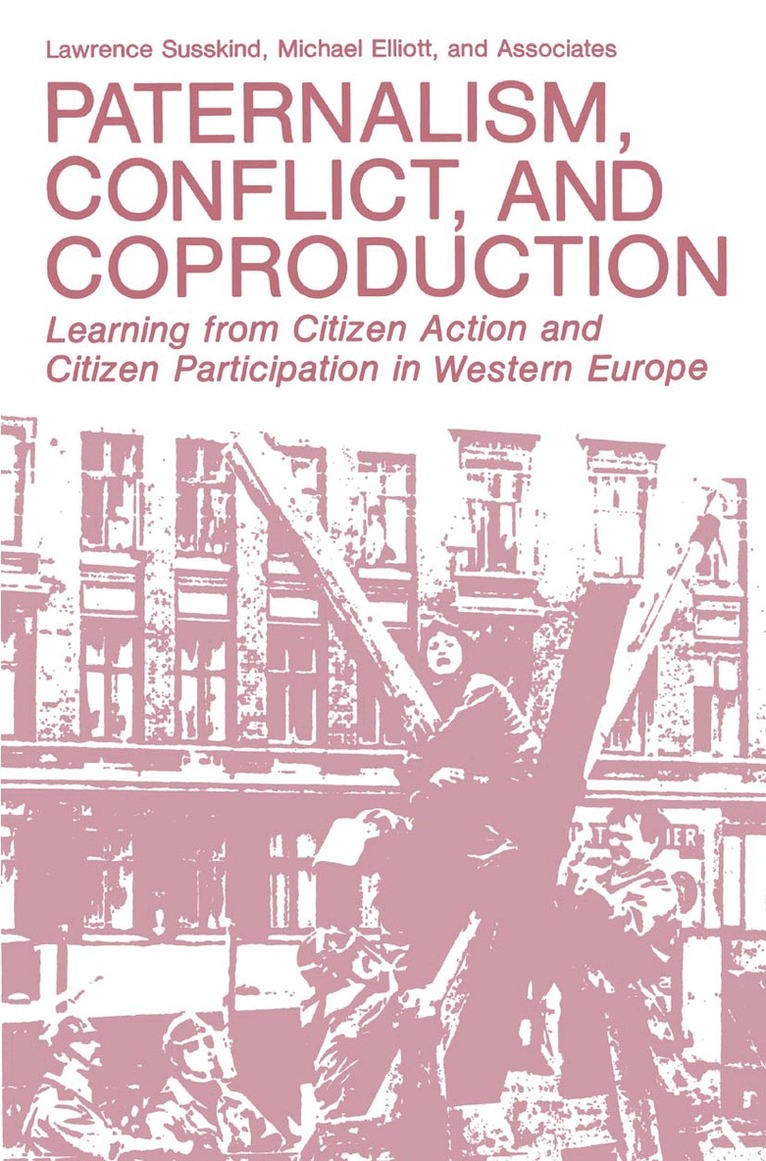
Paternalism, Conflict, and Coproduction
Learning from Citizen Action and Citizen Participation in Western Europe
Inbunden, Engelska, 1983
1 545 kr
Skickas inom 10-15 vardagar
A research team from the United States has completed an examination of citizen participation experiments in seven European countries. The team included Donald Appleyard, Marc Draisen, David Godschalk, Chester Hartman, Janice Perlman, Hans Spiegel, John Zeisel, and ourselves. This book is a product of our joint efforts. Our studies are aimed at summarizing and sharing what can be learned from recent European efforts to enhance the effectiveness of local government through increased public involvement in the organization and management of public services and urban redevelopment. Almost a year was spent assembling the team, developing a shared framework for analysis and identifying appropriate case study cities. European and American public officials and citizen activists helped us assess the potential impact of such a study on current practice. A second year was spent visiting the European cities and preparing the case-study drafts. Finally, team members gathered in Washington, D. C. , with fifty American and European public officials, citizen activists, and scholars. A two-day symposium provided an exciting opportunity to present preliminary research findings and encourage an exchange of ideas between researchers, activists, and policymakers. The final versions of the case studies that appear in this book, along with several commentaries by symposium participants, are written especially for city officials and citizen activists. We have tried to translate the results of our scholarly inquiry into pragmatic suggestions for officials and activists.
1 589 kr
Skickas inom 10-15 vardagar
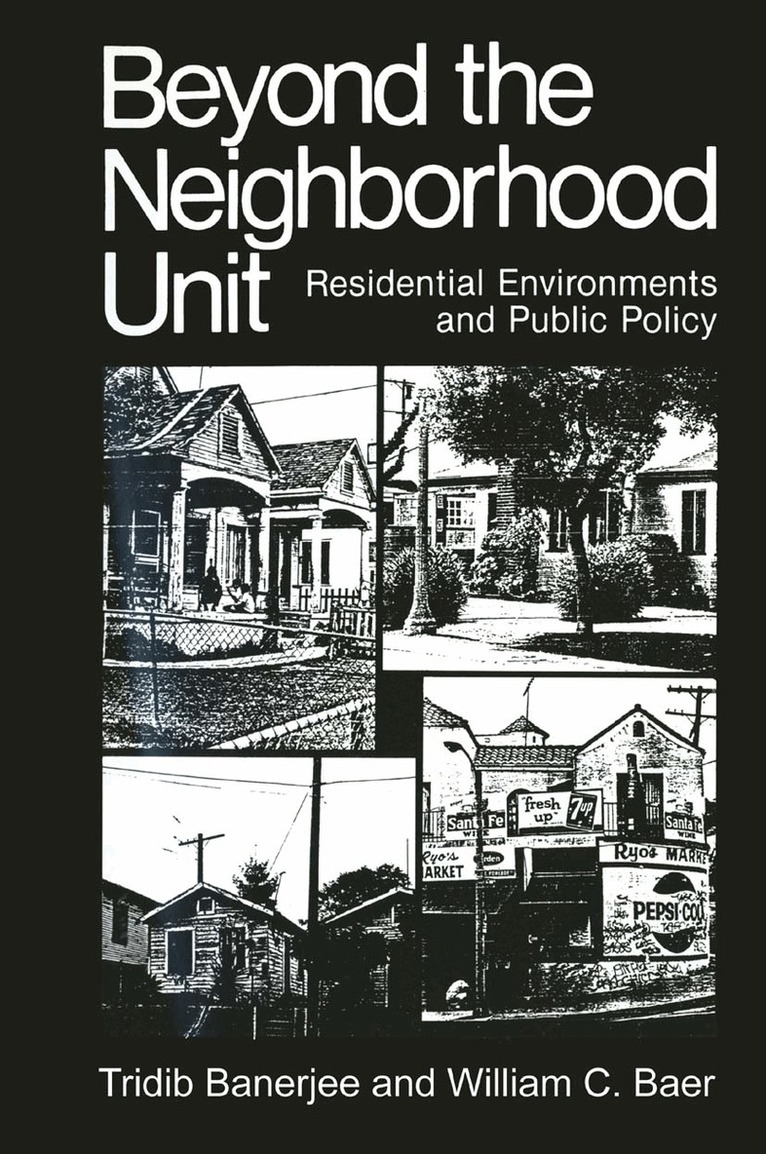
Much of the research on which this book is based was funded almost a decade ago by separate grants from two different agencies of the U. S. Public Health Service, of the then still consolidated Department of Health, Education, and Welfare. The first grant was from the Bureau of Community Environmental Management (Public Health Service Research Grant J-RO J EM 0049-02), and the second from the Center for Studies of Metropolitan Problems of the National Institute of Mental Health (Public Health Service Grant ROJ MH 24904-02). These separate grants were necessary because of budget cuts that truncated our original effort. We were fortunate to receive subsequent assistance from NIMH to conclude the research, as it is doubtful that a project of the scope and intent of our effort--even as completed in abbreviated form-will be funded in the 1980s. The original intent of this project, as formulated by our colleagues Ira Robinson and Alan Kreditor, and as conceptualized earlier by their predeces sors-members of an advisory committee of planners and social scientists ap pointed by the American Public Health Association (APHA)-was to rewrite Planning the Neighborhood, APHA's recommended standards for residential design. In particular, it was proposed that the new study take the point of view of the user in terms of residential standards. Hitherto, the private sector had domi nated these considerations (i. e. , the designer's predilections, the requirements of builders and material suppliers, and lenders' needs for mortgage security).
1 589 kr
Skickas inom 10-15 vardagar
This book has its origins in an M.I.T. research project that was funded by the U.S. Environmental Protection Agency (EPA). Our immediate objective was to prepare a set of case studies that examined bargaining and negotiation as they occurred between government, environmental advocates, and regulatees throughout the traditional regulatory process. The project was part of a larger effort by the EPA to make environmental regulation more efficient and less litigious. The principal investigator for the research effort was Lawrence Sus skind of the Department of Urban Studies and Planning. Eight case studies were prepared under the joint supervision of Susskind and the authors of this book. Studying the negotiating behavior of parties as we worked our way through an environmental dispute proved enlightening. We observed missed oppor tunities for settlement, negotiating tactics that backfired, and strategies that ap peared to be grounded more in intuition than in thoughtful analysis. At the same time, however, we were struck by how often the parties ultimately managed to muddle through. People negotiated not out of some idealistic commitment to consensus but because they thought it better served their own interests. When some negotiations reached an impasse, people improvised mediation. These disputants succeeded in spite of legal and institutional barriers, even though few of them had a sophisticated understanding of negotiation.
1 589 kr
Skickas inom 10-15 vardagar
We are in the second decade of modem environmental law. By some indicators this body of regulation has matured greatly. We can point to statutes and codes at the federal, state, and local levels which address almost every conceivable form of pollution and environmental insult. Yet, despite the existence of this large body of law, despite considerable expenditures on enforcement, and despite the energetic efforts of people sympathetic to environmental objectives, violations are numerous. Serious pollution problems are commonplace. Love Canal, the Valley of the Drums, Times Beach, and Stringfellow Acid Pits epitomize the national environmental quality challenge. Daily, a major illegal disposal of haz ardous waste is recorded; a new mismanaged dump site is discovered; a toxic substance is found in our drinking water; or a failure to meet a water or air quality standard is identified. Many of these violations involve American business. Failures to comply are of several types. A small businessman in Pennsylvania mistakenly allows a spillover of a pollutant into a protected stream. An industrialist in the Midwest adds to his fortune by illegally dumping dangerous chemicals. A series of errors by several firms, some of which no longer exist, combine to create a health threatening conflagration on the West Coast. An automobile company interprets one of the almost innumerable air pollution rules differently from government: It produces a car which the government says fails to comply with the Clean Air Act.
1 589 kr
Skickas inom 10-15 vardagar
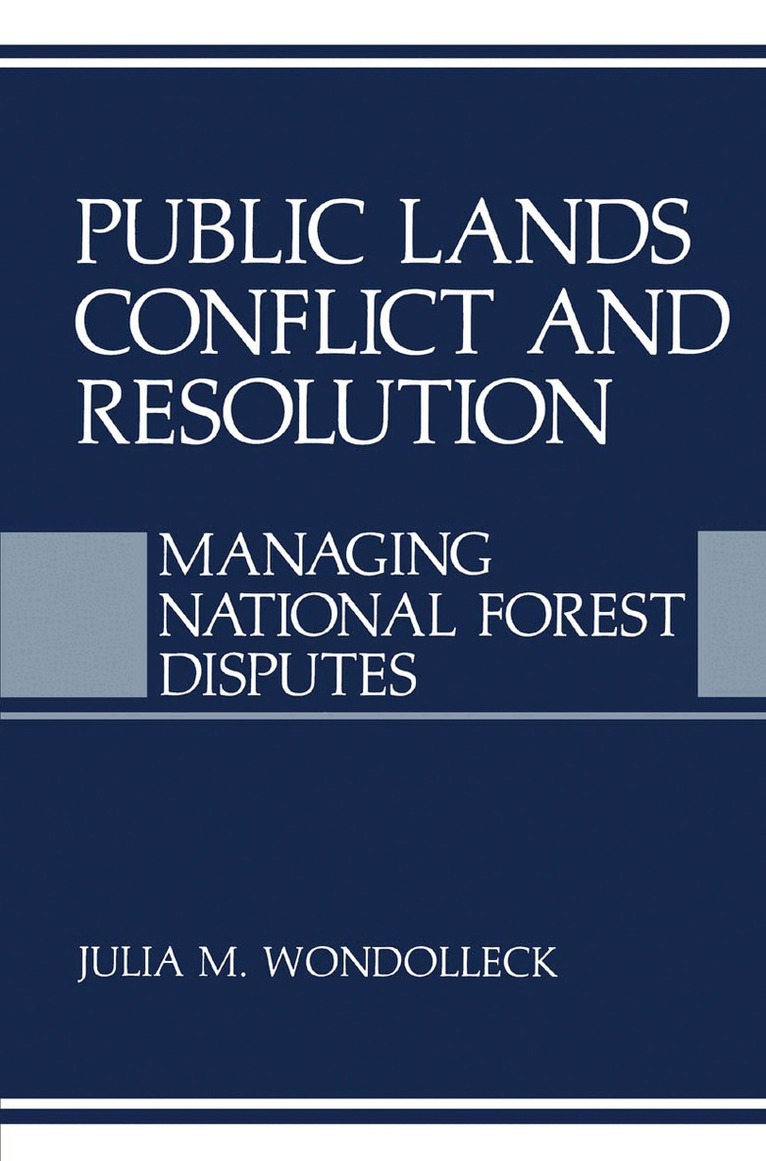
The United States Forest Service, perhaps more than any other federal agency, has made great strides during the past two decades revolution izing its public involvement efforts and reshaping its profile through the hiring of professionals in many disciplinary areas long absent in the agency. In fact, to a large extent, the agency has been doing precisely what everyone has been clamoring for it to do: involving the public more in its decisions; hiring more wildlife biologists, recreation specialists, sociologists, planners, and individuals with "people skills"; and, fur thermore, taking a more comprehensive and long-term view in planning the future of the national forests. The result has been significant-in some ways, monumental-changes in the agency and its land manage ment practices. There are provisions for public input in almost all as pects of national forest management today. The profeSSional disciplines represented throughout the agency's ranks are markedly more diverse than they have ever been. Moreover, no stone is left untumed in the agency's current forest-planning effort, undoubtedly the most compre hensive, interdisciplinary planning effort ever undertaken by a resource agency in the United States. Regardless of the dramatic change that has occurred in the U. S. Forest Service since the early 1970s, the agency is still plagued by con flicts arising from dissatisfaction ~th how it is doing business.
534 kr
Skickas inom 10-15 vardagar
In the last decade, disputes between developers and local commu nities over proposed construction projects have led to increasing litiga tion. Environmental legislation, in particular, has greatly enhanced the rights and powers of organized groups that desire to participate in local development decisions. These powers have allowed citizen groups to block undesired and socially unacceptable projects, such as highways through urban areas and sprawling suburban developments. At the same time, these powers have produced a collective inability to construct many needed projects that produce adverse local impacts. Prisons, airports, hos pitals, waste treatment plants, and energy facilities all face years of liti gation before a final decision. At times, prolonged litigation has pro duced especially high costs to all participants. Despite these new powers, citizen action has often been limited to participation in public hearings or adjudicatory proceedings. Typically, this occurs so late in the decision process that citizen input has very little affect in shaping a project's design. Those who dislike some element of a project often have little choice other than to oppose the entire project through litigation.
534 kr
Skickas inom 10-15 vardagar
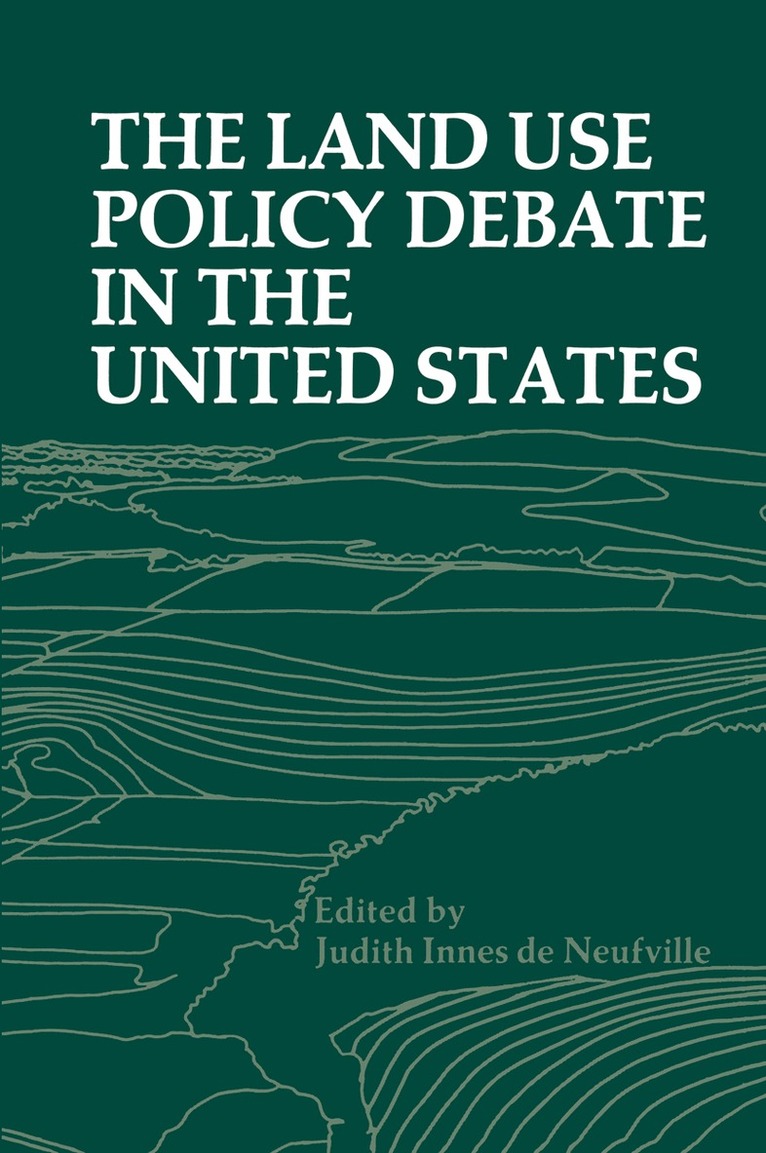
Much of the preparation of this book has been generously supported by the Lincoln Institute of Land Policy, Cambridge, Massachusetts. It evolved from a colloquium held in October 1977, under the sponsorship of the Lincoln Institute. The three-day symposium entitled "Land Policy: Making the Value Choices" involved the preparation of major papers and formal discussions, most of which appear here in considerably revised form, along with additional pieces commis sioned later. The colloquium was an idea jointly conceived by myself and Edward Wood, a colleague at the time in the Tufts University Program in Urban Social and Environmental Policy. We were concerned about two major limitations in the literature and debates over land use. On the one hand, there was little explicit recognition of the latent values that motivated land use policy. On the other, there was no common forum where people from the different land use fields could discuss the issues and learn from one another. A small group of about two dozen people was invited to the colloquium. Each member was a leading spokesman for a different perspective and area of expertise. All participated formally in some fashion. All the papers were written expressly for the col loquium, with the exception of Ann Strong's, which was a keynote address to the American Society of Planning Officials earlier in the year. None of the papers has been published elsewhere.
Can Regulation Work?: The Implementation of the 1972 California Coastal Initiative
Häftad, Engelska, 2012
534 kr
Skickas inom 10-15 vardagar
Although loeal governments have traditionally exereised almost exclusive regula- tory eontrol over land development within their jurisdictions, throughout the 1970s state governments began to amass eonsiderablc authority over loeal land use deeisions. Studies of the implementation of these new programs, however, have generally had the drawbacks of not being integrated into theoretieal litera- tures in the soeial seien ces and suffering from substantial mcthodologieal prob- lems. On the basis of a review of literatures on poliey making by regulatory ageneies, the implementation of federal soeialldistributive programs, and the situational variables affecting ageney behavior, in this study we develop a general eoneeptual framework of the implementation proeess of regulatory statutes. The framework is then applied to the implementation of one of the more novel and eomprehensive state-levclland use statutes, the California Coastal Zone Conser- vati on Act of 1972.In this undertaking we reeeived eonsiderable assistanee in the design stage and later in review of preliminary drafts of our report from aNational Advisory Committee eomposed of persons actively involved in the implementation ofland use poliey, representatives of groups affected by land use regulation, and seholars in the field. For serving on the eommittee we are indebted to James Carroll, California Couneil for Environmental and Eeonomie Balance; Paul Culhane, Department of Politieal Seience, U niversity of Houston; Grant Dehart, Office of Coastal Zone Management, Washington, D. C.
1 589 kr
Skickas inom 10-15 vardagar
Much of the research on which this book is based was funded almost a decade ago by separate grants from two different agencies of the U. S. Public Health Service, of the then still consolidated Department of Health, Education, and Welfare. The first grant was from the Bureau of Community Environmental Management (Public Health Service Research Grant J-RO J EM 0049-02), and the second from the Center for Studies of Metropolitan Problems of the National Institute of Mental Health (Public Health Service Grant ROJ MH 24904-02). These separate grants were necessary because of budget cuts that truncated our original effort. We were fortunate to receive subsequent assistance from NIMH to conclude the research, as it is doubtful that a project of the scope and intent of our effort--even as completed in abbreviated form-will be funded in the 1980s. The original intent of this project, as formulated by our colleagues Ira Robinson and Alan Kreditor, and as conceptualized earlier by their predeces sors-members of an advisory committee of planners and social scientists ap pointed by the American Public Health Association (APHA)-was to rewrite Planning the Neighborhood, APHA's recommended standards for residential design. In particular, it was proposed that the new study take the point of view of the user in terms of residential standards. Hitherto, the private sector had domi nated these considerations (i. e. , the designer's predilections, the requirements of builders and material suppliers, and lenders' needs for mortgage security).
Paternalism, Conflict, and Coproduction
Learning from Citizen Action and Citizen Participation in Western Europe
Häftad, Engelska, 2013
1 589 kr
Skickas inom 10-15 vardagar
A research team from the United States has completed an examination of citizen participation experiments in seven European countries. The team included Donald Appleyard, Marc Draisen, David Godschalk, Chester Hartman, Janice Perlman, Hans Spiegel, John Zeisel, and ourselves. This book is a product of our joint efforts. Our studies are aimed at summarizing and sharing what can be learned from recent European efforts to enhance the effectiveness of local government through increased public involvement in the organization and management of public services and urban redevelopment. Almost a year was spent assembling the team, developing a shared framework for analysis and identifying appropriate case study cities. European and American public officials and citizen activists helped us assess the potential impact of such a study on current practice. A second year was spent visiting the European cities and preparing the case-study drafts. Finally, team members gathered in Washington, D. C. , with fifty American and European public officials, citizen activists, and scholars. A two-day symposium provided an exciting opportunity to present preliminary research findings and encourage an exchange of ideas between researchers, activists, and policymakers. The final versions of the case studies that appear in this book, along with several commentaries by symposium participants, are written especially for city officials and citizen activists. We have tried to translate the results of our scholarly inquiry into pragmatic suggestions for officials and activists.
1 589 kr
Skickas inom 10-15 vardagar
We are in the second decade of modem environmental law. By some indicators this body of regulation has matured greatly. We can point to statutes and codes at the federal, state, and local levels which address almost every conceivable form of pollution and environmental insult. Yet, despite the existence of this large body of law, despite considerable expenditures on enforcement, and despite the energetic efforts of people sympathetic to environmental objectives, violations are numerous. Serious pollution problems are commonplace. Love Canal, the Valley of the Drums, Times Beach, and Stringfellow Acid Pits epitomize the national environmental quality challenge. Daily, a major illegal disposal of haz ardous waste is recorded; a new mismanaged dump site is discovered; a toxic substance is found in our drinking water; or a failure to meet a water or air quality standard is identified. Many of these violations involve American business. Failures to comply are of several types. A small businessman in Pennsylvania mistakenly allows a spillover of a pollutant into a protected stream. An industrialist in the Midwest adds to his fortune by illegally dumping dangerous chemicals. A series of errors by several firms, some of which no longer exist, combine to create a health threatening conflagration on the West Coast. An automobile company interprets one of the almost innumerable air pollution rules differently from government: It produces a car which the government says fails to comply with the Clean Air Act.
1 589 kr
Skickas inom 10-15 vardagar
The United States Forest Service, perhaps more than any other federal agency, has made great strides during the past two decades revolution izing its public involvement efforts and reshaping its profile through the hiring of professionals in many disciplinary areas long absent in the agency. In fact, to a large extent, the agency has been doing precisely what everyone has been clamoring for it to do: involving the public more in its decisions; hiring more wildlife biologists, recreation specialists, sociologists, planners, and individuals with "people skills"; and, fur thermore, taking a more comprehensive and long-term view in planning the future of the national forests. The result has been significant-in some ways, monumental-changes in the agency and its land manage ment practices. There are provisions for public input in almost all as pects of national forest management today. The profeSSional disciplines represented throughout the agency's ranks are markedly more diverse than they have ever been. Moreover, no stone is left untumed in the agency's current forest-planning effort, undoubtedly the most compre hensive, interdisciplinary planning effort ever undertaken by a resource agency in the United States. Regardless of the dramatic change that has occurred in the U. S. Forest Service since the early 1970s, the agency is still plagued by con flicts arising from dissatisfaction ~th how it is doing business.
1 589 kr
Skickas inom 10-15 vardagar
This book has its origins in an M.I.T. research project that was funded by the U.S. Environmental Protection Agency (EPA). Our immediate objective was to prepare a set of case studies that examined bargaining and negotiation as they occurred between government, environmental advocates, and regulatees throughout the traditional regulatory process. The project was part of a larger effort by the EPA to make environmental regulation more efficient and less litigious. The principal investigator for the research effort was Lawrence Sus skind of the Department of Urban Studies and Planning. Eight case studies were prepared under the joint supervision of Susskind and the authors of this book. Studying the negotiating behavior of parties as we worked our way through an environmental dispute proved enlightening. We observed missed oppor tunities for settlement, negotiating tactics that backfired, and strategies that ap peared to be grounded more in intuition than in thoughtful analysis. At the same time, however, we were struck by how often the parties ultimately managed to muddle through. People negotiated not out of some idealistic commitment to consensus but because they thought it better served their own interests. When some negotiations reached an impasse, people improvised mediation. These disputants succeeded in spite of legal and institutional barriers, even though few of them had a sophisticated understanding of negotiation.