Dimensions of Security - Böcker
Visar alla böcker i serien Dimensions of Security. Handla med fri frakt och snabb leverans.
12 produkter
12 produkter
789 kr
Skickas inom 5-8 vardagar
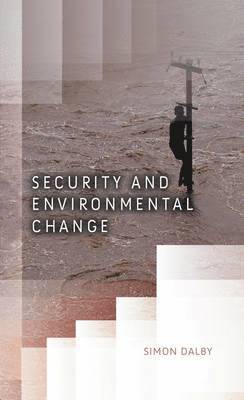
In the early years of the new millennium, hurricanes lashed the Caribbean and flooded New Orleans as heat waves and floods seemed to alternate in Europe. Snows were disappearing on Mount Kilimanjaro while the ice caps on both poles retreated. The resulting disruption caused to many societies and the potential for destabilizing international migration has meant that the environment has become a political priority.The scale of environmental change caused by globalization is now so large that security has to be understood as an ecological process. A new geopolitics is long overdue. In this book Simon Dalby provides an accessible and engaging account of the challenges we face in responding to security and environmental change. He traces the historical roots of current thinking about security and climate change to show the roots of the contemporary concern and goes on to outline modern thinking about securitization which uses the politics of invoking threats as a central part of the analysis. He argues that to understand climate change and the dislocations of global ecology, it is necessary to look back at how ecological change is tied to the expansion of the world economic system over the last few centuries. As the global urban system changes on a local and global scale, the world’s population becomes vulnerable in new ways. In a clear and careful analysis, Dalby shows that theories of human security now require a much more nuanced geopolitical imagination if they are to grapple with these new vulnerabilities and influence how we build more resilient societies to cope with the coming disruptions.This book will appeal to level students and scholars of geography, environmental studies, security studies and international politics, as well as to anyone concerned with contemporary globalization and its transformation of the biosphere.
278 kr
Skickas inom 5-8 vardagar
In the early years of the new millennium, hurricanes lashed the Caribbean and flooded New Orleans as heat waves and floods seemed to alternate in Europe. Snows were disappearing on Mount Kilimanjaro while the ice caps on both poles retreated. The resulting disruption caused to many societies and the potential for destabilizing international migration has meant that the environment has become a political priority.The scale of environmental change caused by globalization is now so large that security has to be understood as an ecological process. A new geopolitics is long overdue. In this book Simon Dalby provides an accessible and engaging account of the challenges we face in responding to security and environmental change. He traces the historical roots of current thinking about security and climate change to show the roots of the contemporary concern and goes on to outline modern thinking about securitization which uses the politics of invoking threats as a central part of the analysis. He argues that to understand climate change and the dislocations of global ecology, it is necessary to look back at how ecological change is tied to the expansion of the world economic system over the last few centuries. As the global urban system changes on a local and global scale, the world’s population becomes vulnerable in new ways. In a clear and careful analysis, Dalby shows that theories of human security now require a much more nuanced geopolitical imagination if they are to grapple with these new vulnerabilities and influence how we build more resilient societies to cope with the coming disruptions.This book will appeal to level students and scholars of geography, environmental studies, security studies and international politics, as well as to anyone concerned with contemporary globalization and its transformation of the biosphere.
813 kr
Skickas inom 5-8 vardagar
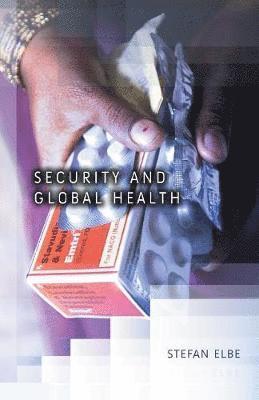
Every era, it is said, has its defining malady. What will be ours? Will it be a new human pandemic caused by an animal-borne infectious disease, such as swine flu? Will it be a lethal microbe like anthrax deliberately released by terrorists bent on causing mass civilian casualties? Or will it be one of our new ‘lifestyle' diseases - the epidemics of smoking, obesity and excessive alcohol consumption that threaten to engulf modern societies? Perhaps our era will even be remembered for its tragic neglect of certain health issues - endemic diseases such as malaria, tuberculosis and HIV/AIDS that continue to ravage millions in developing countries. In this book Stefan Elbe shows that in the new millennium international politics is no longer characterized by its preoccupation with a single disease, but precisely by its need to urgently confront what is now an epidemic of epidemics. Over the past decade a whole host of diverse global health issues have raised the highest levels of political concern, provoking governments and international institutions to tackle such health threats through the prism of security - be it national security, biosecurity, or human security. This convergence between health issues and security concerns has also produced the new notion of health security, which has already begun to shape the way international health policy is formulated.The intersection of the worlds of health and security is beginning to change our very ideas of what security means and how it is achieved. At the outset of the twenty-first century, practising security increasingly demands that citizens become patients, that states resemble huge hospitals, and that security itself becomes a technology of medical control. It is this transformation of security, Elbe argues in an innovative and engaging re-conceptualization of the health-security nexus, that marks nothing short of the medicalization of security.
302 kr
Skickas inom 5-8 vardagar
Every era, it is said, has its defining malady. What will be ours? Will it be a new human pandemic caused by an animal-borne infectious disease, such as swine flu? Will it be a lethal microbe like anthrax deliberately released by terrorists bent on causing mass civilian casualties? Or will it be one of our new ‘lifestyle' diseases - the epidemics of smoking, obesity and excessive alcohol consumption that threaten to engulf modern societies? Perhaps our era will even be remembered for its tragic neglect of certain health issues - endemic diseases such as malaria, tuberculosis and HIV/AIDS that continue to ravage millions in developing countries. In this book Stefan Elbe shows that in the new millennium international politics is no longer characterized by its preoccupation with a single disease, but precisely by its need to urgently confront what is now an epidemic of epidemics. Over the past decade a whole host of diverse global health issues have raised the highest levels of political concern, provoking governments and international institutions to tackle such health threats through the prism of security - be it national security, biosecurity, or human security. This convergence between health issues and security concerns has also produced the new notion of health security, which has already begun to shape the way international health policy is formulated.The intersection of the worlds of health and security is beginning to change our very ideas of what security means and how it is achieved. At the outset of the twenty-first century, practising security increasingly demands that citizens become patients, that states resemble huge hospitals, and that security itself becomes a technology of medical control. It is this transformation of security, Elbe argues in an innovative and engaging re-conceptualization of the health-security nexus, that marks nothing short of the medicalization of security.
715 kr
Skickas inom 7-10 vardagar
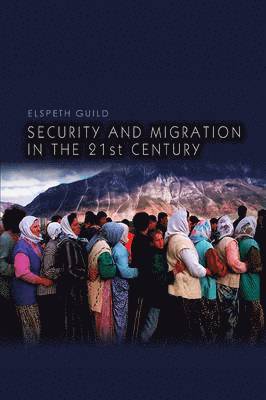
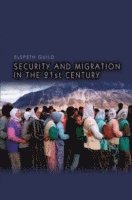
The 21st century has brought new and challenging dimensions to our understanding of security and migration. The old Cold War framework of security as related to war and peace, international relations and foreign affairs has given way to a multiplicity of competing notions, including internal security, human security and even social security. At the same time, migration has become a hotly contested issue, characterised by an enormous difference of views and objectives.So what do we mean by security and migration in the contemporary world? How do these two important fields intersect? And what does this collision of policy concerns and public interests mean for states and individuals alike? In this cutting-edge book, Elspeth Guild seeks to answer these pressing questions, drawing on a wide range of recent examples from the impact of asylum seekers on state border security to identity security in citizenship rules to illustrate her arguments. By approaching the topic from the perspective of the individual – citizen of one state, migrant in another – the book examines key aspects of the security-migration nexus, such as the relationship with refugees; torture; extraordinary rendition; privacy and the retention of personal data; and human rights' protection.The first volume in Polity's new 'Dimensions of Security' series, this book is a must-read for all students of international politics, development studies and related fields.
278 kr
Skickas inom 5-8 vardagar
The 21st century has brought new and challenging dimensions to our understanding of security and migration. The old Cold War framework of security as related to war and peace, international relations and foreign affairs has given way to a multiplicity of competing notions, including internal security, human security and even social security. At the same time, migration has become a hotly contested issue, characterised by an enormous difference of views and objectives.So what do we mean by security and migration in the contemporary world? How do these two important fields intersect? And what does this collision of policy concerns and public interests mean for states and individuals alike? In this cutting-edge book, Elspeth Guild seeks to answer these pressing questions, drawing on a wide range of recent examples from the impact of asylum seekers on state border security to identity security in citizenship rules to illustrate her arguments. By approaching the topic from the perspective of the individual – citizen of one state, migrant in another – the book examines key aspects of the security-migration nexus, such as the relationship with refugees; torture; extraordinary rendition; privacy and the retention of personal data; and human rights' protection.The first volume in Polity's new 'Dimensions of Security' series, this book is a must-read for all students of international politics, development studies and related fields.
715 kr
Skickas inom 7-10 vardagar
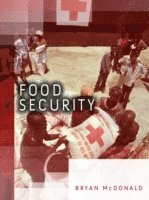
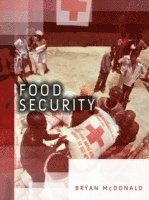
Throughout history, human societies have struggled to ensure that all people have access to sufficient food to lead active and healthy lives. Despite great global effort, events of the early 21st century clearly demonstrate that food remains a pressing challenge which has significant implications for security. In this book, Bryan McDonald explores how processes of globalization and global change have reshaped food systems in ways that have significant impacts for the national security of states and the human of communities and individuals. Over the past few decades, local, regional, and national food systems have increasingly become intertwined in an emerging global food network. This complex web of relations includes the production, harvest, processing, transport, and consumption of food. While this global food network provides new opportunities for improving health and well-being, it also gives rise to new sources of security threats and vulnerabilities. This detailed and comprehensive introduction to the major issues impacting global food security will be essential reading for students and scholars in security studies, international politics, and environmental studies.
278 kr
Skickas inom 5-8 vardagar
Throughout history, human societies have struggled to ensure that all people have access to sufficient food to lead active and healthy lives. Despite great global effort, events of the early 21st century clearly demonstrate that food remains a pressing challenge which has significant implications for security. In this book, Bryan McDonald explores how processes of globalization and global change have reshaped food systems in ways that have significant impacts for the national security of states and the human of communities and individuals. Over the past few decades, local, regional, and national food systems have increasingly become intertwined in an emerging global food network. This complex web of relations includes the production, harvest, processing, transport, and consumption of food. While this global food network provides new opportunities for improving health and well-being, it also gives rise to new sources of security threats and vulnerabilities. This detailed and comprehensive introduction to the major issues impacting global food security will be essential reading for students and scholars in security studies, international politics, and environmental studies.
663 kr
Skickas inom 7-10 vardagar
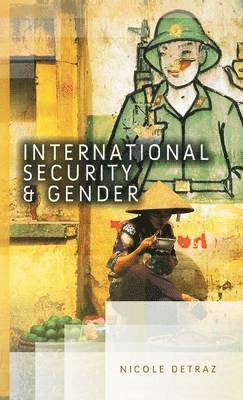
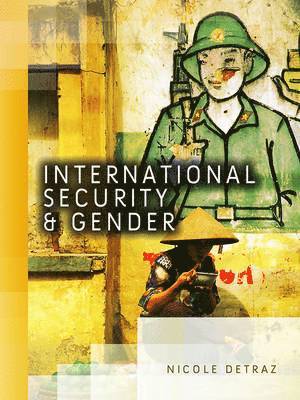
What does it mean to be secure? In the global news, we hear stories daily about the wars in Iraq and Afghanistan, about domestic-level conflicts around the world, about the challenges of cybersecurity and social security. This broad list highlights the fact that security is an idea with multiple meanings, but do we all experience security issues in the same way? In this book, Nicole Detraz explores the broad terrain of security studies through a gender lens. Assumptions about masculinity and femininity play important roles in how we understand and react to security threats. By examining issues of militarization, peacekeeping, terrorism, human security, and environmental security, the book considers how the gender-security nexus pushes us to ask different questions and broaden our sphere of analysis. Including gender in our analysis of security challenges the primacy of some traditional security concepts and shifts the focus to be more inclusive. Without a full understanding of the vulnerabilities and threats associated with security, we may miss opportunities to address pressing global problems. Our society often expects men and women to play different roles, and this is no less true in the realm of security. This book demonstrates that security debates exhibit gendered understandings of key concepts, and whilst these gendered assumptions may benefit specific people, they are often detrimental to others, particularly in the key realm of policy-making.
294 kr
Skickas inom 5-8 vardagar
What does it mean to be secure? In the global news, we hear stories daily about the wars in Iraq and Afghanistan, about domestic-level conflicts around the world, about the challenges of cybersecurity and social security. This broad list highlights the fact that security is an idea with multiple meanings, but do we all experience security issues in the same way? In this book, Nicole Detraz explores the broad terrain of security studies through a gender lens. Assumptions about masculinity and femininity play important roles in how we understand and react to security threats. By examining issues of militarization, peacekeeping, terrorism, human security, and environmental security, the book considers how the gender-security nexus pushes us to ask different questions and broaden our sphere of analysis. Including gender in our analysis of security challenges the primacy of some traditional security concepts and shifts the focus to be more inclusive. Without a full understanding of the vulnerabilities and threats associated with security, we may miss opportunities to address pressing global problems. Our society often expects men and women to play different roles, and this is no less true in the realm of security. This book demonstrates that security debates exhibit gendered understandings of key concepts, and whilst these gendered assumptions may benefit specific people, they are often detrimental to others, particularly in the key realm of policy-making.
639 kr
Skickas inom 7-10 vardagar
Religious violence is on the rise globally. Hardly a day passes without news of a vicious attack being carried out in the name of religion. Religion can, of course, bring security to many but its perversion leads to insecurity for all. Why is this? How and why do so many claim to act on God’s behalf to inflict deliberate human suffering?In Religion and International Security Lee Marsden explores the return of religion as a major cause of insecurity in the contemporary world. He guides readers through the different theoretical perspectives surrounding the study of religion and security, arguing that the secular bias that marginalized the role played by religion in recent times must change to reflect the realities of the emerging post-secular international order. Packed with examples from around the world, the book offers a thoughtful and nuanced exploration of religion and security through key themes such as religiously motivated and inspired terrorism and warfare, the human security of women and gay people in religiously dominated communities, and the capacity for religious communities and leaders to heal conflict through peacebuilding. For those who would rather deny a role for religion when considering security, the genie is truly out of the bottle. This book seeks to understand this phenomenon and how to come to terms with it.
217 kr
Skickas inom 7-10 vardagar
Religious violence is on the rise globally. Hardly a day passes without news of a vicious attack being carried out in the name of religion. Religion can, of course, bring security to many but its perversion leads to insecurity for all. Why is this? How and why do so many claim to act on God’s behalf to inflict deliberate human suffering?In Religion and International Security Lee Marsden explores the return of religion as a major cause of insecurity in the contemporary world. He guides readers through the different theoretical perspectives surrounding the study of religion and security, arguing that the secular bias that marginalized the role played by religion in recent times must change to reflect the realities of the emerging post-secular international order. Packed with examples from around the world, the book offers a thoughtful and nuanced exploration of religion and security through key themes such as religiously motivated and inspired terrorism and warfare, the human security of women and gay people in religiously dominated communities, and the capacity for religious communities and leaders to heal conflict through peacebuilding. For those who would rather deny a role for religion when considering security, the genie is truly out of the bottle. This book seeks to understand this phenomenon and how to come to terms with it.