Bryan L. McDonald – författare
Visar alla böcker från författaren Bryan L. McDonald. Handla med fri frakt och snabb leverans.
6 produkter
6 produkter
Inbunden, Engelska, 2016
1 056 kr
Skickas inom 3-6 vardagar
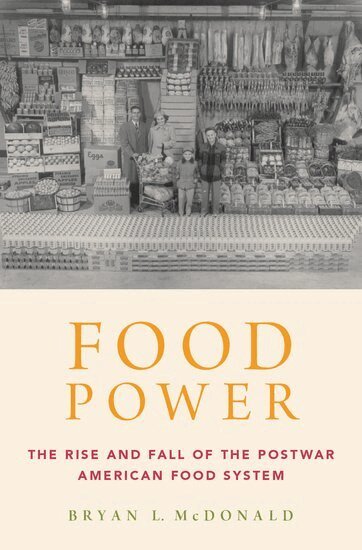
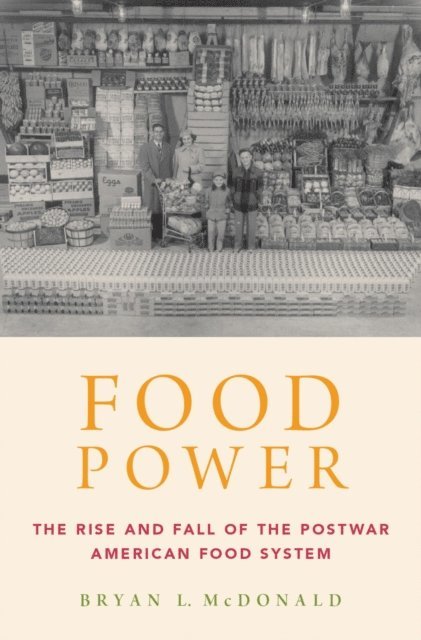
In Food Power, Bryan L. McDonald brings together the history of food, agriculture, and foreign policy to explore the use of food to promote American national security and national interests during the first three decades of the Cold War. In the years after World War II, Americans struggled to understand how an unprecedented abundance of food could be used to best advance American goals and values. Was food a weapon, a commodity to be valued and exchanged through markets, or a substance to be provided to those in need? The use of food as an element of national power is often referred to as "food power." McDonald traces different visions of food power and shows how food was an essential part of America's postwar modernization strategy -- its vision of what it meant to be a stable, secure, and technologically advanced nation. Debates during the postwar years about how food power could help the United States achieve goals such as stability, prosperity, and security were part of a larger conversation about the role of food in the security of states, communities, and individuals. America helped build a new, postwar food system based on the steadying influence of American agricultural surpluses that helped maintain stable prices and food availability. This system averted a global-scale food crisis for almost three decades. The end of this food system in the early 1970s ushered in a much more unstable period in global food relations. Food Power argues that efforts to both interpret America's role in the world during the mid-twentieth century and to address contemporary food problems can be strengthened by understanding more fully the ways postwar American policymakers and experts sought to shape the politics of security and prosperity by linking people and places around the world through food.
E-bok
PDF, Engelska, 2016549 kr
Läs direkt efter köp
There is a widespread assumption that the American food system after World War II was transformed-toward an increasingly industrialized production of crops, more processed foods, and diets higher in fat, sugar, and calories-as part of a unified system. In this book, Bryan McDonald brings together the history of food, agriculture, and foreign policy to explore how food was deployed in the first decades of the Cold War to promote American national security and national interests, a concept referred to as food power.In the postwar years, Americans struggled to understand how an unprecedented abundance of food could be used to best advance U.S. goals and values. Was food a weapon, a commodity to be valued and exchanged through markets, or a substance to be provided to those in need? McDonald traces different visions of food power and shows how food formed an essential part of America''s postwar modernization strategy and its vision of what it meant to be a stable, secure, and technologically advanced nation. Policymakers and experts helped build a new food system based around American agricultural surpluses that stabilized prices and food availability. This system averted a global-scale food crisis for almost three decades. The end of this food system in the early 1970s ushered in a much more precarious period in global food relations. By the late twentieth century, food politics had become a battleground in which the interests of security and foreign policy experts, farmers, businesses, and politicians contended with a growing social movement whose adherents worried about the role of food in contributing to conflict and inequality.Food Power argues that the ways postwar American policymakers and experts politically linked people and places around the world through food illuminates both America''s role in the world during the mid-twentieth century and sheds light on contemporary food problems.
E-bok
Engelska, 2016553 kr
Läs direkt efter köp
There is a widespread assumption that the American food system after World War II was transformed-toward an increasingly industrialized production of crops, more processed foods, and diets higher in fat, sugar, and calories-as part of a unified system. In this book, Bryan McDonald brings together the history of food, agriculture, and foreign policy to explore how food was deployed in the first decades of the Cold War to promote American national security and national interests, a concept referred to as food power.In the postwar years, Americans struggled to understand how an unprecedented abundance of food could be used to best advance U.S. goals and values. Was food a weapon, a commodity to be valued and exchanged through markets, or a substance to be provided to those in need? McDonald traces different visions of food power and shows how food formed an essential part of America''s postwar modernization strategy and its vision of what it meant to be a stable, secure, and technologically advanced nation. Policymakers and experts helped build a new food system based around American agricultural surpluses that stabilized prices and food availability. This system averted a global-scale food crisis for almost three decades. The end of this food system in the early 1970s ushered in a much more precarious period in global food relations. By the late twentieth century, food politics had become a battleground in which the interests of security and foreign policy experts, farmers, businesses, and politicians contended with a growing social movement whose adherents worried about the role of food in contributing to conflict and inequality.Food Power argues that the ways postwar American policymakers and experts politically linked people and places around the world through food illuminates both America''s role in the world during the mid-twentieth century and sheds light on contemporary food problems.
Inbunden, Engelska, 2010
745 kr
Skickas inom 5-8 vardagar
Throughout history, human societies have struggled to ensure that all people have access to sufficient food to lead active and healthy lives. Despite great global effort, events of the early 21st century clearly demonstrate that food remains a pressing challenge which has significant implications for security. In this book, Bryan McDonald explores how processes of globalization and global change have reshaped food systems in ways that have significant impacts for the national security of states and the human of communities and individuals. Over the past few decades, local, regional, and national food systems have increasingly become intertwined in an emerging global food network. This complex web of relations includes the production, harvest, processing, transport, and consumption of food. While this global food network provides new opportunities for improving health and well-being, it also gives rise to new sources of security threats and vulnerabilities. This detailed and comprehensive introduction to the major issues impacting global food security will be essential reading for students and scholars in security studies, international politics, and environmental studies.
Häftad, Engelska, 2010
274 kr
Skickas inom 5-8 vardagar
Throughout history, human societies have struggled to ensure that all people have access to sufficient food to lead active and healthy lives. Despite great global effort, events of the early 21st century clearly demonstrate that food remains a pressing challenge which has significant implications for security. In this book, Bryan McDonald explores how processes of globalization and global change have reshaped food systems in ways that have significant impacts for the national security of states and the human of communities and individuals. Over the past few decades, local, regional, and national food systems have increasingly become intertwined in an emerging global food network. This complex web of relations includes the production, harvest, processing, transport, and consumption of food. While this global food network provides new opportunities for improving health and well-being, it also gives rise to new sources of security threats and vulnerabilities. This detailed and comprehensive introduction to the major issues impacting global food security will be essential reading for students and scholars in security studies, international politics, and environmental studies.
E-bok
Engelska, 2013260 kr
Läs direkt efter köp
Throughout history, human societies have struggled to ensure that all people have access to sufficient food to lead active and healthy lives. Despite great global effort, events of the early 21st century clearly demonstrate that food remains a pressing challenge which has significant implications for security. In this book, Bryan McDonald explores how processes of globalization and global change have reshaped food systems in ways that have significant impacts for the national security of states and the human of communities and individuals. Over the past few decades, local, regional, and national food systems have increasingly become intertwined in an emerging global food network. This complex web of relations includes the production, harvest, processing, transport, and consumption of food. While this global food network provides new opportunities for improving health and well-being, it also gives rise to new sources of security threats and vulnerabilities. This detailed and comprehensive introduction to the major issues impacting global food security will be essential reading for students and scholars in security studies, international politics, and environmental studies.