Economic Ideas that Built Europe – serie
Visar alla böcker i serien Economic Ideas that Built Europe. Handla med fri frakt och snabb leverans.
8 produkter
Politics of Enlightenment
Constitutionalism, Republicanism, and the Rights of Man in Gaetano Filangieri
Inbunden, 2012
1156 kr
Lägg i varukorg
Written by one of Italy’s leading historians, this book analyses the context and legacy of Gaetano Filangieri’s seven-volume ‘Science of Legislation’. This study engages with the unique history of Enlightenment Naples, the intellectual traditions upon which Filangieri drew, and the powerful …
'Short Treatise' on the Wealth and Poverty of Nations (1613)
Av Antonio Serra, Sophus A. Reinert
Inbunden, 2011
1190 kr
Lägg i varukorg
Although no less an authority than Joseph A. Schumpeter proclaimed that Antonio Serra was the world’s first economist, he remains something of a dark horse of economic historiography. ‘A ‘Short Treatise’ on the Wealth and Poverty of Nations’ presents, for the first time, an English translation of …
Politics of Enlightenment
Constitutionalism, Republicanism, and the Rights of Man in Gaetano Filangieri
Häftad, 2014
422 kr
Lägg i varukorg
Written by one of Italy’s leading historians, this book analyses the context and legacy of Gaetano Filangieri’s seven-volume ‘Science of Legislation’. This study engages with the unique history of Enlightenment Naples, the intellectual traditions upon which Filangieri drew, and the powerful …
On Commerce and Usury (1524)
Inbunden, 2015
1156 kr
Lägg i varukorg
This volume presents Martin Luther’s contribution to the modern economic sciences, providing a detailed introduction and revised translation of his major pamphlet on economic matters, ‘On Commerce and Usury’ (‘Von Kauffshandlung und Wucher’, 1524). In his teachings on indulgences, Luther picked up …
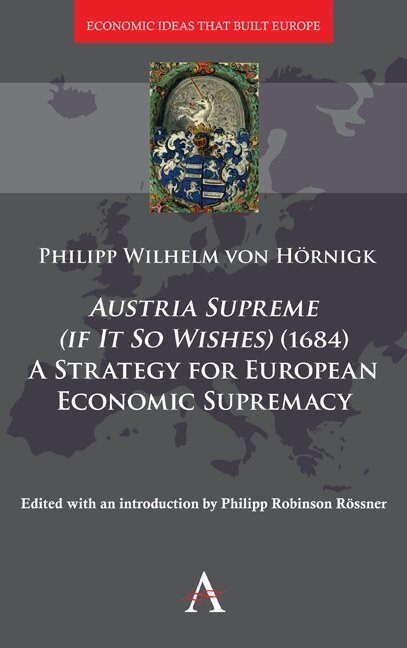
Austria Supreme (if it so Wishes) (1684): 'A Strategy for European Economic Supremacy’
Av Philipp von Hörnigk, Philipp Roessner
Inbunden, 2018
1153 kr
Lägg i varukorg
Austria Supreme (if it so wishes) (1684) provides a translation of and a scholarly introduction to the Austrian-German Mercantilist classic Oesterreich über Alles Wann es Nur Will (1684) by Philipp Wilhelm von Hörnigk. Published a few months after the unsuccessful 1683 siege of Vienna by the Turks, …
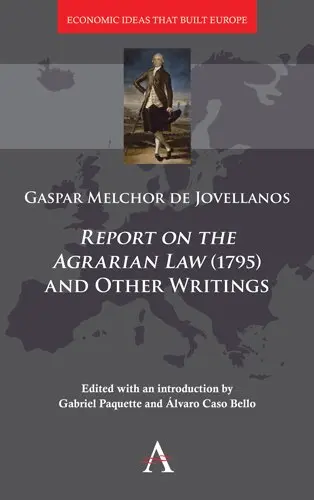
'Report on the Agrarian Law' (1795) and Other Writings
Av Gaspar Melchor de Jovellanos, Gabriel Paquette m. fl.
Häftad, 2018
435 kr
Lägg i varukorg
"Report on the Agrarian Law" (1795) and Other Writings' is the first modern English translation of perhaps the greatest work of the Spanish Enlightenment, Gaspar Melchor de Jovellanos’s 'Informe sobre la Ley Agraria' (1795). A major work of political economy and a beautifully crafted philosophical …
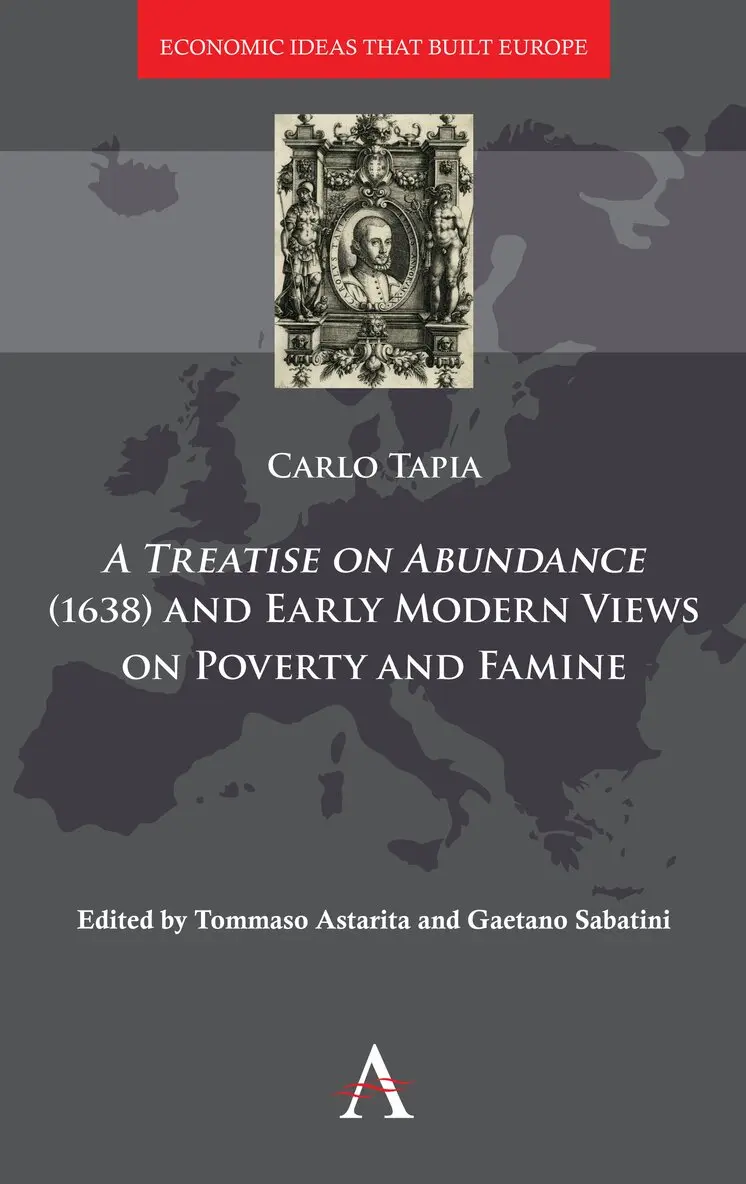
Treatise on Abundance (1638) and Early Modern Views on Poverty and Famine
Av Carlo Tapia, Tommaso Astarita m. fl.
Inbunden, 2019
1358 kr
Lägg i varukorg
‘A “Treatise on Abundance” (1638) and Early Modern Views of Poverty and Famine’ is an edited English translation of Carlo Tapia’s ‘Trattato dell’abondanza’. First published in Naples in 1638, the treatise offered the earliest systematic attempt to develop and publicize the most effective tools …
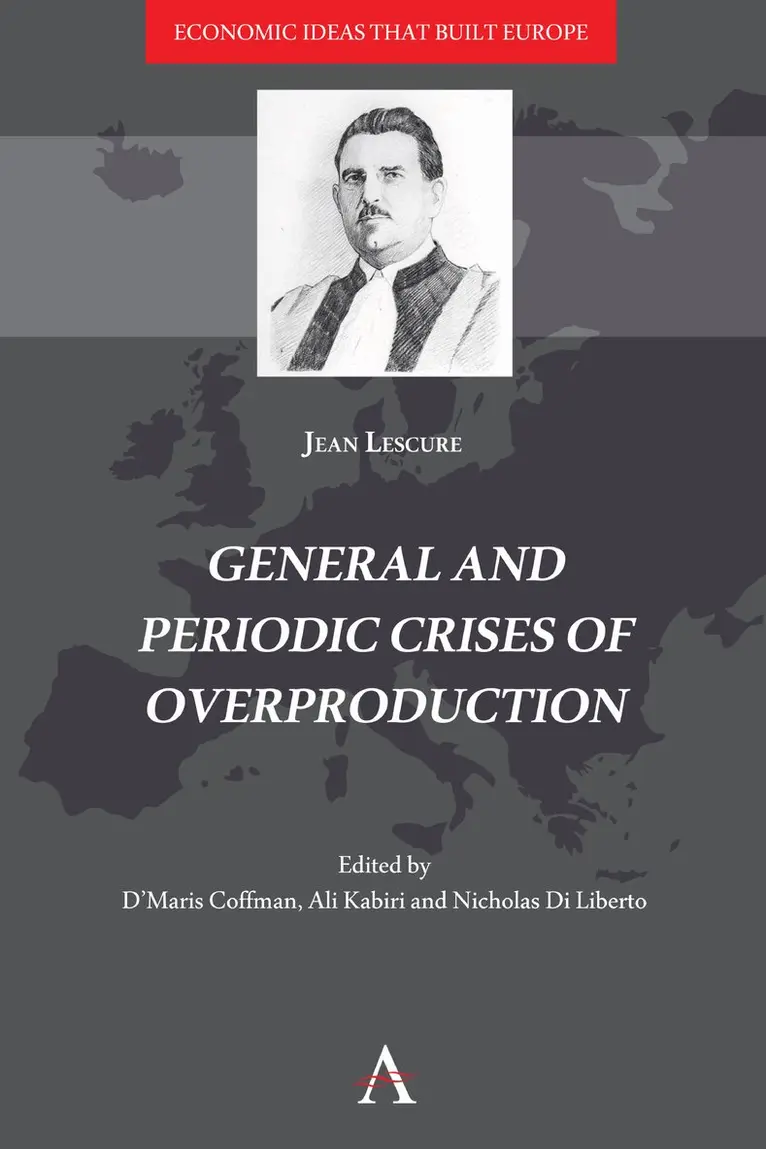
General and Periodic Crises of Overproduction
Av Jean Lescure, D'Maris Coffman m. fl.
Inbunden, 2023
1970 kr
Lägg i varukorg
Jean Lescure’s two-volume General and Periodic Crises of Overproduction is a pioneering study of the causes and consequences of industrial crises in capitalist economies in the nineteenth and early twentieth centuries. The author, who held doctorates in political economy and law, is most remembered …