Vincenzo Ferrone – författare
Visar alla böcker från författaren Vincenzo Ferrone. Handla med fri frakt och snabb leverans.
12 produkter
Enlightenment
History of an Idea - Updated Edition
Inbunden, 2015
501 kr
Lägg i varukorg
In this concise and powerful book, one of the world's leading historians of the Enlightenment provides a bracing and clarifying new interpretation of this watershed period. Arguing that philosophical and historical interpretations of the era have long been hopelessly confused, Vincenzo Ferrone …
Enlightenment
History of an Idea - Updated Edition
Häftad, 2017
245 kr
Lägg i varukorg
In this concise and powerful book, one of the world's leading historians of the Enlightenment provides a bracing and clarifying new interpretation of this watershed period. Arguing that philosophical and historical interpretations of the era have long been hopelessly confused, Vincenzo Ferrone …
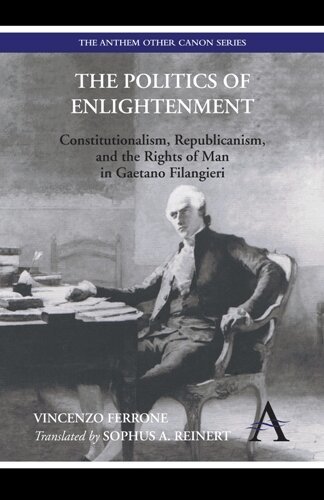
Politics of Enlightenment
Constitutionalism, Republicanism, and the Rights of Man in Gaetano Filangieri
Inbunden, 2012
1156 kr
Lägg i varukorg
Written by one of Italy’s leading historians, this book analyses the context and legacy of Gaetano Filangieri’s seven-volume ‘Science of Legislation’. This study engages with the unique history of Enlightenment Naples, the intellectual traditions upon which Filangieri drew, and the powerful …
World of the Enlightenment
Inbunden, 2025
2515 kr
Lägg i varukorg
The Enlightenment was a laboratory of modernity that changed the history of the Western world, helping to bring about globalisation and the rise of a powerful intellectual class. It gave the scientific revolution new methods and a new purpose by ushering in the sciences of man. At the same time, it …
World of the Enlightenment
Häftad, 2026
707 kr
Lägg i varukorg
The Enlightenment was a laboratory of modernity that changed the history of the Western world, helping to bring about globalisation and the rise of a powerful intellectual class. It gave the scientific revolution new methods and a new purpose by ushering in the sciences of man. At the same time, it …
World of the Enlightenment
E-bok, 2025
813 kr
Lägg i varukorg
The Enlightenment was a laboratory of modernity that changed the history of the Western world, helping to bring about globalisation and the rise of a powerful intellectual class. It gave the scientific revolution new methods and a new purpose by ushering in the sciences of man. At the same time, it …
World of the Enlightenment
E-bok, 2025
813 kr
Lägg i varukorg
The Enlightenment was a laboratory of modernity that changed the history of the Western world, helping to bring about globalisation and the rise of a powerful intellectual class. It gave the scientific revolution new methods and a new purpose by ushering in the sciences of man. At the same time, it …
Enlightenment
History of an Idea - Updated Edition
E-bok, 2015
314 kr
Lägg i varukorg
A compelling reevaluation of the Enlightenment from one of its leading historians In this concise and powerful book, one of the world''s leading historians of the Enlightenment provides a bracing and clarifying new interpretation of this watershed period. Arguing that philosophical and historical …
Politics of Enlightenment
Constitutionalism, Republicanism, and the Rights of Man in Gaetano Filangieri
Häftad, 2014
422 kr
Lägg i varukorg
Written by one of Italy’s leading historians, this book analyses the context and legacy of Gaetano Filangieri’s seven-volume ‘Science of Legislation’. This study engages with the unique history of Enlightenment Naples, the intellectual traditions upon which Filangieri drew, and the powerful …
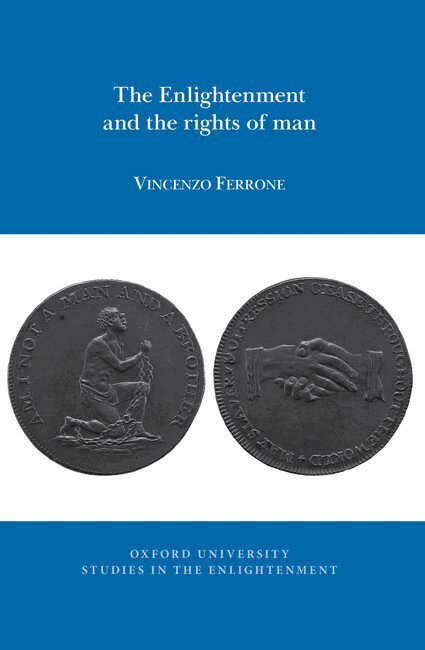
Enlightenment and the rights of man
Häftad, 2019
1657 kr
Lägg i varukorg
The Enlightenment redefined the ethics of the rights of man as part of an outlook that was based on reason, the equality of all nations and races, and man’s self-determination. This led to the rise of a new language: the political language of the moderns, which spread throughout the world its …
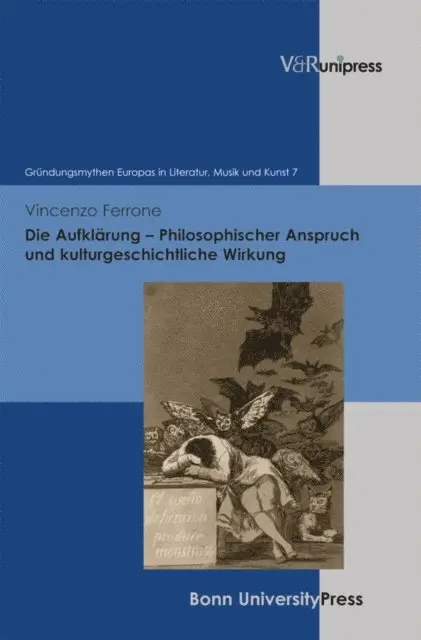
Die Aufklärung – Philosophischer Anspruch und kulturgeschichtliche Wirkung
E-bok, 2013
759 kr
Lägg i varukorg
Vincenzo Ferrone sees the phenomenon of the Enlightenment in terms of the philosophical and cultural development of a new idea of humanity on the one hand, and the political realisation of this revolutionary concept on the other, culminating in the drawing up and formulation of human rights – the …