Electronic Materials Series - Böcker
Visar alla böcker i serien Electronic Materials Series. Handla med fri frakt och snabb leverans.
14 produkter
14 produkter
Del 1 - Electronic Materials Series
Widegap II–VI Compounds for Opto-electronic Applications
Inbunden, Engelska, 1992
1 584 kr
Skickas inom 10-15 vardagar
This book is intended for readers desiring a comprehensive analysis of the latest development in widegap II-VI materials research for opto-electronic applications and basic insight into the fundamental underlying principles. Therefore, it is hoped that this book will serve two purposes. Firstly, to educate newcomers to this area of physics and technology and secondly, to provide specialists with useful references and new insights in related areas of II-VI materials research. The motivation for preparing this book originated from the need for a current review of this fertile and important field. A primary goal of this book therefore to present an ecletic synthesis of these sometimes diverse fields of investigation. This book consists of three sections: growth and properties, materials characterization, and devices. Section 1 presents an overall perspective of the state of the art in the preparation of the widegap II-VI materials. Section 2 concentrates on current topics pertinent to the characterization of these materials from the unique perspective of each of the authors. Section 3 focuses on advances in the optoelectronic applications of these materials.The material in this section runs the gamut from addressing recent advances in device areas which date back to some of the earliest reported research in these materials, to tackling future directions.
2 110 kr
Skickas inom 10-15 vardagar
The area of high temperature electronics is a very active one. This text reviews in detail the trends and options for electronics materials in high temperature environments. Users of these materials are considered initially (e.g. aircraft and space, automotive, military, and power industries) followed by a discussion of silicon and gallium arsenide electronics. Metallization, isolation and packaging are then described followed by an assessment of the future for electronic materials and devices. This text is aimed at all those involved in the electronics industry. It should be of interest to electronic engineers as well as aeronautical, automobile, power and military engineers and designers, researchers and graduates.
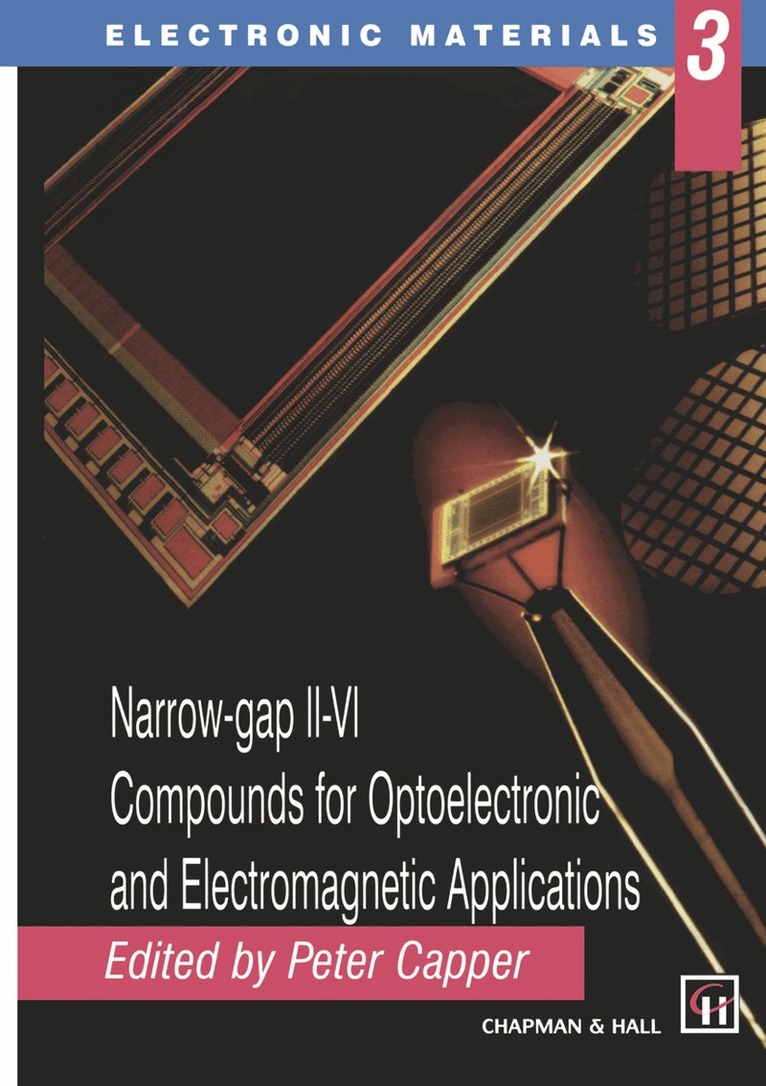
Narrow-gap II-VI Compounds for Optoelectronic and Electromagnetic Applications
Inbunden, Engelska, 1997
2 110 kr
Skickas inom 10-15 vardagar
Organized into three sections this text aims to give an insight into this area of electronic materials activity. The first section covers the growth of materials from the earliest, though still used, bulk techniques, through to the more recent epitaxial techniques, based on both liquid and gas phases, and includes the recent area of low dimensional solids and the novel concepts which arise from them; the second section discusses the properties of the materials which make them useful for various applications such as optical, transport, doping, defects, diffusion, structural and the interfacial and surface effects; and a devices section which encompasses the major fields of infrared detection and emission, by several device types, and the expanding areas of solar cell production and room temperature detection of X-rays and gamma-rays.
1 584 kr
Skickas inom 10-15 vardagar
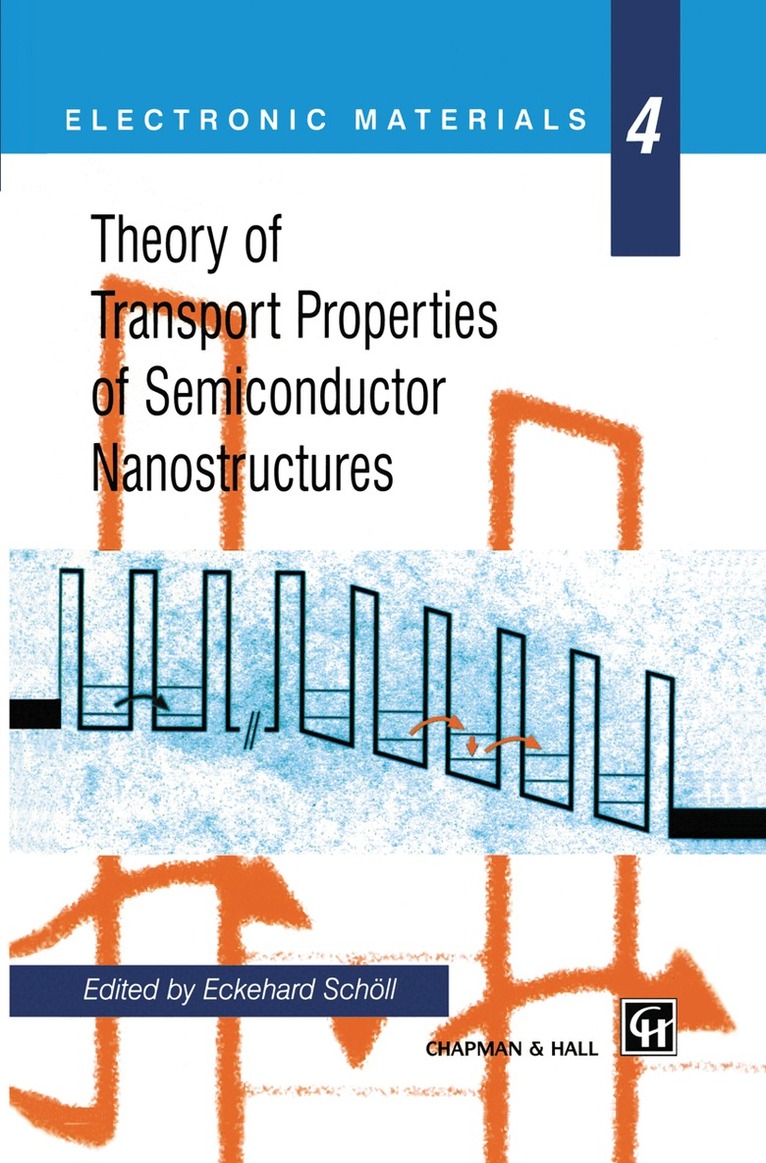
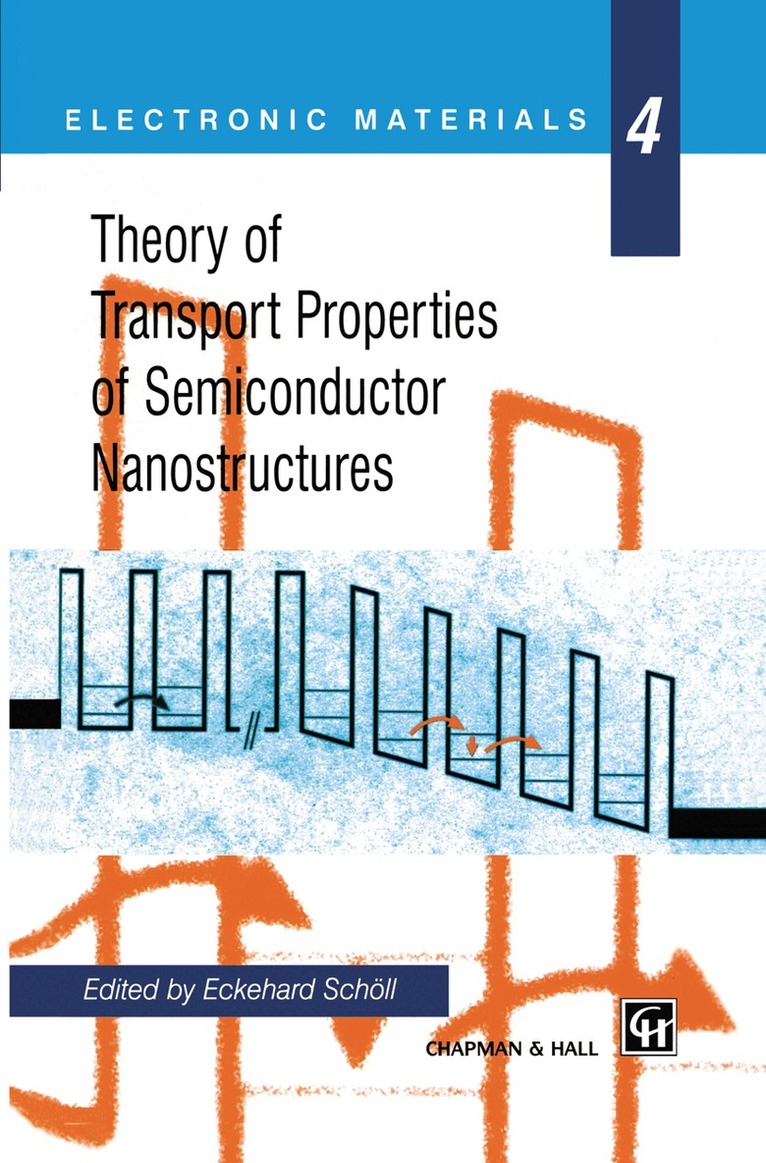
Recent advances in the fabrication of semiconductors have created almost un limited possibilities to design structures on a nanometre scale with extraordinary electronic and optoelectronic properties. The theoretical understanding of elec trical transport in such nanostructures is of utmost importance for future device applications. This represents a challenging issue of today's basic research since it requires advanced theoretical techniques to cope with the quantum limit of charge transport, ultrafast carrier dynamics and strongly nonlinear high-field ef fects. This book, which appears in the electronic materials series, presents an over view of the theoretical background and recent developments in the theory of electrical transport in semiconductor nanostructures. It contains 11 chapters which are written by experts in their fields. Starting with a tutorial introduction to the subject in Chapter 1, it proceeds to present different approaches to transport theory. The semiclassical Boltzmann transport equation is in the centre of the next three chapters. Hydrodynamic moment equations (Chapter 2), Monte Carlo techniques (Chapter 3) and the cellular au tomaton approach (Chapter 4) are introduced and illustrated with applications to nanometre structures and device simulation. A full quantum-transport theory covering the Kubo formalism and nonequilibrium Green's functions (Chapter 5) as well as the density matrix theory (Chapter 6) is then presented.
2 110 kr
Skickas inom 10-15 vardagar
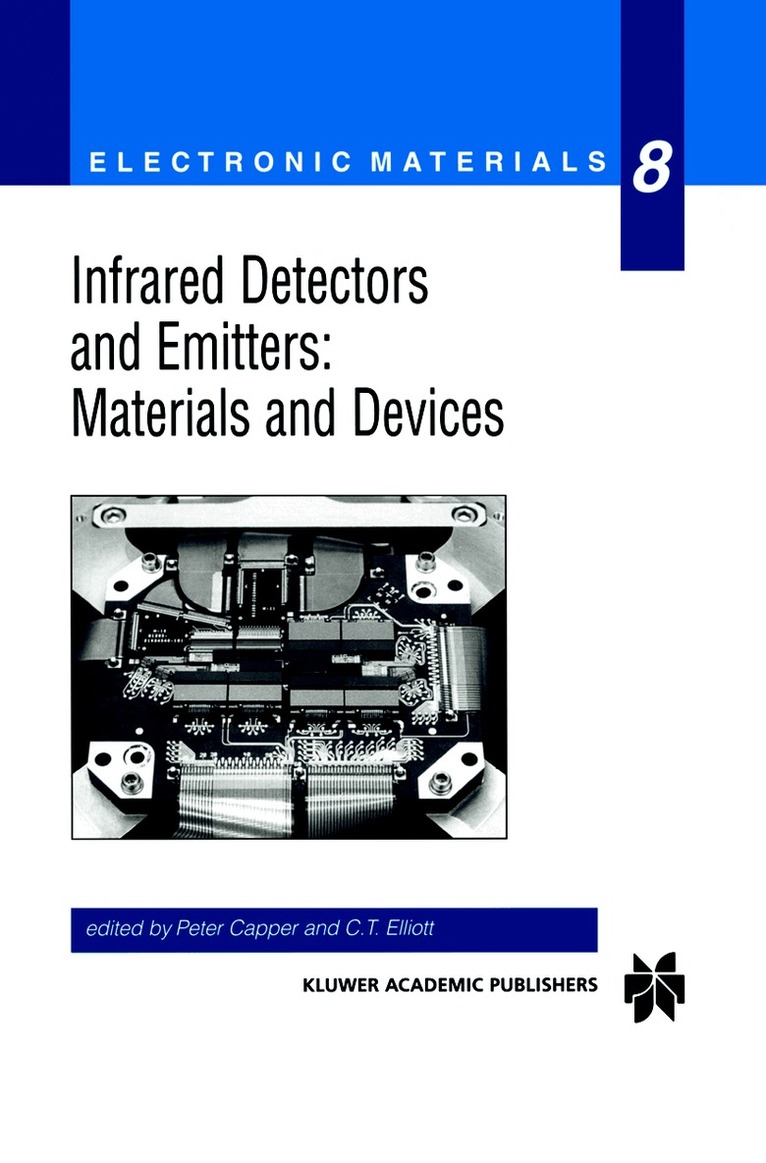
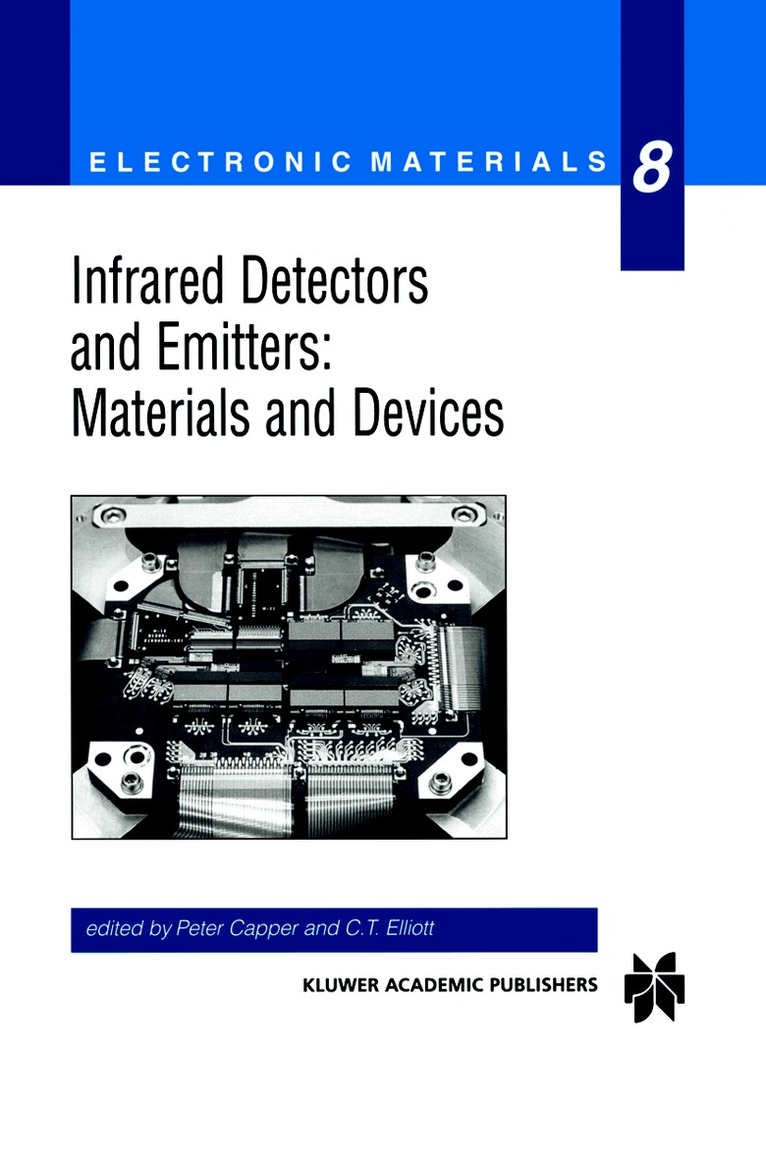
Infrared (IR) detectors fall into two main categories, thermal and photon. The earliest detectors of IR were thermal in nature, e.g. thermometers. The subsequent developments of these detectors, such as thermopiles, resistance bolometers, Golay cells and pyroelectric detectors, can operate at ambient temperature but have disadvantages of insensitivity and slowness. A wide variety of semiconductor photon detectors have been developed and these possess very high sensitivity, high frequency response but have the disadvantage of needing cryogenic cooling, particularly at longer wavelengths. In the main, the applications have been in the military sphere, but widespread industrial and scientific applications also exist. The majority of development funding for these semiconducting IR detectors has, however, come from military sources. This book is an attempt to provide an up-to-date view of the various IR detector/emitter materials systems currently in use or being actively researched. The book is aimed at newcomers to the field and at those already working in the IR industry. It is hoped that the former will find the book readable both as an introductory text and as a useful guide to the literature. Workers in one of the various IR areas will, hopefully, find the book useful in bringing them up-to-date with other, sometimes competing, technologies. To both groups of readers we trust that the book will prove interesting, thought-provoking and a spur to further progress in this fascinating and challenging field of endeavour.
1 069 kr
Skickas inom 10-15 vardagar
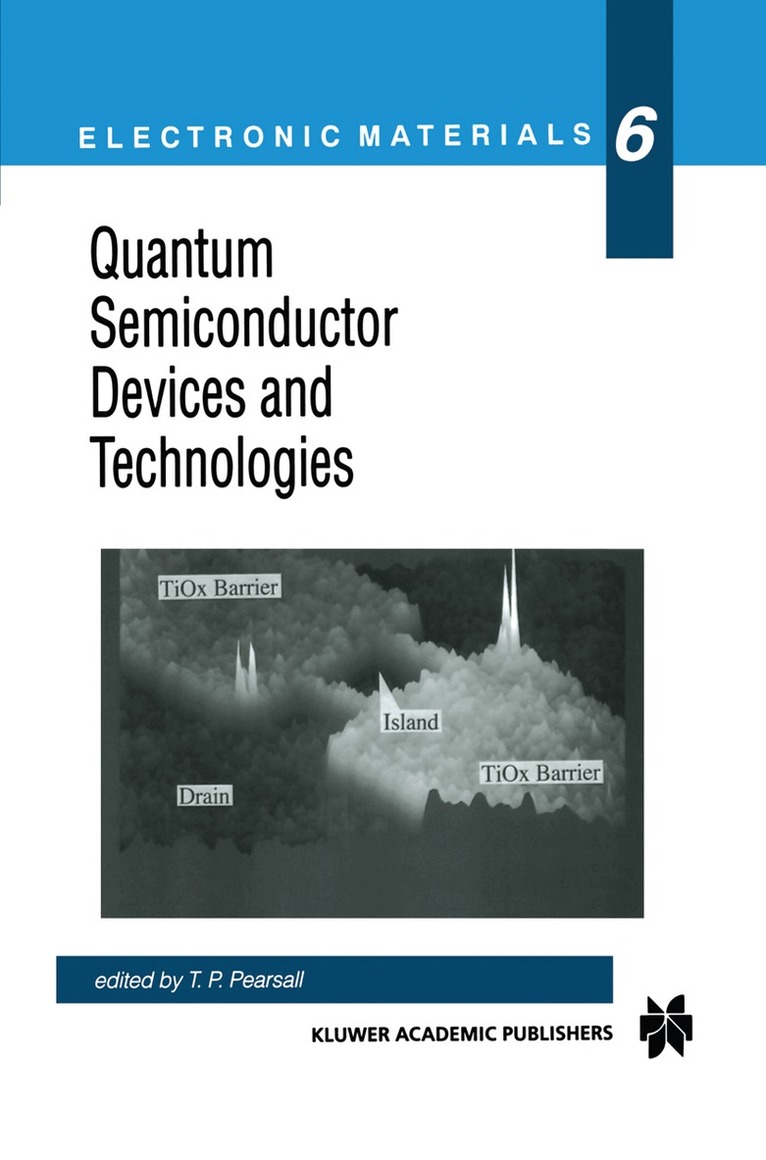
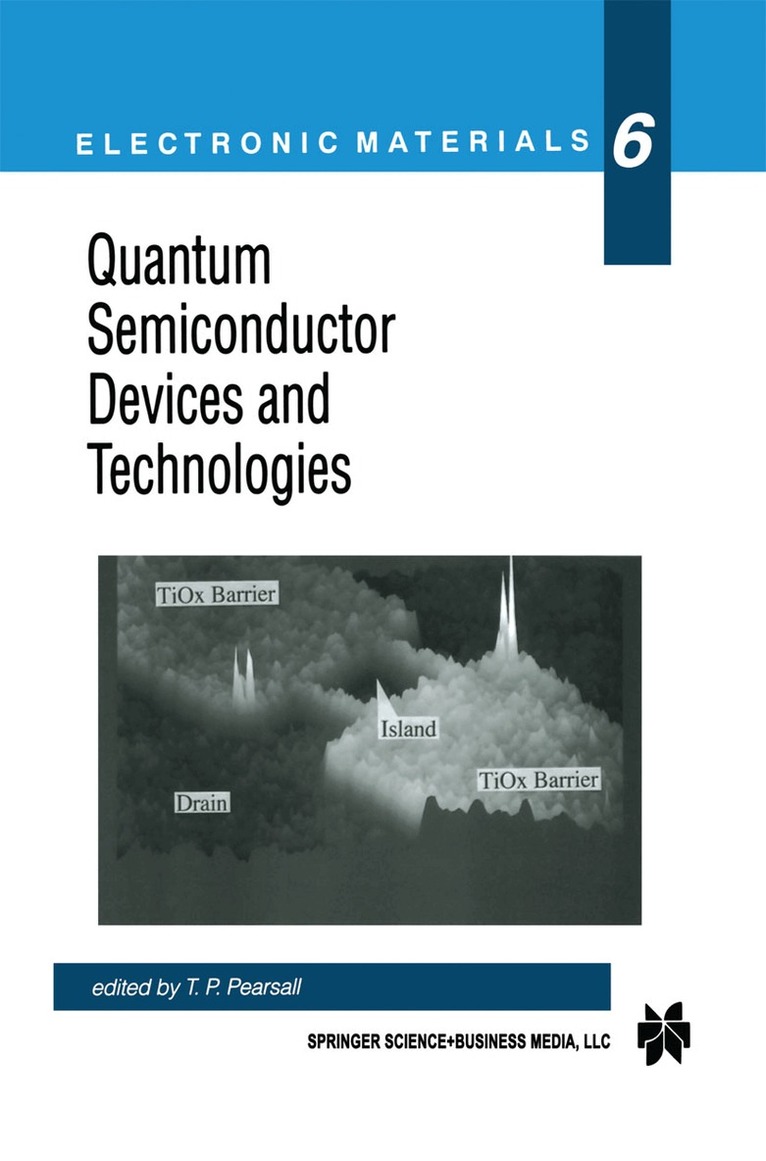
This guide to an important and rapidly developing field introduces the fundamentals, along with current topics ranging from quantum nanocircuits and the potential applications of self-formed quantum dot structures, through the use of MOVPE to produce quantum structured semiconductors, lithography and patterning, and the structural characterization of self-organized G-islands.
1 584 kr
Skickas inom 10-15 vardagar
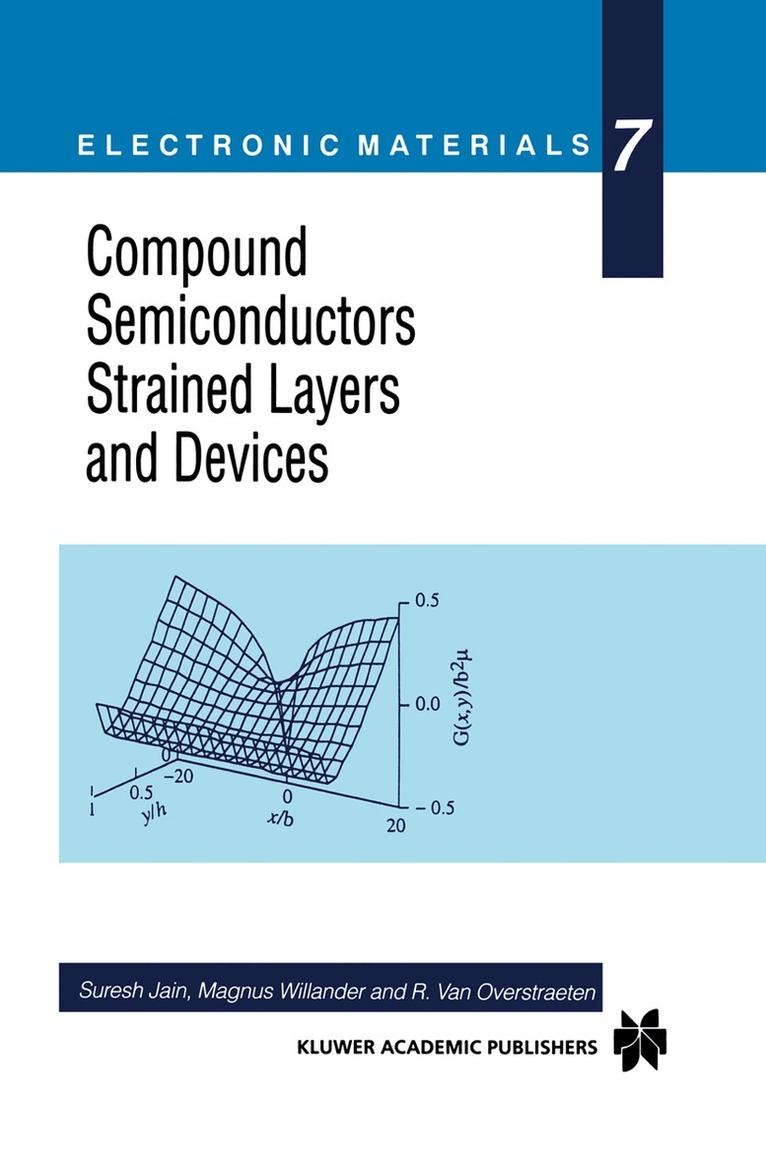
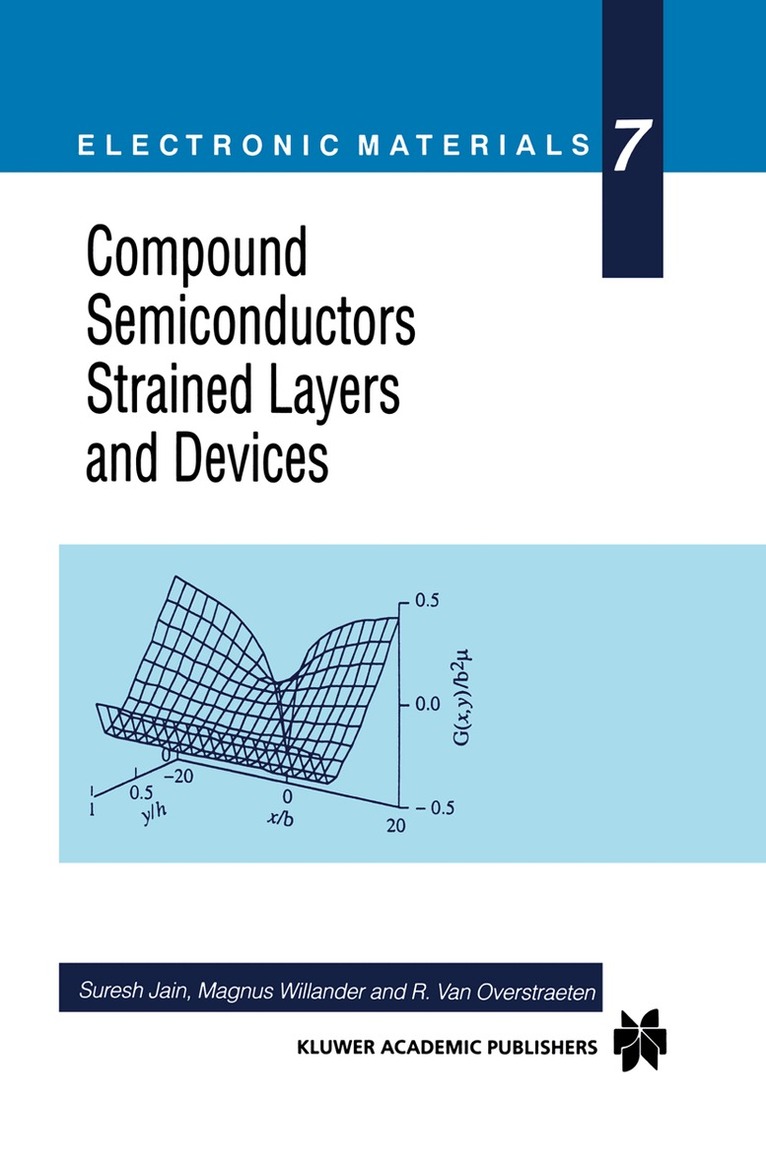
During the last 25 years (after the growth of the first pseudomorphic GeSi strained layers on Si by Erich Kasper in Germany) we have seen a steady accu- mulation of new materials and devices with enhanced performance made pos- sible by strain. 1989-1999 have been very good years for the strained-Iayer- devices. Several breakthroughs were made in the growth and doping technology of strained layers. New devices were fabricated as a results of these break- throughs. Before the advent of strain layer epitaxy short wavelength (violet to green) and mid-IR (2 to 5 f. Lm) regions of the spectrum were not accessi- ble to the photonic devices. Short wavelength Light Emitting Diodes (LEDs) and Laser Diodes (LDs) have now been developed using III-Nitride and II-VI strained layers. Auger recombination increases rapidly as the bandgap narrows and temperature increases. Therefore it was difficult to develop mid-IR (2 to 5 f. Lm range) lasers. The effect of strain in modifying the band-structure and suppressing the Auger recombination has been most spectacular.It is due to the strain mediated band-structure engineering that mid-IR lasers with good per- formance have been fabricated in several laboratories around the world. Many devices based on strained layers have reached the market place. This book de- scribes recent work on the growth, characterization and properties o(compound semiconductors strained layers and devices fabricated using them.
Narrow-gap II-VI Compounds for Optoelectronic and Electromagnetic Applications
Häftad, Engelska, 2012
2 110 kr
Skickas inom 10-15 vardagar
The field of narrow-gap II-VI materials is dominated by lhe compound mercury cadmium telluride, MCT or Hg1_ .. Cd .. Te. By varying the x value, material can be made to cover all the important infrared (lR) ranges of interest. It is probably true to say that MCT is the third most studied semiconductor after silicon and gallium arsenide. As current epitaxial layers of MCT are mainly grown on bulk CdTe family substrates these materials are included in this book, although strictly, of course, they are not 'narrow-gap'. This book is intended for readers who are either new to the field or are experienced workers in the field who need a comprehensive and up to date view of this rapidly expanding area. To satisfy the needs of the frrst group each chapter discusses the principles underlying each topic and some of the historical background before bringing the reader the most recent information available. For those currently in the field the book can be used as a collection of useful data, as a guide to the literature and as an overview of topics covering the wide range of work areas.
2 320 kr
Skickas inom 10-15 vardagar
There is a growing demand for electronic signal processing at elevated temperatures. A number of approaches have been used to develop this capability. Silicon circuits could be developed and fabricated with an appropriate technology to cover increased temperature ranges. In a search for semiconductors with a wider energy gap to avoid leakage currents at high operating temperatures, one developed compound semiconductors such as GaAIAs on GaAs substrates. Efforts to use GaN are also useful, although difficult due to the lack of a suitable substrate material for lattice-matched epitaxial growth. Other work concerns electronic compo nent and circuit developments with SiC. Preliminary results have proved interesting. This book attempts to present the possibilities of such circuitry. Some of the solutions obtained so far are directly usable for the many applications where high environmental temperatures exist. Other concepts, particularly the more demanding ones, such as operation above 500 °C, still need much more researching. This also concerns estimates of device lifetimes for con tinuous high temperature operation. This book may help the potential user of such circuitry to find a suitable solution. It should also stimulate more research groups to enter this demanding effort. And finally, it should stimulate a broad awareness of the need and the solutions for this type of electronics. That is why Part One is devoted to high temperature applications.
2 110 kr
Skickas inom 10-15 vardagar
Infrared (IR) detectors fall into two main categories, thermal and photon. The earliest detectors of IR were thermal in nature, e.g. thermometers. The subsequent developments of these detectors, such as thermopiles, resistance bolometers, Golay cells and pyroelectric detectors, can operate at ambient temperature but have disadvantages of insensitivity and slowness. A wide variety of semiconductor photon detectors have been developed and these possess very high sensitivity, high frequency response but have the disadvantage of needing cryogenic cooling, particularly at longer wavelengths. In the main, the applications have been in the military sphere, but widespread industrial and scientific applications also exist. The majority of development funding for these semiconducting IR detectors has, however, come from military sources. This book is an attempt to provide an up-to-date view of the various IR detector/emitter materials systems currently in use or being actively researched. The book is aimed at newcomers to the field and at those already working in the IR industry. It is hoped that the former will find the book readable both as an introductory text and as a useful guide to the literature. Workers in one of the various IR areas will, hopefully, find the book useful in bringing them up-to-date with other, sometimes competing, technologies. To both groups of readers we trust that the book will prove interesting, thought-provoking and a spur to further progress in this fascinating and challenging field of endeavour.
1 584 kr
Skickas inom 10-15 vardagar
This book is intended for readers desiring a comprehensive analysis of the latest developments in widegap II-VI materials research for opto-electronic applications and basic insight into the fundamental underlying principles. Therefore, it is hoped that this book will serve two purposes. Firstly, to educate newcomers to this exciting area of physics and technology and, secondly, to provide specialists with useful references and new insights in related areas of II-VI materials research. The motivation for preparing this book originated from the need for a current review of this fertile and important field. A primary goal of this book is therefore to present an eclectic synthesis of these sometimes diverse fields of investigation. This book consists of three main sections, namely (1) Growth and Properties, (2) Materials Characterization and (3) Devices. Part One presents an overall perspective of the state of the art in the preparation of the widegap II-VI materials. Part Two concentrates on current topics pertinent to the characterization of these materials from the unique perspective of each of the authors. Part Three focuses on advances in the opto-electronic applications of these materials. The material in this section runs the gamut from addressing recent advances in device areas which date back to some of the earliest reported research in these materials, to tackling some quite new and exciting future directions.
1 584 kr
Skickas inom 10-15 vardagar
During the last 25 years (after the growth of the first pseudomorphic GeSi strained layers on Si by Erich Kasper in Germany) we have seen a steady accu- mulation of new materials and devices with enhanced performance made pos- sible by strain. 1989-1999 have been very good years for the strained-Iayer- devices. Several breakthroughs were made in the growth and doping technology of strained layers. New devices were fabricated as a results of these break- throughs. Before the advent of strain layer epitaxy short wavelength (violet to green) and mid-IR (2 to 5 f. Lm) regions of the spectrum were not accessi- ble to the photonic devices. Short wavelength Light Emitting Diodes (LEDs) and Laser Diodes (LDs) have now been developed using III-Nitride and II-VI strained layers. Auger recombination increases rapidly as the bandgap narrows and temperature increases. Therefore it was difficult to develop mid-IR (2 to 5 f. Lm range) lasers. The effect of strain in modifying the band-structure and suppressing the Auger recombination has been most spectacular.It is due to the strain mediated band-structure engineering that mid-IR lasers with good per- formance have been fabricated in several laboratories around the world. Many devices based on strained layers have reached the market place. This book de- scribes recent work on the growth, characterization and properties o(compound semiconductors strained layers and devices fabricated using them.
1 069 kr
Skickas inom 10-15 vardagar
stacked QD structure and is useful for examining the possibility of all optical measurement of stacked QD layers. Optical absorption spectra of self-assembled QDs has been little reported, and further investigation in necessary to study hole-burning memory. 2.5 Summary This chapter describes recent advances in quantum dot fabrication tech nologies, focusing on our self-formed quantum dot technologies including TSR quantum dots and SK-mode self-assembled quantum dots. As is described in this chapter, there are many possible device applications such as quantum dot tunneling memory devices, quantum dot fioating-dot gate FETs, quantum dot lasers, and quantum dot hole-burning memory devices. The quantum dot laser applications seem to be the most practicable among these applications. However, many problems remain to be solved before even this application becomes practical. The most important issue is to of self-assembled quantum dots more pre control the size and position cisely, with an accuracy on an atomic scale. The confinement must be enough to keep the separation energy between quantized energy levels high enough to get high-temperature characteristics. The lasing oscillation frequency should be fixed at 1.3 f.lITl or 1.5 f.lITl for optical communication. Phonon bottleneck problems should be solved by the optimization of device structures. Fortunately, there is much activity in the area of quantum dot lasers and, therefore, many breakthroughs will be made, along with the exploration of other new application areas.
1 584 kr
Skickas inom 10-15 vardagar
Recent advances in the fabrication of semiconductors have created almost un limited possibilities to design structures on a nanometre scale with extraordinary electronic and optoelectronic properties. The theoretical understanding of elec trical transport in such nanostructures is of utmost importance for future device applications. This represents a challenging issue of today's basic research since it requires advanced theoretical techniques to cope with the quantum limit of charge transport, ultrafast carrier dynamics and strongly nonlinear high-field ef fects. This book, which appears in the electronic materials series, presents an over view of the theoretical background and recent developments in the theory of electrical transport in semiconductor nanostructures. It contains 11 chapters which are written by experts in their fields. Starting with a tutorial introduction to the subject in Chapter 1, it proceeds to present different approaches to transport theory. The semiclassical Boltzmann transport equation is in the centre of the next three chapters. Hydrodynamic moment equations (Chapter 2), Monte Carlo techniques (Chapter 3) and the cellular au tomaton approach (Chapter 4) are introduced and illustrated with applications to nanometre structures and device simulation. A full quantum-transport theory covering the Kubo formalism and nonequilibrium Green's functions (Chapter 5) as well as the density matrix theory (Chapter 6) is then presented.