Elements in Political Philosophy - Böcker
Visar alla böcker i serien Elements in Political Philosophy. Handla med fri frakt och snabb leverans.
12 produkter
12 produkter
753 kr
Skickas inom 7-10 vardagar
Do politicians have to get dirty hands - and what does that mean? Is it okay to be corrupt, when corruption is systemic? When is it a good thing to make compromises in politics? These are questions about political conduct that are raised in political ethics, a somewhat underappreciated subfield of political philosophy. This Element offers a fresh, systematic introduction to political ethics. It starts with a discussion of two challenges to the discipline: One comes from political realists who reject moralism in political philosophy and the other from public choice theorists who model politicians as rational egoists. It then discusses the problem of dirty hands, political corruption, and political compromise as three core topics of political ethics.
234 kr
Skickas inom 7-10 vardagar
Do politicians have to get dirty hands - and what does that mean? Is it okay to be corrupt, when corruption is systemic? When is it a good thing to make compromises in politics? These are questions about political conduct that are raised in political ethics, a somewhat underappreciated subfield of political philosophy. This Element offers a fresh, systematic introduction to political ethics. It starts with a discussion of two challenges to the discipline: One comes from political realists who reject moralism in political philosophy and the other from public choice theorists who model politicians as rational egoists. It then discusses the problem of dirty hands, political corruption, and political compromise as three core topics of political ethics.
234 kr
Skickas inom 7-10 vardagar
In today's societies, political and economic issues are closely intertwined, and political philosophy has turned more and more to economic issues. This Element introduces some key questions of economic philosophy: How to think about the relation between political and economic power? Can markets be 'tamed'? Which values are embedded in the economy and how do those relate to political values? It answers these questions by considering arguments from three theoretical perspectives - liberal egalitarian approaches, neorepublicanism, and critical theory or socialist thought - explaining their different background assumptions but also shared grounds. To illustrate these topics, it zooms in on the future of work: How could work be made more just, democratic, and sustainable? In the conclusion, some implications for research strategies in economic philosophy are explored.
753 kr
Skickas inom 7-10 vardagar
In today's societies, political and economic issues are closely intertwined, and political philosophy has turned more and more to economic issues. This Element introduces some key questions of economic philosophy: How to think about the relation between political and economic power? Can markets be 'tamed'? Which values are embedded in the economy and how do those relate to political values? It answers these questions by considering arguments from three theoretical perspectives - liberal egalitarian approaches, neorepublicanism, and critical theory or socialist thought - explaining their different background assumptions but also shared grounds. To illustrate these topics, it zooms in on the future of work: How could work be made more just, democratic, and sustainable? In the conclusion, some implications for research strategies in economic philosophy are explored.
753 kr
Skickas inom 7-10 vardagar
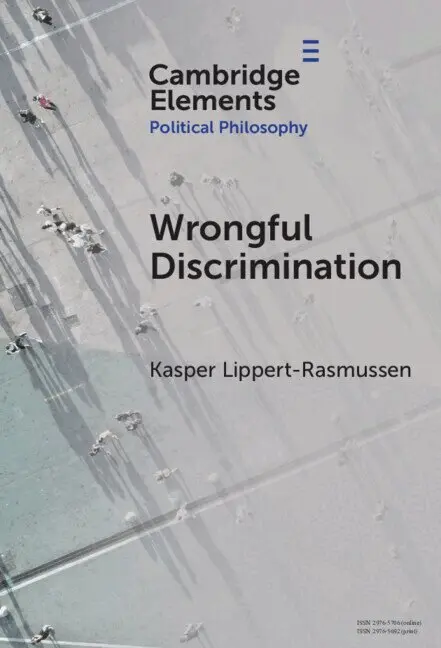
In a generic sense, to discriminate is to differentiate. Generic discrimination is not wrongful. But many instances of a more specific form of discrimination - differentiating between people because they are members of different socially salient groups (henceforth: group discrimination) - are wrongful. This means that people subjected to group discrimination are often wronged, and this bears importantly on whether such acts are morally impermissible. The three main accounts of what makes group discrimination wrongful appeal to considerations of harm, disrespect, and social relations of inequality, respectively. While each of them can explain the wrongfulness of some paradigmatic instances of wrongful direct discrimination, they explain the wrongfulness of a set of three important non-paradigmatic forms of discrimination - indirect discrimination, implicit bias, and algorithmic discrimination - less well. Overall, the prospects of a monistic account of the wrongfulness of discrimination are bleak.
234 kr
Skickas inom 7-10 vardagar
In a generic sense, to discriminate is to differentiate. Generic discrimination is not wrongful. But many instances of a more specific form of discrimination - differentiating between people because they are members of different socially salient groups (henceforth: group discrimination) - are wrongful. This means that people subjected to group discrimination are often wronged, and this bears importantly on whether such acts are morally impermissible. The three main accounts of what makes group discrimination wrongful appeal to considerations of harm, disrespect, and social relations of inequality, respectively. While each of them can explain the wrongfulness of some paradigmatic instances of wrongful direct discrimination, they explain the wrongfulness of a set of three important non-paradigmatic forms of discrimination - indirect discrimination, implicit bias, and algorithmic discrimination - less well. Overall, the prospects of a monistic account of the wrongfulness of discrimination are bleak.
753 kr
Skickas inom 7-10 vardagar
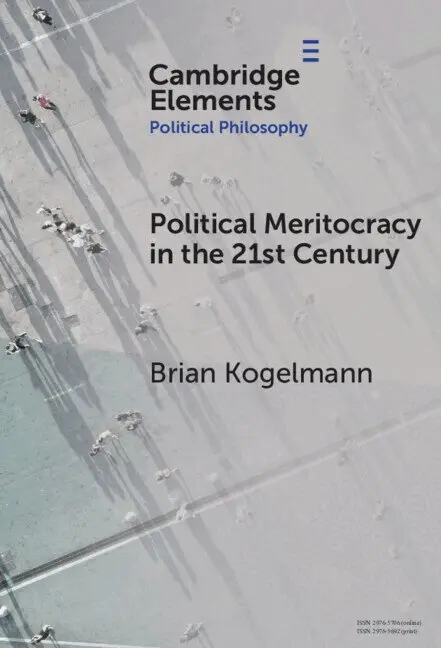
Political meritocrats believe political power should be allocated according to virtue and competence. It is an old idea, going back at least to Plato. But what is old is new again, as several political philosophers have recently proposed and defended novel articulations of this ancient idea. The purpose of this short monograph is to offer a critical overview of this literature. I cover three schools of thought. I first look at epistocracy, a form of government identical to modern liberal democracies, except voting power is allocated to citizens according to competence. I then turn to Confucian meritocracy, where more blatantly nondemocratic forms of political meritocracy are defended. I finally look at democratic meritocracy, which is the idea that elections either do or could (if they were appropriately reformed) select virtuous and competent leaders. I end by offering reasons to think the entire enterprise of political meritocracy rests on a mistake.
234 kr
Skickas inom 7-10 vardagar
Political meritocrats believe political power should be allocated according to virtue and competence. It is an old idea, going back at least to Plato. But what is old is new again, as several political philosophers have recently proposed and defended novel articulations of this ancient idea. The purpose of this short monograph is to offer a critical overview of this literature. I cover three schools of thought. I first look at epistocracy, a form of government identical to modern liberal democracies, except voting power is allocated to citizens according to competence. I then turn to Confucian meritocracy, where more blatantly nondemocratic forms of political meritocracy are defended. I finally look at democratic meritocracy, which is the idea that elections either do or could (if they were appropriately reformed) select virtuous and competent leaders. I end by offering reasons to think the entire enterprise of political meritocracy rests on a mistake.
234 kr
Skickas inom 7-10 vardagar
This Element provides an opinionated survey of the ideal and non-ideal theory debate in political philosophy. It adopts a minimal conception of ideal theory as "theorizing that aims to characterize ideal or perfect justice" and then investigates four major questions. First, does ideal theory provide a benchmark for evaluating what is more just than what? Second, does it provide a target for long-term reform? Third, does it provide a gauge of appropriate or permissible responses to injustice? Fourth, to what extent should we do ideal theory? The core message is that ideal theory is not uniquely or especially well suited to serving these roles, and deserves no pride of place in the discipline. Nevertheless, ideal theory is somewhat valuable and it should remain one active research program among many. Connections to related debates beyond political philosophy are briefly explored. This title is also available as Open Access on Cambridge Core.
753 kr
Skickas inom 7-10 vardagar
This Element provides an opinionated survey of the ideal and non-ideal theory debate in political philosophy. It adopts a minimal conception of ideal theory as "theorizing that aims to characterize ideal or perfect justice" and then investigates four major questions. First, does ideal theory provide a benchmark for evaluating what is more just than what? Second, does it provide a target for long-term reform? Third, does it provide a gauge of appropriate or permissible responses to injustice? Fourth, to what extent should we do ideal theory? The core message is that ideal theory is not uniquely or especially well suited to serving these roles, and deserves no pride of place in the discipline. Nevertheless, ideal theory is somewhat valuable and it should remain one active research program among many. Connections to related debates beyond political philosophy are briefly explored. This title is also available as Open Access on Cambridge Core.
753 kr
Kommande
What is wrong with disobedience? What makes an act of disobedience civil or uncivil? Under what conditions can an act of civil or uncivil disobedience be justified? Can a liberal democratic regime tolerate (un)civil disobedience? This Element book presents the main answers that philosophers and activist-thinkers have offered to these questions. It is organized in 3 parts: Part I presents the main philosophical accounts of civil disobedience that liberal political philosophers and democratic theorists have developed and then conceptualizes uncivil disobedience. Part II examines the origins of disobedience in the praxis of activist-thinkers: Henry David Thoreau on civil resistance, anarchists on direct action, and Mohandas Gandhi and Martin Luther King Jr. on nonviolence. Part III takes up the question of violence in defensive action, the requirement that disobedients accept legal sanctions, and the question of whether uncivil disobedience is counterproductive and undermines civic bonds.
234 kr
Kommande
What is wrong with disobedience? What makes an act of disobedience civil or uncivil? Under what conditions can an act of civil or uncivil disobedience be justified? Can a liberal democratic regime tolerate (un)civil disobedience? This Element book presents the main answers that philosophers and activist-thinkers have offered to these questions. It is organized in 3 parts: Part I presents the main philosophical accounts of civil disobedience that liberal political philosophers and democratic theorists have developed and then conceptualizes uncivil disobedience. Part II examines the origins of disobedience in the praxis of activist-thinkers: Henry David Thoreau on civil resistance, anarchists on direct action, and Mohandas Gandhi and Martin Luther King Jr. on nonviolence. Part III takes up the question of violence in defensive action, the requirement that disobedients accept legal sanctions, and the question of whether uncivil disobedience is counterproductive and undermines civic bonds.