Elements of Christianity and Science - Böcker
Visar alla böcker i serien Elements of Christianity and Science. Handla med fri frakt och snabb leverans.
8 produkter
8 produkter
234 kr
Skickas inom 7-10 vardagar
This Element presents science-engaged theology as a reminder to theologians to use the local tools and products of the sciences as sources for theological reflection. Using critiques of modernity and secularism, the Element questions the idea that Science and Religion were ever transhistorical categories. The Element also encourages theologians to collaborate with colleagues in other disciplines in a highly localised manner that enables theologians to make concrete claims with accountability and show how theological realities are entangled with the empirical world. This title is also available as Open Access on Cambridge Core.
234 kr
Skickas inom 7-10 vardagar
This Element examines the science-theology dialogue from the perspective of Eastern Orthodox Christianity and provides a critique of this dialogue based on six fundamental aspects of that theology: (i) Its understanding of how philosophy may authentically be used in the theological task; (ii) Its understanding of the use and limitations of scientific and theological languages; (iii) Its understanding of the role of humanity in bringing God's purposes to fulfilment; (iv) its sense that material entities should be understood less in materialist terms than in relation to the mind of God; (v) Its Christological focus in understanding the concept of creation; (vi) Its sense that the empirical world can be understood theologically only when the 'world to come' is taken fully into account. It is argued that Orthodoxy either provides an alternative pan-Christian vision to the currently predominant one or, at the very least, provides important new conceptual insights.
221 kr
Skickas inom 7-10 vardagar
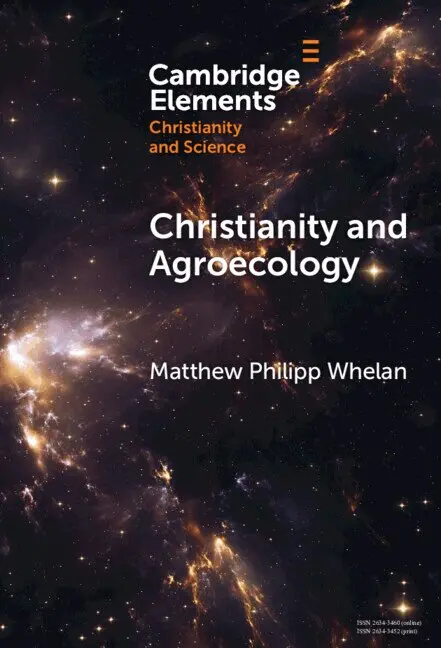
This Element draws on the transdisciplinary field of agroecology to clarify and deepen Catholic social teaching's natural law ethic. In response to the ecological crisis, social teaching has begun to appeal to ecology and the exemplarity of natural ecosystems to foster care of creation. Some have criticized this natural law ethic, along with its invocations of balance and harmony, as overly idealized, advocating instead for an alternative view in which ecological dynamism and ambiguity preclude appeals to ecology for guidance. While sympathizing with these criticisms, this Element offers a different way forward, contending that social teaching's natural law ethic should be revised rather than abandoned. Agroecology displays an approach to tilling and keeping the earth that accommodates dynamism and ambiguity, while also discerning ecological principles and processes that are mimicked agriculturally. In short, this Element argues that engaging agroecology can help social teaching clarify, concretize, and deepen its understanding of natural law.
221 kr
Skickas inom 7-10 vardagar
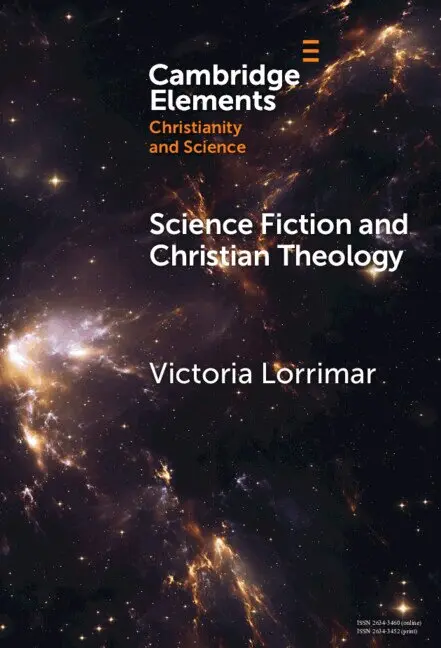
Theologians often struggle to engage with scientific and technological proposals meaningfully in our contemporary context. This Element provides an introduction to the use of science fiction as a conversation partner for theological reflection, arguing that it shifts the science - religion dialogue away from propositional discourse in a more fruitful and imaginative direction. Science fiction is presented as a mediator between theological and scientific disciplines and worldviews in the context of recent methodological debates. Several sections provide examples of theological engagement in relation to the themes of embodiment, human uniqueness, disability and economic inequalities, exploring relevant technologies such as mind-uploading, artificial intelligence, and virtual reality in dialogue with select works of science fiction. A final section considers the pragmatic challenge of progress in the real world towards the more utopian futures presented in science fiction.
234 kr
Skickas inom 7-10 vardagar
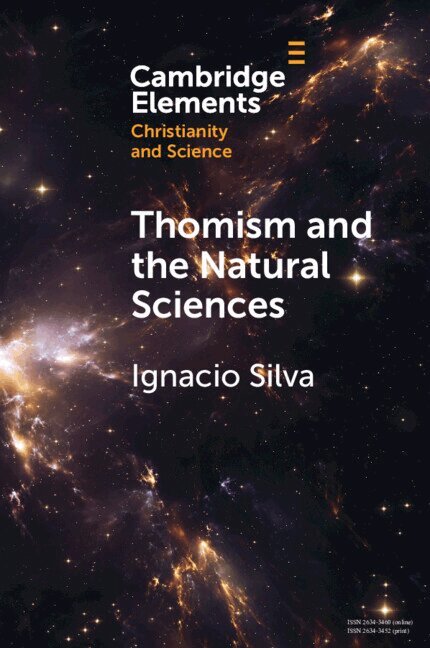
This Element argues for a novel approach to the sciences within Thomism, namely, science-engaged Thomism, which, aligned with the recent science-engaged theology movement, asks theological and metaphysical questions that require the input of the natural sciences. Recent developments within Thomism show a new approach to the natural sciences, and, thus, the proposal is to encourage more of this discourse by portraying the differences between contemporary and past Thomism. Still, even if it takes a novel approach, science-engaged Thomism relies on a tradition of thought that possesses a vast arsenal of metaphysical tools. Thus, after presenting this approach and a concise introduction to some basic notions of Thomistic metaphysics, the Element reviews some theological and philosophical questions and their relation to the natural sciences: issues about creation, cosmology, and astrobiology, divine involvement in evolutionary biology, providence and indeterministic quantum processes, and some ideas for further development at the end.
685 kr
Skickas inom 7-10 vardagar
This Element draws on the transdisciplinary field of agroecology to clarify and deepen Catholic social teaching's natural law ethic. In response to the ecological crisis, social teaching has begun to appeal to ecology and the exemplarity of natural ecosystems to foster care of creation. Some have criticized this natural law ethic, along with its invocations of balance and harmony, as overly idealized, advocating instead for an alternative view in which ecological dynamism and ambiguity preclude appeals to ecology for guidance. While sympathizing with these criticisms, this Element offers a different way forward, contending that social teaching's natural law ethic should be revised rather than abandoned. Agroecology displays an approach to tilling and keeping the earth that accommodates dynamism and ambiguity, while also discerning ecological principles and processes that are mimicked agriculturally. In short, this Element argues that engaging agroecology can help social teaching clarify, concretize, and deepen its understanding of natural law.
699 kr
Skickas inom 7-10 vardagar
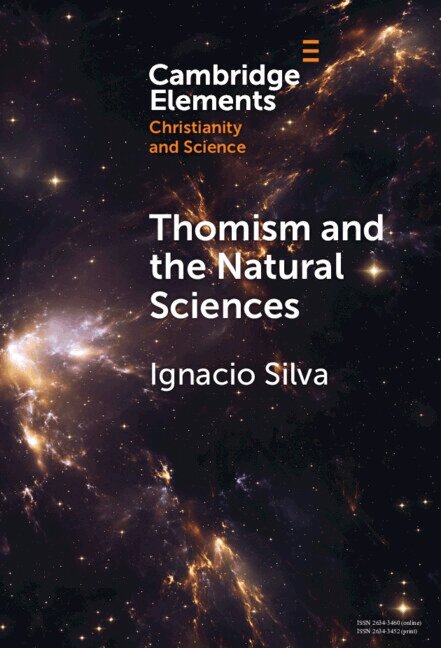
This Element argues for a novel approach to the sciences within Thomism, namely, science-engaged Thomism, which, aligned with the recent science-engaged theology movement, asks theological and metaphysical questions that require the input of the natural sciences. Recent developments within Thomism show a new approach to the natural sciences, and, thus, the proposal is to encourage more of this discourse by portraying the differences between contemporary and past Thomism. Still, even if it takes a novel approach, science-engaged Thomism relies on a tradition of thought that possesses a vast arsenal of metaphysical tools. Thus, after presenting this approach and a concise introduction to some basic notions of Thomistic metaphysics, the Element reviews some theological and philosophical questions and their relation to the natural sciences: issues about creation, cosmology, and astrobiology, divine involvement in evolutionary biology, providence and indeterministic quantum processes, and some ideas for further development at the end.
685 kr
Skickas inom 7-10 vardagar
Theologians often struggle to engage with scientific and technological proposals meaningfully in our contemporary context. This Element provides an introduction to the use of science fiction as a conversation partner for theological reflection, arguing that it shifts the science - religion dialogue away from propositional discourse in a more fruitful and imaginative direction. Science fiction is presented as a mediator between theological and scientific disciplines and worldviews in the context of recent methodological debates. Several sections provide examples of theological engagement in relation to the themes of embodiment, human uniqueness, disability and economic inequalities, exploring relevant technologies such as mind-uploading, artificial intelligence, and virtual reality in dialogue with select works of science fiction. A final section considers the pragmatic challenge of progress in the real world towards the more utopian futures presented in science fiction.