Encounters in Law & Philosophy - Böcker
Visar alla böcker i serien Encounters in Law & Philosophy. Handla med fri frakt och snabb leverans.
16 produkter
16 produkter
2 025 kr
Skickas inom 3-6 vardagar
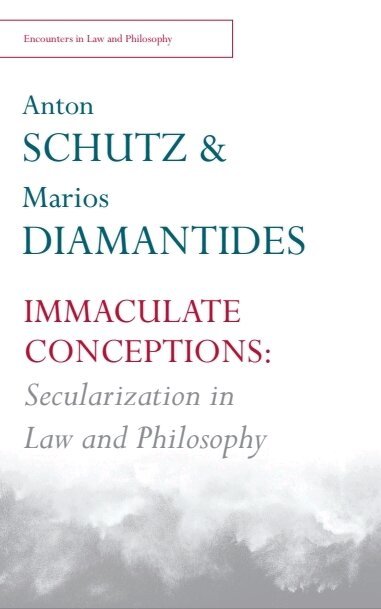
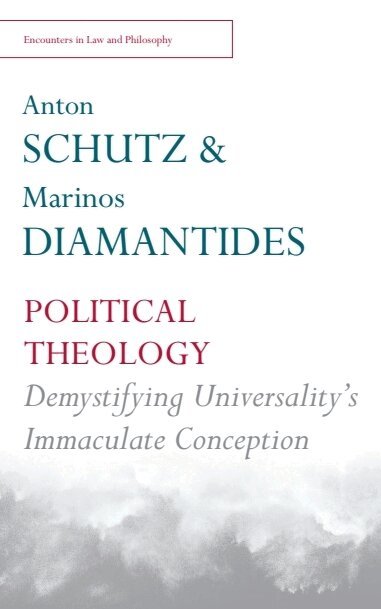
This book provides a genealogical mapping of the universalisation/secularisation thesis that is both widely saluted and mistrusted as master narrative of modern political and normative history. While accepting that foundational issues of religions weigh heavier than political philosophy’s aspirations, the authors question the outdated suggestions of Carl Schmitt’s political theology, building instead upon a refined version of Giorgio Agamben’s close-reading of Christian government as management. The book identifies Western-Christian tensions within jurisprudence and concludes that the West’s secular universality is passing off as politics or law what is really the management of its own dwindling primacy.
397 kr
Skickas inom 7-10 vardagar
This book provides a genealogical mapping of the universalisation/secularisation thesis that is both widely saluted and mistrusted as master narrative of modern political and normative history. While accepting that foundational issues of religions weigh heavier than political philosophy’s aspirations, the authors question the outdated suggestions of Carl Schmitt’s political theology, building instead upon a refined version of Giorgio Agamben’s close-reading of Christian government as management. The book identifies Western-Christian tensions within jurisprudence and concludes that the West’s secular universality is passing off as politics or law what is really the management of its own dwindling primacy.
1 747 kr
Skickas inom 3-6 vardagar
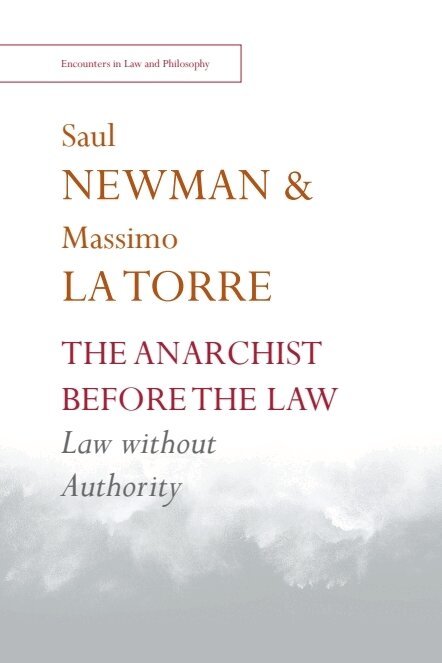
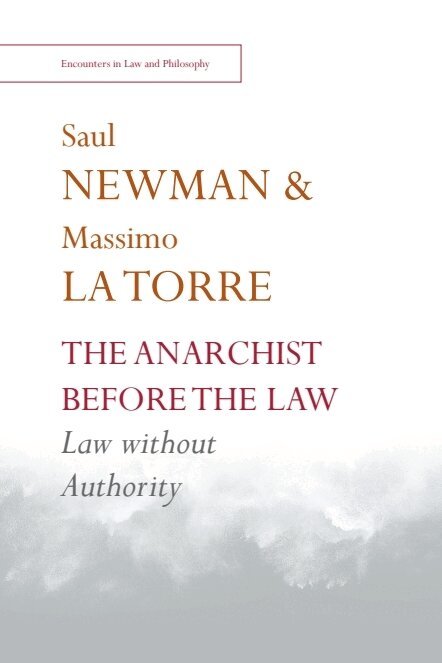
When might an anarchist need a good lawyer? Why do radical activists committed to revolutionary change often have to work within the limits of the law? Can a judge also be an anarchist? This book is an exploration of a paradoxical, yet necessary, encounter between anarchism and the law. Anarchism offers the most radical critique of the principle of legal authority and, as such, poses essential questions that legal philosophy must respond to regarding political obligation and the legitimacy of coercion. At a time when the law is in a state of crisis, it becomes crucial to interrogate its founding principles and ethical limits. Through an exploration of the anarchist tradition, and engaging with contemporary continental and analytical approaches to questions of jurisprudence, state sovereignty, violence, civil disobedience and human rights, this book develops an original anarchist theory of legal institutionalism and a concept of law without authority and coercion.
297 kr
Skickas
When might an anarchist need a good lawyer? Why do radical activists committed to revolutionary change often have to work within the limits of the law? Can a judge also be an anarchist? This book is an exploration of a paradoxical, yet necessary, encounter between anarchism and the law. Anarchism offers the most radical critique of the principle of legal authority and, as such, poses essential questions that legal philosophy must respond to regarding political obligation and the legitimacy of coercion. At a time when the law is in a state of crisis, it becomes crucial to interrogate its founding principles and ethical limits. Through an exploration of the anarchist tradition, and engaging with contemporary continental and analytical approaches to questions of jurisprudence, state sovereignty, violence, civil disobedience and human rights, this book develops an original anarchist theory of legal institutionalism and a concept of law without authority and coercion.
968 kr
Kommande
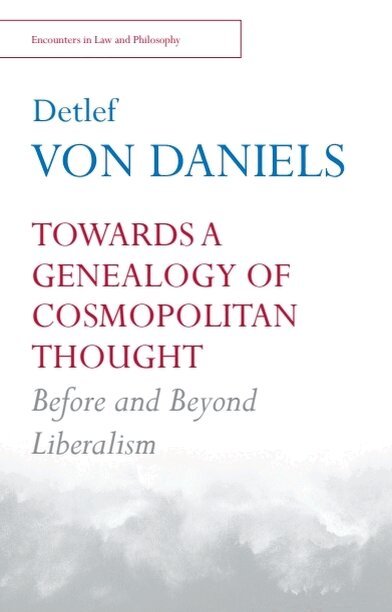
Liberalism, with cosmopolitanism as its intellectual spearhead, seems to be in retreat, while illiberal and populist narratives have come to dominate the digital space. In this book, Detlef von Daniels suggests that this crisis can be addressed through historically situated self-reflection.It begins by noting that cosmopolitan ideas have antecedents going back to the pre-Platonic Sophists. In this light, Plato emerges as the first anti-cosmopolitan philosopher. Unsurprisingly, Plato again plays an important role in today’s authoritarian discourses. Kant’s political philosophy is then read as a fundamental reorientation of philosophy, though one whose dialectics Kant himself had already discerned. Against Heidegger’s appropriation of both antiquity and Kant, Kelsen’s theory of law emerges as a sober antidote that gives rise to two models of post-foundational thought. Framed by the voices of Sappho and Hölderlin, the book finally reveals a poetic mode of communication across space and time.
1 266 kr
Skickas inom 7-10 vardagar
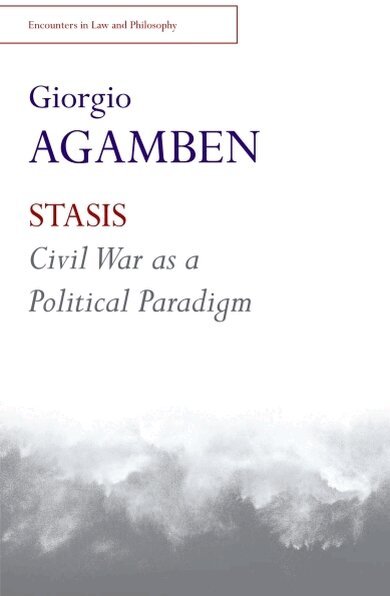
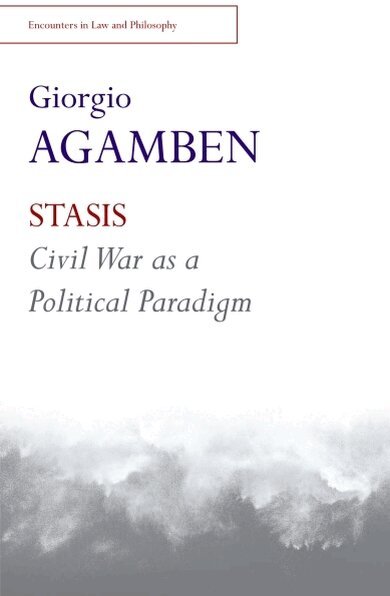
Giorgio Agamben investigates the ongoing warfare that European state power has been waging against its most malignant enemy: civil war itself. The survival of the state is seen to depend on its ability to preserve the political community from factional enmity. Agamben investigates first the classical Athenian theme of ’stasis’ – the city’s struggle against internal revolt. He then turns to a new reading of Hobbes’ Leviathan and its approach to the peril of the early modern English Commonwealth’s exposure to civil strife, division and revolution. At the heart of this book is the issue of state powers in their continuous decline – an issue that is key to the renewal of political, philosophical and legal thought.
295 kr
Skickas inom 3-6 vardagar
Giorgio Agamben investigates the ongoing warfare that European state power has been waging against its most malignant enemy: civil war itself. The survival of the state is seen to depend on its ability to preserve the political community from factional enmity. Agamben investigates first the classical Athenian theme of ’stasis’ – the city’s struggle against internal revolt. He then turns to a new reading of Hobbes’ Leviathan and its approach to the peril of the early modern English Commonwealth’s exposure to civil strife, division and revolution. At the heart of this book is the issue of state powers in their continuous decline – an issue that is key to the renewal of political, philosophical and legal thought.
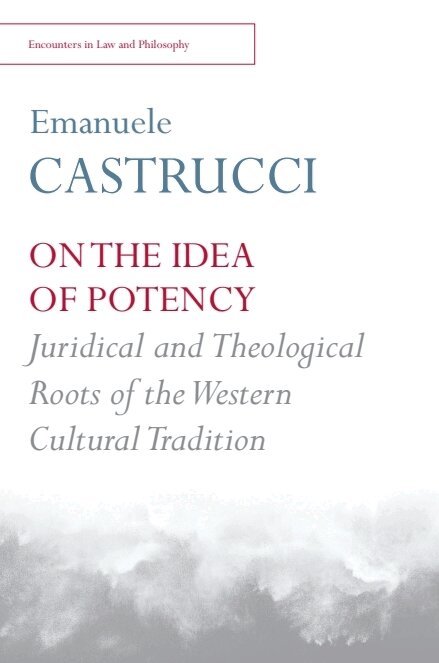
On the Idea of Potency
Juridical and Theological Roots of the Western Cultural Tradition
Häftad, Engelska, 2016
334 kr
Skickas inom 7-10 vardagar
Sweeping through the history of Western philosophy of law, Emanuele Castrucci deals with the metaphysical idea of potency as defined by Spinoza and Nietzsche, upsetting entrenched theories of jurisprudence. From classical Greek philosophy to Jewish biblical exegesis, via Christianity; from Aristotle's Metaphysics to its Arabic interpretations; from the genesis of natural law theory (Augustine, Aquinas, Duns Scotus, Ockham), to Kant and Enlightenment natural law theory, to Carl Schmitt, Castrucci shows how philosophical rationalism has failed to contain absolute power in a juridical sense.
1 338 kr
Skickas inom 7-10 vardagar
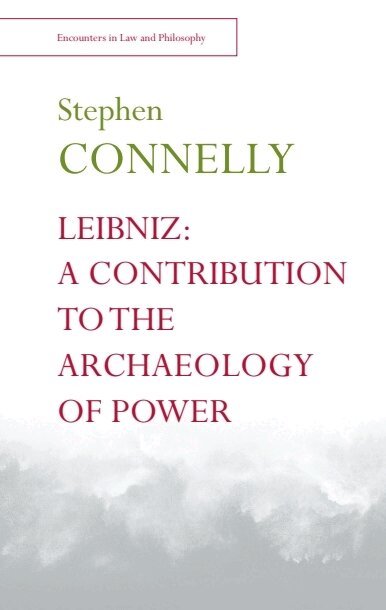
Connelly demonstrates how Leibniz's rearticulation of power and its associated concepts is motivated at least in part by the struggles that marked the terrain in which his ideas were rooted - the struggle between Reformed and Scholastic theology, between natural law and natural right, and between mechanistic natural philosophy and human freedom. He locates Leibniz within power's wider evolution, and shows how the universal jurisprudence which Leibniz developed between the 1660s and 1690s can be considered as a transformative encounter between power, activity and modality.Drawing on thinkers as diverse as Aristotle, Aquinas, Duns Scotus, Grotius, Husserl and Deleuze, Connelly traces Leibniz's conceptualisation of power through its applications in his legal texts, revealing that Leibniz in fact reconceptualises power under a new name: the state space. The move amounts to an internalisation of power as a moral world within each individual, submitting each practical agent to a universal set of obligations and prohibitions defined by that world. What though is at stake in bringing the objective world within each individual and submitting it to a public legal order? And what is the significance of this surgical intervention for any archaeology of power?
546 kr
Skickas inom 3-6 vardagar
A critical reading of Leibniz's legal theory, linking law, space and power Critically links Leibniz to legal theory and situates him with respect to thinkers such as Spinoza, Hobbes, Husserl, Deleuze, Foucault and BadiouBuilds on the French archaeology of power research programme of Agamben collaborator Gwena lle AubryExcavates a theory of law and spaceProvides an account of key tenets of medieval philosophy, such as power, reality, subjective activity, being-in-common, that inform the thought of continental philosophersThe concept of power has been a major feature of natural law theories. It evolved over the course of several centuries and was arguably the defining notion in both Hobbes' and Spinoza's doctrines of natural right. Yet Leibniz appears to effect a reversal in this millennium-long trajectory and demotes power to a derivative term of his philosophy. What was the rationale behind this radical change? And what does this reversal mean for the philosophy that follows?Connelly demonstrates how Leibniz's rearticulation of power and its associated concepts is motivated at least in part by the struggles that marked the terrain in which his ideas were rooted the struggle between Reformed and Scholastic theology, between natural law and natural right, and between mechanistic natural philosophy and human freedom. He locates Leibniz within power's wider evolution, and shows how the universal jurisprudence which Leibniz developed between the 1660s and 1690s can be considered as a transformative encounter between power, activity and modality.Drawing on thinkers as diverse as Aristotle, Aquinas, Duns Scotus, Grotius, Husserl and Deleuze, Connelly traces Leibniz's conceptualisation of power through its applications in his legal texts, revealing that Leibniz in fact reconceptualises power under a new name: the state space. The move amounts to an internalisation of power as a moral world within each individual, submitting each practical agent to a universal set of obligations and prohibitions defined by that world. What though is at stake in bringing the objective world within each individual and submitting it to a public legal order? And what is the significance of this surgical intervention for any archaeology of power?
2 183 kr
Skickas inom 3-6 vardagar
This is a highly original, interdisciplinary study of the archaic Greek word nomos and its family of words. More recently used to mean simply 'law' or 'law-making', Thanos Zartaloudis draws out the richness of this fundamental term by exploring its many roots and uses over the centuries. The Birth of Nomos includes extracts from ancient sources, in both the original and English translation, including material from legal history, philosophy, philology, linguistics, ancient history, poetry, archaeology, ancient musicology and anthropology. Through a thorough analysis of these extracts, we gain a new and complete understanding of nomos and its foundational place in the Western legal tradition.
402 kr
Skickas
This is a highly original, interdisciplinary study of the archaic Greek word nomos and its family of words. More recently used to mean simply 'law' or 'law-making', Thanos Zartaloudis draws out the richness of this fundamental term by exploring its many roots and uses over the centuries. The Birth of Nomos includes extracts from ancient sources, in both the original and English translation, including material from legal history, philosophy, philology, linguistics, ancient history, poetry, archaeology, ancient musicology and anthropology. Through a thorough analysis of these extracts, we gain a new and complete understanding of nomos and its foundational place in the Western legal tradition.
1 169 kr
Skickas
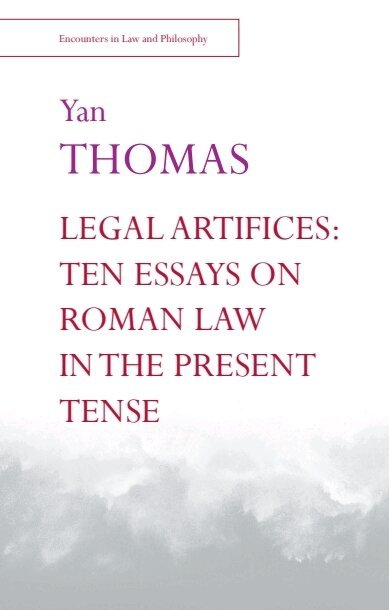
Western legal professionals habitually rely on a version of legal history that bolsters their own sway over the present. The legal mythologies undergirding these self-serving proposals are divided between doctrines of law's immemorial nature, and of its sacred (Roman) origins. Thomas's de-mythicized jurisprudence dismisses these sagas.
580 kr
Skickas inom 3-6 vardagar
The first English-language anthology of Yan Thomas, whose contributions to Roman law revolutionised legal scholarshipCollects and translates 10 essays by Yan Thomas (1943 2008), the most renowned French jurist of the 20th centuryProvides a juridical perspective on the genealogy of the Western subject and the elementary conditions for the exercise of powerBuilds on the growing interest in Thomas' work generated by recent engagements, such as in Giorgio Agamben's Homo Sacer seriesDemonstrates the formal continuity of socio-legal techniques that have defined Western legal cultureWestern legal professionals habitually rely on a version of legal history that bolsters their own sway over the present. The legal mythologies undergirding these self-serving proposals are divided between doctrines of law's immemorial nature, and of its sacred (Roman) origins. Thomas's de-mythicised jurisprudence, presented in this collection of essays, dismisses these sagas. His work sent seismic waves across the humanities and social sciences, with claims including: Law is not a set of rules, but the operation of legal arguments; lawyers are the agents of the legal denaturalisation of the worldRome is misread as an essentially political entity; the effect exercised on Roman society by its jurists ranks before that of its politiciansDespite a widely accepted opposition between modern labour law and the Roman renting-out of a slave's workforce, there exist unexpected commonalities'Legal order' and 'responsibility' are among the inventions of modern law; they are not part of the timeless inventory of the world
1 111 kr
Skickas
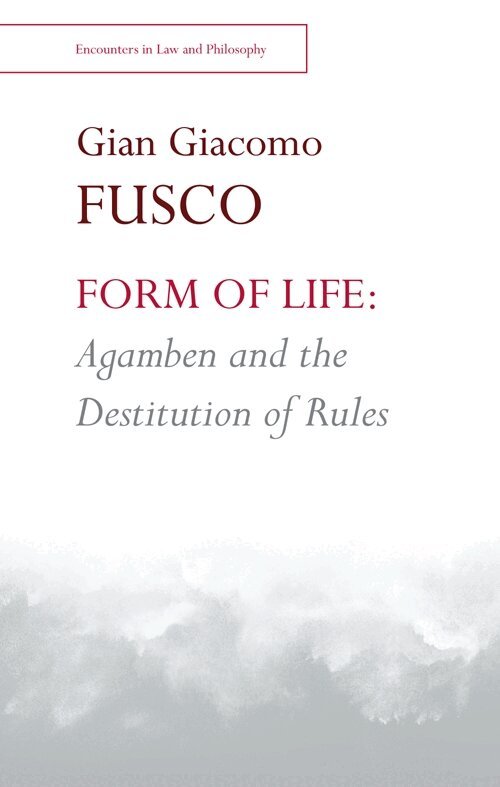
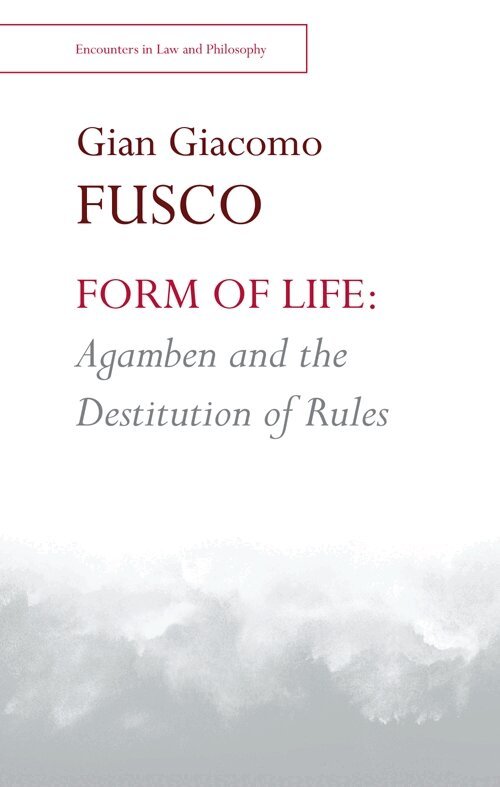
A rigorous reading of Agamben's concept of form-of-lifeDiscusses Agamben's political thought and the question of anarchyRe-evaluates Agamben's thought in light of his later works and the recent completion of the Homo Sacer seriesConsiders Agamben's related works on use, praxis, inoperativity, and destitutioOutlines a theoretical framework through which to think of a non-state and non-legal politicsExplores underappreciated influences of Agamben's philosophyThe concept of a form-of-life is the centre of gravity around which Agamben has advanced his attempts to think of an alternative politics. It refers to a living dimension that has overthrown the structures of power in which humans are supposedly destined to live, disclosing the possibility of a new understanding of political and legal life. By placing 'form-of-life' in the context of contemporary philosophy, this book re-imagines anew some of the basic categories of human socialities such as work, rights, obligation, property, and use. It explores the ways in which Agamben's philosophy might be a strategic resource for developing political and legal strategies that leave behind a situation dominated by pervasive sovereign violence.At a moment of history in which the fundamental promises of Western modernity are undergoing a decisive crisis, to look beyond the basic categories of human social institutions becomes an urgency. Through a close engagement with Agamben's concept of form-of-life, this book seeks to challenge the current crisis of juridical, political and economic reality.
431 kr
Skickas inom 3-6 vardagar
The notion of form-of-life refers to a living dimension that has overthrown the structures of power in which humans are supposedly destined to live, disclosing the possibility of a new understanding of political and legal life. By placing the 'form-of-life' in the context of contemporary philosophy, this book re-imagines anew some of the basic categories of human socialities such as work, rights, obligation, property, and use. It explores the ways in which Agamben's philosophy might be helpful in developing political and legal strategies that leave behind a situation dominated by pervasive sovereign violence.At a moment of history in which the fundamental promises of Western modernity are undergoing a decisive crisis, to look beyond the basic categories of human social institutions becomes an urgency. Through a close engagement with Agamben's concept of form-of-life, this book seeks to challenge the current crisis of juridical, political and economic reality.