Fire Ant Books - Böcker
Visar alla böcker i serien Fire Ant Books. Handla med fri frakt och snabb leverans.
9 produkter
9 produkter
210 kr
Skickas inom 7-10 vardagar
Reelfoot Lake has been a hunting and fishing paradise from the time of its creation in 1812. This work tells of how, in 1908, with the loss of their homes to capitalists, rural folk donned hoods and gowns and engaged in ""night riding"", spreading mayhem and death as they sought justice.
189 kr
Skickas inom 7-10 vardagar
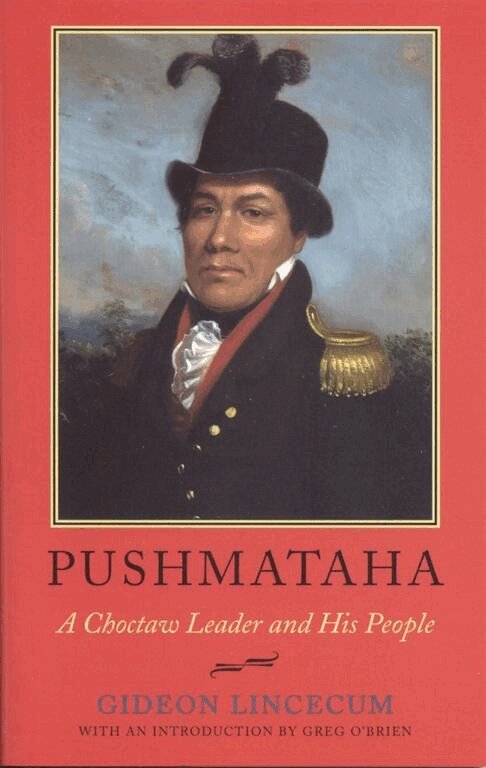
This important book comprises two articles that appeared in the 1904 and 1906 volumes of Publications of the Mississippi Historical Society. In ""Life of Apushimataha,"" Gideon Lincecum tells the story of Choctaw chief Pushmataha, who was born in Mississippi in 1764. A fearless warrior, his name literally means ""one whose tomahawk is fatal in war or hunting."" As a charismatic leader, his foresight in making an alliance with General Andrew Jackson brought the Choctaws into war with the Creek Nation and into the War of 1812 but served to their benefit for many years with the United States government. In 1824, Pushmataha traveled to Washington, D.C., to negotiate the Treaty of Doak's Stand as pressure grew for Choctaw removal to Oklahoma Territory, but he fell ill and died there. He was buried with full military honors in the Congressional Cemetery at Arlington. In ""Choctaw Traditions about Their Settlement in Mississippi and the Origin of Their Mounds,"" Lincecum translates a portion of the Skukhaanumpula - the traditional history of the tribe, which was related to him verbally by Chata Immataha, ""the oldest man in the world, a man that knew everything.
328 kr
Skickas inom 7-10 vardagar
197 kr
Skickas inom 7-10 vardagar
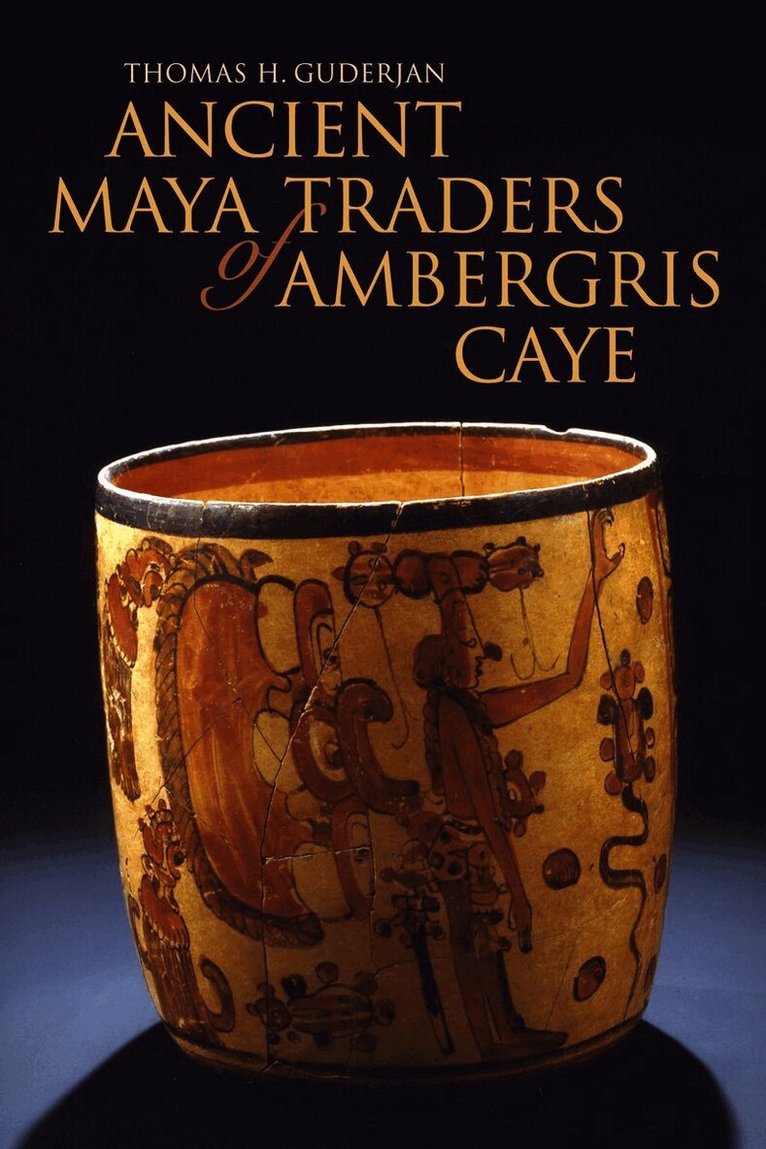
Maya maritime trade networks sites on Ambergris Caye, Belize. Archaeologists are unsure exactly when the Maya inhabited the coastal areas of Belize, but ample evidence exists to support an extensive maritime trade network along the coast by A.D. 600. This volume focuses on the maritime trade network sites on Ambergris Caye, Belize where excavations have revealed remnants of very small villages, or camps, along the Caribbean coastline.
325 kr
Skickas inom 7-10 vardagar
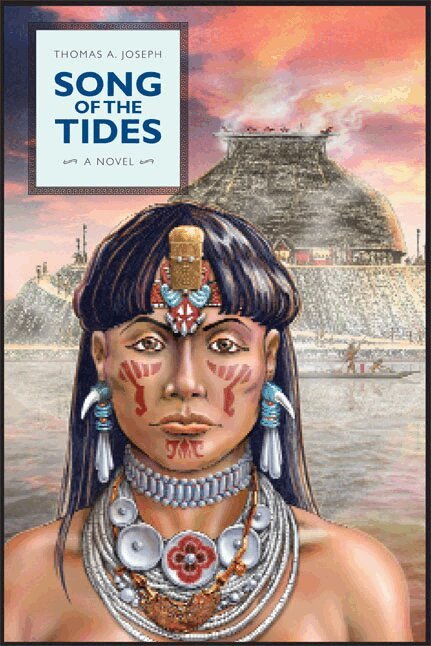
This is the Calusa's historic rejection of 16th-century Spanish occupiers.Beginning with their battle against the forces of Ponce de Leon, the Calusa Indians of southwest Florida entered a dark period of European invasion and native resistance, which changed the nature and course of life on the North American continent.""Song of the Tides"" is a work of anthropological fiction set during the Spanish entrada into southwest Florida and their encounters with the Calusa. Relying on letters and memoirs, especially those of explorer Pedro Menendez de Aviles, shipwrecked captive Escalante Fontaneda, and the Jesuit priest Juan Rogel, Joseph has woven a tale of vivid historical detail and compelling human drama. Working with Calusa scholars, the author has created a superbly written account of the clash of two proud and dominant cultures. Told through the voice of Aesha, daughter of the great Calusa chief Caalus, as well as those of other political and spiritual leaders, the fictional narrative spans half a century of conflict with Spanish soldiers and Jesuits, infighting between bands, struggle to preserve their culture, and eventual defeat of the Spanish through wit and deceit.
264 kr
Skickas inom 7-10 vardagar
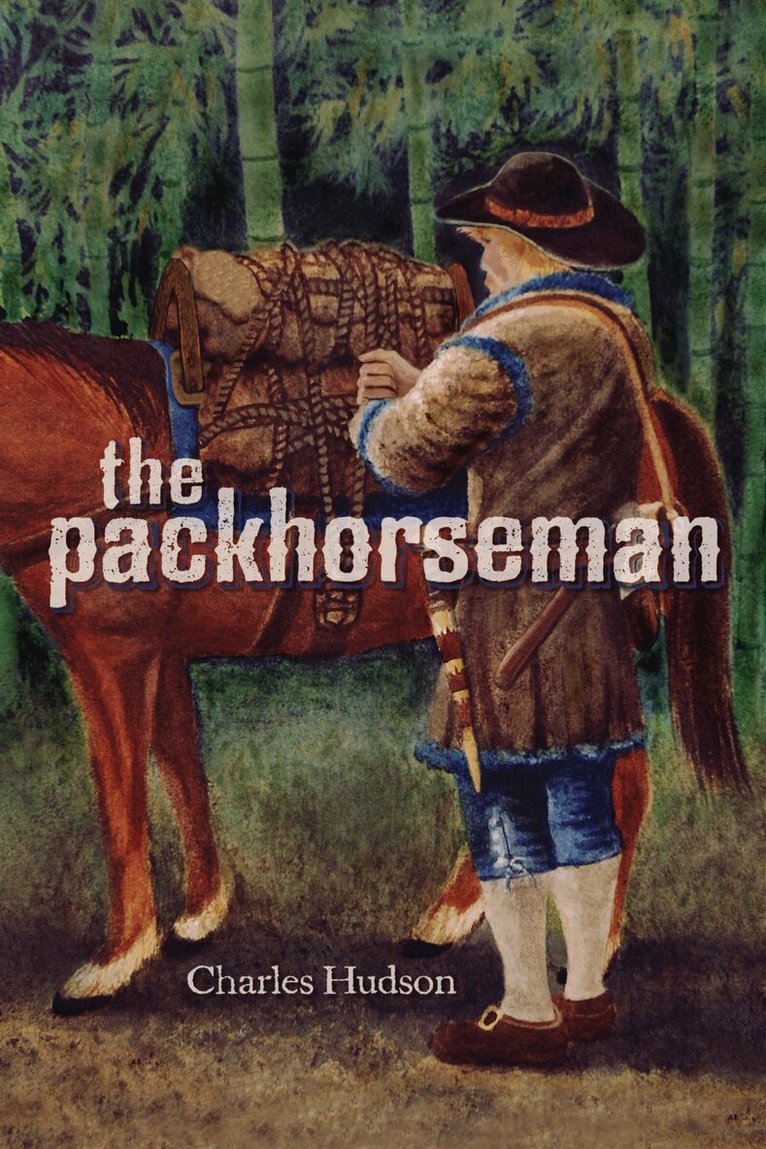
In April 1735, twenty-year-old William MacGregor, possessing little more than a bottle of Scotch whiskey and a set of Shakespeare's plays, arrives in Charles Town, South Carolina, to make his fortune in the New World. The Scottish Highlands, while dear to his heart, were in steep economic decline and hopelessly entangled in dangerous political intrigue. With an uncle in Carolina, the long ocean voyage seemed his best chance for a new start. He soon discovers that the Jacobite politics of Scotland extend to Carolina, and when his mouth gets him in trouble with the Charles Town locals, dimming his employment opportunities, he seizes the one option still open for him and takes a job as a frontier packhorseman. Soon young MacGregor is on the Cherokee trail to Indian country, where he settles in as a novice in the deerskin trade.Along the way William learns not only the arts of managing a pack train and trading with the Indians, but of reading the land and negotiating cultural differences with the Cherokee - whose clan system is much different from the Scottish clans of his homeland. William also learns that the Scottish enlightenment he so admires has not made much headway in the Carolina back-country, where the real challenges are to survive, day to day, during the tense times after the Yamasee War and to remember that while in Indian country...it is their country. A scholar of the native Southeast, Charles Hudson has turned his hand to this work of historical fiction, bringing to life the pack-horsemen, Indian traders, and southeastern Indians of the early 18th-century Carolina. With a comfortable and engaging style, Hudson peoples the Carolina frontier with believable characters, all caught up in a life and time that is historically well-documented but little-known to modern popular readers.
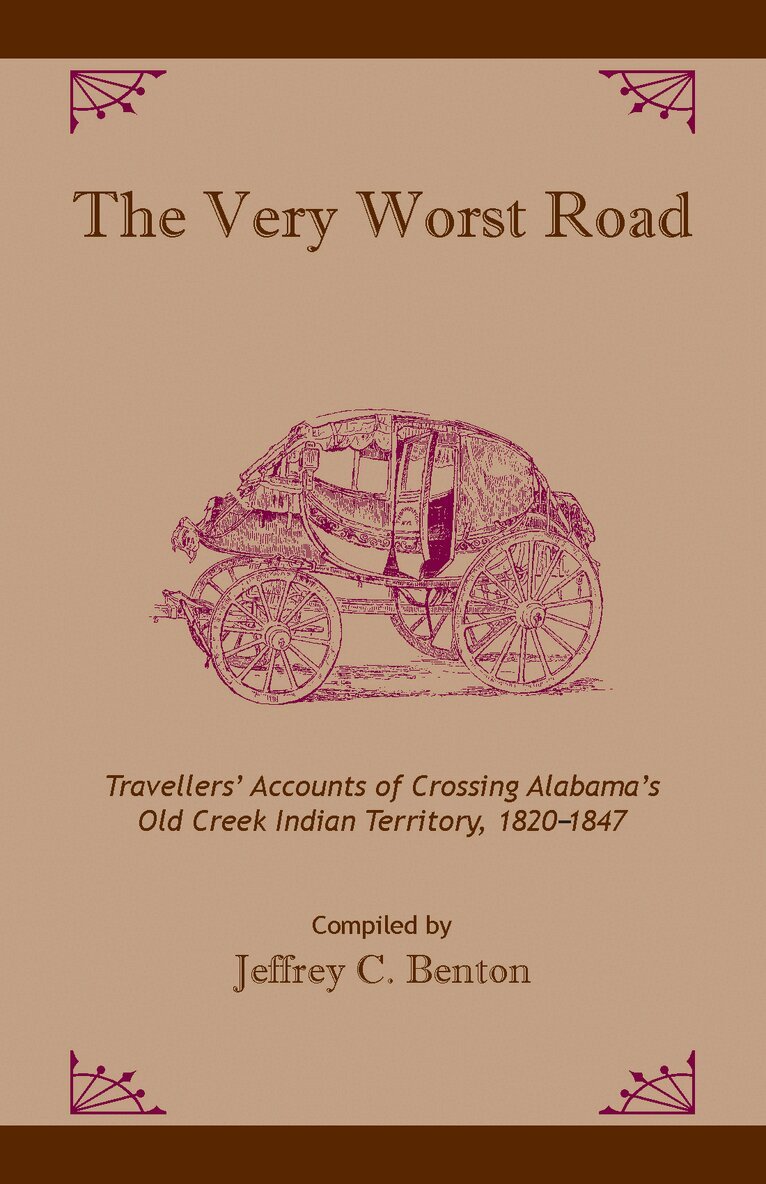
Very Worst Road
Travellers' Accounts of Crossing Alabama's Old Creek Indian Territory, 1820-1847
Häftad, Engelska, 2009
197 kr
Skickas inom 7-10 vardagar
The Very Worst Road was originally published by the Historic Chattahoochee Commission in 1998. ""The Very Worst Road"" contains sixteen contemporary accounts by travelers who reached Alabama along what was known as the 'Old Federal Road'. More of a network of paths than a single road, it ran from Columbus and points south in Georgia for more or less due west into central Alabama and to where the confluence of the Tallapoosa and Coosa Rivers forms the Alabama River. These accounts deal candidly with the rather remarkable array of impediments that faced travelers in Alabama in its first decades as a state. They also describe with wonder, interest, and, frequently with some disgust, the road, the inns, the travelling companions, and the few and raw communities they encountered as they made their way, often with difficulty, through what seemed to many of them uncharted wilderness.
273 kr
Skickas inom 7-10 vardagar
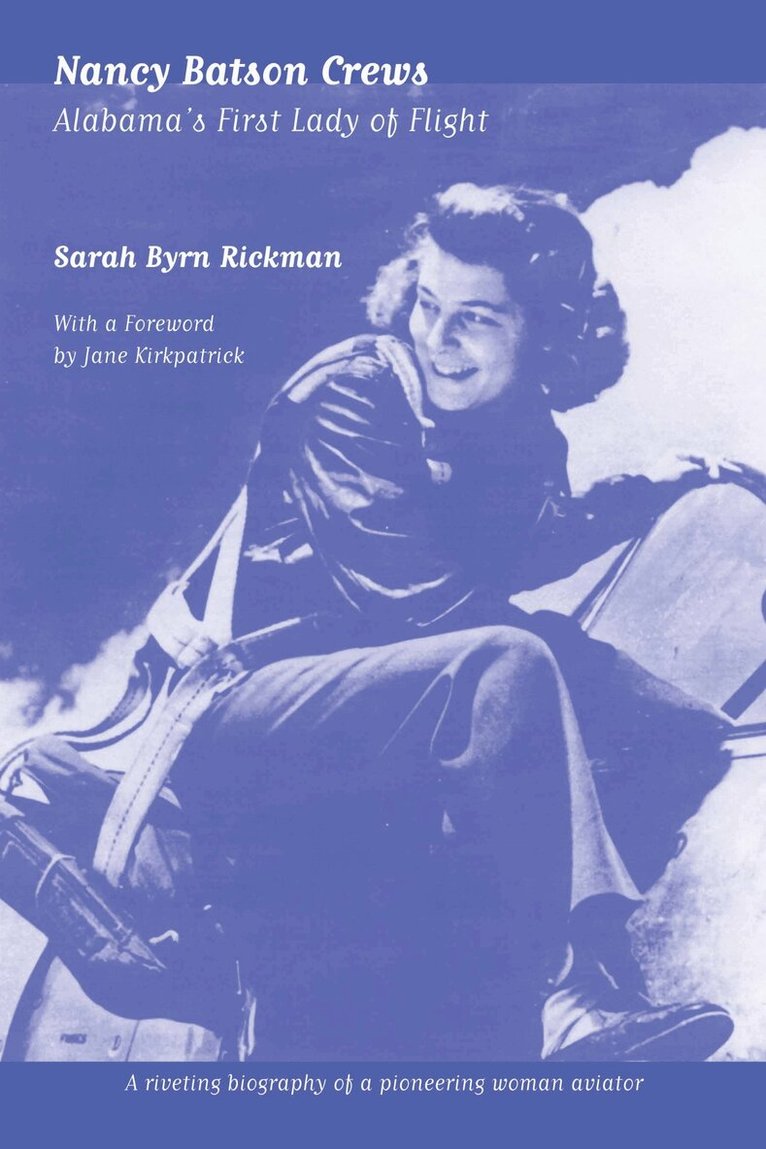
This is the story of an uncommon woman - high school cheerleader, campus queen, airplane pilot, wife, mother, politician, businesswoman - who epitomizes the struggles and freedoms of women in 20th-century America, as they first began to believe they could live full lives and demanded to do so. World War II offered women the opportunity to contribute to the work of the country, and Nancy Batson Crews was one woman who made the most of her privileged beginnings and youthful talents and opportunities. In love with flying from the time she first saw Charles Lindbergh in Birmingham (October 1927), Crews began her aviation career in 1939 as one of only five young women chosen for Civilian Pilot Training at The University of Alabama. Later, Crews became the 20th woman of 28 to qualify as an 'Original' Women's Auxiliary Ferrying Squadron (WAFS) pilot, employed during World War II shuttling P-38, P-47, and P-51 high-performance aircrafts from factory to staging areas and to and from maintenance and training sites. Before the war was over, 1,102 American women would qualify to fly Army airplanes. Many of these female pilots were forced out of aviation after the war as males returning from combat theater assignments took over their roles. But Crews continued to fly, from gliders to turbojets to J-3 Cubs, in a postwar career that began in California and then resumed in Alabama. The author was a freelance journalist looking to write about the WASP (Women Airforce Service Pilots) when she met an elderly, but still vital, Nancy Batson Crews. The former aviatrix held a reunion of the surviving nine WAFS for an interview with them and Rickman, recording hours of her own testimony and remembrance before Crews' death from cancer in 2001. After helping lead the fight in the 70s for WASP to win veteran status, it was fitting that Nancy Batson Crews was buried with full military honors.
265 kr
Skickas inom 7-10 vardagar
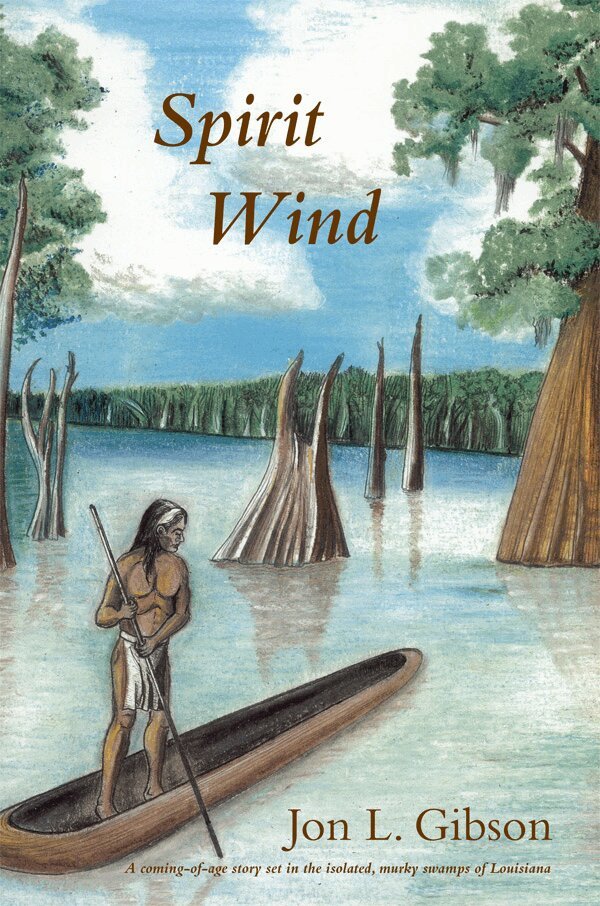
When the mighty wind blows through the swamps of southern Louisiana, it changes not only the land, but the inhabitants as well. Just such a wind brought a lone infant into the care of the Chitimacha Indians deep in the Atchafalaya swamp. Raised by the tribal holy man, Storm Rider grows to adolescence as a respected tribal member, steeped in the wisdom and traditions of his adopted people. Their clan competitions, life-cycle rituals, social interactions, and subsistence labors are well explained in this anthropological novel. When captured by an enemy raiding party, Storm Rider and his nemesis, the village bully, forge a bond that delivers them from danger and charts their futures. Love, hate, friendship, and loyalty ride the dark bayou waters and converge at the sacred Rain Tree. Swamps, hurricanes, cannibals, and unforgettable characters are interwoven as tightly as one of old Cane Basket's watertight baskets in this anthropologically accurate story of American Indian cultures in conflict.