Exeter New Approaches to Legend, Folklore and Popular Belief – Serie
Visar alla böcker i serien Exeter New Approaches to Legend, Folklore and Popular Belief. Handla med fri frakt och snabb leverans.
15 produkter
15 produkter
643 kr
Skickas inom 5-8 vardagar
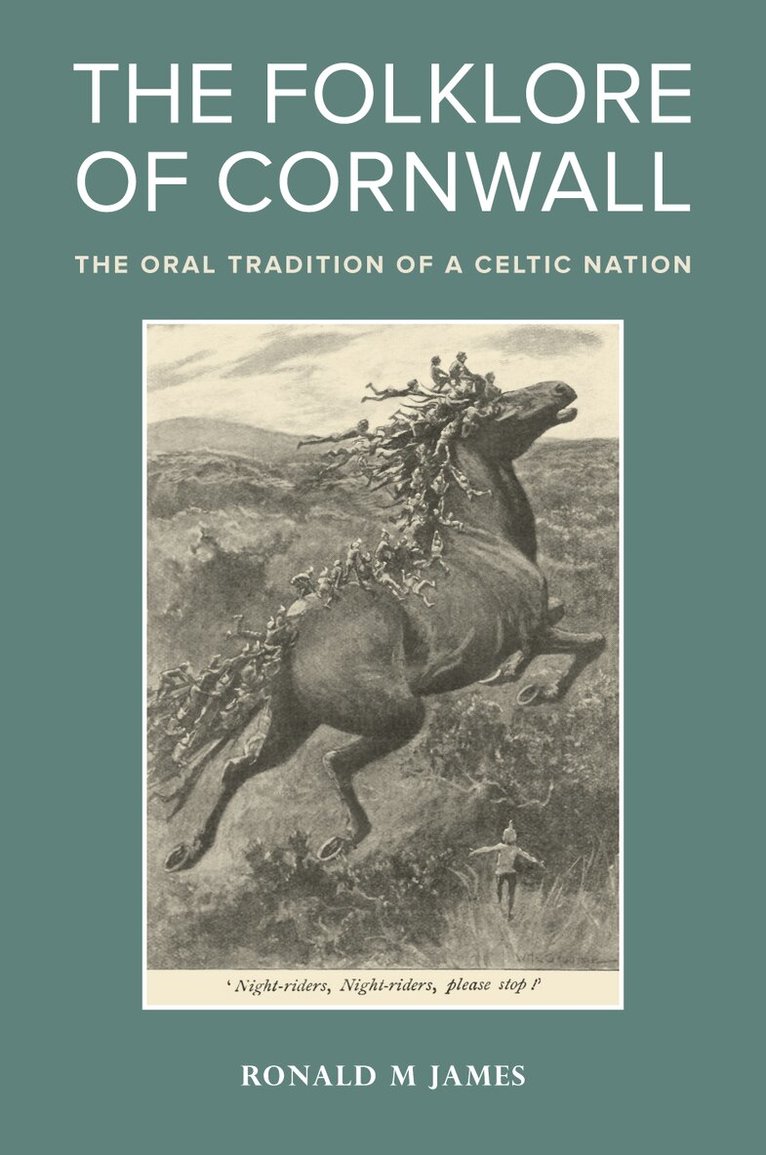
By considering the folklore of Cornwall in a Northern European context, this book casts light on a treasury of often-ignored traditions. Folklore studies internationally have long considered Celtic material, but scholars have tended to overlook Cornwall’s collections. The Folklore of Cornwall fills this gap, placing neglected stories on a par with those from other regions where Celtic languages have deep roots.The Folklore of Cornwall demonstrates that Cornwall has a distinct body of oral tradition, even when examining legends and folktales that also appear elsewhere. The way in which Cornish droll tellers achieved this unique pattern is remarkable; with the publication of this book, it becomes possible for folklorists to look to the peninsula beyond the River Tamar for insight.A very readable text with popular appeal, this book serves as an introduction to folklore studies for the novice while also offering an alternative means to consider Cornish studies for advanced scholars. The comparative analysis combined with an innovative method of The Folklore of Cornwall is not to be found in other treatments of the subject.
306 kr
Skickas
By considering the folklore of Cornwall in a Northern European context, this book casts light on a treasury of often-ignored traditions. Folklore studies internationally have long considered Celtic material, but scholars have tended to overlook Cornwall’s collections. The Folklore of Cornwall fills this gap, placing neglected stories on a par with those from other regions where Celtic languages have deep roots.The Folklore of Cornwall demonstrates that Cornwall has a distinct body of oral tradition, even when examining legends and folktales that also appear elsewhere. The way in which Cornish droll tellers achieved this unique pattern is remarkable; with the publication of this book, it becomes possible for folklorists to look to the peninsula beyond the River Tamar for insight.A very readable text with popular appeal, this book serves as an introduction to folklore studies for the novice while also offering an alternative means to consider Cornish studies for advanced scholars. The comparative analysis combined with an innovative method of The Folklore of Cornwall is not to be found in other treatments of the subject.
Fairy Encounters in Medieval England
Landscape, Folklore and the Supernatural
Inbunden, Engelska, 2024
1 271 kr
Skickas inom 5-8 vardagar
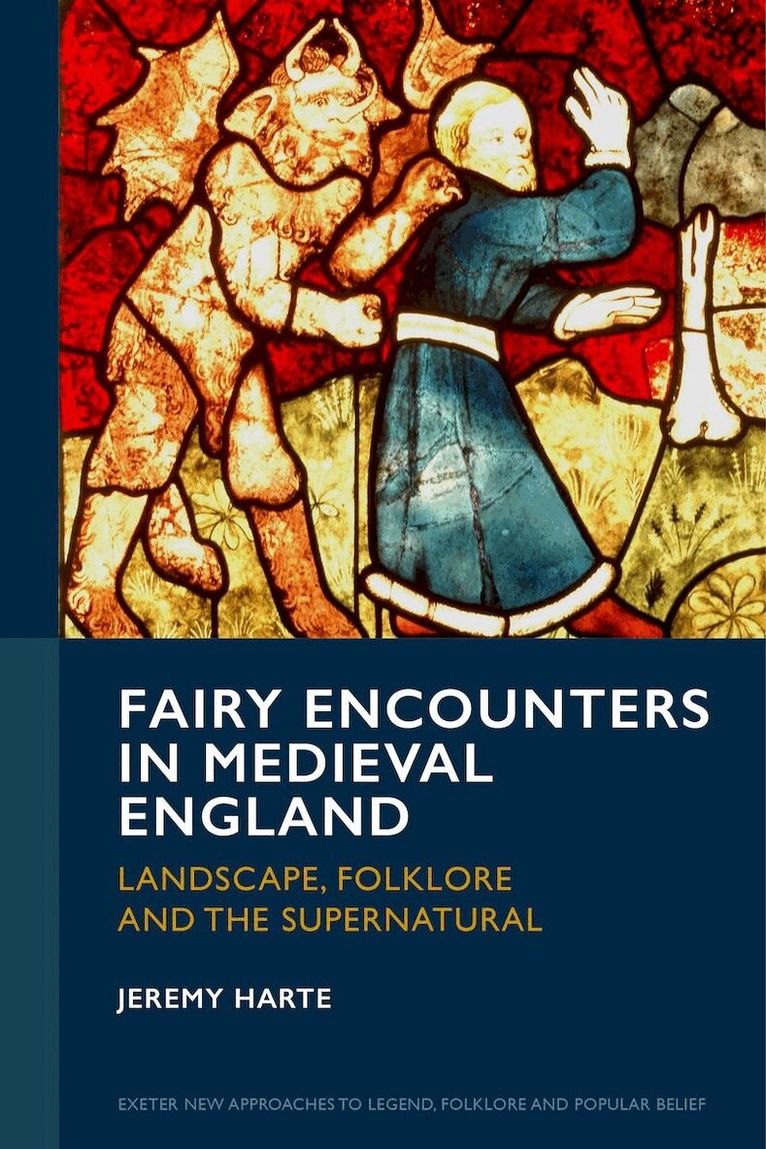
What is it like to meet a being from another world? This book collects testimony from eight hundred years of witnesses baffled by the supernatural breaking into their lives. Close reading of miracle collections, chronicles, saints’ lives and sermons shows how they depended on first-hand vernacular voices, never quite suppressed in the Latin of the clergymen who transcribed them.When people saw spirits, surface identity mattered less than common nature. Whether manifesting as fairies, revenants, local saints or fiends, they came in stock types: goblins, lovers, hunters, pygmies, dogs, indescribable shape-shifting objects. Just as they had preferred forms, so they appeared in particular places. The tradition of English supernatural place-names, never before gathered into a corpus, matches the medieval texts to show what places were haunted and why. The dark pools into which otherworldly things were exorcised, the paths on which they led travellers astray, the hills onto which they descended in search of people to command and seduce, and the meadows where they danced—all these can be found on the cognitive map of the peasantry.This book sheds new light on anomalous experience in medieval life and the relations it forged between vernacular life-stories and the gate-keepers of the written word. Fairies could cure as well as harm, prophecy as well as deceive: that made them a disruptive force in history, theology and morals. They challenge our ideas of a church-dominated society and once they are admitted into the picture, the Middle Ages will never look the same.
Exeter Companion to Fairies, Nereids, Trolls and other Social Supernatural Beings
European Traditions
Inbunden, Engelska, 2024
1 370 kr
Skickas inom 5-8 vardagar
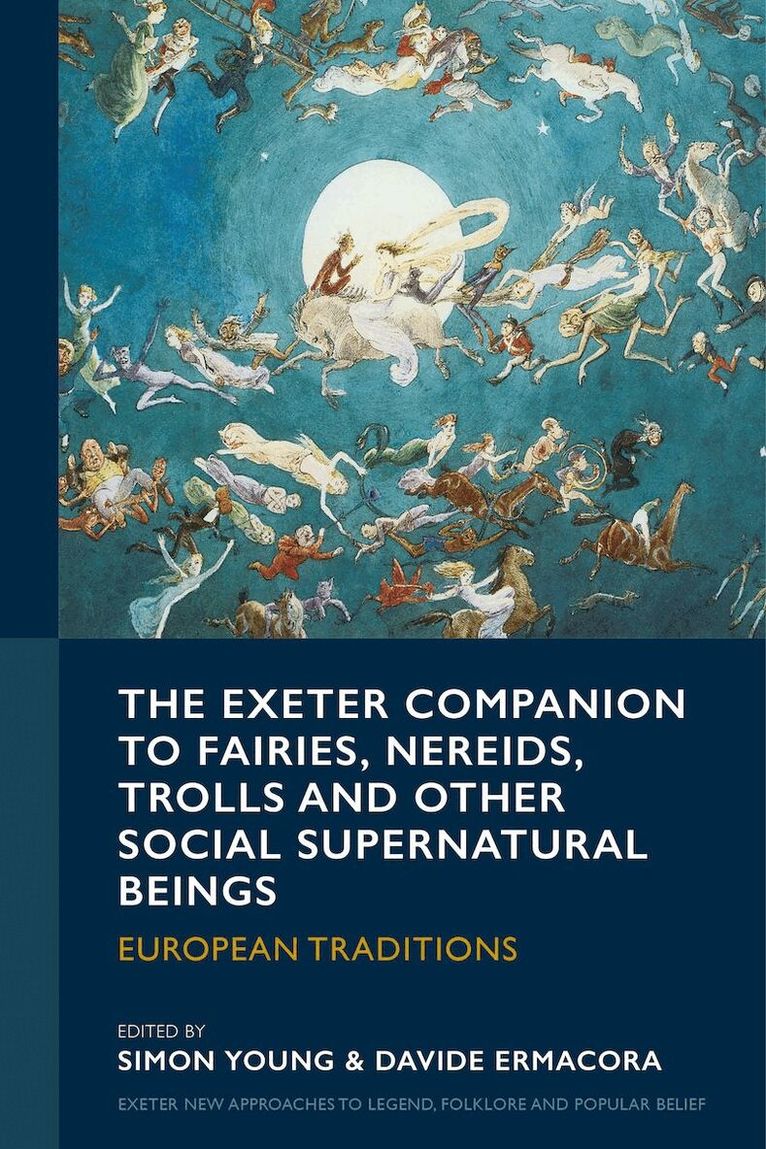
Fairies, elves, and other magical beings… they’re so much more than just children’s tales.For centuries, Europeans believed in a parallel supernatural realm inhabited by these beings who lived much like humans in their own communities. This ‘social supernatural’ world mirrored ours with troll weddings, pixy battles, nereid picnics, dwarf migrations, and the like. Social supernatural beings were thought to interact with the human world in profound ways: they whipped up storms, ensured good harvests, and healed (and, all too often, caused) illness.The Exeter Companion to Fairies, Nereids, Trolls and other Social Supernatural Beings dives into the rich folklore and oral traditions around the social supernatural across Europe; in fact, it pioneers the term ‘social supernatural’ as a folklore and supernatural category. Bringing together eighteen experts, this is the first comprehensive Europe-wide look at these beliefs and practices. Through in-depth studies, the volume explores how diverse cultures from Ireland to Ukraine, and from Norway to Greece, envisioned their supernatural neighbours and how these parallel societies reflected human concerns and desires. Our authors employ ancient, medieval, modern and, in some cases, contemporary material to tease out the ‘hidden people’ from obscure and, all too often, forgotten sources.The book resurrects captivating stories and traditions. For anyone fascinated by European folklore, magic, and mythology, it provides a rich research seam with up-to-date bibliographies for a dozen European countries. It will be of use to folklorists, historians, ethnologists, sociologists and also the general reader interested in the supernatural beliefs of traditional European societies.
1 227 kr
Skickas
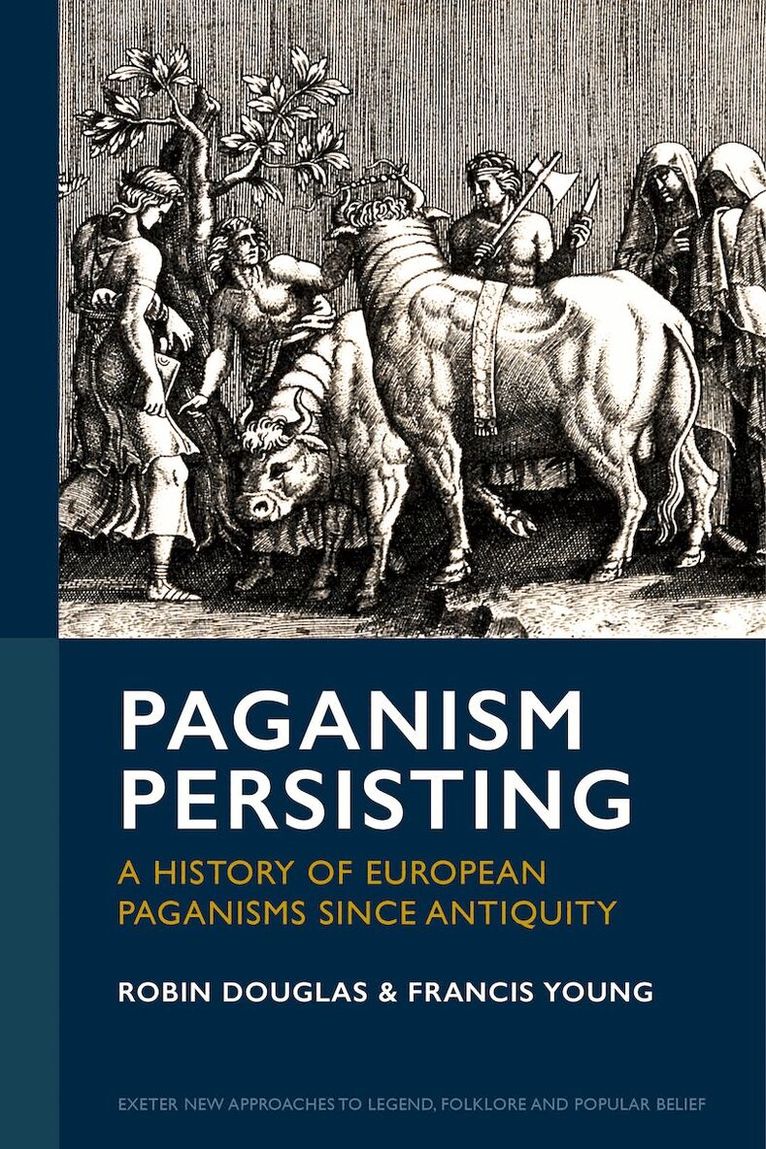
Paganism in Europe was not defeated by Christianity: it never went away. From the fourth century to the twentieth, against the background of a largely Christian culture, people repeatedly attempted to revive various kinds of pre-Christian religion – beliefs and practices that we have come to label as ‘paganism’.Ancient paganism did not survive the Middle Ages in its original form; this book tells the story of the persistence of elements of paganism and the pagan idea through Europe’s pagan revivals, from Byzantine Greece to medieval Eastern Europe and Renaissance Florence, from eighteenth-century Norwich to revolutionary Paris and Edwardian England. While some of these revivals are well known and others are almost entirely forgotten, they all reveal the rich diversity of interpretations of paganism – and how those interpretations have been conditioned by the surrounding culture.Revived paganisms ranged from the austerely rational to the earnestly romantic, from the mystical and occult to the stridently nationalistic. Paganism Persisting uncovers European paganism’s long afterlife, up to and including the emergence of modern paganism as a mass movement in the twentieth century. The authors are both historians of religion specializing, respectively, in the intellectual history of the idea of paganism and in the development of popular religion and folklore. This book has much to offer to anyone interested in European cultural history, the history of ideas and religious studies.
1 227 kr
Skickas
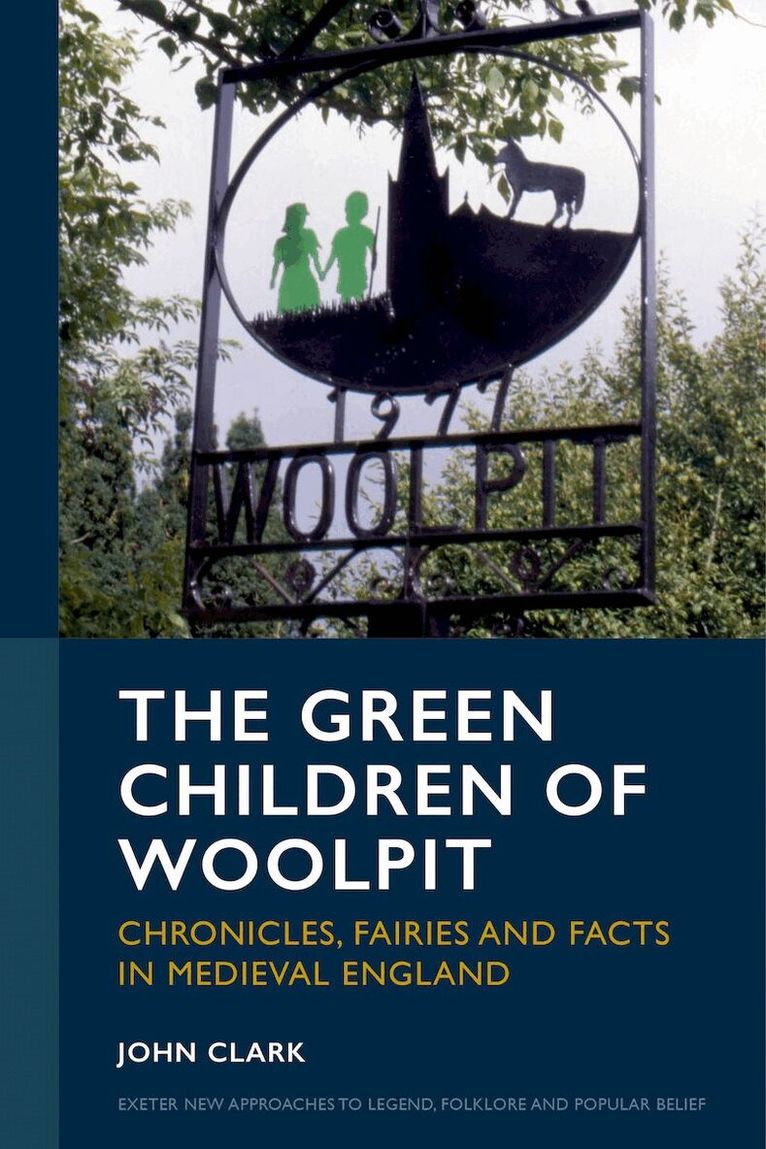
Shortlisted by The Folklore Society for The Katharine Briggs Award 2025.Two medieval chroniclers, William of Newburgh and Ralph of Coggeshall, reported the mysterious appearance of a pair of ‘Green Children’—with green skins and speaking an unknown language—in the Suffolk village of Woolpit in the mid-twelfth century. The story is well known today, usually as a Suffolk folktale about fairies and a fairy otherworld. Retold many times, it continues to inspire novels, poetry, songs, plays, and even operas.This book analyses the story in its historical and geographical context, and considers the numerous ways in which it has been interpreted, recounted, and reimagined by historians, folklorists, philosophers, and writers. Folklorists have mined it for ‘folktale motifs’ without considering whether it is truly a folktale. Historians have used it as a key to understanding the motives of one or other of the two chroniclers who recorded it. ‘Fortean’ researchers have tried to find a convoluted core of historical fact.Returning to the two original Latin accounts, this book translates them afresh and analyses them side by side for the first time, allowing us to conclude that both writers were drawing on the same source. Such an interdisciplinary study is necessary when considering the many modern ‘explanations’ of the events that have been offered, from mundane to extraterrestrial. The volume presents an example of how extraordinary events reported by medieval chroniclers can be studied analytically, and will interest not only medievalists but anyone interested in folklore and fairylore—and perhaps inspire others to fresh reworkings of this perpetually intriguing story.
286 kr
Skickas inom 5-8 vardagar
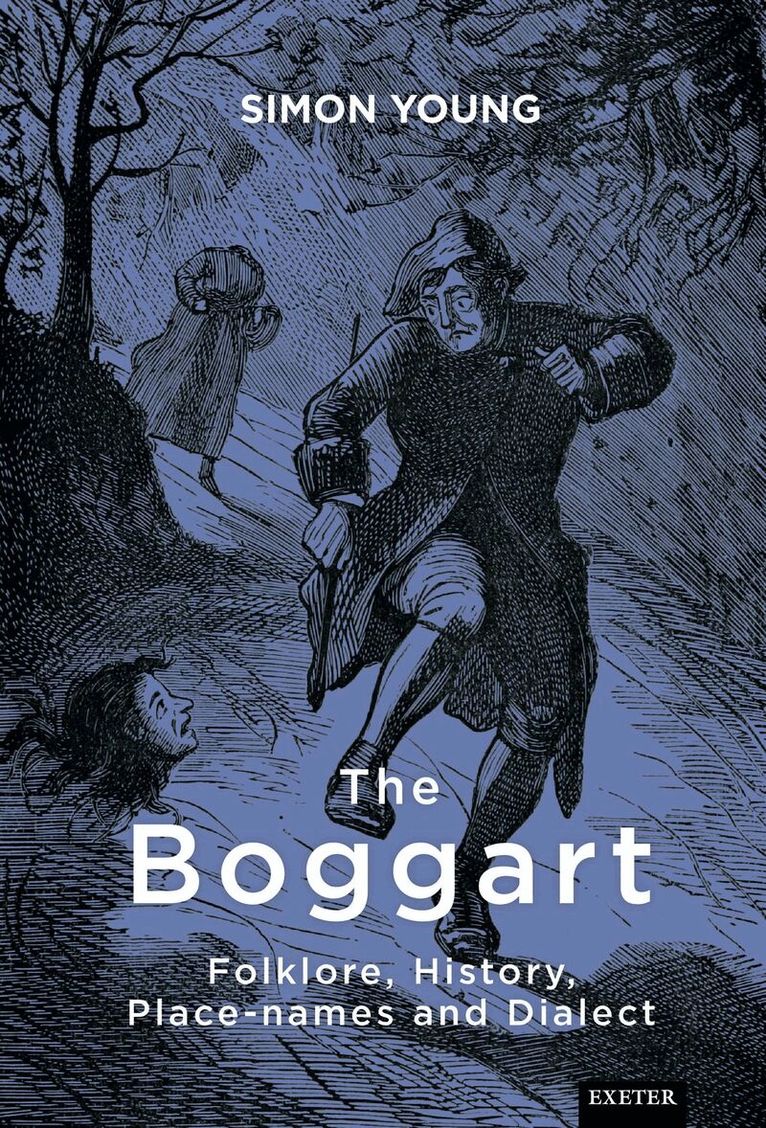
Honourable mention for The American Folklore Society's Wayland D. Hand Prize for outstanding book combining historical and folkloristic methods and materials.Runner up for The Folklore Society's 2022 Katherine Briggs Award for most distinguished contribution to folklore studies.The little-studied and once much-feared boggart is a supernatural being from the north of England. Against the odds it survives today, both in place-names and in fantasy literature—not least the Harry Potter universe. This book pioneers two methods for collecting boggart folklore: first, the use of hundreds of thousands of words on the boggart from newly digitized ephemera; second, about 1,100 contemporary boggart memories from social media surveys and personal interviews relating to the interwar and postwar years.Combining this new data with an interdisciplinary approach involving dialectology, folklore, Victorian history, supernatural history, oral history, place-name studies and sociology, it is possible to reconstruct boggart beliefs, experiences and tales. The boggart was not, as we have been led to believe, a ‘goblin’. Rather, ‘boggart’ was a much more general term encompassing all solitary supernatural beings, from killer mermaids to headless phantoms, from black dogs to shape-changing ghouls.The author shows how in the same period that such beliefs were dying out, folklorists continually misrepresented the boggart, and explores how the modern fantasy boggart was born of these misrepresentations. As well as offering a fresh reading of associated traditions, The Boggart demonstrates some of the ways in which recent advances in digitization can offer rich rewards.
Exeter Companion to Changeling Lore
The West Eurasian and Mediterranean Tradition
Inbunden, Engelska, 2025
1 411 kr
Skickas inom 5-8 vardagar
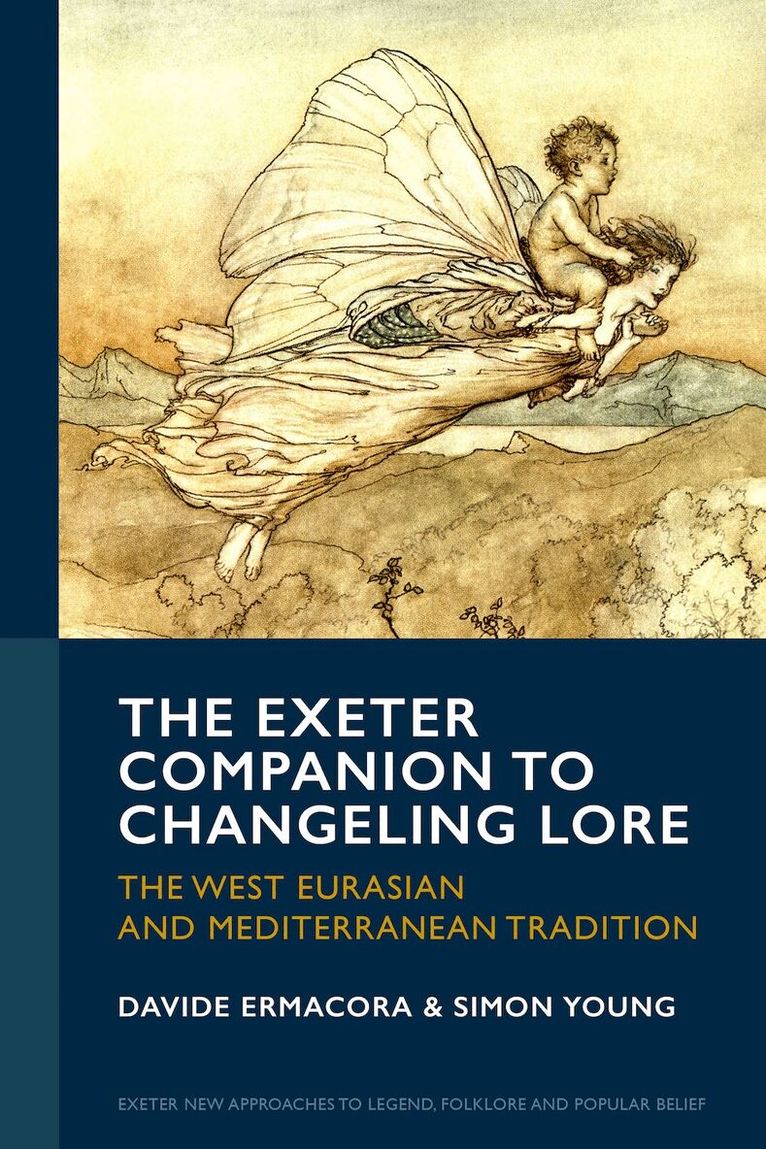
For centuries, people across Europe, North Africa, and the Middle East believed that supernatural beings—fairies, jinn, trolls, or demons—could steal a human child and leave a lookalike in its place. These stories offer fascinating insights into how different cultures made sense of disability, illness, and unexplained transformations.The Exeter Companion to Changeling Lore is the first multi-author volume dedicated to changelings and the most comprehensive study of these beliefs across West Eurasia and the Mediterranean. Bringing together leading historians, literary scholars, and folklorists, it considers changeling legends from Britain to Armenia and from the Arctic Circle to the Maghreb. Individual chapters uncover new archival material in Hungary, previously undocumented folklore motifs in Ireland, and changeling traditions in countries where they had gone unnoticed—such as Italy and Spain. The book even examines how changeling beliefs have persisted into modern UFO-lore.Challenging long-held assumptions, this volume overturns the idea that changeling beliefs are to be found in all corners of the globe and that no such tales predate the medieval period. Instead, it reveals that the vast majority of changeling accounts belong to a distinct West Eurasian-Mediterranean tradition, with records stretching back to ancient Greece and Rome. This book is essential reading for folklorists, historians, anthropologists, disability studies and criminal studies scholars, and anyone fascinated by myths, legends, and the supernatural. It concludes with a revised list of changeling motifs, providing an invaluable resource for future research.
Exeter Companion to Fairies, Nereids, Trolls and other Social Supernatural Beings
European Traditions
Häftad, Engelska, 2026
421 kr
Skickas inom 5-8 vardagar
Fairies, elves, and other magical beings… they’re so much more than just children’s tales.For centuries, Europeans believed in a parallel supernatural realm inhabited by these beings who lived much like humans in their own communities. This ‘social supernatural’ world mirrored ours with troll weddings, pixy battles, nereid picnics, dwarf migrations, and the like. Social supernatural beings were thought to interact with the human world in profound ways: they whipped up storms, ensured good harvests, and healed (and, all too often, caused) illness.The Exeter Companion to Fairies, Nereids, Trolls and other Social Supernatural Beings dives into the rich folklore and oral traditions around the social supernatural across Europe; in fact, it pioneers the term ‘social supernatural’ as a folklore and supernatural category. Bringing together eighteen experts, this is the first comprehensive Europe-wide look at these beliefs and practices. Through in-depth studies, the volume explores how diverse cultures from Ireland to Ukraine, and from Norway to Greece, envisioned their supernatural neighbours and how these parallel societies reflected human concerns and desires. Our authors employ ancient, medieval, modern and, in some cases, contemporary material to tease out the ‘hidden people’ from obscure and, all too often, forgotten sources.The book resurrects captivating stories and traditions. For anyone fascinated by European folklore, magic, and mythology, it provides a rich research seam with up-to-date bibliographies for a dozen European countries. It will be of use to folklorists, historians, ethnologists, sociologists and also the general reader interested in the supernatural beliefs of traditional European societies.
408 kr
Skickas inom 5-8 vardagar
Shortlisted by The Folklore Society for The Katharine Briggs Award 2025.Two medieval chroniclers, William of Newburgh and Ralph of Coggeshall, reported the mysterious appearance of a pair of ‘Green Children’—with green skins and speaking an unknown language—in the Suffolk village of Woolpit in the mid-twelfth century. The story is well known today, usually as a Suffolk folktale about fairies and a fairy otherworld. Retold many times, it continues to inspire novels, poetry, songs, plays, and even operas.This book analyses the story in its historical and geographical context, and considers the numerous ways in which it has been interpreted, recounted, and reimagined by historians, folklorists, philosophers, and writers. Folklorists have mined it for ‘folktale motifs’ without considering whether it is truly a folktale. Historians have used it as a key to understanding the motives of one or other of the two chroniclers who recorded it. ‘Fortean’ researchers have tried to find a convoluted core of historical fact.Returning to the two original Latin accounts, this book translates them afresh and analyses them side by side for the first time, allowing us to conclude that both writers were drawing on the same source. Such an interdisciplinary study is necessary when considering the many modern ‘explanations’ of the events that have been offered, from mundane to extraterrestrial. The volume presents an example of how extraordinary events reported by medieval chroniclers can be studied analytically, and will interest not only medievalists but anyone interested in folklore and fairylore—and perhaps inspire others to fresh reworkings of this perpetually intriguing story.
364 kr
Skickas inom 5-8 vardagar
What is it like to meet a being from another world? This book collects testimony from eight hundred years of witnesses baffled by the supernatural breaking into their lives. Close reading of miracle collections, chronicles, saints’ lives and sermons shows how they depended on first-hand vernacular voices, never quite suppressed in the Latin of the clergymen who transcribed them.When people saw spirits, surface identity mattered less than common nature. Whether manifesting as fairies, revenants, local saints or fiends, they came in stock types: goblins, lovers, hunters, pygmies, dogs, indescribable shape-shifting objects. Just as they had preferred forms, so they appeared in particular places. The tradition of English supernatural place-names, never before gathered into a corpus, matches the medieval texts to show what places were haunted and why. The dark pools into which otherworldly things were exorcised, the paths on which they led travellers astray, the hills onto which they descended in search of people to command and seduce, and the meadows where they danced—all these can be found on the cognitive map of the peasantry.This book sheds new light on anomalous experience in medieval life and the relations it forged between vernacular life-stories and the gate-keepers of the written word. Fairies could cure as well as harm, prophecy as well as deceive: that made them a disruptive force in history, theology and morals. They challenge our ideas of a church-dominated society and once they are admitted into the picture, the Middle Ages will never look the same.
581 kr
Skickas inom 3-6 vardagar
Paganism in Europe was not defeated by Christianity: it never went away. From the fourth century to the twentieth, against the background of a largely Christian culture, people repeatedly attempted to revive various kinds of pre-Christian religion – beliefs and practices that we have come to label as ‘paganism’.Ancient paganism did not survive the Middle Ages in its original form; this book tells the story of the persistence of elements of paganism and the pagan idea through Europe’s pagan revivals, from Byzantine Greece to medieval Eastern Europe and Renaissance Florence, from eighteenth-century Norwich to revolutionary Paris and Edwardian England. While some of these revivals are well known and others are almost entirely forgotten, they all reveal the rich diversity of interpretations of paganism – and how those interpretations have been conditioned by the surrounding culture.Revived paganisms ranged from the austerely rational to the earnestly romantic, from the mystical and occult to the stridently nationalistic. Paganism Persisting uncovers European paganism’s long afterlife, up to and including the emergence of modern paganism as a mass movement in the twentieth century. The authors are both historians of religion specializing, respectively, in the intellectual history of the idea of paganism and in the development of popular religion and folklore. This book has much to offer to anyone interested in European cultural history, the history of ideas and religious studies.
1 965 kr
Kommande
Cornish folklore is a vibrant tapestry, ever-changing yet deeply rooted in the past. The History of Cornish Tradition: A Folkloric Journey examines the rich tradition of the West Country, providing a definitive historical analysis of how the region’s legends, language, and customs have transformed over the last four centuries. This essential volume traces the evolution of Cornwall’s most famous stories, including Ann Jefferies and her fairies, the shifting identity of pixies/piskies from local spirits to international good-luck charms, enduring legends of King Arthur, the mystique of the lost land of Lyonesse, the birth of a sea serpent, and the escapades of the monstrous bogeyman Tregeagle.The new approach offered by this book is its blending of history and folklore through a close examination of how Cornish tradition has manifested and changed over time. It also explores the geographical spread of tales, looking outward from Cornwall to the wider Atlantic fringe— including Brittany, Wales, and Ireland—to gauge the progress of history. The History of Cornish Tradition is intended for both historians and folklorists while still being entirely accessible to the general reader.
692 kr
Skickas inom 5-8 vardagar
Honourable mention for The American Folklore Society's Wayland D. Hand Prize for outstanding book combining historical and folkloristic methods and materials.Runner up for The Folklore Society's 2022 Katherine Briggs Award for most distinguished contribution to folklore studies.The little-studied and once much-feared boggart is a supernatural being from the north of England. Against the odds it survives today, both in place-names and in fantasy literature—not least the Harry Potter universe. This book pioneers two methods for collecting boggart folklore: first, the use of hundreds of thousands of words on the boggart from newly digitized ephemera; second, about 1,100 contemporary boggart memories from social media surveys and personal interviews relating to the interwar and postwar years.Combining this new data with an interdisciplinary approach involving dialectology, folklore, Victorian history, supernatural history, oral history, place-name studies and sociology, it is possible to reconstruct boggart beliefs, experiences and tales. The boggart was not, as we have been led to believe, a ‘goblin’. Rather, ‘boggart’ was a much more general term encompassing all solitary supernatural beings, from killer mermaids to headless phantoms, from black dogs to shape-changing ghouls.The author shows how in the same period that such beliefs were dying out, folklorists continually misrepresented the boggart, and explores how the modern fantasy boggart was born of these misrepresentations. As well as offering a fresh reading of associated traditions, The Boggart demonstrates some of the ways in which recent advances in digitization can offer rich rewards.
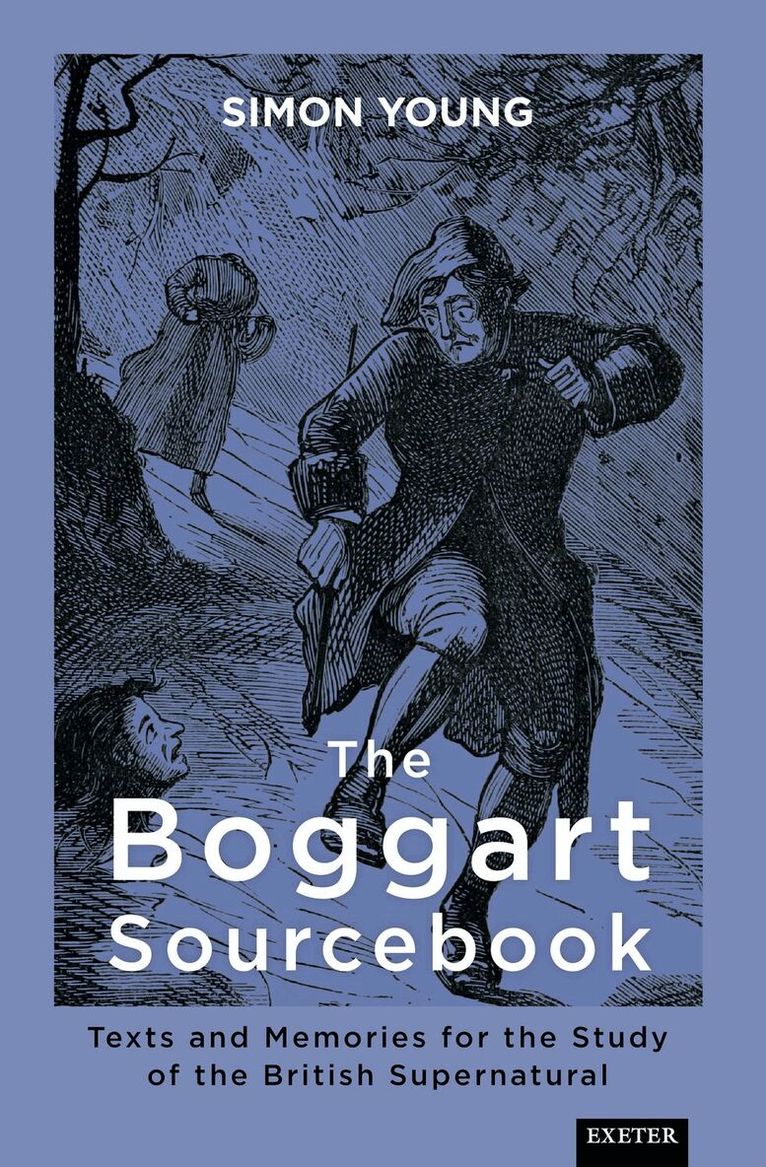
Boggart Sourcebook
Texts and Memories for the Study of the British Supernatural
Inbunden, Engelska, 2022
692 kr
Skickas inom 5-8 vardagar
Comprising three parts, this book is a companion volume to The Boggart: Folklore, History, Place-Names and Dialect. Part one, ‘Boggart Ephemera’, is a selection of about 40,000 words of nineteenth-century boggart writing (particularly material that is difficult to find in libraries). Part two presents a catalogue of ‘Boggart Names’ (place-names and personal names, totalling over 10,000 words). Finally, part three contains the entire ‘Boggart Census’ – a compendium of ground-breaking grassroots research. This census includes more than a thousand responses, totalling some 80,000 words, from older respondents in the north-west of England, to the question: ‘What is a boggart?’ The Boggart Sourcebook will be of interest to folklorists, historians and dialect scholars. It provides the three corpora on which the innovative monograph, The Boggart, is based.