Forum on Constructive Capitalism - Böcker
Visar alla böcker i serien Forum on Constructive Capitalism. Handla med fri frakt och snabb leverans.
6 produkter
6 produkter
502 kr
Tillfälligt slut
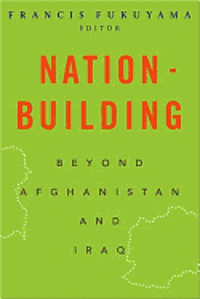
Bestselling author Francis Fukuyama brings together esteemed academics, political analysts, and practitioners to reflect on the U.S. experience with nation-building, from its historical underpinnings to its modern-day consequences. The United States has sought on repeated occasions to reconstruct states damaged by conflict, from Reconstruction in the South after the Civil War to Japan and Germany after World War II, to the ongoing rebuilding of Iraq. Despite this rich experience, there has been remarkably little systematic effort to learn lessons on how outside powers can assist in the building of strong and self-sufficient states in post-conflict situations. The contributors dissect mistakes, false starts, and lessons learned from the cases of Afghanistan and Iraq within the broader context of reconstruction efforts in other parts of the world, including Latin America, Japan, and the Balkans. Examining the contrasting models in Afghanistan and Iraq, they highlight the Coalition Provisional Authority in Iraq as a cautionary example of inadequate planning. The need for post-conflict reconstruction will not cease with the end of the Afghanistan and Iraq missions.This timely volume offers the critical reflection and evaluation necessary to avoid repeating costly mistakes in the future. Contributors: Larry Diamond, Hoover Institution and Stanford University; James Dobbins, RAND; David Ekbladh, American University; Michele A. Flournoy, Center for Strategic and International Studies; Francis Fukuyama, Paul H. Nitze School of Advanced International Studies, Johns Hopkins University; Larry P. Goodson, U.S. Army War College; Johanna Mendelson Forman, UN Foundation; Minxin Pei, Samia Amin, and Seth Garz, Carnegie Endowment for International Peace; S. Frederick Starr, Central Asia-Caucacus Institute at Johns Hopkins School of Advanced International Studies; F. X. Sutton, Ford Foundation Emeritus; Marvin G. Weinbaum, University of Illinois at Urbana-Champaign
306 kr
Tillfälligt slut
Bestselling author Francis Fukuyama brings together esteemed academics, political analysts, and practitioners to reflect on the U.S. experience with nation-building, from its historical underpinnings to its modern-day consequences. The United States has sought on repeated occasions to reconstruct states damaged by conflict, from Reconstruction in the South after the Civil War to Japan and Germany after World War II, to the ongoing rebuilding of Iraq. Despite this rich experience, there has been remarkably little systematic effort to learn lessons on how outside powers can assist in the building of strong and self-sufficient states in post-conflict situations. The contributors dissect mistakes, false starts, and lessons learned from the cases of Afghanistan and Iraq within the broader context of reconstruction efforts in other parts of the world, including Latin America, Japan, and the Balkans. Examining the contrasting models in Afghanistan and Iraq, they highlight the Coalition Provisional Authority in Iraq as a cautionary example of inadequate planning. The need for post-conflict reconstruction will not cease with the end of the Afghanistan and Iraq missions.This timely volume offers the critical reflection and evaluation necessary to avoid repeating costly mistakes in the future. Contributors: Larry Diamond, Hoover Institution and Stanford University; James Dobbins, RAND; David Ekbladh, American University; Michele A. Flournoy, Center for Strategic and International Studies; Francis Fukuyama, Paul H. Nitze School of Advanced International Studies, Johns Hopkins University; Larry P. Goodson, U.S. Army War College; Johanna Mendelson Forman, UN Foundation; Minxin Pei, Samia Amin, and Seth Garz, Carnegie Endowment for International Peace; S. Frederick Starr, Central Asia-Caucacus Institute at Johns Hopkins School of Advanced International Studies; F. X. Sutton, Ford Foundation Emeritus; Marvin G. Weinbaum, University of Illinois at Urbana-Champaign
574 kr
Tillfälligt slut
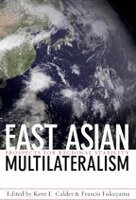
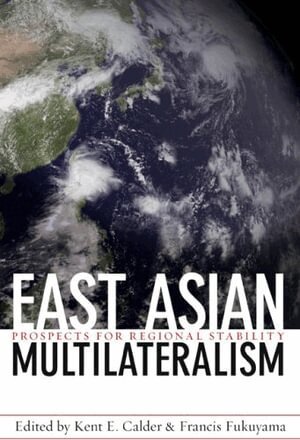
While the Iraq war and Middle East conflicts command the attention of the United States and most of the rest of the developed world, fundamental changes are occurring in East Asia. North Korea has tested nuclear weapons, even as it and South Korea have effectively entered a period of tepid detente; relations among China, Japan, and South Korea are a complex mixture of conflict and cooperation; and Japan is developing more forthright security policies, even as it deepens ties with the United States. Together, these developments pose vital questions for world stability and security. In East Asian Multilateralism, prominent international foreign affairs scholars examine the range of implications of shifting alignments in East Asia. The first part delves into the intraregional dynamics, and the second assesses current economic conditions and policies within individual East Asian states. The third section examines the challenge of regional cooperation from the perspectives of local players, while the fourth analyzes the implications for foreign policy in the United States and in Asia.This thorough review and assessment charts the preconditions and prospects for deeper multilateralism, poses tough questions about America's security and national interests in the region, and carries a plea for more serious institution-building in the North Pacific, using the ongoing six-party process in talks on North Korea as a point of departure.
352 kr
Skickas inom 7-10 vardagar
While the Iraq war and Middle East conflicts command the attention of the United States and most of the rest of the developed world, fundamental changes are occurring in East Asia. North Korea has tested nuclear weapons, even as it and South Korea have effectively entered a period of tepid detente; relations among China, Japan, and South Korea are a complex mixture of conflict and cooperation; and Japan is developing more forthright security policies, even as it deepens ties with the United States. Together, these developments pose vital questions for world stability and security. In East Asian Multilateralism, prominent international foreign affairs scholars examine the range of implications of shifting alignments in East Asia. The first part delves into the intraregional dynamics, and the second assesses current economic conditions and policies within individual East Asian states. The third section examines the challenge of regional cooperation from the perspectives of local players, while the fourth analyzes the implications for foreign policy in the United States and in Asia.This thorough review and assessment charts the preconditions and prospects for deeper multilateralism, poses tough questions about America's security and national interests in the region, and carries a plea for more serious institution-building in the North Pacific, using the ongoing six-party process in talks on North Korea as a point of departure.
824 kr
Skickas inom 7-10 vardagar
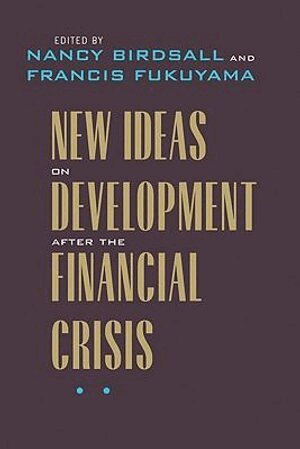
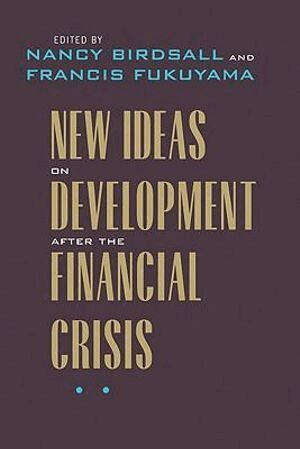
The global financial crisis of 2008-9 has changed the way people around the world think about development. The market-friendly, lightly regulated model of capitalism promoted by the United States is now at risk, and development thinking worldwide is at something of an impasse. Editors Nancy Birdsall and Francis Fukuyama bring together leading scholars to explore the implications of the global financial crisis on existing and future development strategies. In addressing this issue, the contributors contemplate three central questions: What effect has the crisis had on current ideas in development thinking? How has it affected and how will it affect economic policy and political realities in Latin America and Asia, including China and India? Will the financial collapse reinforce shifts in geopolitical power and influence, and in what form? Essays answering these questions identify themes that are essential as economic and political leaders address future challenges of development.To help move beyond this time of global economic turmoil, the contributors-the foremost minds in the field of international development-offer innovative ideas about stabilizing the international economy and promoting global development strategies. Contributors: Nancy Birdsall, Center for Global Development; Michael Clemens, Center for Global Development; Kemal Dervis, Brookings Institution; Larry Diamond, Stanford University; Francis Fukuyama, Stanford University; Peter S. Heller, Johns Hopkins University; Yasheng Huang, Massachusetts Institute of Technology; Justin Yifu Lin, World Bank; Jose Antonio Ocampo, Columbia University; Mitchell A. Orenstein, Johns Hopkins University; Minxin Pei, Claremont McKenna College; Lant Pritchett, Harvard University; Liliana Rojas-Suarez, Center for Global Development; Arvid Subramanian, Johns Hopkins University
372 kr
Tillfälligt slut
The global financial crisis of 2008-9 has changed the way people around the world think about development. The market-friendly, lightly regulated model of capitalism promoted by the United States is now at risk, and development thinking worldwide is at something of an impasse. Editors Nancy Birdsall and Francis Fukuyama bring together leading scholars to explore the implications of the global financial crisis on existing and future development strategies. In addressing this issue, the contributors contemplate three central questions: What effect has the crisis had on current ideas in development thinking? How has it affected and how will it affect economic policy and political realities in Latin America and Asia, including China and India? Will the financial collapse reinforce shifts in geopolitical power and influence, and in what form? Essays answering these questions identify themes that are essential as economic and political leaders address future challenges of development.To help move beyond this time of global economic turmoil, the contributors-the foremost minds in the field of international development-offer innovative ideas about stabilizing the international economy and promoting global development strategies. Contributors: Nancy Birdsall, Center for Global Development; Michael Clemens, Center for Global Development; Kemal Dervis, Brookings Institution; Larry Diamond, Stanford University; Francis Fukuyama, Stanford University; Peter S. Heller, Johns Hopkins University; Yasheng Huang, Massachusetts Institute of Technology; Justin Yifu Lin, World Bank; Jose Antonio Ocampo, Columbia University; Mitchell A. Orenstein, Johns Hopkins University; Minxin Pei, Claremont McKenna College; Lant Pritchett, Harvard University; Liliana Rojas-Suarez, Center for Global Development; Arvid Subramanian, Johns Hopkins University