• Fri frakt över 249 kr
  • •
  • Snabba leveranser
  • •
  • Billiga böcker
Kundservice

Du är på sajten för privatpersoner.

Företag, bibliotek eller offentlig verksamhet?

Du handlar på classic.bokus.com, där alla dina funktioner finns intakta.
Till classic.bokus.com
Bokus logotyp. Gå till startsidan.
  • Erbjudanden
  • Nyheter
  • Student
  • Topplistor
  • Barn & ungdom
  • Bokus Play
  • E-böcker
  • Pocketböcker
  • Spel & pussel

10% rabatt på allt med kod: NYSTART10 →

Sidfot

Mina sidor

    Hjälp

    • Kundservice
    • Vanliga frågor och svar
    • Frakt och leverans
    • Retur vid ångerrätt
    • Reklamera vara
    • Betalning
    • Köpvillkor
    • Allmänna villkor
    • Information om webbplatsens tillgänglighet

    Om Bokus

    • Om oss
    • Pressrum
    • För studenter
    • För företag
    • För bibliotek och offentlig verksamhet
    • För leverantörer
    • Hållbarhet

    Populärt

    • Aktuella erbjudanden
    • Presentkort
    • Studentlitteratur
    • Nya böcker
    • Topplistor
    • Signerade böcker
    • Engelska böcker

    Inspiration

    • Boktips
    • BookTok
    • Populära bokserier
    • Barnbokskaraktärer
    • Populära författare
    Logotyp för Bokus
    Följ oss på Facebook (extern länk)Följ oss på Instagram (extern länk)Följ oss på YouTube (extern länk)Följ oss på TikTok (extern länk)
    bokus @ CookiesAnpassa cookiesIntegritetspolicyKöpvillkor
    Till Citymail hemsida (extern länk)Till Budbee hemsida (extern länk)Till Postnord hemsida (extern länk)Till Schenker hemsida (extern länk)Till Early Bird hemsida (extern länk)Till Walleys hemsida (extern länk)
    1. Ekonomi och Ledarskap
    2. Nationalekonomi
    3. Internationell ekonomi

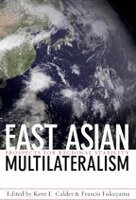
    East Asian Multilateralism

    Prospects for Regional Stability

    AvKent E. Calder,Francis Fukuyama

    Inbunden, Engelska, 2008

    Del i serien Forum on Constructive Capitalism

    574 kr

    Tillfälligt slut

    Beskrivning

    While the Iraq war and Middle East conflicts command the attention of the United States and most of the rest of the developed world, fundamental changes are occurring in East Asia. North Korea has tested nuclear weapons, even as it and South Korea have effectively entered a period of tepid detente; relations among China, Japan, and South Korea are a complex mixture of conflict and cooperation; and Japan is developing more forthright security policies, even as it deepens ties with the United States. Together, these developments pose vital questions for world stability and security. In East Asian Multilateralism, prominent international foreign affairs scholars examine the range of implications of shifting alignments in East Asia. The first part delves into the intraregional dynamics, and the second assesses current economic conditions and policies within individual East Asian states. The third section examines the challenge of regional cooperation from the perspectives of local players, while the fourth analyzes the implications for foreign policy in the United States and in Asia.This thorough review and assessment charts the preconditions and prospects for deeper multilateralism, poses tough questions about America's security and national interests in the region, and carries a plea for more serious institution-building in the North Pacific, using the ongoing six-party process in talks on North Korea as a point of departure.

    Produktinformation

    • Utgivningsdatum:2008-06-10
    • Mått:152 x 229 x 26 mm
    • Vikt:522 g
    • Format:Inbunden
    • Språk:Engelska
    • Serie:Forum on Constructive Capitalism
    • Antal sidor:296
    • Förlag:Johns Hopkins University Press
    • ISBN:9780801888489

    Utforska kategorier

    • Internationell ekonomi inom Ekonomi och Ledarskap
    • Internationella relationer inom Samhälle och politik

    Mer om författaren

    Kent E. Calder is the Edwin O. Reischauer Professor and director of the Edwin O. Reischauer Center for East Asian Studies at the Paul H. Nitze School of Advanced International Studies at the Johns Hopkins University. He is the author of Embattled Garrisons. Francis Fukuyama is the Bernard L. Schwartz Professor of International Political Economy and director of the International Development Program at the Paul H. Nitze School of Advanced International Studies at the Johns Hopkins University. He is the author or editor of dozens of books, including Nation-Building, also published by Johns Hopkins.

    Recensioner i media

    A 'must' for any college-level collection strong in Asian politics. Midwest Book Review 2008 A worthwhile read for anyone interested in recent momentum towards regionalism in East Asia. Survival 2009 Aside from its inherent appeal to American policy wonks, the volume offers some interesting thoughts about the theory and practice of multilateralism in east Asia. -- Nicola P. Contessi International Journal 2009 East Asian Multilateralism provides a comprehensive analysis of the major challenges for the establishment of a multilateral regional order. In particular interest is the additional focus on policy recommendations (for the US diplomacy). -- Alfred Gerstl East Asia Integration Studies 2009 The volume is well-organised, readable, and remarkably jargon-free and benefits from a multinational set of contributors with considerable expertise in the region. -- Brian Bridges Asian Affairs Assembles an impressive crew of American and American-based policy experts on the subject. -- Simon Tay Pacific Affairs

    Innehållsförteckning

    • AcknowledgementsList of AbbreviationsNotes on Foreign Names and TransliterationsIntroduction Part I: Beyond the Hub and SpokesChapter 1. Critical Junctures and the Contours of Northeast Asian RegionalismChapter 2. The History and Practice of Unilateralism in East AsiaChapter 3. The Outlook for Economic Integration in East AsiaChapter 4. The New Trade Bilateralism in East AsiaPart II: Country PerspectivesChapter 5. China's Evolving Multilateralism in Asia: The Aussenpolitik and Innenpolitik ExplanationsChapter 6. China and the Impracticality of Closed RegionalismChapter 7. Japan and the New Security Structures of Asian MultilateralismChapter 8. Korean Perspectives on East Asian RegionalismPart III: Policy ImplicationsChapter 9. A New Order in East Asia?Chapter 10. The Security Architecture in Asia and American Foreign PolicyConclusionContributors Index