Founders of Modern Political and Social Thought – serie
Visar alla böcker i serien Founders of Modern Political and Social Thought. Handla med fri frakt och snabb leverans.
14 produkter
14 produkter
685 kr
Skickas inom 7-10 vardagar
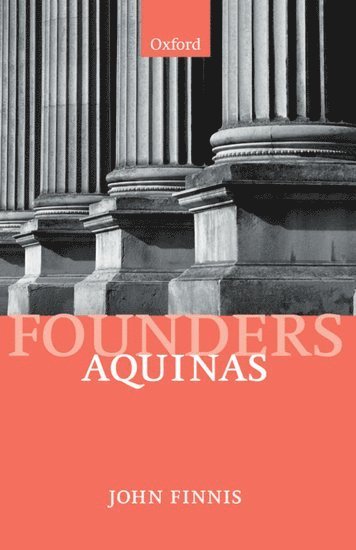
Founders of Modern Political and Social Thought Series Editor: Dr Mark Philp, Oriel College, University of Oxford Founders of Modern Political and Social Thought present critical examinations of the work of major political philosophers and social theorists, assessing both their initial contribution and continuing relevance to politics and society. Each volume provides a clear, accessible, historically-informed account of each thinker's work, focusing on a re-assessment of their central ideas and arguments. Founders encourage scholars and students to link their study of classic texts to current debates in political philosophy and social theory. This launch volume in the Founders of Modern Political and Social Thought series presents a critical examination of Aquinas' thought, combining an accessible, historically-informed account of his work with a re-assessment of his central ideas and arguments. John Finnis presents a richly-documented review of Aquinas's ideas on morality, politics, law, and method in social science, using the philosopher's own long-neglected distinctions between types of order and types of theory. Unique in his coverage of Aquinas' primary and secondary texts and his own vigorous argumentation on many themes, the author focuses on the Aquinas' philosophy while also demonstrating how this interconnects with the theological elements. In his fresh, far-reaching re-reading of Aquinas, John Finnis argues out such questions as: Is egoism rational? Why is Aristotle's paternalism wrong? Has sexual morality any reasonable principle? What's wrong with lying and usury? Why are democracy and the rule of law aspects of the best polity? Drawing on over 60 of Aquinas's works, the author shows how, despite some medieval limitations, Aquinas makes profound, powerful contributions to present debates.
668 kr
Skickas inom 5-8 vardagar
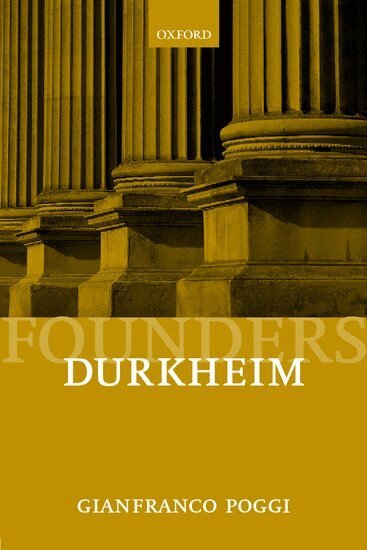
Founders of Modern Political and Social Thought present critical examinations of the work of major political philosophers and social theorists, assessing both their initial contribution and continuing relevance to politics and society. Each volume provides a clear, accessible, historically-informed account of each thinker's work, focusing on a reassessment of their central ideas and arguments. Founders encourage scholars and students to link their study of classic texts to current debates in political philosophy and social theory. Emile Durkheim can undoubtedly be considered one of the most significant social thinkers of the last one hundred years and his writings continue to attract both applause and controversy throughout the world, not just from sociologists and scholars from related disciplines but also from all those interested in the way modern society operates. In this highly readable and compact introduction to Durkheim's thought, Gianfranco Poggi examines closely all of Durkheim's 'canonical' works and assesses their significance today. Poggi also considers closely the question what did Durkheim mean by 'society'? and assesses Durkheim's contribution to both political sociology and the sociology of law, putting his writings into the context of the generation of European scholars to which he belonged. Poggi's clear and concise reappraisal of this towering figure in the development of modern sociological thought provides an essential overview of his major writings and also illustrates just why Durkheim is still so widely read and debated a century after his death.
1 932 kr
Skickas inom 5-8 vardagar
Founders of Modern Political and Social Thought Series Editor: Dr Mark Philp, Oriel College, University of Oxford Founders of Modern Political and Social Thought present critical examinations of the work of major political philosophers and social theorists, assessing both their initial contribution and continuing relevance to politics and society. Each volume provides a clear, accessible, historically-informed account of each thinker's work, focusing on a re-assessment of their central ideas and arguments. Founders encourage scholars and students to link their study of classic texts to current debates in political philosophy and social theory. This launch volume in the Founders of Modern Political and Social Thought series presents a critical examination of Machiavelli's thought, combining an accessible, historically-informed account of his work with a re-assessment of his central ideas and arguments. Maurizio Viroli challenges the accepted interpretations of Machiavelli's work, insisting that his republicanism was based not on a commitment to virtue, greatness, and expansion, but to the ideal of civic life protected by the shield of fair laws. His detailed study of how Machiavelli composed his famous work The Prince presents new interpretations, and he further argues that the most challengingand completely underestimatedaspect of Machiavelli's thought is his philosophy of life, in particular his conceptions of love, women, irony, God, and the human condition. Viroli demonstrates that Machiavelli composed The Prince, and all his works, according to the rules of classical rhetoric and never intended to found the 'modern science of politics', aiming rather to continue and refine the practice of political theorising as a rhetorical endeavour taught by the Roman masters of civic philosophy. Viroli's Machiavelli, a serious challenge to contemporary methods of doing political theory, will be essential for advanced students of the history of political thought.
668 kr
Skickas inom 5-8 vardagar
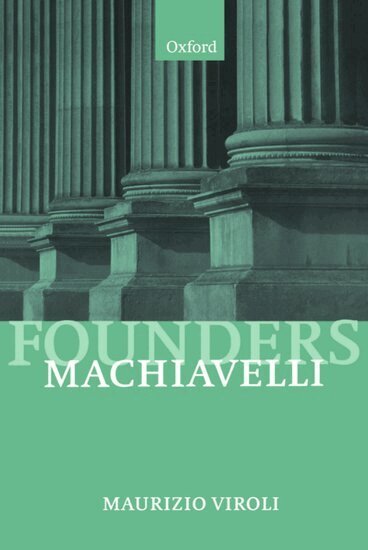
Founders of Modern Political and Social Thought Series Editor: Dr Mark Philp, Oriel College, University of Oxford Founders of Modern Political and Social Thought present critical examinations of the work of major political philosophers and social theorists, assessing both their initial contribution and continuing relevance to politics and society. Each volume provides a clear, accessible, historically-informed account of each thinker's work, focusing on a re-assessment of their central ideas and arguments. Founders encourage scholars and students to link their study of classic texts to current debates in political philosophy and social theory. This launch volume in the Founders of Modern Political and Social Thought series presents a critical examination of Machiavelli's thought, combining an accessible, historically-informed account of his work with a re-assessment of his central ideas and arguments. Maurizio Viroli challenges the accepted interpretations of Machiavelli's work, insisting that his republicanism was based not on a commitment to virtue, greatness, and expansion, but to the ideal of civic life protected by the shield of fair laws. His detailed study of how Machiavelli composed his famous work The Prince presents new interpretations, and he further argues that the most challengingand completely underestimatedaspect of Machiavelli's thought is his philosophy of life, in particular his conceptions of love, women, irony, God, and the human condition. Viroli demonstrates that Machiavelli composed The Prince, and all his works, according to the rules of classical rhetoric and never intended to found the 'modern science of politics', aiming rather to continue and refine the practice of political theorising as a rhetorical endeavour taught by the Roman masters of civic philosophy. Viroli's Machiavelli, a serious challenge to contemporary methods of doing political theory, will be essential for advanced students of the history of political thought.
686 kr
Skickas inom 5-8 vardagar
Founders of Modern Political and Social Thought present critical examinations of the work of major political philosphers and social theorists, assessing both their initial contribution and continuing relevance to politics and society. Each volume provides a clear, accessible, historically-informed account of each thinker's work, focusing on a reassessment of their central ideas and arguments. Founders encourage scholars and students to link their study of classic texts to current debates in political philosophy and social theory.Alexis de Tocqueville is one of the most topical and debated figures in contemporary political and social theory. This clear new introduction to de Tocqueville's thought examines in detail his classic works and their major themes. Welch argues thet Tocqueville's major themes tap into deep anxieties about democratic practices and his writings help us to identify the major fault lines in democracy at the turn of the new century. Beginning with a consideration of Tocqueville's distinctiveness against the historical background and intellectual context of his time, Welch goes on to trace the development of his thought on democracy and revolution, history, slavery, religion, and gender, including chapters dealing with his writings on France and the United States. The final chapter then explores Tocqueville's historical legacy and his contemporary significance, illuminating the reasons why this displaced nineteenth century aristocrat has become one of the most topical figures in contemporary political and social theory.
590 kr
Skickas inom 5-8 vardagar
This book presents a wide-ranging overview of Aristotle's political thought that makes him come alive as a philosopher who can speak to our own times. Beginning with a critique of subjectivist accounts of well-being, Kraut goes on to assess Aristotle's objective and universalistic account of eudaimonia and excellent activity. He offers a detailed interpretation of Aristotle's conception of justice in the Nicomachean Ethics, and then turns to the major themes of the Politics: the political nature of human beings, the city's priority over the individual, the justification of slavery, the defence of the family and property, the pluralistic nature of cities and the need for their unification, the distinction between good citizenship and full virtue, the value and limits of popular control over elites, the corrosive effects of poverty and wealth, the critique of democratic conceptions of freedom and equality, and the radically egalitarian institutions of the ideal society. Aristotle's political philosophy, as Kraut reads it, provides a model of the way in which a rich understanding of human well-being can guide the amelioration of a world in which agreement about the human good is rarely, if ever, achieved.
511 kr
Skickas inom 5-8 vardagar
The Founders of Modern Political and Social Thought series presents critical examinations of the work of major political philosophers and social theorists, assessing both their initial contribution and their continuing relevance to politics and society. Each volume provides a clear, accessible, historically informed account of a thinker's work, focusing on a reassessment of the central ideas and arguments. The series encourages scholars and students to link their study of classic texts to current debates in political philosophy and social theory.In this authoritative general account of Plato's political thought, a leading scholar of ancient Greek philosophy explores its key themes: education, democracy and its shortcomings, the role of knowledge in government, utopia and the idea of community, money and its grip on the psyche, ideological uses of religion. Between them these define what Plato considered to be the fundamental challenges for politics. All remain live issues. On all of them Plato took radical and uncomfortable positions. The radicalism derives above all from his reflections on the fate of Socrates at the hands of the Athenian democracy in 399 BC. So the book begins with chapters situating Plato's alienation from contemporary politics in its historical context, and examines at length the images of Athens and the Spartan alternative which pervade his writings on politics.The Republic is a main focus of discussion throughout, but ideas and arguments in many other dialogues from Apology and Gorgias to the Statesman and the Laws are examined. Plato: Political Philosophy assumes a broad range of readers - with backgrounds in varied fields (politics, philosophy, classics, history) - who may have little prior knowledge of Plato. It articulates and analyses his main lines of thought, illustrating them with a liberal use of translated excerpts, and highlighting affinities with modern theorists from Machiavelli and Mill to Rawls and Habermas. Schofield's distinctive line of approach to Plato's problems constitutes a lucid and accessible guide for those needing an introduction, and at the same time will provide those who know Plato well with much food for thought.
1 888 kr
Skickas inom 5-8 vardagar
Plato is the best known and most widely studied of all the ancient Greek philosophers. Malcolm Schofield, a leading scholar of ancient philosophy, offers a lucid and accessible guide to Plato's political thought, enormously influential and much discussed in the modern world as well as the ancient. Schofield discusses Plato's ideas on education, democracy and its shortcomings, the role of knowledge in government, utopia and the idea of community, money and its grip on the psyche, and ideological uses of religion.
1 287 kr
Skickas inom 5-8 vardagar
Frederick Rosen presents an original study of John Stuart Mill's moral and political philosophy, which explores the main themes of his writings--particularly those that emerge from the two major works, System of Logic (1843) and Principles of Political Economy (1848). From these, Mill developed the more widely-read later essays, On Liberty (1859), Utilitarianism (1861), Considerations on Representative Government (1861), and The Subjection of Women (1869). He was one of the greatest thinkers of the nineteenth century, and attempted to understand the political as well as intellectual struggles of his time, including those between capitalism and socialism, liberty and despotism, and Christianity and secular forces (particularly the sciences) that seemed to undermine religious belief. Rosen examines Mill's complex relationships with other contemporary thinkers (such as Jeremy Bentham, James Mill, Auguste Comte, George Grote, and Harriet Taylor Mill), and his philosophical sources, including Socrates, Plato, Aristotle, Hobbes, Locke, and Hume; and goes on to illustrate Mill's influence on subsequent philosophers, logicians, and economists. Rosen considers Mill's approaches to the study of active character and happiness in his work on logic and in the study of political economy, from which new interpretations of his ideas of liberty, justice, equality, and utility follow. Many of the debates with which Mill was engaged remain part of contemporary life, and Rosen's book is a guide for exploring and resolving them. Mill's ideas, his arguments, and the versions of utilitarianism and liberalism that he developed have created a humane, civilising philosophy for our times.
468 kr
Skickas inom 5-8 vardagar
Frederick Rosen presents an original study of John Stuart Mill's moral and political philosophy, which explores the main themes of his writings--particularly those that emerge from the two major works, System of Logic (1843) and Principles of Political Economy (1848). From these, Mill developed the more widely-read later essays, On Liberty (1859), Utilitarianism (1861), Considerations on Representative Government (1861), and The Subjection of Women (1869). He was one of the greatest thinkers of the nineteenth century, and attempted to understand the political as well as intellectual struggles of his time, including those between capitalism and socialism, liberty and despotism, and Christianity and secular forces (particularly the sciences) that seemed to undermine religious belief. Rosen examines Mill's complex relationships with other contemporary thinkers (such as Jeremy Bentham, James Mill, Auguste Comte, George Grote, and Harriet Taylor Mill), and his philosophical sources, including Socrates, Plato, Aristotle, Hobbes, Locke, and Hume; and goes on to illustrate Mill's influence on subsequent philosophers, logicians, and economists. Rosen considers Mill's approaches to the study of active character and happiness in his work on logic and in the study of political economy, from which new interpretations of his ideas of liberty, justice, equality, and utility follow. Many of the debates with which Mill was engaged remain part of contemporary life, and Rosen's book is a guide for exploring and resolving them. Mill's ideas, his arguments, and the versions of utilitarianism and liberalism that he developed have created a humane, civilising philosophy for our times.
1 113 kr
Skickas inom 5-8 vardagar
In famously beautiful and laconic prose, Jean-Jacques Rousseau presents us with a forceful picture of a democratic society, in which we live together as free and equal, and our politics focuses on the common good. In Rousseau: A Free Community of Equals Joshua Cohen explains how the values of freedom, equality, and community all work together as parts of the democratic ideal expressed in Rousseau's conception of the 'society of the general will'. The book also explains Rousseau's anti-Augustinian and anti-Hobbesian idea that we are naturally good, shows why Rousseau thinks it is reasonable for us to endorse that idea, and discusses how our natural goodness might make a free community of equals possible for us. And Cohen examines in detail Rousseau's picture of the institutions of a democratic society: why he emphasised the importance of political participation, how he argued against extreme inequalities, and what led him to embrace a civil religion as necessary for the society of the general will. This book provides an analytical and critical appraisal of Rousseau's political thought that, while frank about its limits, also explains its enduring power.
476 kr
Skickas inom 5-8 vardagar
In famously beautiful and laconic prose, Jean-Jacques Rousseau presents us with a forceful picture of a democratic society, in which we live together as free and equal, and our politics focuses on the common good. In Rousseau: A Free Community of Equals Joshua Cohen explains how the values of freedom, equality, and community all work together as parts of the democratic ideal expressed in Rousseau's conception of the 'society of the general will'. The book also explains Rousseau's anti-Augustinian and anti-Hobbesian idea that we are naturally good, shows why Rousseau thinks it is reasonable for us to endorse that idea, and discusses how our natural goodness might make a free community of equals possible for us. And Cohen examines in detail Rousseau's picture of the institutions of a democratic society: why he emphasised the importance of political participation, how he argued against extreme inequalities, and what led him to embrace a civil religion as necessary for the society of the general will. This book provides an analytical and critical appraisal of Rousseau's political thought that, while frank about its limits, also explains its enduring power.
1 170 kr
Skickas inom 5-8 vardagar
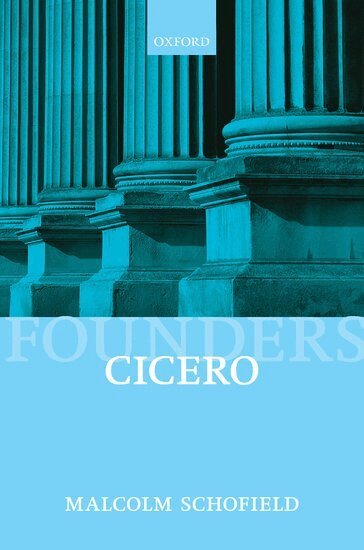
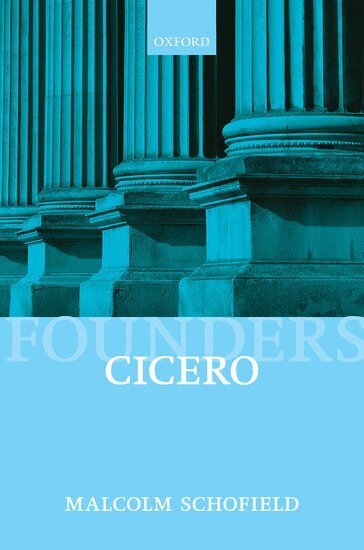
This book offers an innovative analytic account of Cicero's treatment of key political ideas: liberty and equality, government, law, cosmopolitanism and imperialism, republican virtues, and ethical decision-making in politics. Cicero (106-43 BC) is well known as a major player in the turbulent politics of the last three decades of the Roman Republic. But he was a political thinker, too, influential for many centuries in the Western intellectual and cultural tradition. His theoretical writings stand as the first surviving attempt to articulate a philosophical rationale for republicanism. They were not written in isolation either from the stances he took in his political actions and political oratory of the period, or from his discussions of immediate political issues or questions of character or behaviour in his voluminous correspondence with friends and acquaintances. In this book, Malcolm Schofield situates the intimate interrelationships between Cicero's writings in all these modes within the historical context of a fracturing Roman political order. It exhibits the continuing attractions of Cicero's scheme of republican values, as well as some of its limitations as a response to the crisis that was engulfing Rome.
406 kr
Skickas
This book offers an innovative analytic account of Cicero's treatment of key political ideas: liberty and equality, government, law, cosmopolitanism and imperialism, republican virtues, and ethical decision-making in politics. Cicero (106-43 BC) is well known as a major player in the turbulent politics of the last three decades of the Roman Republic. But he was a political thinker, too, influential for many centuries in the Western intellectual and cultural tradition. His theoretical writings stand as the first surviving attempt to articulate a philosophical rationale for republicanism. They were not written in isolation either from the stances he took in his political actions and political oratory of the period, or from his discussions of immediate political issues or questions of character or behaviour in his voluminous correspondence with friends and acquaintances. In this book, Malcolm Schofield situates the intimate interrelationships between Cicero's writings in all these modes within the historical context of a fracturing Roman political order. It exhibits the continuing attractions of Cicero's scheme of republican values, as well as some of its limitations as a response to the crisis that was engulfing Rome.