Franz Rosenzweig Lecture Series - Böcker
Visar alla böcker i serien Franz Rosenzweig Lecture Series. Handla med fri frakt och snabb leverans.
6 produkter
6 produkter
363 kr
Skickas inom 5-8 vardagar
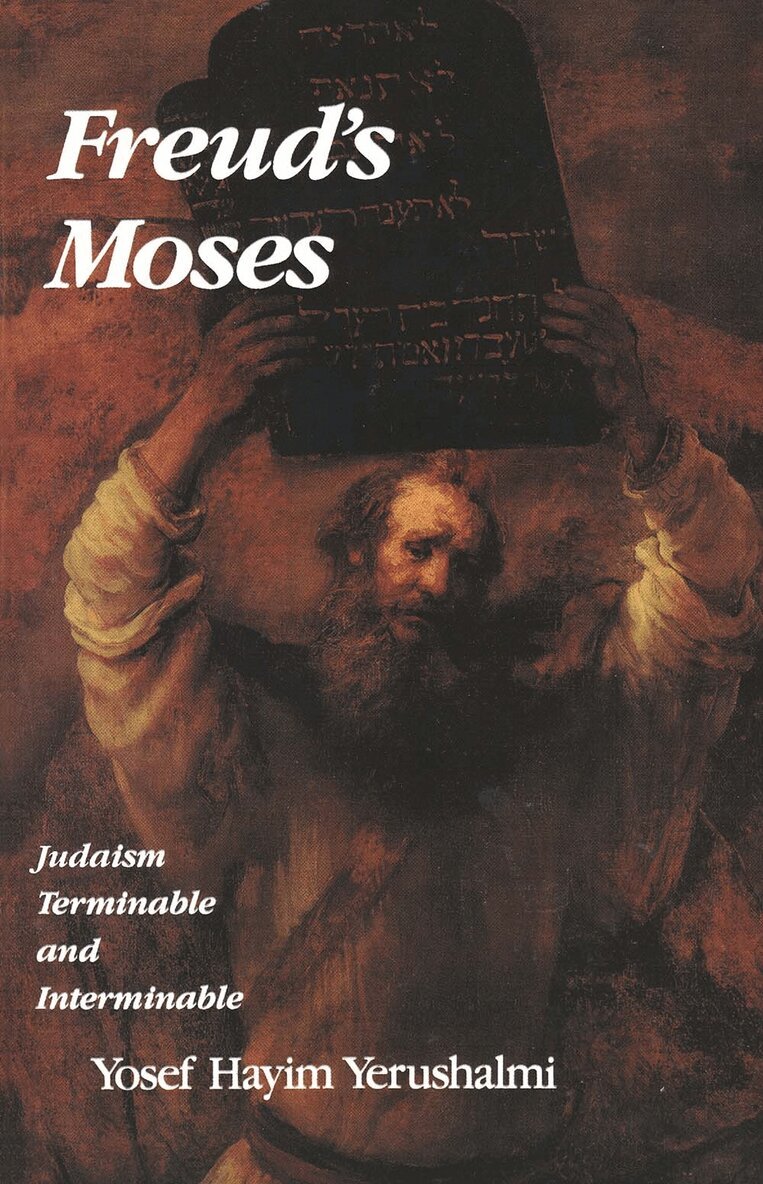
Moses and Monotheism, Freud’s last major book and the only one specifically devoted to a Jewish theme, has proved to be one of the most controversial and enigmatic works in the Freudian canon. Among other things, Freud claims in the book that Moses was an Egyptian, that he derived the notion of monotheism from Egyptian concepts, and that after he introduced monotheism to the Jews he was killed by them. Since these historical and ethnographic assumptions have been generally rejected by biblical scholars, anthropologists, and historians of religion, the book has increasingly been approached psychoanalytically, as a psychological document of Freud’s inner life—of his allegedly unresolved Oedipal complex and ambivalence over his Jewish identity. In Freud’s Moses a distinguished historian of the Jews brings a new perspective to this puzzling work. Yosef Hayim Yerushalmi argues that while attempts to psychoanalyze Freud’s text may be potentially fruitful, they must be preceded by a genuine effort to understand what Freud consciously wanted to convey to his readers. Using both historical and philological analysis, Yerushalmi offers new insights into Freud’s intentions in writing Moses and Monotheism. He presents the work as Freud’s psychoanalytic history of the Jews, Judaism, and the Jewish psyche—his attempt, under the shadow of Nazism, to discover what has made the Jews what they are. In the process Yerushalmi’s eloquent and sensitive exploration of Freud’s last work provides a reappraisal of Freud’s feelings toward anti-Semitism and the gentile world, his ambivalence about psychoanalysis as a “Jewish” science, his relationship to his father, and above all a new appreciation of the depth and intensity of Freud’s identity as a “godless Jew.”
697 kr
Skickas inom 5-8 vardagar
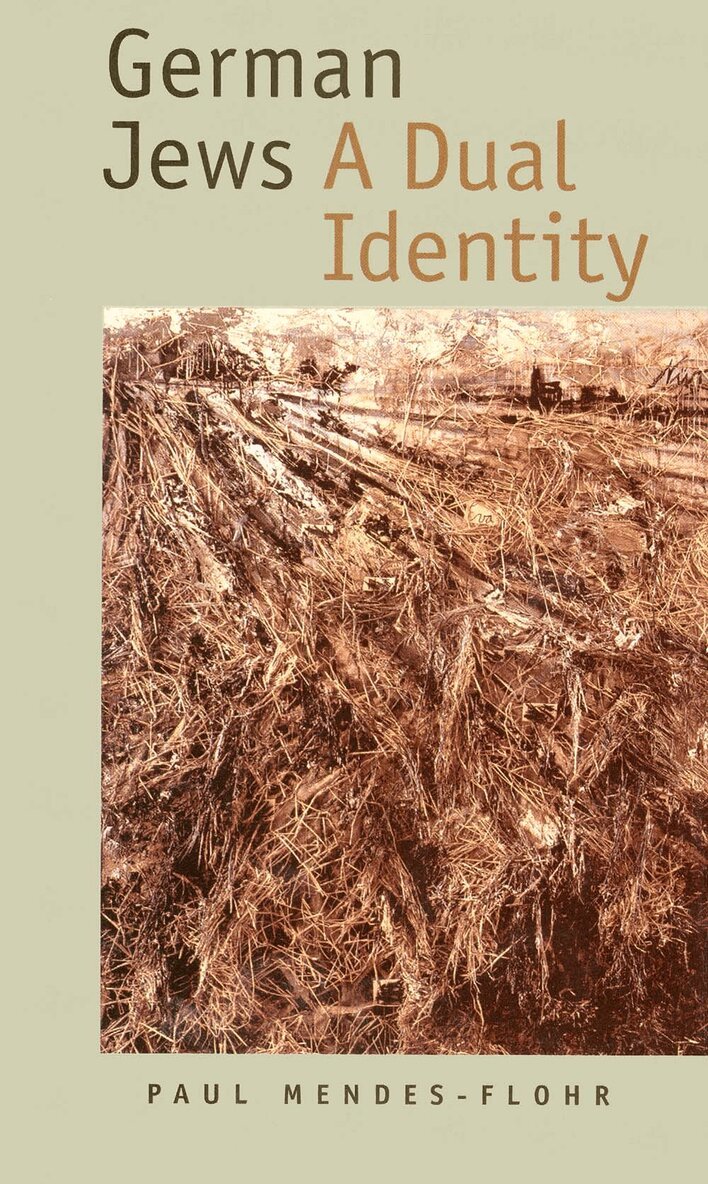
When the German-Jewish philosopher Franz Rosenzweig entitled his 1926 collection of essays on Jewish and universal cultural topics Zweistromland—a land of two rivers—he meant to underscore, indeed celebrate, the fact that German-Jewish culture is nurtured by both German culture and the Jewish religious and cultural heritage. In this thought-provoking book, Paul Mendes-Flohr explores through the prism of Rosenzweig’s image how German Jews have understood and contended with their twofold spiritual patrimony. He deepens the discussion to consider also how the German-Jewish experience bears upon the general modern experience of living with multiple cultural identities.German Jews assimilated the cultural values of Germany but were not themselves assimilated into German society, Mendes-Flohr contends. Yet, by virtue of their adoption of values sponsored by enlightened German discourse, they were no longer unambiguously Jewish. The author discusses how their identity and cultural loyalty became fractured and how German Jews—like other Jews and indeed like all denizens of the modern world—were obliged to confront the challenges of living with plural identities and cultural affiliations.
248 kr
Skickas inom 7-10 vardagar
As featured on the cover of Tikkun magazineHow do we articulate a religious vision that embraces evolution and human authorship of Scripture? Drawing on the Jewish mystical traditions of Kabbalah and Hasidism, path-breaking Jewish scholar Arthur Green argues that a neomystical perspective can help us to reframe these realities, so they may yet be viewed as dwelling places of the sacred. In doing so, he rethinks such concepts as God, the origins and meaning of existence, human nature, and revelation to construct a new Judaism for the twenty-first century.
458 kr
Skickas inom 5-8 vardagar
In this illuminating book, one of our foremost literary critics views the much-debated question of the literary canon from an entirely new angle. Robert Alter explores the ways in which a range of iconoclastic twentieth-century authors have put to use the stories, language, and imagery of the paramount canonical text—the Hebrew Bible. Alter makes a compelling case against the prevalent, pejorative notion of the canon as a vehicle of ideological enforcement. He shows instead that canons by nature are surprisingly elastic, providing later writers with imaginative resources even when those same writers rebel against what they conceive as the constraints of the canon. Focusing special attention on Franz Kafka’s Amerika, Haim Nahman Bialik’s The Dead of the Desert, and James Joyce’s Ulysses, Alter brings to bear an unusual perspective, putting into a single frame of discussion three writers from widely different linguistic traditions (German, Hebrew, English) and from disparate cultural settings (Prague, Odessa, Dublin). Alter’s close readings of these major modern writers reveal how reference to canonical antecedents can be both surprisingly various and enabling. Examining the diverse modes in which Biblical material becomes interwoven with the fabric of a new work, he also offers new insights into the nature and range of modernism. Critically appreciative rather than polemic in tone, Alter conveys in this thoughtful book a renewed sense of the vitality of literary modernism.
468 kr
Tillfälligt slut
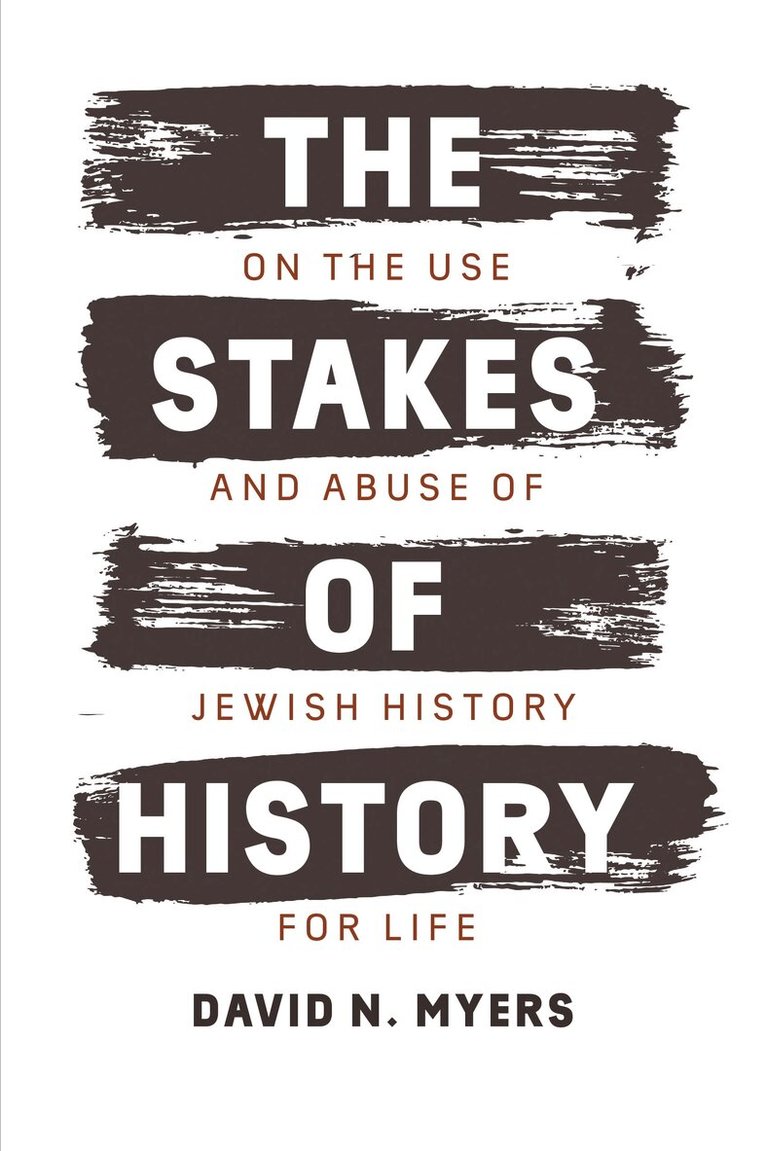
A leading scholar of Jewish history’s bracing and challenging case for the role of the historian todayWhy do we study history? What is the role of the historian in the contemporary world? These questions prompted David N. Myers’s illuminating and poignant call for the relevance of historical research and writing. His inquiry identifies a number of key themes around which modern Jewish historians have wrapped their labors: liberation, consolation, and witnessing. Through these portraits, Myers revisits the chasm between history and memory, revealing the middle space occupied by modern Jewish historians as they work between the poles of empathic storytelling and the critical sifting of sources.History, properly applied, can both destroy ideologically rooted myths that breed group hatred and create new memories that are sustaining of life. Alive in these investigations is Myers’s belief that the historian today can and should attend to questions of political and moral urgency. Historical knowledge is not a luxury to society but an essential requirement for informed civic engagement, as well as a vital tool in policy making, conflict resolution, and restorative justice.
834 kr
Skickas inom 5-8 vardagar
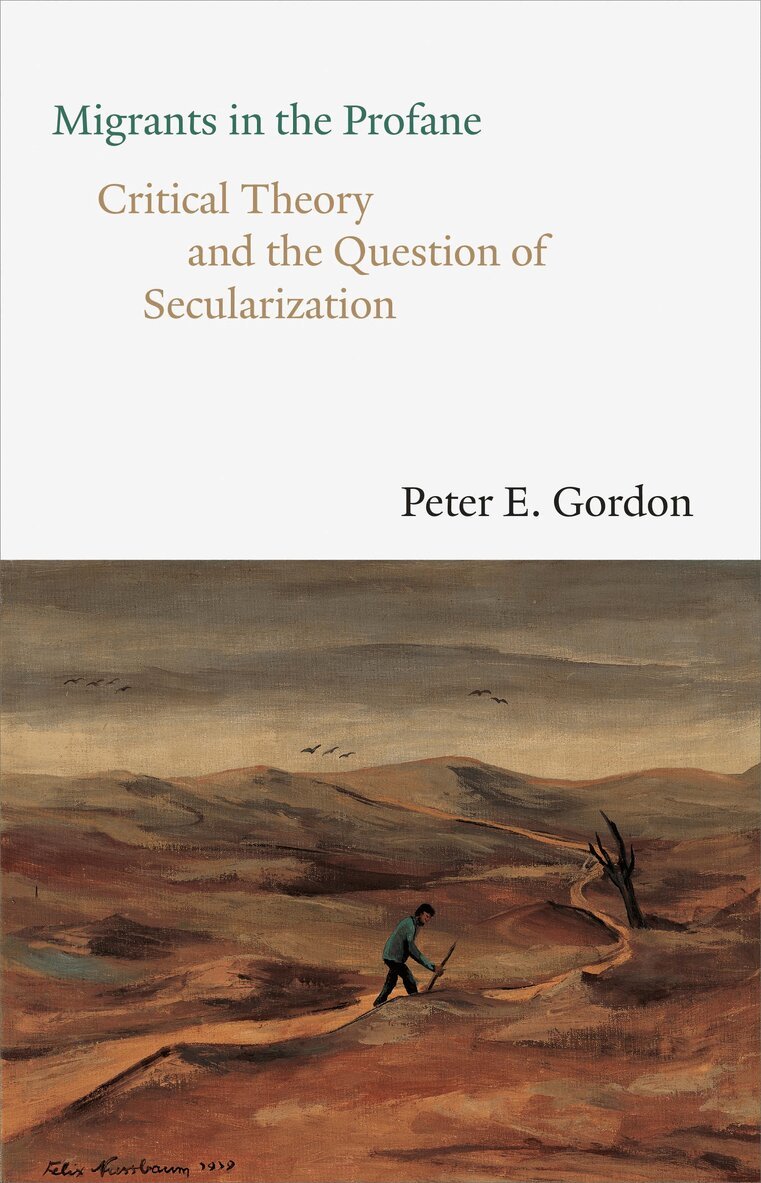
A beautifully written exploration of religion’s role in a secular, modern politics, by an accomplished scholar of critical theory“Rich in historical background, illuminating in its comparative perspective, yet focused on the question of secularization and the normative resources of modernity—a joy to read.”—Maeve Cooke, University College Dublin“Gordon writes with a controlled power, elegance, simplicity, and clarity that is a rare pleasure.”—Max Pensky, Binghamton UniversityMigrants in the Profane takes its title from an intriguing remark by Theodor W. Adorno, in which he summarized the meaning of Walter Benjamin’s image of a celebrated mechanical chess-playing Turk and its hidden religious animus: “Nothing of theological content will persist without being transformed; every content will have to put itself to the test of migrating in the realm of the secular, the profane.”In this masterful book, Peter Gordon reflects on Adorno’s statement and asks an urgent question: Can religion offer any normative resources for modern political life, or does the appeal to religious concepts stand in conflict with the idea of modern politics as a domain free from religion’s influence? In answering this question, he explores the work of three of the Frankfurt School’s most esteemed thinkers: Walter Benjamin, Max Horkheimer, and Theodor W. Adorno. His illuminating analysis offers a highly original account of the intertwined histories of religion and secular modernity.