German History in Context - Böcker
Visar alla böcker i serien German History in Context. Handla med fri frakt och snabb leverans.
12 produkter
12 produkter
Del 2 - German History in Context
Returning Memories
Former Prisoners of War in Divided and Reunited Germany
Inbunden, Engelska, 2015
1 462 kr
Skickas inom 10-15 vardagar
Provides the first comprehensive analysis of the history of returning German POWs after the Second World War, explored as a history of memory both during Germany's division and after unification.Millions of former German soldiers (known as Heimkehrer, literally "homecomers," or returnees) returned from captivity as prisoners of war at the end of the Second World War, an experience that had profound effects on German society and touched almost every German family. Based on extensive archival research and oral history interviews, this book provides the first comprehensive analysis of the history of the German returnees, explored as a historyof memory, both during Germany's division and after unification. At its core lies the question of how the experiences of war captivity were transformed into individual and collective memories. The book argues that memory of the experience of captivity and return is complex and multilayered and has been shaped by postwar political and social frameworks.Christiane Wienand is a historian and works in Heidelberg, Germany. She holds a PhD in Historyfrom University College London.

Del 4 - German History in Context
Revisiting the "Nazi Occult"
Histories, Realities, Legacies
Inbunden, Engelska, 2015
1 174 kr
Skickas inom 10-15 vardagar
New collection of essays promising to re-energize the debate on Nazism's occult roots and legacies and thus our understanding of German cultural and intellectual history over the past century.Scholars have debated the role of the occult in Nazism since it first appeared on the German political landscape in the 1920s. After 1945, a consensus held that occultism - an ostensibly anti-modern, irrational blend of pseudo-religious and -scientific practices and ideas - had directly facilitated Nazism's rise. More recently, scholarly debate has denied the occult a role in shaping the Third Reich, emphasizing the Nazis' hostility to esoteric religion and alternative forms of knowledge. Bringing together cutting-edge scholarship on the topic, this volume calls for a fundamental reappraisal of these positions.The book is divided into three chronological sections. The first,on the period 1890 to 1933, looks at the esoteric philosophies and occult movements that influenced both the leaders of the Nazi movement and ordinary Germans who became its adherents. The second, on the Third Reich in power, explores how the occult and alternative religious belief informed Nazism as an ideological, political, and cultural system. The third looks at Nazism's occult legacies. In emphasizing both continuities and disjunctures, this book promises to re-open and re-energize debate on the occult roots and legacies of Nazism, and with it our understanding of German cultural and intellectual history over the past century.Contributors: Monica Black; Jeff Hayton; Oded Heilbronner; Eric Kurlander; Fabian Link and J. Laurence Hare; Anna Lux; Perry Myers; John Ondrovcik; Michael E. O'Sullivan; Jared Poley; Uwe Schellinger, Andreas Anton, and Michael T. Schetsche; Peter Staudenmaier.Monica Black is Associate Professor and Associate Head of the Department of History at the University of Tennessee, Knoxville. Eric Kurlander is J. Ollie Edmunds Chair and Professor of Modern European History at Stetson University.
Del 1 - German History in Context
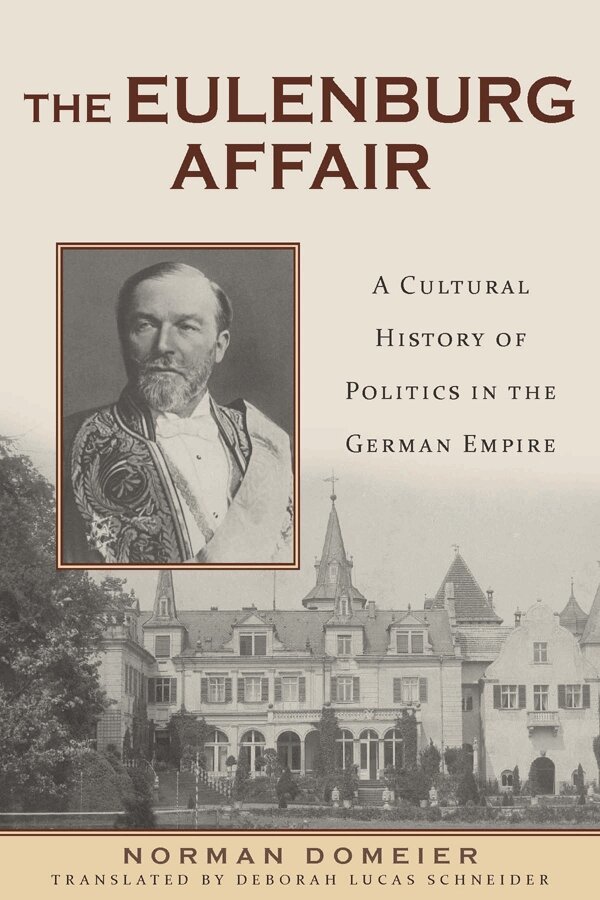
Eulenburg Affair
A Cultural History of Politics in the German Empire
Inbunden, Engelska, 2015
2 348 kr
Skickas inom 5-8 vardagar
The first monograph to treat comprehensively the epoch-making though now too often forgotten scandal that rocked German political culture from 1906 to 1909, now in English translation.When it broke out in 1906, the scandal surrounding Prince Philipp Eulenburg, closest confidant of Emperor Wilhelm II, shook the Hohenzollern monarchy and all of Europe to the core. Sparked by accusations by the journalist and publicist Maximilian Harden, the scandal dominated European headlines until 1909; it was the first modern scandal in which homosexuality was openly discussed. Particularly shocking was Harden's claim that Wilhelm had long been under the influence of a homosexual camarilla led by Eulenburg. Allegedly, this clique had brought about Bismarck's dismissal, cut off the emperor from his people, and, with its undue pacifism, maneuvered Germany not only into isolation,but to the brink of war during the Morocco Crisis of 1905-6.The scandal came to be a forum for the German public to debate diverse political, social, and cultural issues: honor, friendship, marriage, privacy, sexual mores,anti-Semitism, spiritualism, class struggle, submission to authority, and enthusiasm for the military. Norman Domeier's book, now in English translation, is the first scholarly monograph on the scandal. It draws on a wealth of primary material, including ca. 5,000 newspaper articles as well as minutes of court trials, private correspondence, government files, pamphlets, diaries, memoirs, and images. Domeier's historical analysis offers fascinating insightsinto the cultural history of German politics in the fateful years of transition from the Belle Époque to the "Iron Age" of the world wars.Norman Domeier is Assistant Professor at the University of Stuttgart's Historical Institute.
Del 3 - German History in Context
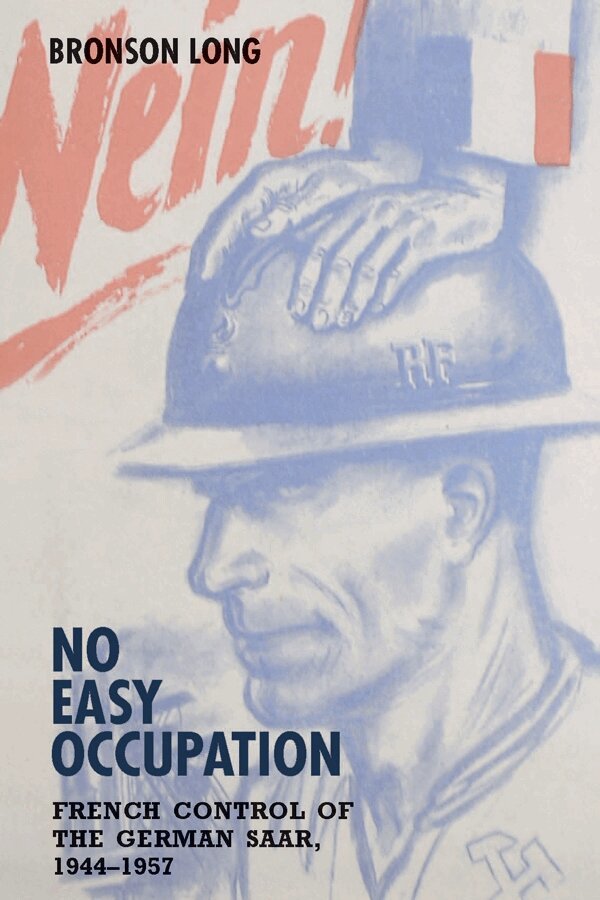
No Easy Occupation
French Control of the German Saar, 1944-1957
Inbunden, Engelska, 2015
1 209 kr
Skickas inom 10-15 vardagar
The first up-to-date study in English of the Saar dispute, an important stage in French-German postwar relations and thus significant for European integration.After 1945, France and West Germany were involved in a bitter dispute over the Saar, a small, coal-rich, culturally German territory bordering France's Lorraine region that France had occupied at war's end. French officials and the Saar's political elite attempted to wrest the territory from Germany and make it an independent nation oriented culturally towards France. Although France's occupation officially ended in 1947 with the ratification of a new constitution and elections, the new Saar state was not fully sovereign, as French control persisted until 1955. The Saar's status was an increasing concern for West Germany, partly due to its implications for the division of Germany.After lengthy negotiations, France and West Germany agreed to turn the Saar into a European territory and the seat of European institutions, much as today's Brussels. Saarlanders, however, saw this as a French ploy to maintain control, and in a heated 1955 referendum voted against it, leading to the territory's reunification with West Germany. This is the first study in English dealing with the German research of recent decades and citing original French and German sources.Bronson Long is Associate Professor of History at Georgia Highlands College.
Del 7 - German History in Context
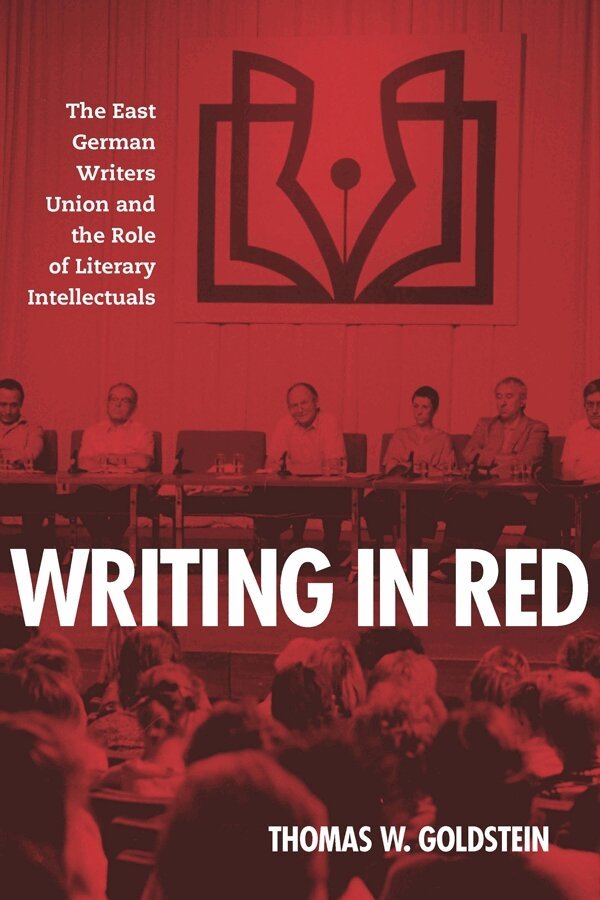
Writing in Red
The East German Writers Union and the Role of Literary Intellectuals
Inbunden, Engelska, 2017
1 383 kr
Skickas
This book explores how the East German Writers Union became a site for the contestation of writers' roles in GDR society with consequences well beyond the literary community.In the German Democratic Republic words and ideas mattered, both for legitimizing and criticizing the regime. No wonder, then, that the ruling SED party created a Writers Union to mold what writers publicly wrote and said. Its chief task was ideological: creating a socialist and antifascist culture. But it was also supposed to advance its members' professional interests and enable them to act as public intellectuals with a say in the direction of socialism. Many writers demanded that it pursue this second function as well, which brought it into conflict with the SED. This book explores how the union became a site for the contestation of writers' roles in GDR society with consequences well beyond the literary community. Union leaders, pressured by the SED or the secret police, usually acquiesced in enforcing regime demands, but by the 1980s many authors had adapted to the rules of the game, exploiting theirunion membership to insulate themselves from reprisal for their carefully worded critiques and in so doing beginning to break down limitations on public speech. The book explores how and why in the 1970s the Writers Union helped normalize relations between writers and state, yet over the course of the 1980s inadvertently aided the expansion of permissible speech, ultimately helping destabilize the East German system.Thomas W. Goldstein is Assistant Professor of History at the University of Central Missouri.
Del 5 - German History in Context
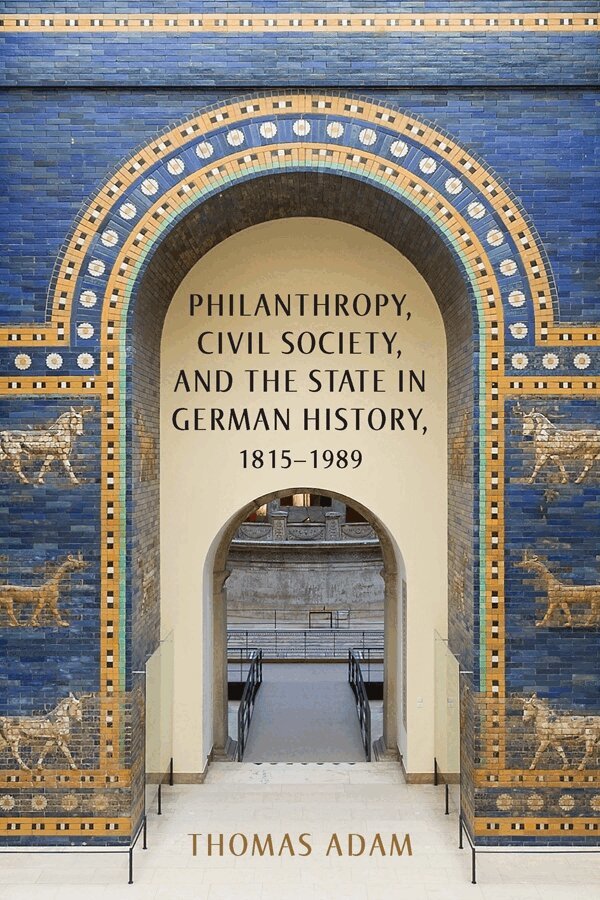
Philanthropy, Civil Society, and the State in German History, 1815-1989
Inbunden, Engelska, 2016
1 083 kr
Skickas inom 10-15 vardagar
The first book to provide the English-speaking reader with the revisionist interpretation of the role of the state and philanthropy in Germany that is increasingly embraced by German historians.Largely unnoticed among English-speaking scholars of German history, a major shift in interpretation of German history has been underway during the past three decades among German historians of Germany. While American and British historians continue to subscribe to an interpretation of German society as state centered, their German counterparts have begun to embrace an interpretation in which nineteenth- and twentieth-century German society was characterized by private initiative and a vibrant civil society. Public institutions such as museums, high schools, universities, hospitals, and charities relied heavily on the support of wealthy donors. State funding for universitiesand high schools, for instance, accounted only for a fragment of the operating costs of those institutions, while private endowments running into the millions of marks funded scholarships as well as health care for teachers and students. Private support for public institutions was essential for their existence and survival: it was the backbone of Germany's civil society. This book is the first to provide the English-speaking reader with this revisionist interpretation of the role of the state and philanthropy in nineteenth- and twentieth-century Germany: a society in which private actors claimed responsibility for the common good and used philanthropic engagement to shape societyaccording to their visions.. Thomas Adam is Professor of History at the University of Texas at Arlington. He has published extensively in the field of transnational history and the history of philanthropy.
Del 6 - German History in Context
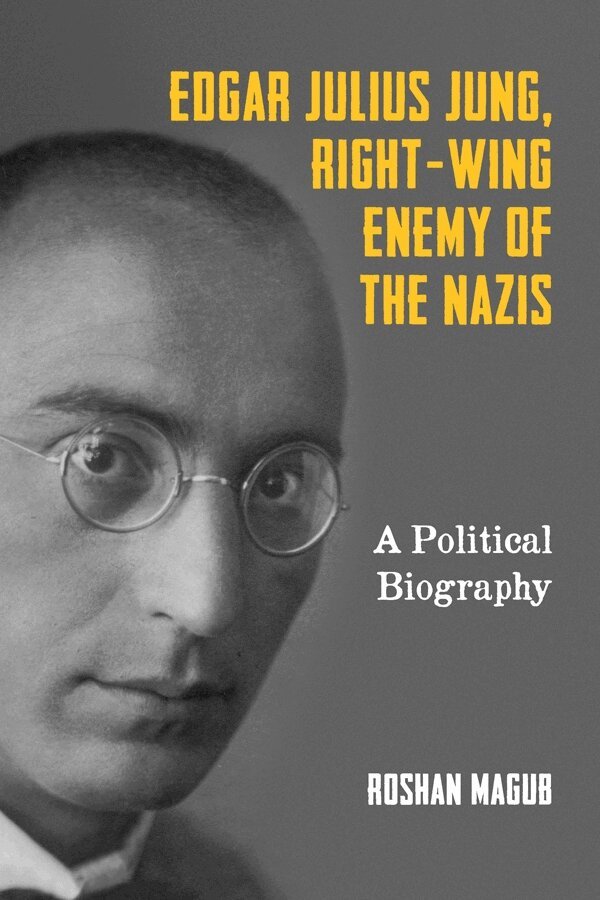
Edgar Julius Jung, Right-Wing Enemy of the Nazis
A Political Biography
Inbunden, Engelska, 2017
1 246 kr
Skickas inom 10-15 vardagar
Fills a serious gap in German historical literature by providing the first political biography of Jung, a leading figure of the anti-Nazi Right.By the time of his death, Edgar Julius Jung (1894-1934) was well known in Germany and Europe as one of the foremost ideologues of the political movement that called itself the Conservative Revolution and as a right-wing opponent of the Nazis. He was speechwriter for and confidant of Franz von Papen (first Hitler's predecessor as chancellor, then Hitler's vice-chancellor), which put him at the center of political events right up until the Nazi seizure of power. Considered by Baldur von Schirach and Goebbels to be one of the worst enemies of the Nazis, Jung was assassinated by the Nazi regime in June 1934. The eleven years of Nazi rule that followed contributed to Jung's neglect by historians, as did distaste, since the war's end and the founding of the Federal Republic on democratic principles, for his strongly antidemocratic stance.Although there have been several studies on Jung's political thought,there has been until now no biography in German or English. Roshan Magub's book therefore fills a serious gap in German historical literature. It shows that Jung's opposition to National Socialism dates from the earliest days andthat he had a very close relationship with the Ruhr industry, which supported him financially and enabled him to reach a nationwide audience. Magub uses, for the first time, all the available material from the archives in Munich,Koblenz, Cologne, and Berlin, and the whole of Jung's Nachlass. Her book sheds new light on Jung and demonstrates his importance in Germany's political history.Roshan Magub holds a PhD from Birkbeck College, University of London.
715 kr
Skickas inom 7-10 vardagar
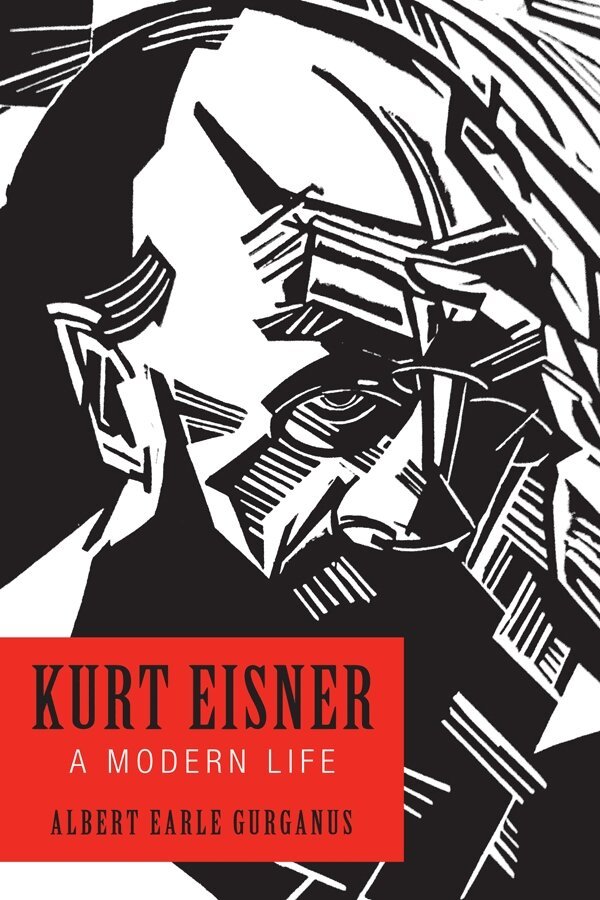
The first comprehensive biography in English of the leader of the Bavarian Revolution and Republic of 1918/19, the first Jewish head of a European state and a man who embraced and embodied modernity.At the end of the First World War, German Jewish journalist, theater critic, and political activist Kurt Eisner (1867-1919), just released from prison, led a nonviolent revolution in Munich that deposed the monarchy and established the Bavarian Republic. Local head of the Independent Socialists, Eisner had been jailed for treason after organizing a munitions workers' strike to force an armistice. For a hundred days, as Germany spiraled into civil war, Eisner fought as head of state to preserve calm while implementing a peaceful transition to democracy and reforging international relations. He rejected another central German government dominated by Prussia in favor of a confederation of autonomous equals, a "United States of Germany." A Francophile, he sought ties with Paris in hope of containing Prussia. In February 1919, on the way to submit his government's resignation to the newly elected constitutionalassembly, Eisner was shot by a protofascist aristocrat, plunging Bavaria into political chaos from which Adolf Hitler would emerge. At the centenary of the Bavarian Revolution and Republic of 1918/19, this is the first comprehensive biography of Eisner written for an English-language audience.Albert Earle Gurganus is Professor Emeritus of Modern Languages at The Citadel. He is the author of The Art of Revolution: Kurt Eisner's Agitprop (Camden House, 1986).
Del 4 - German History in Context
Revisiting the "Nazi Occult"
Histories, Realities, Legacies
Häftad, Engelska, 2019
339 kr
Skickas inom 10-15 vardagar
New collection of essays promising to re-energize the debate on Nazism's occult roots and legacies and thus our understanding of German cultural and intellectual history over the past century.Scholars have debated the role of the occult in Nazism since it first appeared on the German political landscape in the 1920s. After 1945, a consensus held that occultism - an ostensibly anti-modern, irrational blend of pseudo-religious and -scientific practices and ideas - had directly facilitated Nazism's rise. More recently, scholarly debate has denied the occult a role in shaping the Third Reich, emphasizing the Nazis' hostility to esoteric religion and alternative forms of knowledge. Bringing together cutting-edge scholarship on the topic, this volume calls for a fundamental reappraisal of these positions.The book is divided into three chronological sections. The first,on the period 1890 to 1933, looks at the esoteric philosophies and occult movements that influenced both the leaders of the Nazi movement and ordinary Germans who became its adherents. The second, on the Third Reich in power, explores how the occult and alternative religious belief informed Nazism as an ideological, political, and cultural system. The third looks at Nazism's occult legacies. In emphasizing both continuities and disjunctures, this book promises to re-open and re-energize debate on the occult roots and legacies of Nazism, and with it our understanding of German cultural and intellectual history over the past century.Contributors: Monica Black; Jeff Hayton; Oded Heilbronner; Eric Kurlander; Fabian Link and J. Laurence Hare; Anna Lux; Perry Myers; John Ondrovcik; Michael E. O'Sullivan; Jared Poley; Uwe Schellinger, Andreas Anton, and Michael T. Schetsche; Peter Staudenmaier.Monica Black is Associate Professor and Associate Head of the Department of History at the University of Tennessee, Knoxville. Eric Kurlander is J. Ollie Edmunds Chair and Professor of Modern European History at Stetson University.
Del 9 - German History in Context
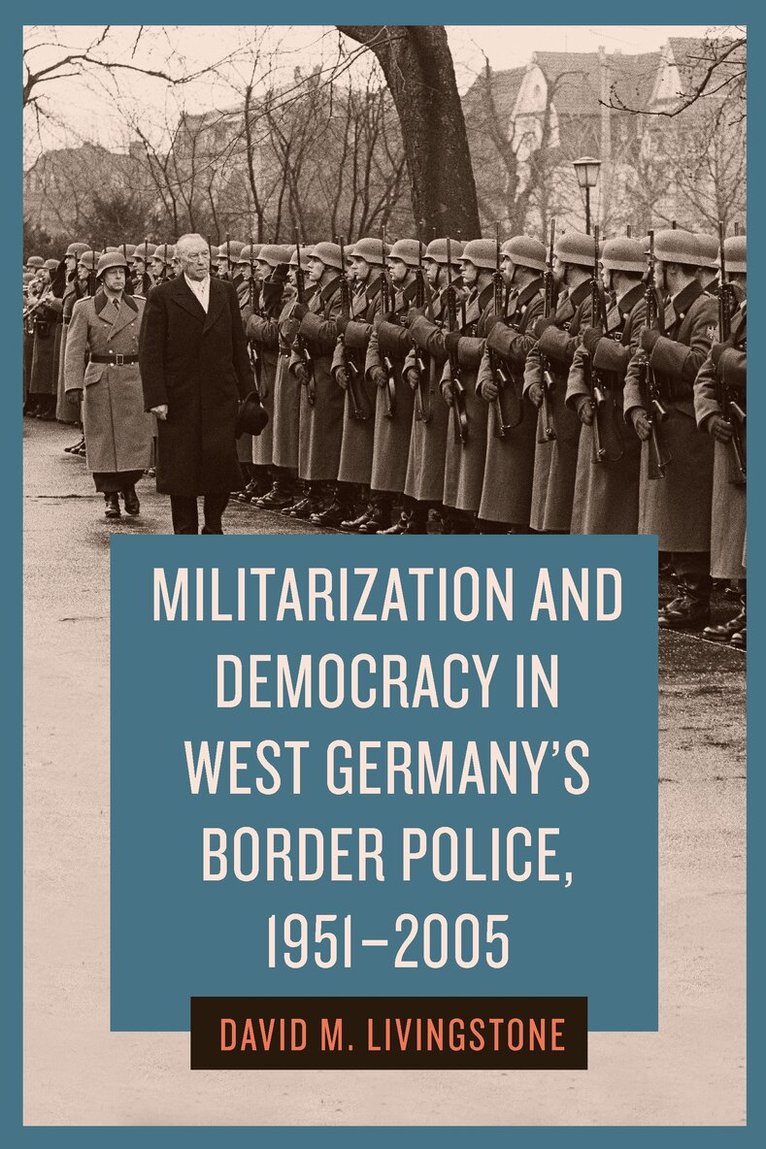
Militarization and Democracy in West Germany's Border Police, 1951-2005
Inbunden, Engelska, 2024
1 192 kr
Skickas inom 7-10 vardagar
A social history of West Germany's Bundesgrenzschutz (BGS, Federal Border Police) that complicates the telling of the country's history as a straightforward success story.The 2020 murder of George Floyd by Minneapolis police officers shows that police violence is still a problem in Western democracies. Floyd's murder prompted some critics to hail the German police as a model of democratic policing that should be emulated. After 1945, Germany's police forces had supposedly shed the militarization and authoritarian impulses still prevalent in other nations' forces. These uncritical appraisals, however, deserve closer analysis.This book is a social history of West Germany's Bundesgrenzschutz (BGS), a federal border guard established in 1951 that became re-unified Germany's first national police force. It argues that the BGS revived authoritarian traditions of militarized policing and kept them alive long into the postwar era even though the country was supposedly consigning these problematic legacies to its past. The BGS was staffed and led by Wehrmacht and SS veterans until the late 1970s, and while West Germany was democratizing, BGS commanders were still planning to fight wars and were teaching its officers "street fighting" tactics. While the end outcome was positive, the study contributes to the growing body of recent research that complicates the writing of the Federal Republic's history as a "success story."Dealing explicitly with post-fascist West Germany's struggle to establish a democratic police force, the book enters a conversation with studies concerned with democratization, security, and Germany's effort to overcome its Nazi past.
1 629 kr
Skickas inom 7-10 vardagar
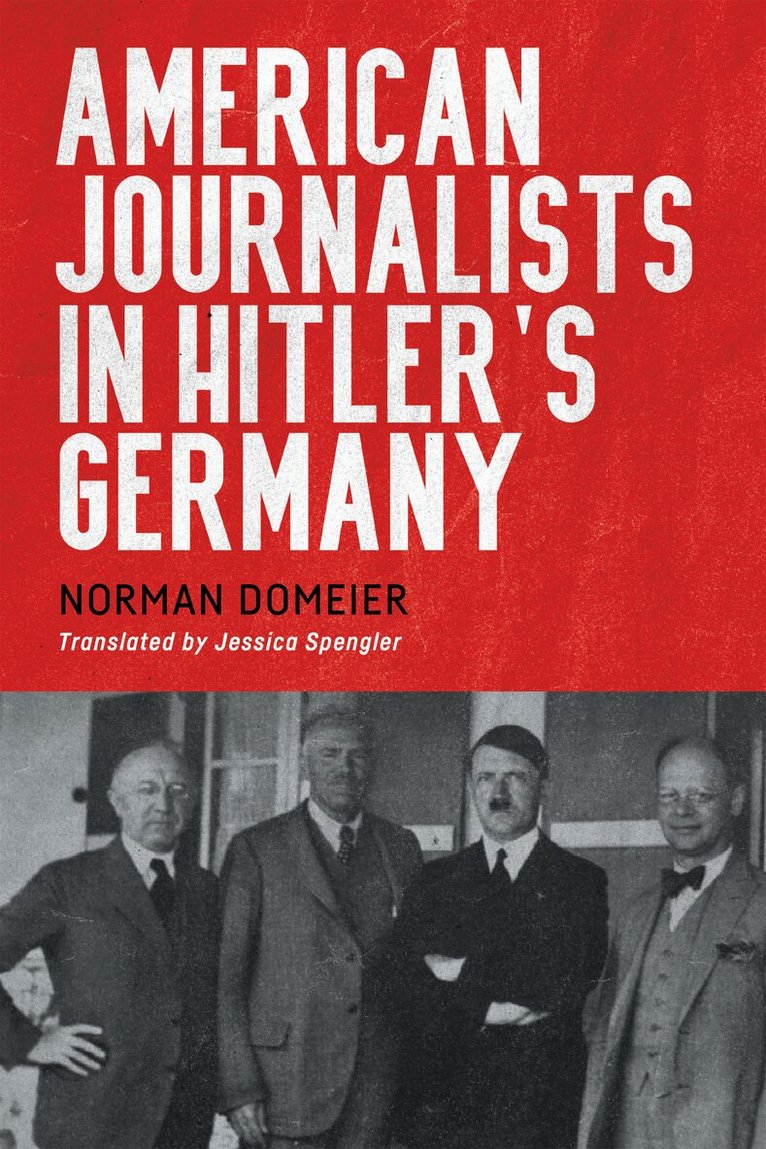
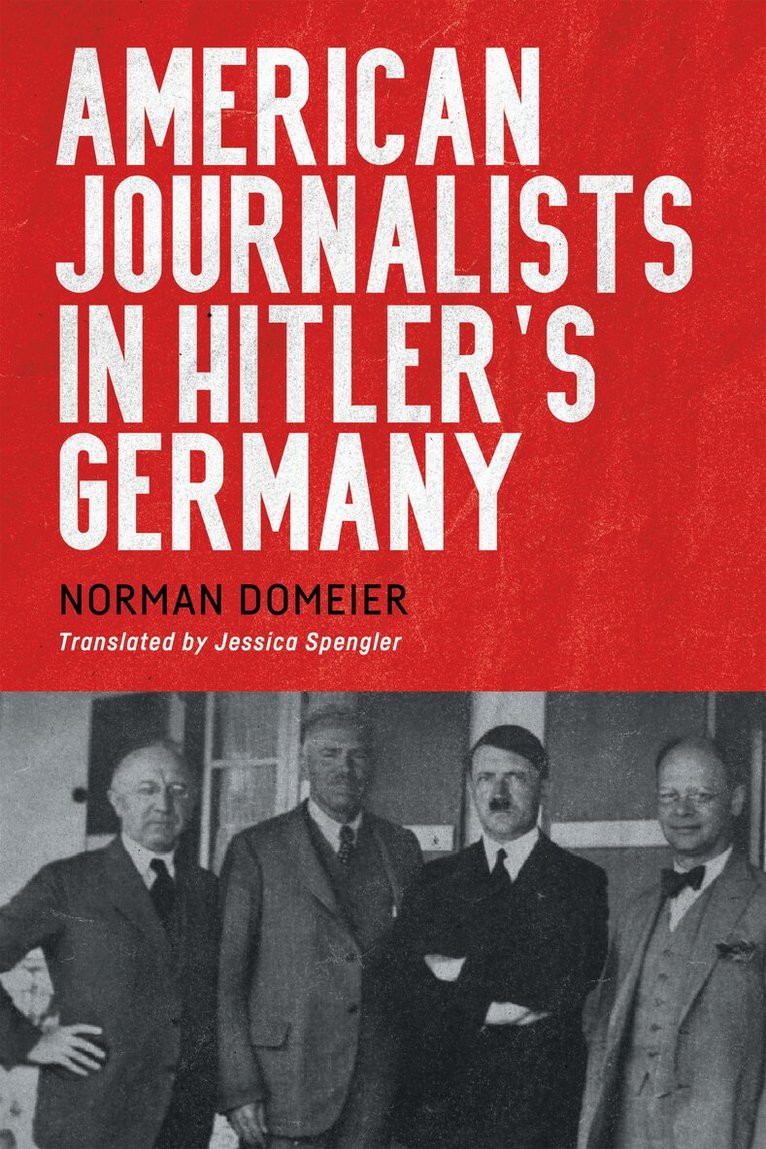
Examines American journalists' and media companies' roles in Hitler's Germany, reigniting the debate on the relationship between political power and the media.Despite Hitler's international use of propaganda, and despite the power of the US press, historians have neglected American journalists' activity in Nazi Germany. American media companies expanded their presence in Germany after 1933, and the Associated Press (AP) conducted business with Hitler's regime throughout the war.Norman Domeier's study, now in English, is the first to examine critically and in detail the roles of American journalists and media companies in Hitler's Germany, showing that they knew about but kept secret the plans for rearmament, the occupation of the Rhineland, the annexation of Austria, and the invasions of Denmark, Norway, and the Soviet Union. The book documents the "companionship" between Adolf Hitler and Karl Henry von Wiegand, chief German correspondent of the Hearst press, who was the first and last American to interview him. Most important, it details the secret exchange of news photographs - discovered by Domeier in 2017 - between the AP and the Nazis from 1942 to 1945. Thousands of AP photos were used in the Nazi press, usually with anti-American or anti-Semitic spin, while the AP distributed ca. 40,000 Nazi photographs to US newspapers. Domeier's book reignites the debate on the relationship between political power and the media, opening up new perspectives on the political and cultural history of journalism beyond one-sided idealizations.
426 kr
Kommande
Examines American journalists' and media companies' roles in Hitler's Germany, reigniting the debate on the relationship between political power and the media.Despite Hitler's international use of propaganda, and despite the power of the US press, historians have neglected American journalists' activity in Nazi Germany. American media companies expanded their presence in Germany after 1933, and the Associated Press (AP) conducted business with Hitler's regime throughout the war.Norman Domeier's study, now in English, is the first to examine critically and in detail the roles of American journalists and media companies in Hitler's Germany, showing that they knew about but kept secret the plans for rearmament, the occupation of the Rhineland, the annexation of Austria, and the invasions of Denmark, Norway, and the Soviet Union. The book documents the "companionship" between Adolf Hitler and Karl Henry von Wiegand, chief German correspondent of the Hearst press, who was the first and last American to interview him. Most important, it details the secret exchange of news photographs - discovered by Domeier in 2017 - between the AP and the Nazis from 1942 to 1945. Thousands of AP photos were used in the Nazi press, usually with anti-American or anti-Semitic spin, while the AP distributed ca. 40,000 Nazi photographs to US newspapers. Domeier's book reignites the debate on the relationship between political power and the media, opening up new perspectives on the political and cultural history of journalism beyond one-sided idealizations.