Global Studies in Social and Cultural Maritime History – serie
Visar alla böcker i serien Global Studies in Social and Cultural Maritime History. Handla med fri frakt och snabb leverans.
11 produkter
11 produkter
Negotiating Masculinities and Modernity in the Maritime World, 1815–1940
A Sailor’s Progress?
Inbunden, Engelska, 2022
1 419 kr
Skickas inom 10-15 vardagar
In doing so, this edited collection shows that maritime masculinities (ideals, representations and the seamen themselves) were highly visible and volatile sites for negotiating the tensions of masculinities with civilisation, race, technology, patriotism, citizenship, and respectability during the long nineteenth century.
Negotiating Masculinities and Modernity in the Maritime World, 1815–1940
A Sailor’s Progress?
Häftad, Engelska, 2023
1 419 kr
Skickas inom 10-15 vardagar
In doing so, this edited collection shows that maritime masculinities (ideals, representations and the seamen themselves) were highly visible and volatile sites for negotiating the tensions of masculinities with civilisation, race, technology, patriotism, citizenship, and respectability during the long nineteenth century.
Bombardment, Public Safety and Resilience in English Coastal Communities during the First World War
Inbunden, Engelska, 2021
1 311 kr
Skickas inom 10-15 vardagar
This book makes the case for a unique coastal-urban experience of war on the home front during the First World War, focusing on case studies from the north-east of England.
1 311 kr
Skickas inom 10-15 vardagar
This book examines the British Admiralty’s engagement with science and technological innovation in the nineteenth century. It is a book about people, and gross misunderstanding, about the dreams and disappointments of scientific workers and inventors in relation to the administrators who adjudicated their requests for support, and about the power of paper to escalate arguments, reduce opinions, and frustrate hopes. From instructions for naval surveying to debates about rewards to civilians for inventions, Paper Navigators puts a wide range of primary sources in the context of public debates and explores the British Admiralty’s engagement with, decision-making around, and management of questions of value, support, and funding with citizen inventors, the broader public, and their own employees. Concentrating on the Admiralty’s private, internal correspondence to explore these themes, it offers a fresh perspective on the Victorian Navy's history of innovation and exploration and is a novel addition to literature on the history of science in the nineteenth century.
1 311 kr
Skickas inom 10-15 vardagar
This book examines the British Admiralty’s engagement with science and technological innovation in the nineteenth century. It is a book about people, and gross misunderstanding, about the dreams and disappointments of scientific workers and inventors in relation to the administrators who adjudicated their requests for support, and about the power of paper to escalate arguments, reduce opinions, and frustrate hopes. From instructions for naval surveying to debates about rewards to civilians for inventions, Paper Navigators puts a wide range of primary sources in the context of public debates and explores the British Admiralty’s engagement with, decision-making around, and management of questions of value, support, and funding with citizen inventors, the broader public, and their own employees. Concentrating on the Admiralty’s private, internal correspondence to explore these themes, it offers a fresh perspective on the Victorian Navy's history of innovation and exploration and is a novel addition to literature on the history of science in the nineteenth century.
1 419 kr
Skickas inom 10-15 vardagar
This book explores the idea of privacy at sea, from early sixteenth-century maritime expansions to nineteenth-century naval developments. In this period, the sea became a focal point of political and economic ambition as technological and cultural shifts enabled a more extensive exploration of maritime spaces and global coexistence at sea. The exploration of the sea and the conflicts arising from establishing control over maritime routes demanded a more nuanced distinction and negotiation between State and private efforts. Privateering, for example, became a bridge between the private enterprises and the State’s warfares or trade struggles, demonstrating that the sea required public control at the same time as it enabled private endeavours. Although this tension between private and public interests has been explored in military and economic studies, questions of how the private appeared in maritime history have been discussed only through a particularly merchantile lens.This volume adds a new dimension to this discussion by focusing on how privacy and the private were perceived and created by the historical agents at sea. We aim to move beyond the mercantile “private” as a direct opposite to the “public” or the State, thereby opening the discussion of privacy at sea as a multiplicity of lived experiences.Chapters 1, 8 and 14 are available open access under a Creative Commons Attribution 4.0 International License via link.springer.com.
1 419 kr
Skickas inom 10-15 vardagar
This book explores the idea of privacy at sea, from early sixteenth-century maritime expansions to nineteenth-century naval developments. In this period, the sea became a focal point of political and economic ambition as technological and cultural shifts enabled a more extensive exploration of maritime spaces and global coexistence at sea. The exploration of the sea and the conflicts arising from establishing control over maritime routes demanded a more nuanced distinction and negotiation between State and private efforts. Privateering, for example, became a bridge between the private enterprises and the State’s warfares or trade struggles, demonstrating that the sea required public control at the same time as it enabled private endeavours. Although this tension between private and public interests has been explored in military and economic studies, questions of how the private appeared in maritime history have been discussed only through a particularly merchantile lens.This volume adds a new dimension to this discussion by focusing on how privacy and the private were perceived and created by the historical agents at sea. We aim to move beyond the mercantile “private” as a direct opposite to the “public” or the State, thereby opening the discussion of privacy at sea as a multiplicity of lived experiences.Chapters 1, 8 and 14 are available open access under a Creative Commons Attribution 4.0 International License via link.springer.com.
1 202 kr
Skickas inom 10-15 vardagar
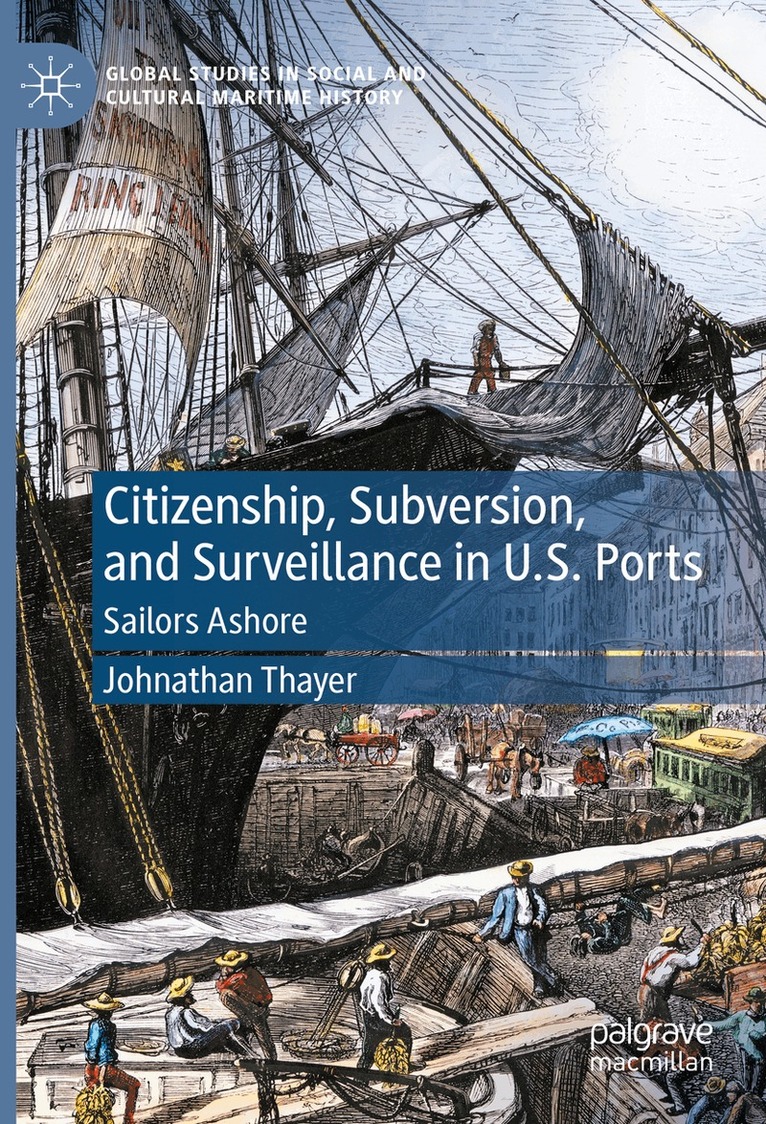
This book argues first, that the forces of industrialization that transformed ship technology simultaneously transformed the working-class lives of merchant seamen, intensifying class conflict and producing collective networks of subversion and resistance within the urban borderland spaces of sailortowns in which sailors fought to maintain control over their mobility, agency, and rights. Second, that given their social, cultural, economic, geographic, and legal marginalization, merchant seamen have occupied essential roles at the parameters of US urban, legal, labor, immigration, and wartime history. Third, that the constellation of these histories, embedded in the encounters and negotiations that merchant seamen provoked along the nation’s coastlines and sailortowns, collectively represents a unique and essential perspective on the history of US citizenship.
1 202 kr
Skickas inom 10-15 vardagar
This book argues first, that the forces of industrialization that transformed ship technology simultaneously transformed the working-class lives of merchant seamen, intensifying class conflict and producing collective networks of subversion and resistance within the urban borderland spaces of sailortowns in which sailors fought to maintain control over their mobility, agency, and rights. Second, that given their social, cultural, economic, geographic, and legal marginalization, merchant seamen have occupied essential roles at the parameters of US urban, legal, labor, immigration, and wartime history. Third, that the constellation of these histories, embedded in the encounters and negotiations that merchant seamen provoked along the nation’s coastlines and sailortowns, collectively represents a unique and essential perspective on the history of US citizenship.
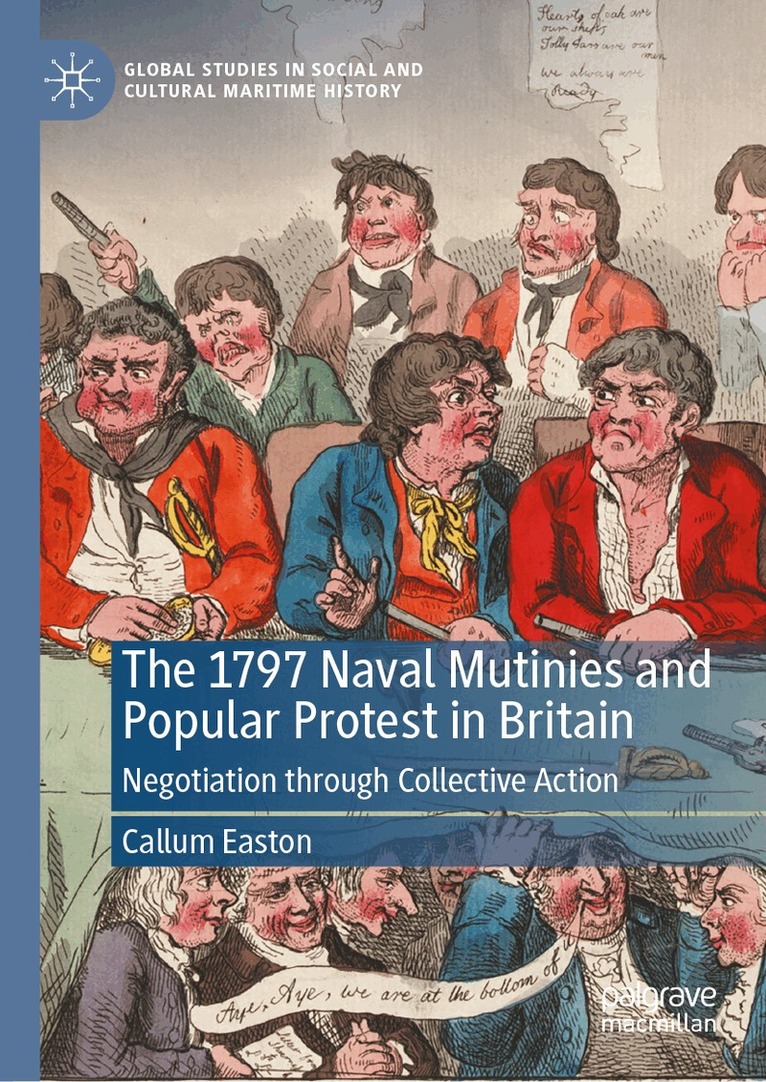
1797 Naval Mutinies and Popular Protest in Britain
Negotiation through Collective Action
Inbunden, Engelska, 2025
1 202 kr
Skickas inom 10-15 vardagar
This book offers a holistic re-evaluation of the Spithead and Nore mutinies of 1797, which immobilised the two Royal Navy fleets responsible for Britain's defence at a time when invasion seemed likely.
608 kr
Kommande
This open access book explores the story of early modern Swedish sailors and merchants captured and enslaved in the North African territory then known as ‘Barbary’ (Algeria, Libya, Tunisia, and Morocco), and the efforts of their families, communities, and consuls to ransom them. Swedes were a minority among the Spaniards, Italians, Frenchmen, and British who were carried off. For that reason, Swedish authorities were initially unaware of their suffering; however, as the losses of men increased and awareness of their plight grew, it became a huge concern for Sweden’s long-distance trade, particularly the import of salt—essential for food preservation in the long winter months— from Southern Europe.By studying the Swedish experience of encountering Barbary, the book illustrates how a small Lutheran state navigated global interests. This volume studies letters from captured and enslaved Swedish sailors and how this correspondence played a pivotal role in shaping slave narratives and by extension Swedish identity. The book also examines these letters’ social impact on local communities at home, the political pressure they exerted on government officials, and their cultural significance among intellectuals. In addition, the study highlights how Swedish consuls became integrated into the local power elite in North Africa, which facilitated diplomatic negotiations and opened up opportunities for commerce, including participation in the transport and trade of African slaves.