Graphic History Series - Böcker
Visar alla böcker i serien Graphic History Series. Handla med fri frakt och snabb leverans.
6 produkter
6 produkter
695 kr
Skickas inom 3-6 vardagar
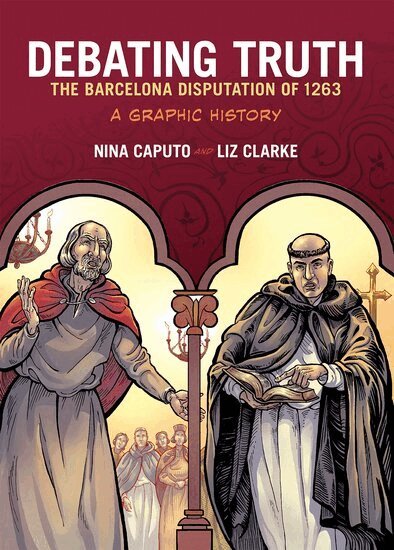
In the summer of 1263, Nahmanides (Rabbi Moses ben Nahman, ca 1195-1270), who was Aragon (1213-1276) to debate with a Dominican Friar named Paul about specific claims concerning the Messiah in Judaism and Christianity. Friar Paul had converted from Judaism to Christianity as an adult, so he brought with him some knowledge of rabbinic texts, which he used to challenge the faith of Jews in Provence and northern Spain. His strategy was entirely innovative. Using passages from the Talmud, a foundation of Jewish life in the diaspora claimed that Jewish leaders recognized that Jesus was the messiah. The Barcelona dispuation was an officially sanctioned opportunity for Friar Paul to perform this kind of argument. it was conducted in a public forum at the roayal palace before an audience of Jewish and Christian dignitaries The two disputants, each thoroughly convinced of the indisputable truth of his own religious faith and theological interpretations, argued for his position before a panel of judges headed by James I himself. Nina Caputo's new graphic history tells the story of the Barcelona Disputation from Nahmanides' perspective.By combining the visual power of graphics with primary sources, contextualizing essays, historiography, and study questions, Debating Truth explores issues of the nature of truth, interfaith relations, and the complicated dynamics between Christians, Jews and Muslims in the medieval Mediterranean.
318 kr
Skickas inom 5-8 vardagar
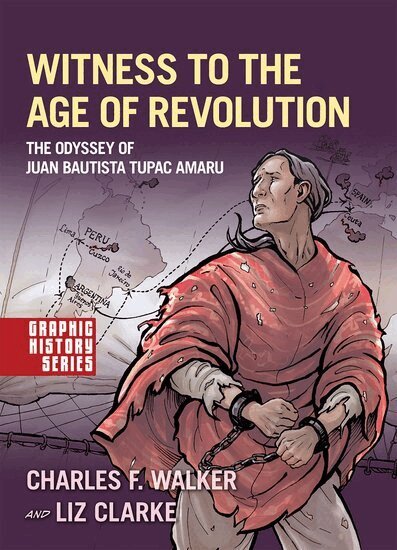
The Tupac Amaru rebellion of 1780-1783 began as a local revolt against colonial authorities and grew into the largest rebellion in the history of Spain's American empire-more widespread and deadlier than the American Revolution. An official collector of tribute for the imperial crown, José Gabriel Condorcanqui had seen firsthand what oppressive Spanish rule meant for Peru's Indian population and, under the Inca royal name Tupac Amaru, he set events in motion that would transform him into one of Latin America's most iconic revolutionary figures. While he and the rebellion's leaders were put to death, his half-brother, Juan Bautista Tupac Amaru, survived but paid a high price for his participation in the uprising.This work in the Graphic History series is based on the memoir written by Juan Bautista about his odyssey as a prisoner of Spain. He endured forty years in jails, dungeons, and presidios on both sides of the Atlantic. Juan Bautista spent two years in jail in Cusco, was freed, rearrested, and then marched 700 miles in chains over the Andes to Lima. He spent two years aboard a ship travelling around Cape Horn to Spain. Subsequently, he endured over thirty years imprisoned in Ceuta, Spain's much-feared garrison city on the northern tip of Africa. In 1822, priest Marcos Durán Martel and Maltese-Argentine naval hero Juan Bautista Azopardo arranged to have him freed and sent to the newly independent Argentina, where he became a symbol of Argentina's short-lived romance with the Incan Empire. There he penned his memoirs, but died without fulfilling his dream of returning to Peru.This stunning graphic history relates the life and legacy of Juan Bautista Tupac Amaru, enhanced by a selection of primary sources, and chronicles the harrowing and extraordinary life of a firsthand witness to the Age of Revolution. .
478 kr
Skickas inom 3-6 vardagar
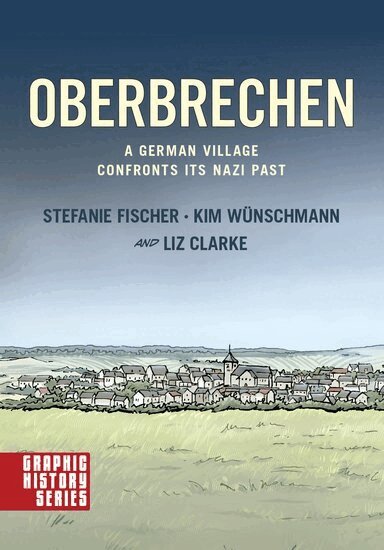
Oberbrechen: A German Village Confronts Its Nazi Past is a new title in OUP's Graphic History Series that chronicles the events of the Holocaust and its aftermath in a small village in rural Germany. Based on meticulous research and using powerful visual storytelling, the book provides a multilayered narrative that explores the experiences of both Jewish and non-Jewish villagers from the First World War to the present. Its focus on how "ordinary" people experienced this time offers a new and illuminating insight into everyday life and the processes of violence, rupture, and reconciliation that characterized the history of the twentieth century in Germany and beyond. The graphic narrative is accompanied by source documents published in English translation for the first time, an essay on the wider historical context, and an incisive reflection on the writing of this book--and of history more broadly.
301 kr
Kommande
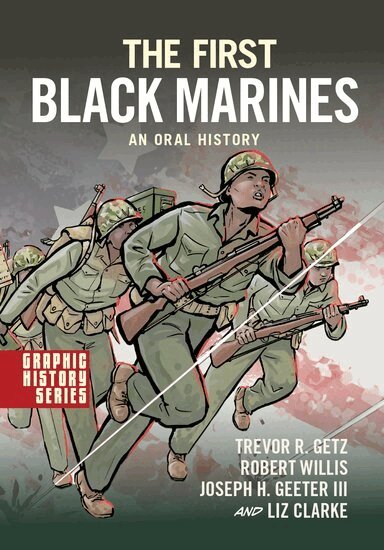
The First Black Marines: An Oral History tells the extraordinary stories of the men who made history as the first African Americans to serve in the US Marine Corps. Based on extensive oral history interviews with a group of veterans conducted by the authors, this new title in OUP's Graphic History Series documents the experiences of these men as they underwent training at the segregated Camp Montford Point in Jacksonville, North Carolina, during the 1940s and served in the Pacific theater of World War II. Narrated in the authentic voices of the Marines and featuring powerful imagery, this book provides a personal and moving account of the challenges they faced and overcame as pioneers in the US military during the Jim Crow era of widespread racial segregation and discrimination. The graphic history is accompanied by a highly accessible introduction to an inquiry-based approach to historical research and the methodology of oral history that empowers students to develop and conduct their own research projects in their communities. In addition, the book includes a brief overview of the historical context in which the Marines' stories unfold as well as a carefully chosen set of primary documents.
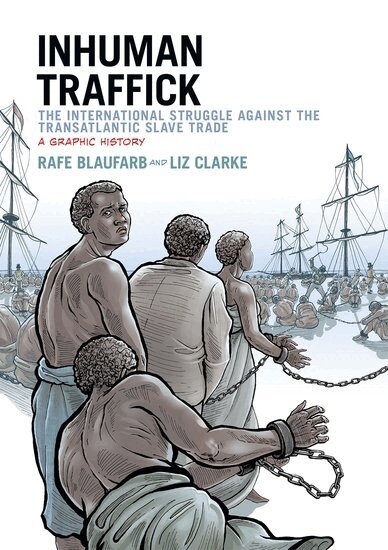
Inhuman Traffick
The International Struggle against the Transatlantic Slave Trade, A Graphic History
Häftad, Engelska, 2015
715 kr
Skickas inom 3-6 vardagar
The dramatic story of the slave ship Neirsee springs vividly to life in Rafe Blaufarb's graphic mircohistory, Inhuman Traffic. The story, set in the early nineteenth century, moves from the slave port of Old Calabar to the Caribbean and to the courts of Britain and France where the history of the illegal slave trade, slavery in the Caribbean, and diplomatic history all come into focus as Blaufarb follows the ship, its crew, and its captives. Students will be taken in by the vivid drawings and the rich narrative, but they will also find themselves immersed in an unusual learning experience. Blaufarb not only presents the history of the ship and captives, he takes the reader inside the project itself. He explains how he came upon the story, how he and his editor envisioned the project, and how he worked with the illustrator Liz Clarke to craft the 350 "cells" that compose the book. He and Clarke even take the reader inside archives in Britain and France which are themselves illustrated and their histories explained. Like all the best examples of the genre, Inhuman Traffic tells a compelling story through a complex interplay of image and text -- it will keep students reading, and learning, to the very end.
284 kr
Skickas inom 5-8 vardagar
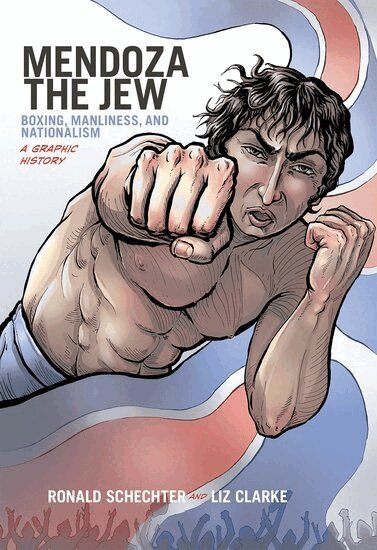
Inspired by the resounding success of Abina and the Important Men (OUP, 2011), Mendoza the Jew combines a graphic history with primary documentation and contextual information to explore issues of nationalism, identity, culture, and historical methodology through the life story of Daniel Mendoza. Mendoza was a poor Sephardic Jew from East London who became the boxing champion of Britain in 1789. As a Jew with limited means and a foreign-sounding name, Mendoza was an unlikely symbol of what many Britons considered to be their very own "national" sport. Whereas their adversaries across the Channel reputedly settled private quarrels by dueling with swords or pistols--leaving widows and orphans in their wake--the British (according to supporters of boxing) tended to settle their disputes with their fists. Mendoza the Jew provides an exciting and lively alternative to conventional lessons on nationalism. Rather than studying learned treatises and political speeches, students can read a graphic history about an eighteenth-century British boxer that demonstrates how ideas and emotions regarding the "nation" permeated the practices of everyday life. Mendoza's story reveals the ambivalent attitudes of British society towards its minorities, who were allowed (sometimes grudgingly) to participate in national life by braving pain and injury in athletic contests, but whose social mobility was limited and precarious.