Stefanie Fischer – författare
Visar alla böcker från författaren Stefanie Fischer. Handla med fri frakt och snabb leverans.
13 produkter
13 produkter
Häftad, Engelska, 2024
488 kr
Skickas inom 3-6 vardagar
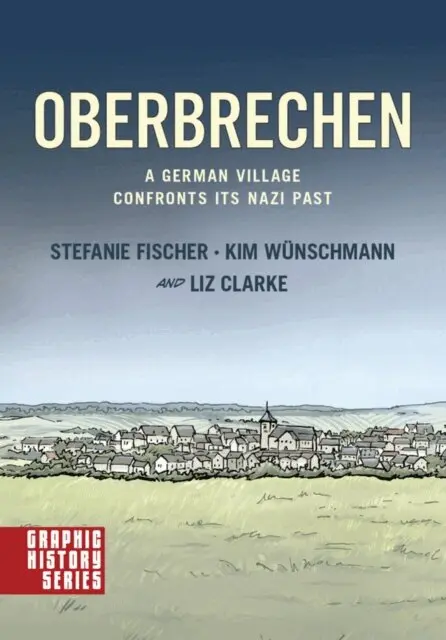
Oberbrechen: A German Village Confronts Its Nazi Past is a new title in OUP's Graphic History Series that chronicles the events of the Holocaust and its aftermath in a small village in rural Germany. Based on meticulous research and using powerful visual storytelling, the book provides a multilayered narrative that explores the experiences of both Jewish and non-Jewish villagers from the First World War to the present. Its focus on how "ordinary" people experienced this time offers a new and illuminating insight into everyday life and the processes of violence, rupture, and reconciliation that characterized the history of the twentieth century in Germany and beyond. The graphic narrative is accompanied by source documents published in English translation for the first time, an essay on the wider historical context, and an incisive reflection on the writing of this book--and of history more broadly.
E-bok
Engelska, 2024414 kr
Läs direkt efter köp
Oberbrechen: A German Village Confronts Its Nazi Past is a new title in OUP's Graphic History Series that chronicles the events of the Holocaust and its aftermath in a small village in rural Germany. Based on meticulous research and using powerful visual storytelling, the book provides a multilayered narrative that explores the experiences of both Jewish and non-Jewish villagers from the First World War to the present. Its focus on how "e;ordinary"e; people experienced this time offers a new and illuminating insight into everyday life and the processes of violence, rupture, and reconciliation that characterized the history of the twentieth century in Germany and beyond. The graphic narrative is accompanied by source documents published in English translation for the first time, an essay on the wider historical context, and an incisive reflection on the writing of this book--and of history more broadly.
Inbunden, Engelska, 2024
1 024 kr
Skickas inom 5-8 vardagar
Jewish Cattle Traders in the German Countryside, 1919–1939, explores the social and economic networks in which this group operated and the informal but durable bonds between Jewish cattle traders and farmers that not even incessant Nazi attacks could break.Stefanie Fischer combines approaches from social history, economic history, and sociology to challenge the longstanding cliché of the shady Jewish cattle dealer. By focusing on trust and social connections rather than analyzing economic trends, Fischer exposes the myriad inconsistencies that riddled the process of expelling the Jews from Germany.Jewish Cattle Traders in the German Countryside, 1919–1939, examines the complexities of relations between Jews and non-Jews who were engaged in economic and social exchange. In the process, Fischer challenges previous understandings of everyday life under Nazi rule and discovers new ways in which Jewish agency acted as a critical force throughout the exclusionary processes that took place in Hitler's Germany.
Häftad, Engelska, 2024
544 kr
Skickas inom 5-8 vardagar
Jewish Cattle Traders in the German Countryside, 1919–1939, explores the social and economic networks in which this group operated and the informal but durable bonds between Jewish cattle traders and farmers that not even incessant Nazi attacks could break.Stefanie Fischer combines approaches from social history, economic history, and sociology to challenge the longstanding cliché of the shady Jewish cattle dealer. By focusing on trust and social connections rather than analyzing economic trends, Fischer exposes the myriad inconsistencies that riddled the process of expelling the Jews from Germany.Jewish Cattle Traders in the German Countryside, 1919–1939, examines the complexities of relations between Jews and non-Jews who were engaged in economic and social exchange. In the process, Fischer challenges previous understandings of everyday life under Nazi rule and discovers new ways in which Jewish agency acted as a critical force throughout the exclusionary processes that took place in Hitler's Germany.
Del 42 - Europäisch-Jüdische Studien - Beiträge
Juden und Nichtjuden nach der Shoah
Inbunden, Tyska, 2019
1 433 kr
Skickas inom 5-8 vardagar
Del 42 - Europäisch-Jüdische Studien - Beiträge
Juden Und Nichtjuden Nach Der Shoah
Begegnungen in Deutschland
Häftad, Tyska, 2020
347 kr
Skickas inom 5-8 vardagar
Tyska, 2021
317 kr
Skickas inom 3-6 vardagar
283 kr
Skickas inom 3-6 vardagar
Häftad, Tyska, 2025
130 kr
Skickas inom 3-6 vardagar
Häftad, Tyska, 2016
214 kr
Skickas inom 3-6 vardagar
Häftad, Tyska, 2015
192 kr
Skickas inom 5-8 vardagar
E-bok
PDF, Tyska, 2014317 kr
Läs direkt efter köp
Die Nationalsozialisten stießen beim Versuch, Juden aus dem Viehhandel zu verdrängen an die Grenzen ihrer rassistischen Wirtschaftspolitik. Trotz antisemitischer Propaganda hielten viele Bauern an ihren vertrauten Handelspartnern, den jüdischen Viehhändlern, fest. Tatsächlich zählt der Viehhandel zu den ältesten Tätigkeitsfeldern von Juden in Mitteleuropa. Als Viehein- und -verkäufer, aber auch als Kreditgeber und Güterhändler, agierten sie an einer sensiblen Stelle in der Agrargesellschaft. Stefanie Fischer untersucht erstmals die Bedeutung der jüdischen Viehhändler für den ländlichen Raum. Sie beleuchtet, wie sich das Vertrauensverhältnis zwischen Viehhändlern und Bauern aufbaute und wie lange die wirtschaftlichen Beziehungen unter dem Druck antisemitischer Gewalt und Propaganda Bestand hatten. Als Untersuchungsregion dient die bayerische Region Mittelfranken. Dort lebte noch bis 1933 eine der größten jüdischen Gemeinden im Deutschen Reich. Gleichzeitig nahm im Gau von Julius Streicher die antisemitische Gewalt ein besonders scharfes Ausmaß an.