Greenwood Guides to Historic Events of the Medieval World – serie
Visar alla böcker i serien Greenwood Guides to Historic Events of the Medieval World. Handla med fri frakt och snabb leverans.
11 produkter
11 produkter
646 kr
Skickas inom 10-15 vardagar
When in Henry II of England married Eleanor of Aquitaine of France in 1154 A.D., he became at once the reigning sovereign over a vast stretch of land extending across all of England and half of France—and yet, according to the feudal hierarchy of the times, a vassal to the King of France. This situation, which placed French and English borders in such a tenuous position, solidified the precarious ground on which the Hundred Years War was to be fought 183 years later. This epic border conflict—which was contemporaneous with the age of popular uprisings and the Bubonic Plague, fought according to enduring notions of chivalry and the budding pride of nationality, and which numbered among its participants Richard II, the Black Prince of Wales, Henry IV, Henry V, and Charles of Navarre—ultimately depended upon a peasant woman, Joan of Arc, to reinforce the French ideal of a sacred kingdom, swing the pendulum once more in the direction of the French, and bring this perennial conflict to an end.When in 1154 A.D. Henry II of England married Eleanor of Aquitaine of France, he became at once the reigning sovereign over a vast stretch of land extending across all of England and half of France, and yet, according to the feudal hierarchy of the times, a vassal to the King of France. This situation, which placed French and English borders in such a tenuous position, solidified the precarious ground on which the Hundred Years War was to be fought 183 years later. This epic border conflict—which was contemporaneous with the age of popular uprisings and the Bubonic Plague, fought according to enduring notions of chivalry and the budding pride of nationality, and which numbered among its participants Richard II, the Black Prince of Wales, Henry IV, Henry V, and Charles of Navarre—ultimately depended upon a peasant woman, Joan of Arc, to reinforce the French ideal of a sacred kingdom, swing the pendulum once more in the direction of the French, and bring this perennial conflict to an end.Topics of the theme essays have been selected to show the diversity of this complex war, and include discussions of: the origins of the war; the age of popular rebellion; chivalry's effect on 14th and 15th century warfare; the religion of the monarchy and the role of sacred kingship in the building of the French monarchy; and Joan of Arc's understanding of the war. An annotated timeline and a chronology of French and English Kings provide readers with an easy-to-follow overview of the Hundred Years War and the rulers who presided over it. Nineteen biographical sketches of key French and English figures lend a human aspect to historic names; and 14 annotated primary documents breathe fresh life into the topic, and provide students and readers with a new look at the period. The book concludes with an annotated bibliography and index.
695 kr
Skickas inom 10-15 vardagar
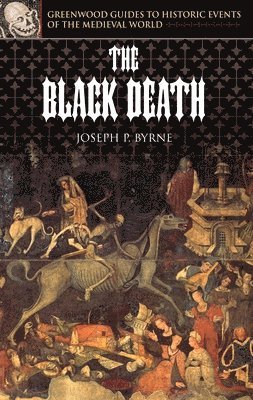
Probably the greatest natural disaster to ever curse humanity, the Black Death's lethality is legendary, killing between a quarter to over half of any given stricken area's population. Though historians suspect a first wave of bubonic plague struck the Mediterranean area between 571 - 760 C.E., there is no doubt that the plague was carried west by the Mongol Golden Horde in the late 1340s as they raided as far west as Constantinople, where it is believed that Genoese traders became infected, and then carried, the disease into European and northern African ports after their escape. Within about two years practically the entire European continent and much of North Africa had been burned over by this disaster of apocalyptic proportions.Eight thematic chapters guide the reader through the medical perspective of the plague— medieval and modern—and to the plague's impact on society, cities, individuals, and art of the time. Medieval doctors named miasmatic vapors—bad air —as a primary cause of infection, along with an improper balance of the four Humors—blood, phlegm, black bile and yellow bile, often caused by ominous astrological alignments; or so they believed. Scapegoats, often Jews, were persecuted and murdered as frightened people desperately sought somebody to blame for the spread of the plague. Others assumed the plague was God's punishment of wicked humanity, and roamed the countryside in groups that would flagellate themselves publicly as an act of atonement. An annotated timeline guides the reader to the key events and dates of this recurring disaster. Nine illustrations show how artists represented the plague's impact on the self and society. Twelve primary documents, half of them never before translated into English, come from eyewitnesses ranging from Constantinople, Damascus, Prague, Italy, France, Germany, and England. A glossary is provided that enables readers to quickly look up unfamiliar medical and historical terms and concepts such as Bacillus, Verjuice, and Peasants' Revolt of 1381. An annotated bibliography follows, divided by topic. The work is fully indexed.
626 kr
Skickas inom 10-15 vardagar
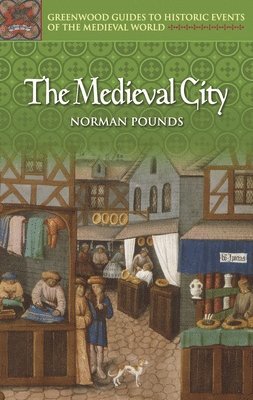
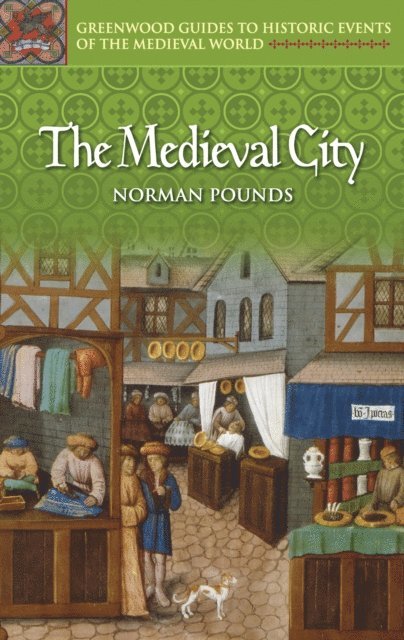
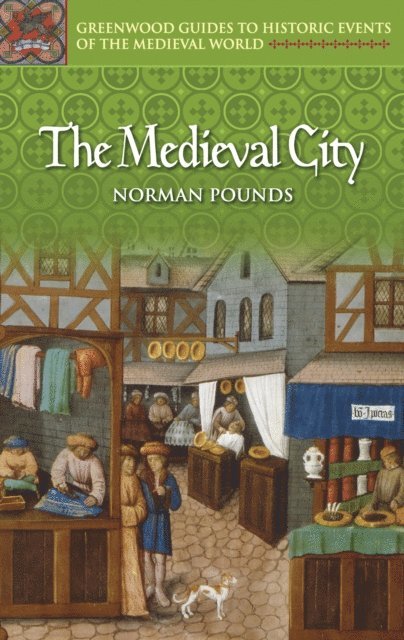
An introduction to the life of towns and cities in the medieval period, this book shows how medieval towns grew to become important centers of trade and liberty. Beginning with a look at the Roman Empire's urban legacy, the author delves into urban planning or lack thereof; the urban way of life; the church in the city; city government; urban crafts and urban trade, health, wealth, and welfare; and the city in history. Annotated primary documents like Domesday Book, sketches of street life, and descriptions of fairs and markets bring the period to life, and extended biographical sketches of towns, regions, and city-dwellers provide readers with valuable detail. In addition, 26 maps and illustrations, an annotated bibliography, glossary, and index round out the work.After a long decline in urban life following the fall of the Roman Empire, towns became centers of trade and of liberty during the medieval period. Here, the author describes how, as Europe stabilized after centuries of strife, commerce and the commercial class grew, and urban areas became an important source of revenue into royal coffers. Towns enjoyed various levels of autonomy, and always provided goods and services unavailable in rural areas. Hazards abounded in towns, though. Disease, fire, crime and other hazards raised mortality rates in urban environs.Designed as an introduction to life of towns and cities in the medieval period, eminent historian Norman Pounds brings to life the many pleasures, rewards, and dangers city-dwellers sought and avoided. Beginning with a look at the Roman Empire's urban legacy, Pounds delves into Urban Planning or lack thereof; The Urban Way of Life; The Church in the City; City Government; Urban Crafts and Urban Trade, Health, Wealth, and Welfare; and The City in History. Annotated primary documents like Domesday Book, sketches of street life, and descriptions of fairs and markets bring the period to life, and extended biographical sketches of towns, regions, and city-dwellers provide readers with valuable detail. In addition, 26 maps and illustrations, an annotated bibliography, glossary, and index round out the work.
875 kr
Skickas inom 10-15 vardagar
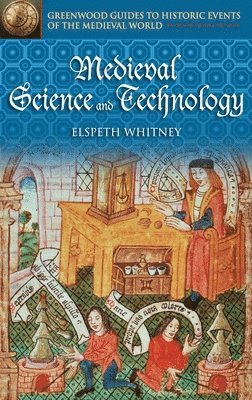
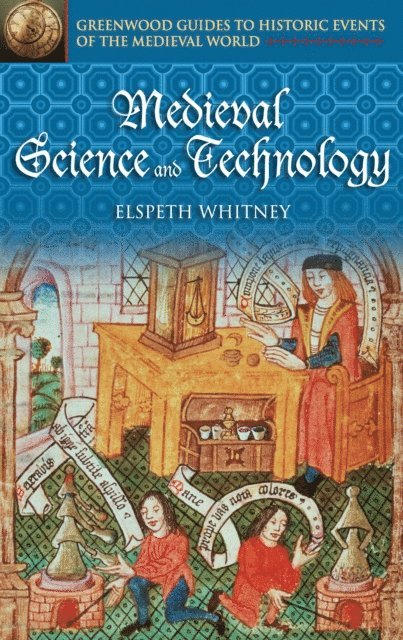
Medieval science and technology was firmly rooted in Aristotelian explanations of the physical world. This book begins by introducing the basic concepts of the classical tradition, and explains how these ideas were promulgated by the ancient Greeks, preserved and commented on by the great Muslim scholars of the early middle ages, and finally transmitted to western Europe as that region began to grow and expand around 1100 C.E. Specific avenues of inquiry such as astronomy and astrology, optics, chemistry and alchemy, zoology, geography, and medicine are described on their own terms. Rounding out the work is a discussion of the many technological innovations of the medieval age, such as mechanical clocks, firearms, and the blast furnace, that profoundly altered the course of European and world history. Biographical sketches provide insight into the lives and accomplishments of 20 men and women, Christian, Muslim, and pagan, whose works profoundly shaped the era's scientific spirit. Eleven annotated key primary documents afford a fascinating glimpse into how the best minds of the time posed their questions and their answers. An annotated timeline, glossary of terms, several illustrations, and an annotated bibliography round out the work.Medieval scientists, or natural philosophers, as they were then called, were powerfully influenced by the authority of older traditions, including Christianity and scientific ideas dating back to Plato, Aristotle, and Ptolemy. Yet their respect for these traditions was balanced by an equal respect for reason and the spirit of inquiry. Religious faith, far from dampening scientific and technological innovation, actually buttressed their efforts to understand the natural world as it was generally taken for granted that knowledge acquired through reason would harmonize with religious beliefs. While medieval science and technology did not seek to overthrow the prevailing worldviews of the time, their accomplishments did lay the groundwork for the scientific revolution and European global expansion of the early modern age.
568 kr
Skickas inom 10-15 vardagar
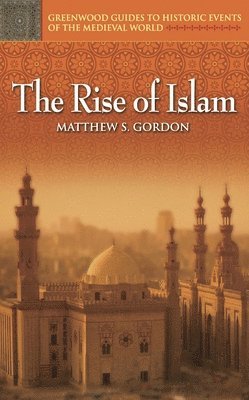
The birth of Islam in the 7th century and its subsequent outward expansion from the Arab world has been one of the most influential occurrences in world history. During its first few decades, the new faith inspired conquests from Spain to northern India. In this illuminating study, the author tracks the rise of Islam from it 7th century beginnings with the life of the Prophet Muhammad to the collapse of the Islamic empire in the early 10th century. He demonstrates how a sophisticated, new religion and society emerged to become one of the world's most vital and sustained cultures.The opening chapter provides an outline of the history of early Islamic society over a period of roughly three centuries, from the early 7th to the early 10th centuries, concentrating on pre-Islamic Arab countries and the life of the Prophet. Subsequent chapters treat Arab-Islamic conquests; the early Islamic empire; and society and religion, particularly in the early Abbasid period (750-925 C.E.). The spread of urbanization throughout the early Islamic world is highlighted. Fifteen brief biographies of key figures such as Qur'an commentators, empire-building caliphs, scholars, and military leaders help to add a personal human element to the data, and 15 translated primary documents ranging from key Qur'annic passages to contemporary accounts of military campaigns bring the history to life. A glossary of terms, a timeline, and selected bibliography aid student research. The work is fully indexed.
626 kr
Skickas inom 10-15 vardagar
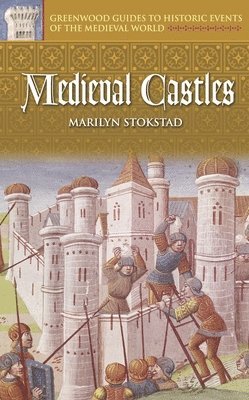
The castle was far more than a walled and turreted fortress; it was an instrument of social control and the symbol of power, authority, and wealth. Acknowledged expert Marilyn Stokstad combines interpretive essays and original documents in English translation in order to examine the role of the castle in society as well as its use in war.Commencing with an overview of the military and social systems operating in the Middle Ages, Stokstad places castles and other fortified places into an appropriate context. Readers are then guided through the development of early motte and bailey castles and the development of masonry towers and walls in the 11th and 12th centuries. Medieval Castles considers the military aspect of castles, including seige warfare and the architectural response to attack and defence, in the 12th and 13th centuries. It explores castles and citadels as local and regional government and economic centers in the 14th and 15th centuries. It also looks at the symbolic role of architecture and at castles as elite residences and settings for public display. A concluding interpretive essay looks at the impact of gunpowder on castles as well as our continuing fascination with the castle as a romantic fantasy of an idealized world.
716 kr
Skickas inom 10-15 vardagar
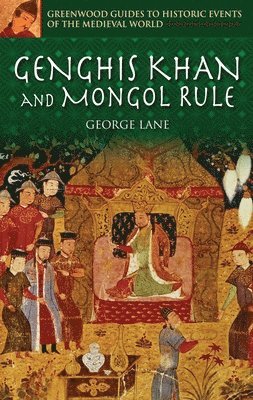
The Mongols are often associated with the arts of warfare and annals of horror, but a more realistic association would be their contribution to international trade and cultural exchange during the medieval age. Thematic chapters, biographical sketches, a glossary, maps, illustrations, and selected primary documents provide fresh insight on a regretfully underexamined period.The legacy of the Mongols has often been associated with their contributions to the arts of warfare and annals of horror. A more realistic association would be their contribution to international trade and cultural exchange. Spawning an empire ranging from Persia to China, Genghis Khan united a nomadic warrior culture that had lived with their agrarian neighbors through controlled and limited extortion. It was a society whose leaders waged successful war and increased the tribe's prosperity. But the Mongols also understood it would serve their purposes to maintain commerce and agriculture, and to cultivate the arts in order that the luxuries they coveted would be all the more readily available. It was to this end that, after the first decades of destruction and rampage, the Mongols' policy changed to one of cooption and governance. The Mongols became effective cultural brokers as they forced, urged, bribed and coerced the movement of artists and artisans, scientists and scholars around their empire.Thematic chapters provide an accessible overview of the Steppe people from which Genghis Khan emerged, and chronicle his ascent as the Great Khan, as he subdued enemies and then conquered lands to the east and west. Following are excellent overviews of the founding and cementing of Mongol rule in China—the Yuan Dynasty—and Persia, centered in Iran. A concluding chapter provides a fresh perspective of the Mongol empire and makes clear the relevance of this vast and influential period to the contemporary world. Useful endmatter for students and researchers includes sixteen biographical sketches of figures ranging from Yuan Dynasty founder Qubilai Khan to famed Italian merchant and traveler Marco Polo. A score of annotated primary documents provide immediate access to the issues of the period through the eyes of the people living through them. Five maps, an annotated timeline, a glossary and annotated bibliography and several illustrations round out this engaging and valuable resource.
695 kr
Skickas inom 10-15 vardagar
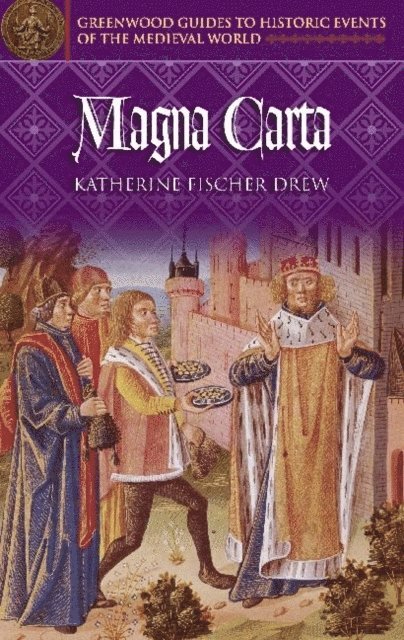
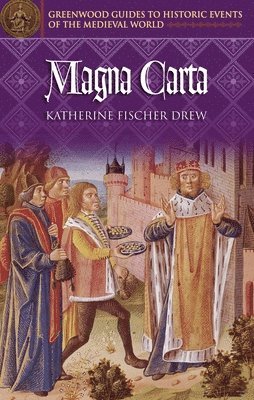
With the advent of Magna Carta, royal power fell under written secular law and individual liberties were codified. Representative government, common law, and key trial rights such as habeas corpus grew out of these landmark documents. Magna Carta Magna Carta is the name later given to a document signed by king John of England under pressure from the barons and other notables of England in the summer of 1215 at a meadow called Runnymede, which is on the river Thames between London and Windsor. This remarkable document resulted from an aristocratic rebellion against the crown, sparked by king John's abusive use of his customary rights as lord of England. Though the rebellion began with the barons - who benefited most from John's concessions - success was ensured by John's alienation of the church and the rising merchant class, symbolized by the City of London. But remarkable as the original agreement was, it acquired its elevated position in the legal and constitutional history of England as much from what men thought it said as from what its provisions actually contained.Magna Carta was actually issued several times during the 12th century, often with substantial revisions. Entangled in dynastic wars at home and in France, and carrying on Crusades in the Holy Land, English kings required tremendous amounts of money to finance their armies and pay for the increasingly centralized government. Unsurprisingly, sentiments of rebellion grew stronger and stronger among the landed barons and wealthy merchants as royal demands for their money grew heavier and heavier. Thematically oriented chapters help readers differentiate fact from fiction regarding this pivotal charter in the history of human freedom. Furthermore, the pivotal roles played by the Church, of the landed barons, and of the emerging merchants in England's towns in extracting the concessions from the crown are discussed in broad, yet detailed, strokes. Chapters on Magna Carta's profound influence on common law and the development of representative government follow. Fifteen biographies of key figures like Henry II, Pope Innocent III, William the Conqueror and Eleanor of Aquitaine enhance the narrative chapters, as do the extensive extracts of the Coronation Oath of Henry I, Magna Cartas of 1215 and 1225, the Charter of the Forest of 1225, and the final Confirmation of the Charters from 1297. Glossary, annotated timeline, maps, bibliography, and index are included.
695 kr
Skickas inom 10-15 vardagar
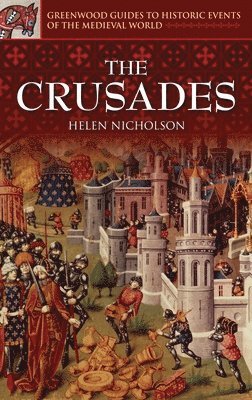
The Crusades of the Middle Ages were fought by Latin Christians against peoples who they believed were threatening the existence of their Christian faith. Some of these campaigns were against Muslims, some were against other Christians, and some were against pagans. Topically oriented chapters backed up by biographies, primary documents, maps, and illustrations make this an ideal introductory reference resource to this pivotal period in European medieval history.The Crusades were distinctive because they were an invention of Latin Christians, they had their own symbols and traditions, and they were not one war but many, fought over several centuries. Thematic chapters provide an overview of the Crusades—why scholars believe they were fought, why they appealed to a very broad cross-section of Europe's population, and what motivated crusaders to dedicate years of their lives to the martial cause of Christendom. Among other interesting facts, readers will learn that to the Muslim states, the Christian Crusades were more of a distraction, as the Mongols from the East and schisms within occupied the bulk of their efforts, and that when it was convenient and advantageous—which was often—Christians and Muslims would ally with one another, or serve as mercenaries in each other's armies.Covering the classic crusades to the Holy Lands and the taking and defending of Jerusalem, Nicholson also gives equal treatment to the just as important Requonquista of the Iberian peninsula, the subjugation and conversion of pagans in North-Western Europe, the Crusades against the Ottoman Turks in the Balkans, and the internal Crusades against the heretical Albigensians and Hussites. An annotated timeline provides readers with an easy-to-follow overview of the several centuries' worth of Crusading, and a half-dozen maps provide rapid and easy-to-read geographical and political information on the most important campaigns. Seventeen biographical sketches of key Christian, Muslim, Balkan, Spanish, and pagan figures and a dozen annotated primary documents breathe fresh life into the topic, providing students and readers with a new look at the period. A glossary is provided, as is an annotated bibliography and index.
875 kr
Skickas inom 10-15 vardagar
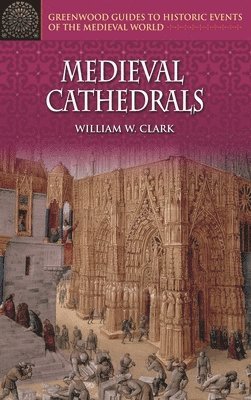
An introduction to the medieval cathedral, those churches that are regarded as the greatest achievements of medieval architecture. Details their social history, who built them, how they were built, and why. Forty photos and maps help to guide the reader through a narrated tour of these awe-inspiring churches.When we think of cathedrals, we usually envision the great Gothic Buildings of 12th- and 13th-century Europe. But other than being a large church, a cathedral is neither a specific building type nor specifically medieval. What a makes a large church a cathedral is the presence of a single item of furniture: the chair (in Latin: cathedra) or throne that is the symbol of the ecclesiastical and spiritual authority of a bishop. This book is an introduction to the medieval cathedral, those churches that are usually regarded as among the greatest achievements of medieval architecture.While cathedrals were often the most prominent urban structure in many European cities, their construction was never a civic responsibility, but remained the responsibility of the clergy in charge of the day to day activities and services. Beginning with an overview of the social history of cathedrals, Clark examines such topics as patrons, builders and artists, and planning and construction; and provides an in-depth examination of the French Cathedral at Reims—a seminal building with significant technological advances, important sculptural programs, a surviving bishop's palace, and other structures. The volume concludes with a series of illustrations, a selection of original texts, and a selected bibliography for further study. A full index is also provided.
695 kr
Skickas inom 10-15 vardagar
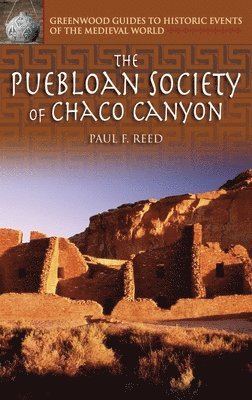
To veteran travelers of the American Southwest, the name Chaco Canyon invokes an inaccessible, vast land of tremendous vistas and huge, empty stone houses. Today, the Canyon appears as a barren land and most visitors are struck by its apparent inhospitable nature. Yet almost 1000 years ago, during the Medieval period, Chaco Canyon was the hub of a flourishing Pueblo Indian society, with 12 multi-story great houses built of stone and wood, a dozen great kivas (large, subterranean ceremonial structures), and hundreds of smaller habitation sites, pueblos along the intermittent drainage known today as Chaco Wash. This society peaked in the year AD 1100, when more than 150 Chacoan towns, in addition to the 12 great houses in Chaco Canyon, and perhaps 30,000 people across the greater San Juan Basin of the southwestern United States were affiliated with Chaco. This landmass, which extends across portions of the four modern states of New Mexico, Arizona, Utah, and Colorado, is roughly equal in size to the country of Ireland.Chacoan society endured for more than 200 hundred years, evolving and changing in the period from AD 950 to about 1150. The peak of Chacoan society can be more narrowly dated from AD 1020 to 1130. Undoubtedly, many leaders came and went during these hundred years. But, we have no written records to name these leaders. Unlike the history of other continents, in the Americas, the absence of written aboriginal languages means that written chronologies of the events, processes, and lives of people do not exist. This simple fact makes reconstruction and understanding of America's pre-European past very challenging. The archaeological record does speak to us. Thematic chapters guide readers to the emergence of Chacoan society, its cultural and environmental settings, and the Pueblo people. Other chapters detail what is known of Chacoan society c. 1100, how it was settled, and where its people probably dispersed to. Also, given the nature of the topic, information about the discovery and investigations of Chacoan society by Europeans and Americans is provided. An annotated timeline provides easy reference to key dates and events. Biographical sketches offer a look at the people who have formed our thoughts about and approaches to Chacoan society, and twenty annotated excerpted primary and secondary documents walk readers through Canyon related material. A glossary of terms is provided, as are illustrations and maps. The work concludes with recommended sources for further inquiry, websites, video, and print.