Hakluyt Society Studies in the History of Travel – serie
Visar alla böcker i serien Hakluyt Society Studies in the History of Travel. Handla med fri frakt och snabb leverans.
4 produkter
4 produkter
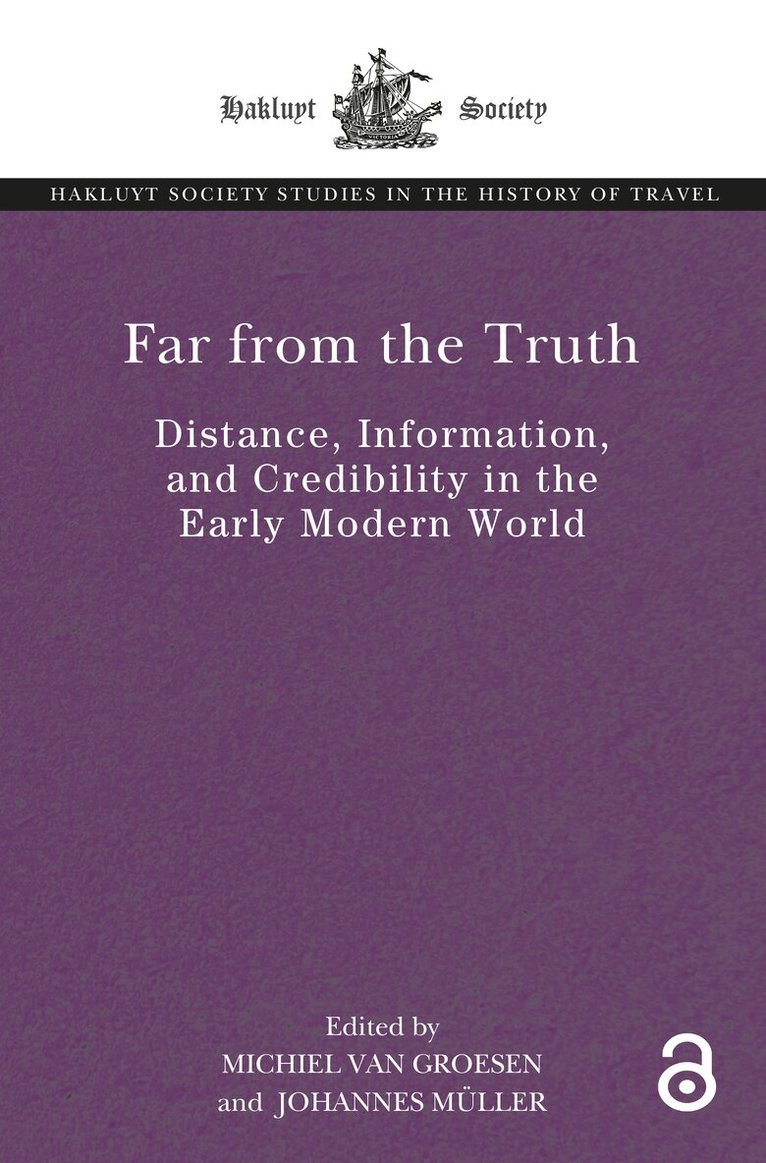
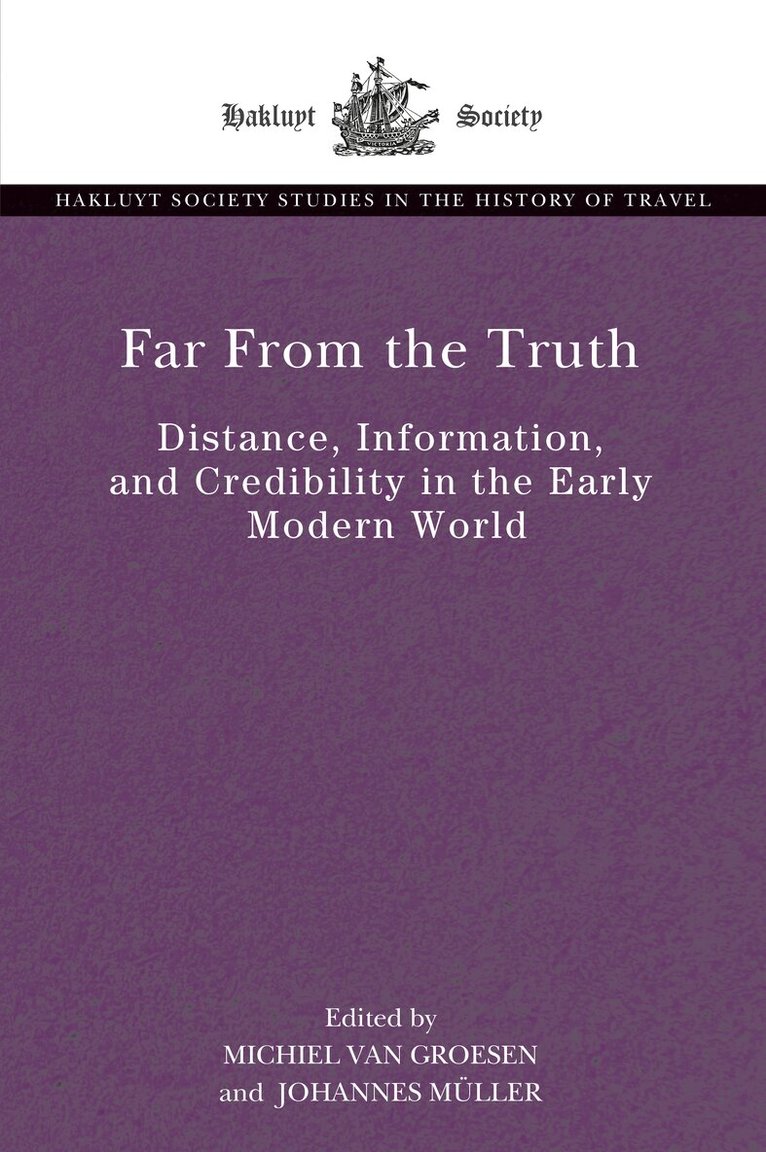
Far From the Truth
Distance, Information, and Credibility in the Early Modern World
Inbunden, Engelska, 2023
2 036 kr
Skickas inom 10-15 vardagar
Information and knowledge were essential tools of early modern Europe’s global ambitions. This volume addresses a key concern that emerged as the competition for geopolitical influence increased: how could information from afar be trusted when there was no obvious strategy for verification? How did notions of doubt develop in relation to intercultural encounters? Who were those in the position to use misinformation in their favour, and how did this affect trust? How, in other words, did distance affect credibility, and which intellectual and epistemological strategies did early modern Europe devise to cope with this problem?The movement of information, and its transformations in the process of gathering, ordering, and disseminating, makes it necessary to employ both a global and a local perspective in order to understand its significance. The rise of print, leading to various new forms of mediation, played a crucial role everywhere, inspiring theories of modernization in which media served as agents of new connections and, eventually, of globalization. Paradoxically, during the entire period between 1500 and 1800, the demise of distance through various strategies of verification coincided with constructions of otherness that emphasized the cultural and geographical difference between Europe and the worlds it encountered.Ten leading scholars of the early modern world address the relationship between distance, information, and credibility from a variety of perspectives. This volume will be an essential companion to those interested in the history of knowledge and early modern encounters, as well as specialists in the history of empire and print culture.The Open Access version of this book, available at http://www.taylorfrancis.com, has been made available under a Creative Commons Attribution-Non Commercial-No Derivatives (CC-BY-NC-ND) 4.0 license.
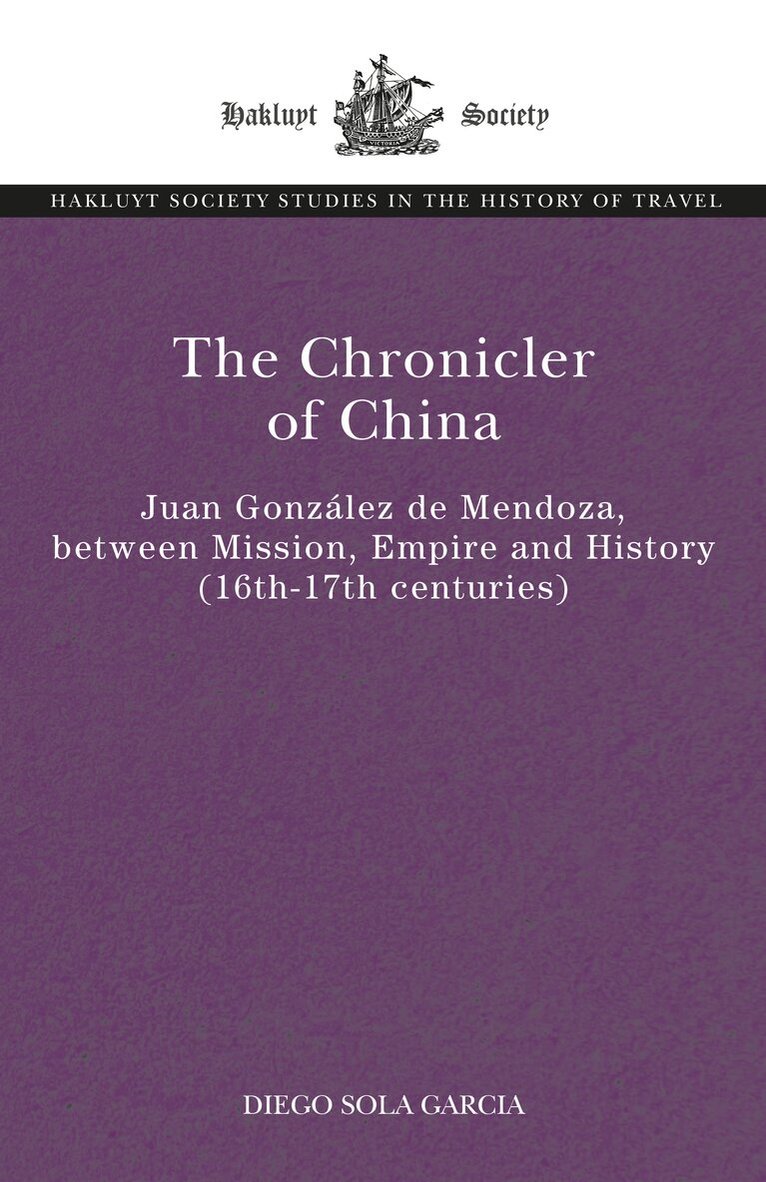
Chronicler of China
Juan González de Mendoza, between Mission, Empire and History (Sixteenth- to Seventeenth Centuries)
Inbunden, Engelska, 2024
2 176 kr
Skickas inom 10-15 vardagar
This monograph provides an analysis and contextualization of an extraordinarily successful book, the History of the Great Kingdom of China (Rome 1585), by the Spanish Augustinian friar Juan González de Mendoza (1545–1618). Within a few years, this book had reached 30 editions and had been translated into several languages, including English. Mendoza’s chronicle shaped the late Renaissance interpretation of China across Europe. It had its origin in an embassy to emperor Wanli of China sent by Philip II, ruler of the Spanish and Portuguese overseas empires in America and Asia. Reconstructing the biography of González de Mendoza with new sources, this volume offers a systematic study of his account of late Ming China, analyzing its reception and influence both in Spain and elsewhere in Europe.The Chronicler of China is divided into five chapters, covering the Portuguese and Castilian sources that recorded the earliest contacts with China in the sixteenth century, the figure of Mendoza as an ethnographical and political writer, the building of his chronicle on China, the dialogue with his sources and, finally, the footprint of Mendoza’s book in the European Republic of Letters.This book, the most complete study on the Augustinian Mendoza and his historical and ethnographical work to date, contributes to a wider understanding of the Iberian contribution to sixteenth-century travel writing and the Western knowledge of China. It will appeal to scholars and students alike interested in the early modern interpretation of China in Europe.
Chronicler of China
Juan González de Mendoza, between Mission, Empire and History (Sixteenth- to Seventeenth Centuries)
Häftad, Engelska, 2025
651 kr
Skickas inom 10-15 vardagar
This monograph provides an analysis and contextualization of an extraordinarily successful book, the History of the Great Kingdom of China (Rome 1585), by the Spanish Augustinian friar Juan González de Mendoza (1545–1618). Within a few years, this book had reached 30 editions and had been translated into several languages, including English. Mendoza’s chronicle shaped the late Renaissance interpretation of China across Europe. It had its origin in an embassy to emperor Wanli of China sent by Philip II, ruler of the Spanish and Portuguese overseas empires in America and Asia. Reconstructing the biography of González de Mendoza with new sources, this volume offers a systematic study of his account of late Ming China, analyzing its reception and influence both in Spain and elsewhere in Europe.The Chronicler of China is divided into five chapters, covering the Portuguese and Castilian sources that recorded the earliest contacts with China in the sixteenth century, the figure of Mendoza as an ethnographical and political writer, the building of his chronicle on China, the dialogue with his sources and, finally, the footprint of Mendoza’s book in the European Republic of Letters.This book, the most complete study on the Augustinian Mendoza and his historical and ethnographical work to date, contributes to a wider understanding of the Iberian contribution to sixteenth-century travel writing and the Western knowledge of China. It will appeal to scholars and students alike interested in the early modern interpretation of China in Europe.
Far From the Truth
Distance, Information, and Credibility in the Early Modern World
Häftad, Engelska, 2025
651 kr
Skickas inom 10-15 vardagar
Information and knowledge were essential tools of early modern Europe’s global ambitions. This volume addresses a key concern that emerged as the competition for geopolitical influence increased: how could information from afar be trusted when there was no obvious strategy for verification? How did notions of doubt develop in relation to intercultural encounters? Who were those in the position to use misinformation in their favour, and how did this affect trust? How, in other words, did distance affect credibility, and which intellectual and epistemological strategies did early modern Europe devise to cope with this problem?The movement of information, and its transformations in the process of gathering, ordering, and disseminating, makes it necessary to employ both a global and a local perspective in order to understand its significance. The rise of print, leading to various new forms of mediation, played a crucial role everywhere, inspiring theories of modernization in which media served as agents of new connections and, eventually, of globalization. Paradoxically, during the entire period between 1500 and 1800, the demise of distance through various strategies of verification coincided with constructions of otherness that emphasized the cultural and geographical difference between Europe and the worlds it encountered.Ten leading scholars of the early modern world address the relationship between distance, information, and credibility from a variety of perspectives. This volume will be an essential companion to those interested in the history of knowledge and early modern encounters, as well as specialists in the history of empire and print culture.The Open Access version of this book, available at http://www.taylorfrancis.com, has been made available under a Creative Commons Attribution-Non Commercial-No Derivatives (CC-BY-NC-ND) 4.0 license.