Heretical Thought - Böcker
Visar alla böcker i serien Heretical Thought. Handla med fri frakt och snabb leverans.
11 produkter
11 produkter
1 335 kr
Skickas inom 5-8 vardagar
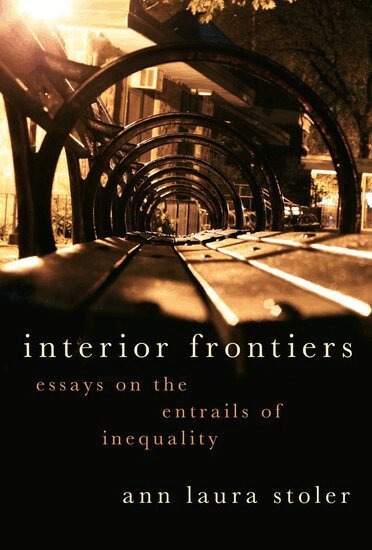
In this book, Ann Laura Stoler navigates the shadows and shatterzones of democratic policies, considering how imperial features are folded through (il)liberal orders, where racial inequities thicken in the borderlands of interior frontiers. Sometimes those frontiers, or the lines that define the contours of belonging and not belonging, are porous--often fixed and firm. For those on the "wrong side" of the fabulated division between inside and out, entry requirements can be opaque, neither verbal nor visible. Illegibilities are secured in code. The sites of inequity are disparate, the sensibilities that produce and sustain those inequities are as well. Borrowing Ralph Ellison's phrase, Stoler exposes unexpected sites and scenes that register the "lower frequencies" of denigration. Seemingly benign sites are laid bare as toxic, as in her essay eviscerating the warped criteria assigned to taste and who can have it, and in her study of the seared lives that longing, envy, and humiliation inscribe. In so doing, she hews close to the "soft" violences of sentiments that ascribe, distribute, and assess human kinds. But the project of these essays turns as much to those who reject those violences, who distil refusal in "poetic rage"--the phrase Stoler invokes to describe the anti-colonial avant-garde. Stoler casts this aesthetic of dissent through a surge of multi-media archiving ventures among Palestinians bent on creating and conjuring landscapes beyond Israeli violences-for the future and today. Stoler hugs close to the dark corridors where racial inequalities thrive. These inequities may be blatant but "unnoticed," others are neither muted nor unseen. Each essay iterates a "(sub)metric of inequality" as a fictive measure of human worth. With an optic, ever bold and subtle, she turns the reader to the social ecologies and racial logics targeting the body and the senses. These are hazardous zones for the instruments and infrastructures in which (il)liberalisms invest. Increasingly unsettled and challenged by a more radically just demos, these sites of contest may be the emergent political scenes of racial sovereignty's unmaking and where the weapons of that unmaking are readied, and stored.
334 kr
Skickas
In this book, Ann Laura Stoler navigates the shadows and shatterzones of democratic policies, considering how imperial features are folded through (il)liberal orders, where racial inequities thicken in the borderlands of interior frontiers. Sometimes those frontiers, or the lines that define the contours of belonging and not belonging, are porous--often fixed and firm. For those on the "wrong side" of the fabulated division between inside and out, entry requirements can be opaque, neither verbal nor visible. Illegibilities are secured in code. The sites of inequity are disparate, the sensibilities that produce and sustain those inequities are as well. Borrowing Ralph Ellison's phrase, Stoler exposes unexpected sites and scenes that register the "lower frequencies" of denigration. Seemingly benign sites are laid bare as toxic, as in her essay eviscerating the warped criteria assigned to taste and who can have it, and in her study of the seared lives that longing, envy, and humiliation inscribe. In so doing, she hews close to the "soft" violences of sentiments that ascribe, distribute, and assess human kinds. But the project of these essays turns as much to those who reject those violences, who distil refusal in "poetic rage"--the phrase Stoler invokes to describe the anti-colonial avant-garde. Stoler casts this aesthetic of dissent through a surge of multi-media archiving ventures among Palestinians bent on creating and conjuring landscapes beyond Israeli violences-for the future and today. Stoler hugs close to the dark corridors where racial inequalities thrive. These inequities may be blatant but "unnoticed," others are neither muted nor unseen. Each essay iterates a "(sub)metric of inequality" as a fictive measure of human worth. With an optic, ever bold and subtle, she turns the reader to the social ecologies and racial logics targeting the body and the senses. These are hazardous zones for the instruments and infrastructures in which (il)liberalisms invest. Increasingly unsettled and challenged by a more radically just demos, these sites of contest may be the emergent political scenes of racial sovereignty's unmaking and where the weapons of that unmaking are readied, and stored.
289 kr
Skickas inom 5-8 vardagar
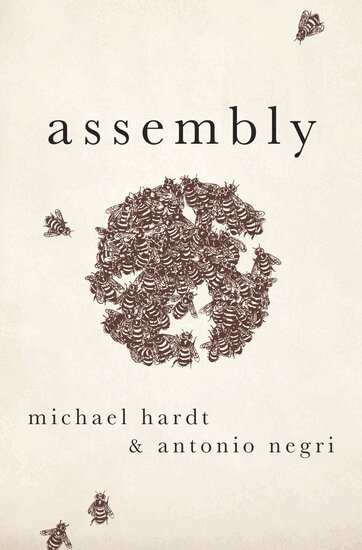
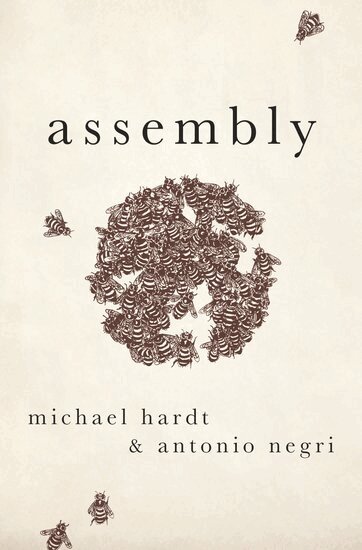
Each year a new eruption of "leaderless" social movements -- from North Africa and the Middle East to Europe, the Americas, and East Asia -- leaves journalists, political analysts, police forces, and governments disoriented and perplexed. Activists too struggle to understand and evaluate the power and effectiveness of horizontal movements. Why have the movements, which address the needs and desires of so many, not been able to achieve lasting change and create a new, more democratic and just society? Some people assume that if only social movements could find new leaders they would return to their earlier glory. Where, they ask, are the new Martin Luther Kings, Rudi Dutschkes, and Steven Bikos? Although today's leaderless and spontaneous political organizations are not sufficient, a return to traditional, centralized forms of political leadership is neither desirable nor possible. Necessary, instead, as Michael Hardt and Antonio Negri argue, is an inversion of the roles of the multitude and leadership in political organizations. Leaders should be confined to short-term, tactical action, while the multitude drives strategy. In other words, the formulation of long-term goals and objectives must come from the collective, rather than designated figureheads. Drawing on the ideas developed through their well-known Empire trilogy, Hardt and Negri have produced, in Assembly, a timely proposal for how current large-scale, horizontal movements can develop collectively the capacities for political strategy and decision-making to effect lasting and democratic change.
422 kr
Skickas inom 5-8 vardagar
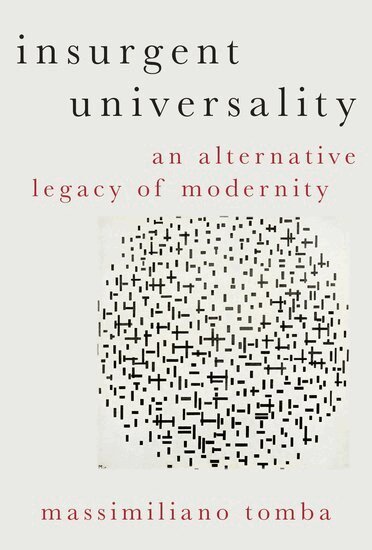
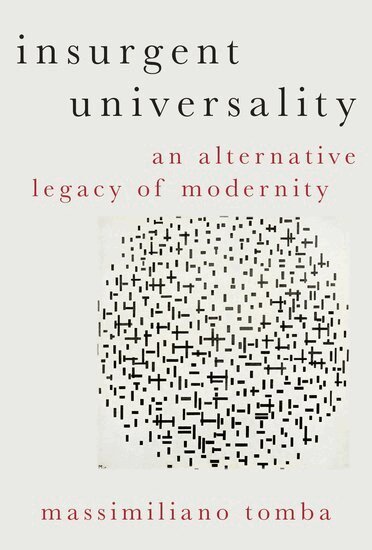
Scholars commonly take the Declaration of the Rights of Man and Citizen of 1789, written during the French Revolution, as the starting point for the modern conception of human rights. According to the Declaration, the rights of man are held to be universal, at all times and all places. But as recent crises around migrants and refugees have made obvious, this idea, sacred as it might be among human rights advocates, is exhausted. It's long past time to reconsider the principles on which Western economic and political norms rest. This book advocates for a tradition of political universality as an alternative to the juridical universalism of the Declaration. Insurgent universality isn't based on the idea that we all share some common humanity but, rather, on the democratic excess by which people disrupt and reject an existing political and economic order. Going beyond the constitutional armor of the representative state, it brings into play a plurality of powers to which citizens have access, not through the funnel of national citizenship but in daily political practice. We can look to recent history to see various experiments in cooperative and insurgent democracy: the Indignados in Spain, the Arab Spring, Occupy, the Zapatistas in Mexico, and, going further back, the Paris Commune, the 1917 peasant revolts during the Russian Revolution, and the Haitian Revolution. This book argues that these movements belong to the common legacy of insurgent universality, which is characterized by alternative trajectories of modernity that have been repressed, hindered, and forgotten. Massimiliano Tomba examines these events to show what they could have been and what they can still be. As such he explores how their common legacy can be reactivated. Insurgent Universality analyzes the manifestos and declarations that came out of these experiments considering them as collective works of an alternative canon of political theory that challenges the great names of the Western pantheon of political thought and builds bridges between European and non-European political and social experiments.
398 kr
Skickas inom 5-8 vardagar
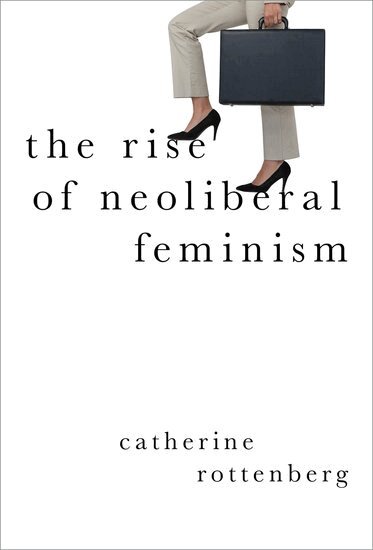
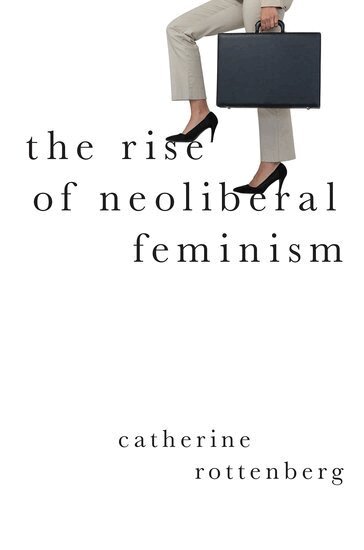
From Hillary Clinton to Ivanka Trump and from Emma Watson all the way to Beyoncé, more and more high-powered women are unabashedly identifying as feminists in the mainstream media. In the past few years feminism has indeed gained increasing visibility and even urgency. Yet, in her analysis of recent bestselling feminist manifestos, well-trafficked mommy blogs, and television series such as The Good Wife, Catherine Rottenberg reveals that a particular variant of feminism-which she calls neoliberal feminism-has come to dominate the cultural landscape, one that is not interested in a mass women's movement or struggles for social justice. Rather, this feminism has introduced the notion of a happy work-family balance into the popular imagination, while transforming balance into a feminist ideal. So-called "aspirational women" are now exhorted to focus on cultivating a felicitous equilibrium between their child-rearing responsibilities and their professional goals, and thus to abandon key goals that have historically informed feminism, including equal rights and liberation. Rottenberg maintains that because neoliberalism reduces everything to market calculations it actually needs feminism in order to "solve" thorny issues related to reproduction and care. She goes on to show how women of color and poor and immigrant women most often serve as the unacknowledged care-workers who enable professional women to strive toward balance, arguing that neoliberal feminism legitimates the exploitation of the vast majority of women while disarticulating any kind of structural critique. It is not surprising, then, that this new feminist discourse has increasingly dovetailedwith conservative forces. In Europe, gender parity has been used by Marine Le Pen and Geert Wilders to further racist, anti-immigrant agendas, while in the United States, women's rights has been invoked to justify interventions in countries with majority Muslim populations. And though campaigns such as the #MeToo and #TimesUp appear to be shifting the discussion, given our frightening neoliberal reality, these movements are currently insufficient. Rottenberg therefore concludes by raising urgent questions about how we can successfully reorient and reclaim feminism as a social justice movement.
Call Your "Mutha'"
A Deliberately Dirty-Minded Manifesto for the Earth Mother in the Anthropocene
Inbunden, Engelska, 2020
1 396 kr
Skickas inom 7-10 vardagar
The ecocide and domination of nature that is the Anthropocene does not represent the actions of all humans, but that of Man, the Western and masculine identified corporate, military, intellectual, and political class that long has masked itself as the civilized and the human. In this book, Jane Caputi looks at two major "myths" of the Earth, one ancient and one contemporary, and uses them to devise a manifesto for the survival of nature--which includes human beings--in our current ecological crisis. These are the myths of Mother Earth and the Anthropocene. The former personifies nature as a figure with the power to give life or death, and one who shares a communal destiny with all other living things. The latter myth sees humans as exceptional for exerting an implicitly sexual domination of Mother Earth through technological achievement, from the plow to synthetic biology and artificial intelligence. Much that we take for granted as inferior or taboo is based in a splitting apart of inherent unities: culture-nature; up-down, male-female; spirit-matter; mind-body; life-death; sacred-profane; reason-madness; human-beast; light-dark. The first is valued and the second reviled. This provides the framework for any number of related injustices--sexual, racial, and ecological.This book resists this pattern, in part, by deliberately putting the dirty back into the mind, the obscene back into the sacred, and vice versa. Ecofeminism and Environmental Justice argue for the significance and reality of the Earth Mother. Caputi engages specifically with the powers of that Mother, ones made taboo and even obscene throughout heteropatriarchal traditions. Jane Caputi rejects misogynist and colonialist stereotypes, and examines the potency of the Earth Mother in order to deepen awareness of how our relationship to the Earth went astray and what might be done to address this. Drawing upon Indigenous and African American, ecofeminism, ecowomanism, green activism, femme, queer and gender non-binary philosophies, literature and arts, Afrofuturism, and popular culture images, Call Your "Mutha" contends that the Anthropocene is not evidence so much of Man's supremacy, but instead a sign that Mother Nature-Earth, faced with disrespect, is turning away, withdrawing the support systems necessary for life and continuance. Caputi looks at contemporary narratives and artwork to consider the ways in which respect for the autonomous and potent Earth Mother and a call for their return has already reasserted itself into our political and popular culture.
Call Your "Mutha'"
A Deliberately Dirty-Minded Manifesto for the Earth Mother in the Anthropocene
Häftad, Engelska, 2020
410 kr
Skickas inom 5-8 vardagar
The ecocide and domination of nature that is the Anthropocene does not represent the actions of all humans, but that of Man, the Western and masculine identified corporate, military, intellectual, and political class that long has masked itself as the civilized and the human. In this book, Jane Caputi looks at two major "myths" of the Earth, one ancient and one contemporary, and uses them to devise a manifesto for the survival of nature--which includes human beings--in our current ecological crisis. These are the myths of Mother Earth and the Anthropocene. The former personifies nature as a figure with the power to give life or death, and one who shares a communal destiny with all other living things. The latter myth sees humans as exceptional for exerting an implicitly sexual domination of Mother Earth through technological achievement, from the plow to synthetic biology and artificial intelligence. Much that we take for granted as inferior or taboo is based in a splitting apart of inherent unities: culture-nature; up-down, male-female; spirit-matter; mind-body; life-death; sacred-profane; reason-madness; human-beast; light-dark. The first is valued and the second reviled. This provides the framework for any number of related injustices--sexual, racial, and ecological.This book resists this pattern, in part, by deliberately putting the dirty back into the mind, the obscene back into the sacred, and vice versa. Ecofeminism and Environmental Justice argue for the significance and reality of the Earth Mother. Caputi engages specifically with the powers of that Mother, ones made taboo and even obscene throughout heteropatriarchal traditions. Jane Caputi rejects misogynist and colonialist stereotypes, and examines the potency of the Earth Mother in order to deepen awareness of how our relationship to the Earth went astray and what might be done to address this. Drawing upon Indigenous and African American, ecofeminism, ecowomanism, green activism, femme, queer and gender non-binary philosophies, literature and arts, Afrofuturism, and popular culture images, Call Your "Mutha" contends that the Anthropocene is not evidence so much of Man's supremacy, but instead a sign that Mother Nature-Earth, faced with disrespect, is turning away, withdrawing the support systems necessary for life and continuance. Caputi looks at contemporary narratives and artwork to consider the ways in which respect for the autonomous and potent Earth Mother and a call for their return has already reasserted itself into our political and popular culture.
271 kr
Skickas inom 5-8 vardagar
In recent years "leaderless" social movements have proliferated around the globe, from North Africa and the Middle East to Europe, the Americas, and East Asia. Some of these movements have led to impressive gains: the toppling of authoritarian leaders, the furthering of progressive policy, and checks on repressive state forces. They have also been, at times, derided by journalists and political analysts as disorganized and ineffectual, or suppressed by disoriented and perplexed police forces and governments who fail to effectively engage them. Activists, too, struggle to harness the potential of these horizontal movements. Why have the movements, which address the needs and desires of so many, not been able to achieve lasting change and create a new, more democratic and just society? Some people assume that if only social movements could find new leaders they would return to their earlier glory. Where, they ask, are the new Martin Luther Kings, Rudi Dutschkes, and Stephen Bikos? With the rise of right-wing political parties in many countries, the question of how to organize democratically and effectively has become increasingly urgent. Although today's leaderless political organizations are not sufficient, a return to traditional, centralized forms of political leadership is neither desirable nor possible. Instead, as Michael Hardt and Antonio Negri argue, familiar roles must be reversed: leaders should be responsible for short-term, tactical action, but it is the multitude that must drive strategy. In other words, if these new social movements are to achieve meaningful revolution, they must invent effective modes of assembly and decision-making structures that rely on the broadest democratic base. Drawing on ideas developed through their well-known Empire trilogy, Hardt and Negri have produced, in Assembly, a timely proposal for how current large-scale horizontal movements can develop the capacities for political strategy and decision-making to effect lasting and democratic change. We have not yet seen what is possible when the multitude assembles.
203 kr
Skickas
From Hillary Clinton to Ivanka Trump and from Emma Watson all the way to Beyoncé, more and more high-powered women are unabashedly identifying as feminists in the mainstream media. In the past few years feminism has indeed gained increasing visibility and even urgency. Yet, in her analysis of recent bestselling feminist manifestos, well-trafficked mommy blogs, and television series such as The Good Wife, Catherine Rottenberg reveals that a particular variant of feminism--which she calls neoliberal feminism--has come to dominate the cultural landscape, one that is not interested in a mass women's movement or struggles for social justice. Rather, this feminism has introduced the notion of a happy work-family balance into the popular imagination, while transforming balance into a feminist ideal. So-called "aspirational women" are now exhorted to focus on cultivating a felicitous equilibrium between their child-rearing responsibilities and their professional goals, and thus to abandon key goals that have historically informed feminism, including equal rights and liberation. Rottenberg maintains that because neoliberalism reduces everything to market calculations it actually needs feminism in order to "solve" thorny issues related to reproduction and care. She goes on to show how women of color and poor and immigrant women most often serve as the unacknowledged care-workers who enable professional women to strive toward balance, arguing that neoliberal feminism legitimates the exploitation of the vast majority of women while disarticulating any kind of structural critique. It is not surprising, then, that this new feminist discourse has increasingly dovetailed with conservative forces. In Europe, gender parity has been used by Marine Le Pen and Geert Wilders to further racist, anti-immigrant agendas, while in the United States, women's rights has been invoked to justify interventions in countries with majority Muslim populations. And though campaigns such as #MeToo and #TimesUp appear to be shifting the discussion, given our frightening neoliberal reality, these movements are currently insufficient. Rottenberg therefore concludes by raising urgent questions about how we can successfully reorient and reclaim feminism as a social justice movement.
572 kr
Skickas inom 3-6 vardagar
Scholars commonly take the Declaration of the Rights of Man and Citizen of 1789, written during the French Revolution, as the starting point for the modern conception of human rights. According to the Declaration, the rights of man are held to be universal, at all times and all places. But as recent crises around migrants and refugees have made obvious, this idea, sacred as it might be among human rights advocates, is exhausted. It's long past time to reconsider the principles on which Western economic and political norms rest. This book advocates for a tradition of political universality as an alternative to the juridical universalism of the Declaration. Insurgent universality isn't based on the idea that we all share some common humanity but, rather, on the democratic excess by which people disrupt and reject an existing political and economic order. Going beyond the constitutional armor of the representative state, it brings into play a plurality of powers to which citizens have access, not through the funnel of national citizenship but in daily political practice. We can look to recent history to see various experiments in cooperative and insurgent democracy: the Indignados in Spain, the Arab Spring, Occupy, the Zapatistas in Mexico, and, going further back, the Paris Commune, the 1917 peasant revolts during the Russian Revolution, and the Haitian Revolution. This book argues that these movements belong to the common legacy of insurgent universality, which is characterized by alternative trajectories of modernity that have been repressed, hindered, and forgotten. Massimiliano Tomba examines these events to show what they could have been and what they can still be. As such he explores how their common legacy can be reactivated. Insurgent Universality analyzes the manifestos and declarations that came out of these experiments considering them as collective works of an alternative canon of political theory that challenges the great names of the Western pantheon of political thought and builds bridges between European and non-European political and social experiments.
321 kr
Skickas inom 5-8 vardagar
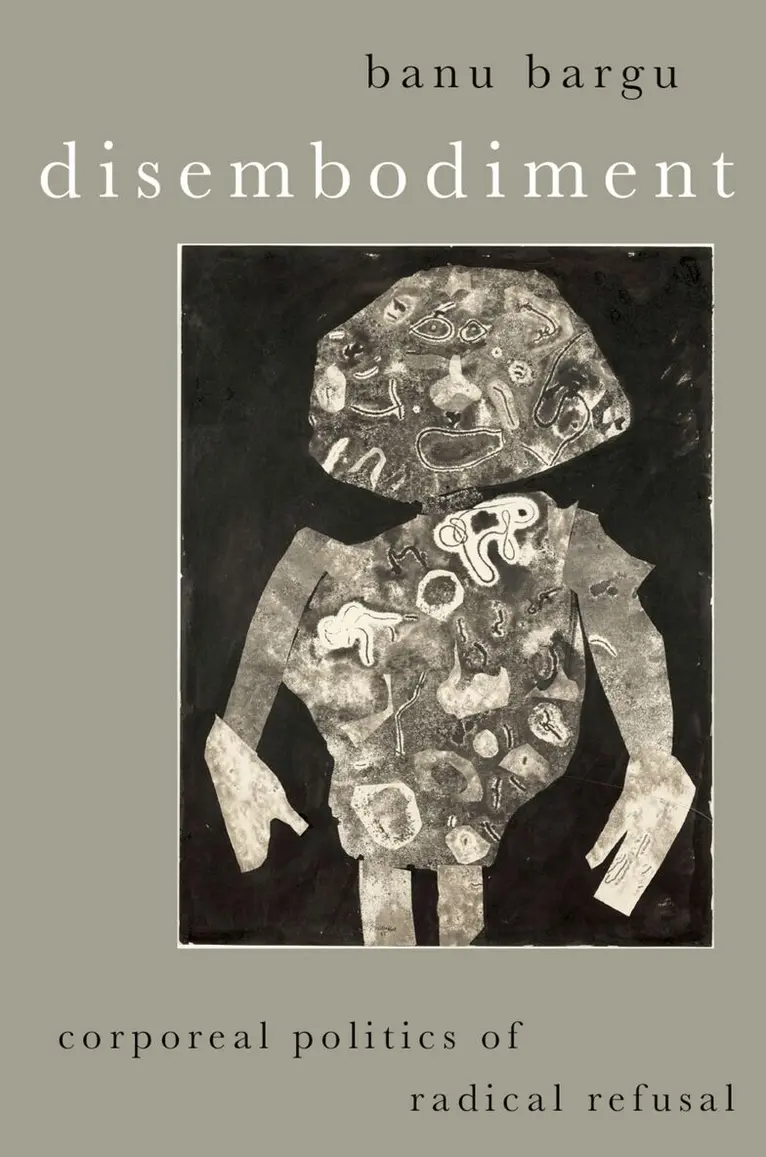
Disembodiment examines self-destruction, self-injury, and self-endangerment as actions that express the injustices and indignities of the life conditions of impoverished, dispossessed, and dominated peoples. Author Banu Bargu troubles the dominant approach that treats these acts as individual pathologies, cries for help, and signs of despair. Instead, she suggests that they should be read as unconventional performances of resistance and refusal that are erased, marginalized, and distorted by metanarratives of history as progress and of agency as freedom and intentionality. Situating these practices in a dialectic of desubjectivation and counter-subjectivation, Bargu argues that they dispel a western metaphysics of subjecthood and invoke alternative ways of being human and of relating to one's body and the world. Pursuing philosophical questions about the meaning of agency, the direction of history, and the limits of the political generated by the forfeiture of the body, Bargu offers a stark and unforgiving critique of our present. As a work in global critical theory whose normative compass is the suffering body, Disembodiment brings together corporeal enactments of defiance and refusal from the global south with major thinkers of western modernity and prominent critical-theoretical traditions of the twentieth century. Bargu moves from such historical precedents as the suicides of enslaved Africans during the transatlantic crossing, the hunger strikes of woman suffragists in England's prisons, and Gandhian fasting practices in the Indian anticolonial struggle to contemporary examples that include the hunger and thirst strikes in the Maze and Guantánamo, the self-incineration of Mohammed Bouazizi, and the lip-sewing practices of migrants and asylum seekers in detention centers and border zones of the global north today. She takes the reader on an unsettling journey that delineates the emergence of a corporeal repertoire of contention. Performed by the powerless who find themselves in crisis, this repertoire is built on the expressive agency of the body and its ability to irrupt, undoing its training in composure and radicalizing the meaning of dignity. Disembodiment presents a bold materialist theory of corporeal agency, which upholds the body's powers as fundamentally rebellious and ultimately undomesticatable