Heritage of Mississippi Series – serie
Visar alla böcker i serien Heritage of Mississippi Series. Handla med fri frakt och snabb leverans.
10 produkter
10 produkter
668 kr
Skickas inom 10-15 vardagar
Colonial Mississippi: A Borrowed Land offers the first composite of histories from the entire colonial period in the land now called Mississippi. Christian Pinnen and Charles Weeks reveal stories spanning over three hundred years and featuring a diverse array of individuals and peoples from America, Europe, and Africa. The authors focus on the encounters among these peoples, good and bad, and the lasting impacts on the region.The eighteenth century receives much deserved attention from Pinnen and Weeks as they focus on the trials and tribulations of Mississippi as a colony, especially along the Gulf Coast and in the Natchez country. The authors tell the story of a land borrowed from its original inhabitants and never returned. They make clear how a remarkable diversity characterized the state throughout its early history.Early encounters and initial contacts involved primarily Native Americans and Spaniards in the first half of the sixteenth century following the expeditions of Columbus and others to the large region of the Gulf of Mexico. More sustained interaction began with the arrival of the French to the region and the establishment of a French post on Biloxi Bay at the end of the seventeenth century. Such exchanges continued through the eighteenth century with the British, and then again the Spanish until the creation of the territory of Mississippi in 1798 and then two states, Mississippi in 1817 and Alabama in 1819. Though readers may know the bare bones of this history, the dates, and names, this is the first book to reveal the complexity of the story in full, to dig deep into a varied and complicated tale.
296 kr
Skickas inom 10-15 vardagar
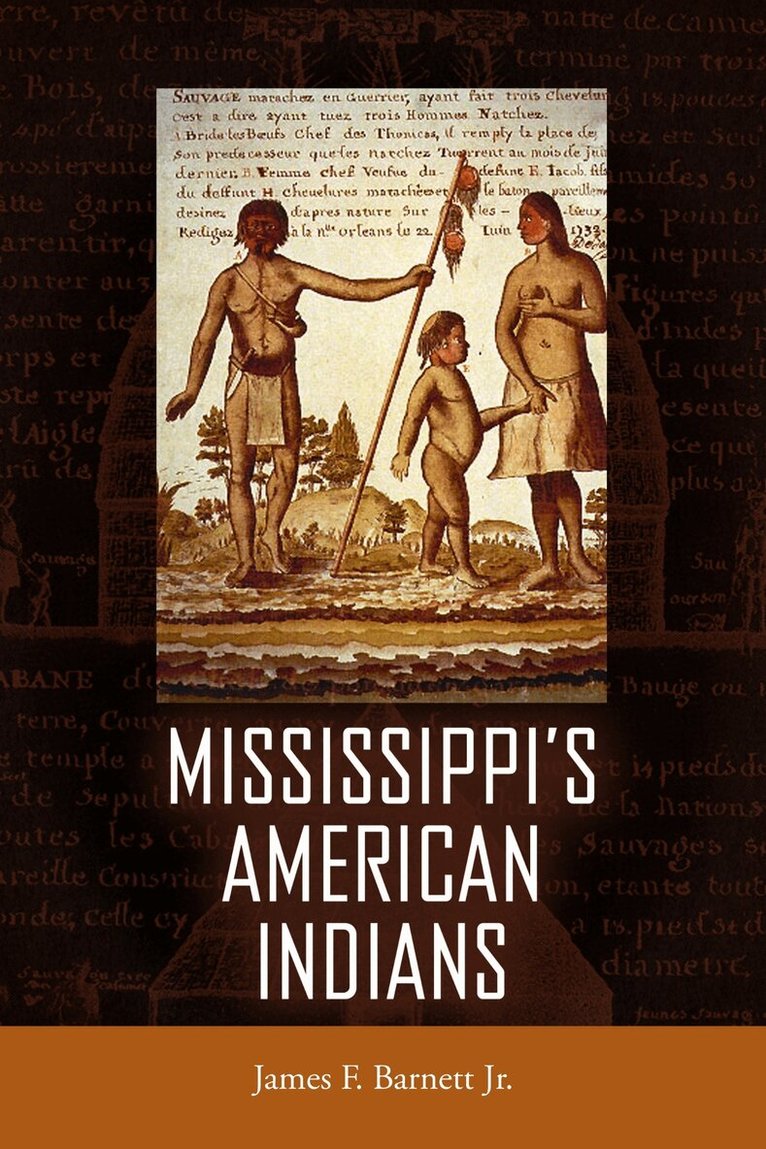
At the beginning of the eighteenth century, over twenty different American Indian tribal groups inhabited present-day Mississippi. Today, Mississippi is home to only one tribe, the Mississippi Band of Choctaw Indians. In Mississippi's American Indians, author James F. Barnett Jr. explores the historical forces and processes that led to this sweeping change in the diversity of the state's native peoples.The book begins with a chapter on Mississippi's approximately 12,000-year prehistory, from early hunter-gatherer societies through the powerful mound building civilizations encountered by the first European expeditions. With the coming of the Spanish, French, and English to the New World, native societies in the Mississippi region connected with the Atlantic market economy, a source for guns, blankets, and many other trade items. Europeans offered these trade materials in exchange for Indian slaves and deerskins, currencies that radically altered the relationships between tribal groups. Smallpox and other diseases followed along the trading paths. Colonial competition between the French and English helped to spark the Natchez rebellion, the Chickasaw-French wars, the Choctaw civil war, and a half-century of client warfare between the Choctaws and Chickasaws. The Treaty of Paris in 1763 forced Mississippi's pro-French tribes to move west of the Mississippi River. The Diaspora included the Tunicas, Houmas, Pascagoulas, Biloxis, and a portion of the Choctaw confederacy. In the early nineteenth century, Mississippi's remaining Choctaws and Chickasaws faced a series of treaties with the United States government that ended in destitution and removal. Despite the intense pressures of European invasion, the Mississippi tribes survived by adapting and contributing to their rapidly evolving world.
442 kr
Skickas inom 7-10 vardagar
Mississippi’s foundational epoch—in which the state literally took shape—has for too long remained overlooked and shrouded in misunderstanding. Yet the years between 1798, when the Mississippi Territory was created, and 1840, when the maturing state came into its own as arguably the heart of the antebellum South, was one of remarkable transformation. Beginning as a Native American homeland subject to contested claims by European colonial powers, the state became a thoroughly American entity in the span of little more than a generation. In Old Southwest to Old South: Mississippi, 1798–1840, authors Mike Bunn and Clay Williams tell the story of Mississippi’s founding era in a sweeping narrative that gives these crucial years the attention they deserve.Several key themes, addressing how and why the state developed as it did, rise to the forefront in the book’s pages. These include a veritable list of the major issues in Mississippi history: a sudden influx of American settlers, the harsh saga of Removal, the pivotal role of the institution of slavery, and the consequences of heavy reliance on cotton production. The book bears witness to Mississippi’s birth as the twentieth state in the Union, and it introduces a cast of colorful characters and events that demand further attention from those interested in the state’s past. A story of relevance to all Mississippians, Old Southwest to Old South explains how Mississippi’s early development shaped the state and continues to define it today.
296 kr
Skickas inom 10-15 vardagar
Colonial Mississippi: A Borrowed Land offers the first composite of histories from the entire colonial period in the land now called Mississippi. Christian Pinnen and Charles Weeks reveal stories spanning over three hundred years and featuring a diverse array of individuals and peoples from America, Europe, and Africa. The authors focus on the encounters among these peoples, good and bad, and the lasting impacts on the region.The eighteenth century receives much-deserved attention from Pinnen and Weeks as they focus on the trials and tribulations of Mississippi as a colony, especially along the Gulf Coast and in the Natchez country. The authors tell the story of a land borrowed from its original inhabitants and never returned. They make clear how a remarkable diversity characterized the state throughout its early history.Early encounters and initial contacts involved primarily Native Americans and Spaniards in the first half of the sixteenth century following the expeditions of Columbus and others to the large region of the Gulf of Mexico. More sustained interaction began with the arrival of the French to the region and the establishment of a French post on Biloxi Bay at the end of the seventeenth century. Such exchanges continued through the eighteenth century with the British, and then again the Spanish until the creation of the territory of Mississippi in 1798 and then two states, Mississippi in 1817 and Alabama in 1819. Though readers may know the bare bones of this history, the dates, and names, this is the first book to reveal the complexity of the story in full, to dig deep into a varied and complicated tale.
389 kr
Skickas inom 3-6 vardagar
Throughout the ten-year period following the end of the Civil War, Mississippians responded to broader movements in the country, to changes in the national and international economy, and to congressional and presidential initiatives as they worked to recover from the devastation of war and pursue new expressions of freedom. Reconstruction in Mississippi, 1862–1877 is a compelling account of how Black Mississippians embraced this freedom and how white Mississippians could not.Recording the mechanics of how the Confederate states were allowed to resume representation in Congress, the restoration of civil governments, and the political freedoms the formerly enslaved people acquired, Reconstruction in Mississippi, 1862–1877 documents the ways economic freedoms, such as the acquisition of land and the negotiation of fair labor contracts, evolved. Jere Nash begins this exploration with how the formerly enslaved men and women changed the political landscape for Abraham Lincoln by taking matters into their own hands as the Union Army moved into Mississippi in 1862. Nash then traces the federal occupation of the state, the adoption of the infamous Black Codes by the state legislature in 1865, the drafting and approval of the new constitution in 1869, the selection of the first two Black men to ever serve in the United States Senate, and the use of terror and fraud by white Democrats to steal the election of 1875 and regain political power. Reconstruction in Mississippi, 1862–1877 is a detailed and comprehensive history of this turbulent and eventful era in Mississippi.
379 kr
Skickas inom 10-15 vardagar
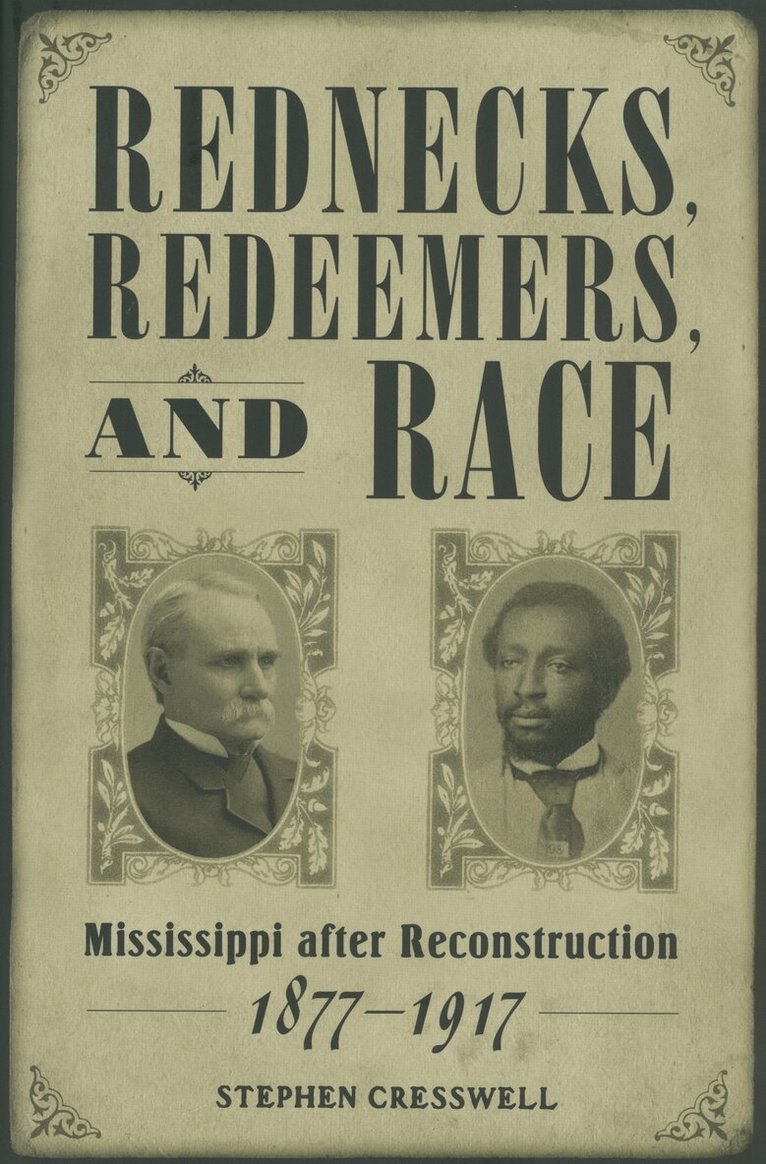
Mississippi saw great change in the four decades after Reconstruction. Between 1877 and 1917 the state transformed. Its cities increased rapidly in size and saw the advent of electric lights, streetcars, and moving pictures. Farmers diversified their operations, sharply increasing their production of corn, sweet potatoes, and dairy products. Mississippians built large textile mills in a number of cities and increased the number of manufacturing workers tenfold. But many things did not change. In 1917 as in 1877, Mississippi was a top cotton producer and relied more heavily on cotton than on any other product. In 1917 as in 1877 the state had troubled race relations and was all too often the site of lynchings and race riots. Compared with other states in 1917, Mississippi was near the bottom of the list for length of the school year, for percentage of farms that boasted tractors, and for the number of miles of paved or gravel roads. Mississippi was the least urban and most agricultural state in the nation. Rednecks, Redeemers, and Race: Mississippi after Reconstruction, 1877-1917 examines the paradox of significant change alongside many unbroken continuities. It explores the reasons Mississippi was not more successful in urbanizing, in industrializing, and in reducing its reliance on cotton. The volume closes by looking at events that would move Mississippi closer to the national mainstream.
1 219 kr
Skickas inom 10-15 vardagar
At the beginning of the eighteenth century, over twenty different American Indian tribal groups inhabited present-day Mississippi. Today, Mississippi is home to only one tribe, the Mississippi Band of Choctaw Indians. In Mississippi's American Indians, author James F. Barnett Jr. explores the historical forces and processes that led to this sweeping change in the diversity of the state's native peoples. The book begins with a chapter on Mississippi's approximately 12,000-year prehistory, from early hunter-gatherer societies through the powerful mound building civilizations encountered by the first European expeditions. With the coming of the Spanish, French, and English to the New World, native societies in the Mississippi region connected with the Atlantic market economy, a source for guns, blankets, and many other trade items. Europeans offered these trade materials in exchange for Indian slaves and deerskins, currencies that radically altered the relationships between tribal groups. Smallpox and other diseases followed along the trading paths. Colonial competition between the French and English helped to spark the Natchez rebellion, the Chickasaw-French wars, the Choctaw civil war, and a half-century of client warfare between the Choctaws and Chickasaws. The Treaty of Paris in 1763 forced Mississippi's pro-French tribes to move west of the Mississippi River. The Diaspora included the Tunicas, Houmas, Pascagoulas, Biloxis, and a portion of the Choctaw confederacy. In the early nineteenth century, Mississippi's remaining Choctaws and Chickasaws faced a series of treaties with the United States government that ended in destitution and removal. Despite the intense pressures of European invasion, the Mississippi tribes survived by adapting and contributing to their rapidly evolving world.
368 kr
Skickas inom 10-15 vardagar
In the 1600s Colonial French settlers brought Christianity into the lands that are now the state of Mississippi. Throughout the period of French rule and the period of Spanish dominion that followed, Roman Catholicism remained the principal religion. By the time that statehood was achieved in 1817, Mississippi was attracting Methodists, Baptists, Presbyterians, and other Protestant evangelical faiths at a remarkable pace, and by the twentieth century, religion in Mississippi was dominantly Protestant and evangelical.In this book, Randy J. Sparks traces the roots of evangelical Christianity in the state and shows how the evangelicals became a force of cultural revolution. They embraced the poorer segments of society, welcomed high populations of both women and African Americans, and deeply influenced ritual and belief in the state's vision of Christianity. In the 1830s as the Mississippi economy boomed, so did evangelicalism. As Protestant faiths became wedded to patriarchal standards, slaveholding, and southern political tradition, seeds were sown for the war that would erupt three decades later.Until Reconstruction many Mississippi churches comprised biracial congregations and featured women in prominent roles, but as the Civil War and the racial split cooled the evangelicals' liberal fervor and drastically changed the democratic character of their religion into archconservatism, a strong but separate black church emerged. As dominance by Protestant conservatives solidified, Jews, Catholics, and Mormons struggled to retain their religious identities while conforming to standards set by white Protestant society.As Sparks explores the dissonance between the state's powerful evangelical voice and Mississippi's social and cultural mores, he reveals the striking irony of faith and society in conflict. By the time of the Civil Rights movement of the 1960s, religion, formerly a liberal force, had become one of the leading proponents of segregation, gender inequality, and ethnic animosity among whites in the Magnolia State. Among blacks, however, the churches were bastions of racial pride and resistance to the forces of oppression.
296 kr
Skickas inom 10-15 vardagar
In Mississippi in the Civil War: The Home Front, Timothy B. Smith examines Mississippi's Civil War defeat by both outside and inside forces. From without, the Union army dismantled the state's political system, infrastructure, economy, and fighting capability. The state saw extensive military operations, destruction, and bloodshed within her borders. One of the most frightful and extended sieges of the war ended in a crucial Confederate defeat at Vicksburg, the capstone to a tremendous Union campaign.As Confederate forces and Mississippi became overwhelmed militarily, the populace's morale began to crumble. Realizing that the enemy could roll unchecked over the state, civilians, Smith argues, began to lose the will to continue the struggle. Many white Confederates chose to return to the Union rather than see continued destruction in the name of a victory that seemed ever more improbable. When the tide turned, Unionists and African Americans boldly stepped up their endeavors. The result, Smith finds, was a state vanquished and destined to endure suffering far into its future.The first examination of the state's Civil War home front in seventy years, this book tells the story of all classes of Mississippians during the war, focusing new light on previously neglected groups such as women and African Americans. The result is a revelation of the heart of a populace facing the devastating impact of total war.
296 kr
Skickas inom 10-15 vardagar
From the first Union attack on Vicksburg in the spring of 1862 through Benjamin Grierson's last raid through Mississippi in late 1864 and early 1865, this book traces the campaigns, fighting, and causes and effects of armed conflict in central and North Mississippi, where major campaigns were waged and fighting occurred.The Civil War in Mississippi: Major Campaigns and Battles will be a must-read for any Mississippian or Civil War buff who wants the complete story of the Civil War in Mississippi. It discusses the key military engagements in chronological order. It begins with a prologue covering mobilization and other events leading up to the first military action within the state's borders. The book then covers all of the major military operations, including the campaign for and siege of Vicksburg, and battles at Iuka and Corinth, Meridian, Brice's Crossroads, and Tupelo. The colorful cast of characters includes such household names as Sherman, Grant, Pemberton, and Forrest, as well as a host of other commanders and soldiers. Author Michael B. Ballard discusses at length minority troops and others glossed over or lost in studies of the Mississippi military during the war.