Historical Ecology Series - Böcker
Visar alla böcker i serien Historical Ecology Series. Handla med fri frakt och snabb leverans.
7 produkter
7 produkter
1 031 kr
Skickas inom 3-6 vardagar
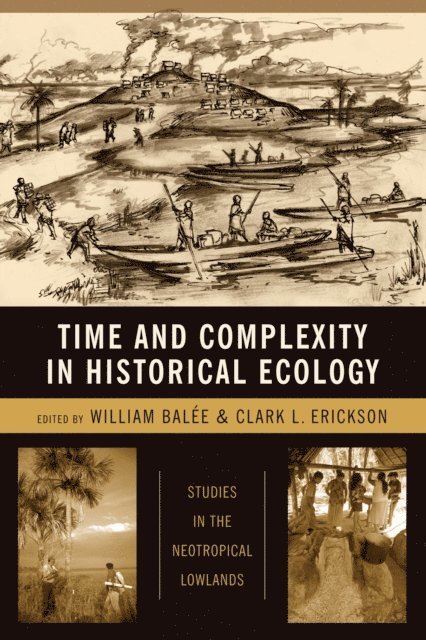
Ecology is an attempt to understand the reciprocal relationship between living and nonliving elements of the earth. For years, however, the discipline either neglected the human element entirely or presumed its effect on natural ecosystems to be invariably negative. Among social scientists, notably in geography and anthropology, efforts to address this human-environment interaction have been criticized as deterministic and mechanistic. Bridging the divide between social and natural sciences, the contributors to this book use a more holistic perspective to explore the relationships between humans and their environment. Exploring short- and long-term local and global change, eighteen specialists in anthropology, geography, history, ethnobiology, and related disciplines present new perspectives on historical ecology. A broad theoretical background on the material factors central to the field is presented, such as anthropogenic fire, soils, and pathogens. A series of regional applications of this knowledge base investigates landscape transformations over time in South America, the Mississippi Delta, the Great Basin, Thailand, and India.The contributors focus on traditional societies where lands are most at risk from the incursions of complex, state-level societies. This book lays the groundwork for a more meaningful understanding of humankind's interaction with its biosphere. Scholars and environmental policymakers alike will appreciate this new critical vocabulary for grasping biocultural phenomena.
986 kr
Skickas inom 3-6 vardagar
We often envision the New World before the arrival of the Europeans as a land of pristine natural beauty and undisturbed environments. However, David Lentz offers an alternative view by detailing the impact of native cultures on these ecosystems prior to their contact with Europeans. Drawing on a wide range of experts from the fields of paleoclimatology, historical ecology, paleontology, botany, geology, conservation science, and resource management, this book unlocks the secret of how the Western Hemisphere's indigenous inhabitants influenced and transformed their natural environment. A rare combination of collaborators uncovers the changes that took place in North America, Mexico, Central America, the Andes, and Amazonia. Each section of the book has been comprehensively arranged so that a botanical description of the natural vegetation of the region is coupled with a set of case studies outlining local human influences. From modifications of vegetation, to changes in soil, wildlife, microclimate, hydrology, and the land surface itself, this collection addresses one of the great issues of our time: the human modification of the earth.
3 005 kr
Skickas inom 3-6 vardagar
Scientists and policymakers are beginning to understand in ever-increasing detail that environmental problems cannot be understood solely through the biophysical sciences. Environmental issues are fundamentally human issues and must be set in the context of social, political, cultural, and economic knowledge. The need both to understand how human beings in the past responded to climatic and other environmental changes and to synthesize the implications of these historical patterns for present-day sustainability spurred a conference of the world's leading scholars on the topic. The Way the Wind Blows is the rich result of that conference. Articles discuss the dynamics of climate, human perceptions of and responses to the environment, and issues of sustainability and resiliency. These themes are illustrated through discussions of human societies around the world and throughout history.
812 kr
Skickas inom 3-6 vardagar
Scientists and policymakers are beginning to understand in ever-increasing detail that environmental problems cannot be understood solely through the biophysical sciences. Environmental issues are fundamentally human issues and must be set in the context of social, political, cultural, and economic knowledge. The need both to understand how human beings in the past responded to climatic and other environmental changes and to synthesize the implications of these historical patterns for present-day sustainability spurred a conference of the world's leading scholars on the topic. The Way the Wind Blows is the rich result of that conference. Articles discuss the dynamics of climate, human perceptions of and responses to the environment, and issues of sustainability and resiliency. These themes are illustrated through discussions of human societies around the world and throughout history.
1 140 kr
Skickas inom 7-10 vardagar
The Huaorani of Ecuador lived as hunters and gatherers in the Amazonian rainforest for hundred of years, largely undisturbed by western civilization. Since their first encounter with North American missionaries in 1956, they have held a special place in journalistic and popular imagination as "Ecuador's last savages." Trekking Through History is the first description of Huaorani society and culture according to modern standards of ethnographic writing. Through her comprehensive study of their extraordinary tradition of trekking, Laura Rival shows that the Huaorani cannot be seen merely as anachronistic survivors of the Spanish Conquest. Her critical reappraisal of the notions of agricultural regression and cultural devolution challenges the universal application of the thesis that marginal tribes of the Amazon Basin represent devolved populations who have lost their knowledge of agriculture. Far from being an evolutionary event, trekking expresses cultural creativity and political agency.Through her detailed comparative discussion of native Amazonian representations of history and the environment, Rival illustrates the unique way the Huaorani have socialized nature by choosing to depend on resources created in the past-highlighting the unique contribution anthropology makes to the study of environmental history.
610 kr
Skickas inom 3-6 vardagar
The Huaorani of Ecuador lived as hunters and gatherers in the Amazonian rainforest for hundred of years, largely undisturbed by western civilization. Since their first encounter with North American missionaries in 1956, they have held a special place in journalistic and popular imagination as "Ecuador's last savages." Trekking Through History is the first description of Huaorani society and culture according to modern standards of ethnographic writing. Through her comprehensive study of their extraordinary tradition of trekking, Laura Rival shows that the Huaorani cannot be seen merely as anachronistic survivors of the Spanish Conquest. Her critical reappraisal of the notions of agricultural regression and cultural devolution challenges the universal application of the thesis that marginal tribes of the Amazon Basin represent devolved populations who have lost their knowledge of agriculture. Far from being an evolutionary event, trekking expresses cultural creativity and political agency.Through her detailed comparative discussion of native Amazonian representations of history and the environment, Rival illustrates the unique way the Huaorani have socialized nature by choosing to depend on resources created in the past-highlighting the unique contribution anthropology makes to the study of environmental history.
738 kr
Skickas inom 3-6 vardagar
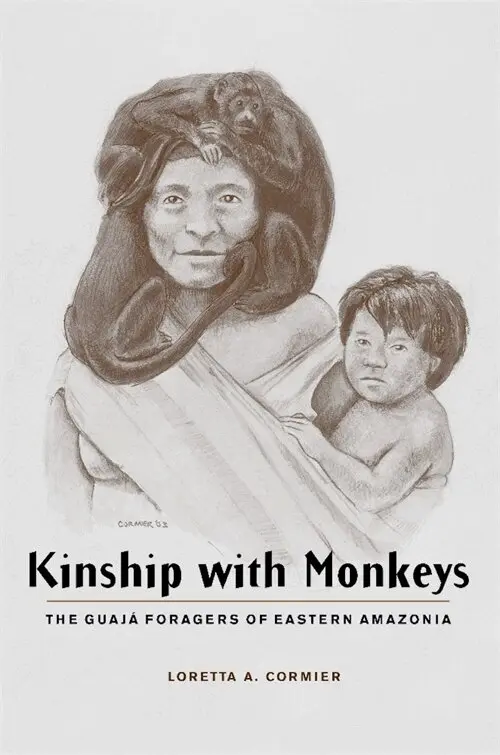
Intrigued by a slide showing a woman breast-feeding a monkey, anthropologist Loretta A. Cormier spent fifteen months living among the Guaja, a foraging people in a remote area of Brazil. The result is this ethnographic study of the extraordinary relationship between the Guaja Indians and monkeys. While monkeys are a key food source for the Guaja, certain pet monkeys have a quasi-human status. Some infant monkeys are adopted and nurtured as human children while others are consumed in accordance with the "symbolic cannibalism" of their belief system. The apparent contradiction of this predator/protector relationship became the central theme of Cormier's research: How can monkeys be both eaten as food and nurtured as children? Her research reveals that monkeys play a vital role in Guaja society, ecology, economy, and religion. In Guaja animistic beliefs, all forms of plant and animal life-especially monkeys-have souls and are woven into a comprehensive kinship system. Therefore, all consumption can be considered a form of cannibalism.Cormier sets the stage for this enlightening study by examining the history of the Guaja and the ecological relationships between human and nonhuman primates in Amazonia. She also addresses the importance of monkeys in Guaja ecological adaptation as well as their role in the Guaja kinship system. Cormier then looks at animism and life classification among the Guaja and the role of pets, which provide a context for understanding "symbolic cannibalism" and how the Guaja relate to various forms of life in their natural and supernatural world. The book concludes with a discussion of the implications of ethnoprimatology beyond Amazonia, including Western perceptions of primates.