History and Philosophy of Education – serie
Visar alla böcker i serien History and Philosophy of Education. Handla med fri frakt och snabb leverans.
4 produkter
4 produkter
924 kr
Skickas inom 11-20 vardagar
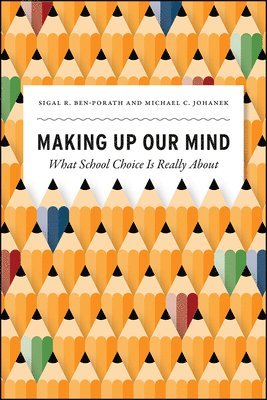
If free market advocates had total control over education policy, would the shared public system of education collapse? Would school choice revitalize schooling with its innovative force? With proliferating charters and voucher schemes, would the United States finally make a dramatic break with its past and expand parental choice?That's not only the wrong question--it's the wrong premise, argue philosopher Sigal R. Ben-Porath and historian Michael C. Johanek in Making Up Our Mind. Market-driven school choices aren't a new. They predate the republic, and for generations parents have chosen to educate their children through an evolving mix of publicly supported, private, charitable, and entrepreneurial enterprises. This process has arguably always been influenced by market forces, especially those of parental demand, and, more recently, by the impact of coordinated corporate and philanthropic influence. The question is not whether to have school choice. It is how we will regulate who has which choices in our mixed market for schooling--and what we, as a nation, hope to accomplish with that mix of choices. Making Up Our Mind looks beyond the simple divide between those who oppose government intervention and those who support public education as a way to nurture a democratic, integrated public sphere. Instead, the authors make the case for a structured landscape of choice in schooling, one that protects the interests of children and of society, while also identifying key shared values on which a broadly acceptable policy could rest.
230 kr
Skickas inom 7-10 vardagar
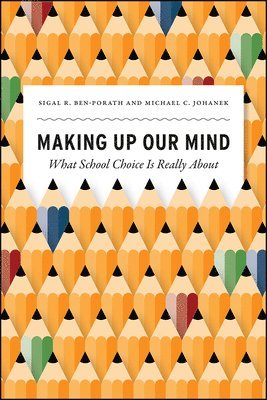
If free market advocates had total control over education policy, would the shared public system of education collapse? Would school choice revitalize schooling with its innovative force? With proliferating charters and voucher schemes, would the United States finally make a dramatic break with its past and expand parental choice?That's not only the wrong question--it's the wrong premise, argue philosopher Sigal R. Ben-Porath and historian Michael C. Johanek in Making Up Our Mind. Market-driven school choices aren't a new. They predate the republic, and for generations parents have chosen to educate their children through an evolving mix of publicly supported, private, charitable, and entrepreneurial enterprises. This process has arguably always been influenced by market forces, especially those of parental demand, and, more recently, by the impact of coordinated corporate and philanthropic influence. The question is not whether to have school choice. It is how we will regulate who has which choices in our mixed market for schooling--and what we, as a nation, hope to accomplish with that mix of choices. Making Up Our Mind looks beyond the simple divide between those who oppose government intervention and those who support public education as a way to nurture a democratic, integrated public sphere. Instead, the authors make the case for a structured landscape of choice in schooling, one that protects the interests of children and of society, while also identifying key shared values on which a broadly acceptable policy could rest.
673 kr
Tillfälligt slut
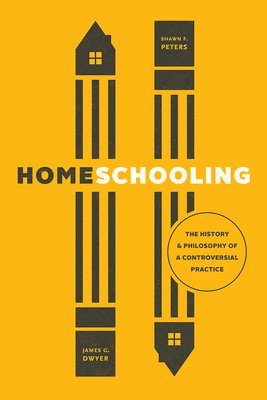
In Homeschooling: The History and Philosophy of a Controversial Practice, James G. Dwyer and Shawn F. Peters examine homeschooling's history, its methods, and the fundamental questions at the root of the heated debate over whether and how the state should oversee and regulate it. The authors trace the evolution of homeschooling and the law relating to it from before America's founding to the present day. In the process they analyze the many arguments made for and against it, and set them in the context of larger questions about school and education. They then tackle the question of regulation, and they do so within a rigorous moral framework, one that is constructed from a clear-eyed assessment of what rights and duties children, parents, and the state each possess. Viewing the question through that lens allows Dwyer and Peters to even-handedly evaluate the competing arguments and ultimately generate policy prescriptions. Homeschooling is the definitive study of a vexed question, one that ultimately affects all citizens, regardless of their educational background.
230 kr
Skickas inom 7-10 vardagar
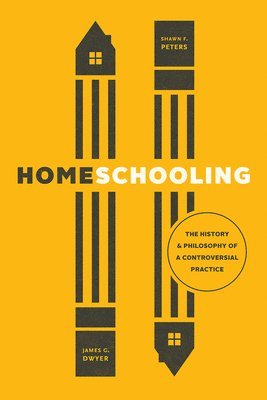
In Homeschooling: The History and Philosophy of a Controversial Practice, James G. Dwyer and Shawn F. Peters examine homeschooling's history, its methods, and the fundamental questions at the root of the heated debate over whether and how the state should oversee and regulate it. The authors trace the evolution of homeschooling and the law relating to it from before America's founding to the present day. In the process they analyze the many arguments made for and against it, and set them in the context of larger questions about school and education. They then tackle the question of regulation, and they do so within a rigorous moral framework, one that is constructed from a clear-eyed assessment of what rights and duties children, parents, and the state each possess. Viewing the question through that lens allows Dwyer and Peters to even-handedly evaluate the competing arguments and ultimately generate policy prescriptions. Homeschooling is the definitive study of a vexed question, one that ultimately affects all citizens, regardless of their educational background.