History of Science Series – Serie
Visar alla böcker i serien History of Science Series. Handla med fri frakt och snabb leverans.
3 produkter
3 produkter
207 kr
Skickas inom 10-15 vardagar
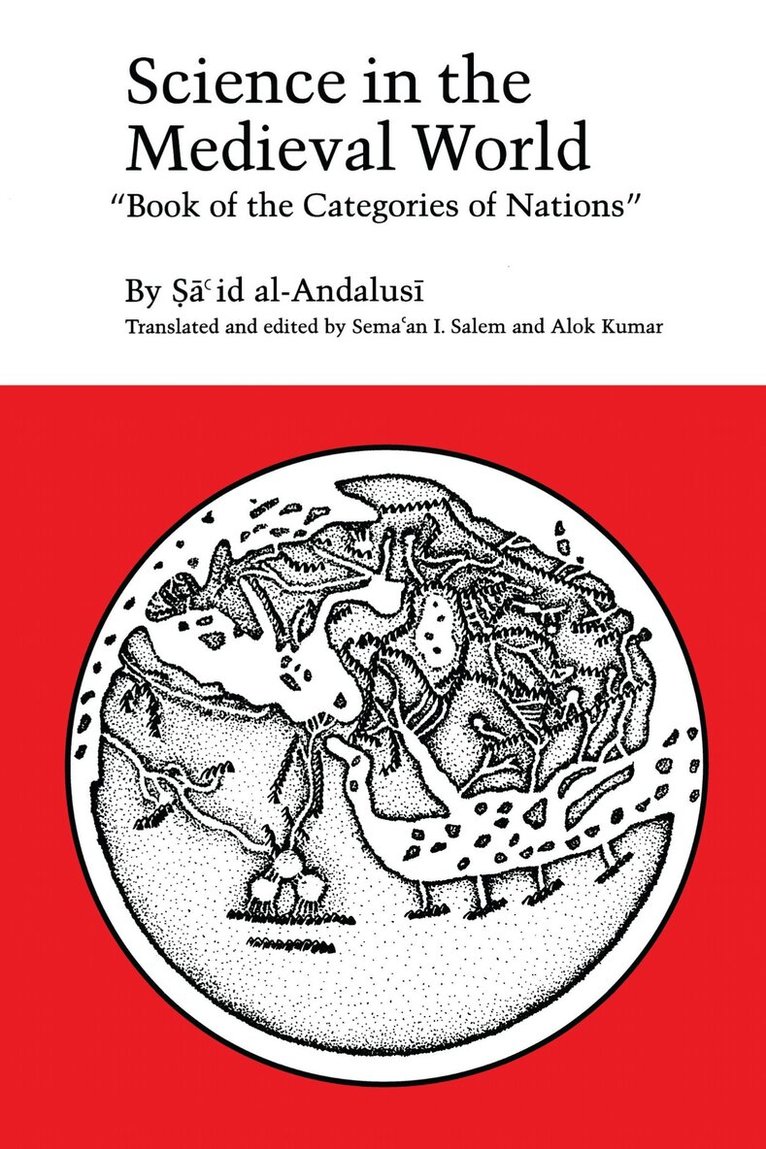
During the Middle Ages, a thriving center for learning and research was Muslim Spain, where students gathered to consult Arabic manuscripts of earlier scientific works and study with famous teachers. One of these teachers was Sa'id al-Andalusi, who in 1068 wrote Kitab Tabaqat al-'Umam, or "Book of the Categories of Nations," which recorded the contributions to science of all known nations. Today, it is one of few surviving medieval Spanish Muslim texts, and this is its first English translation.Science ('ulum), as used by Sa'id and other scholars of that period, is a broad term covering virtually all aspects of human knowledge. After initial discussions of the categories of nations that did or did not cultivate science, Sa'id details the specific contribution of nine nations or peoples-India, Persia, Chaldea, Greece, Rome, Egypt, the Arab Orient, al-Andalus, and the Hebrews. He includes the names of many individual scientists and scholars and describes their various contributions to knowledge, making his book a significant work of reference as well as history.
257 kr
Skickas inom 7-10 vardagar
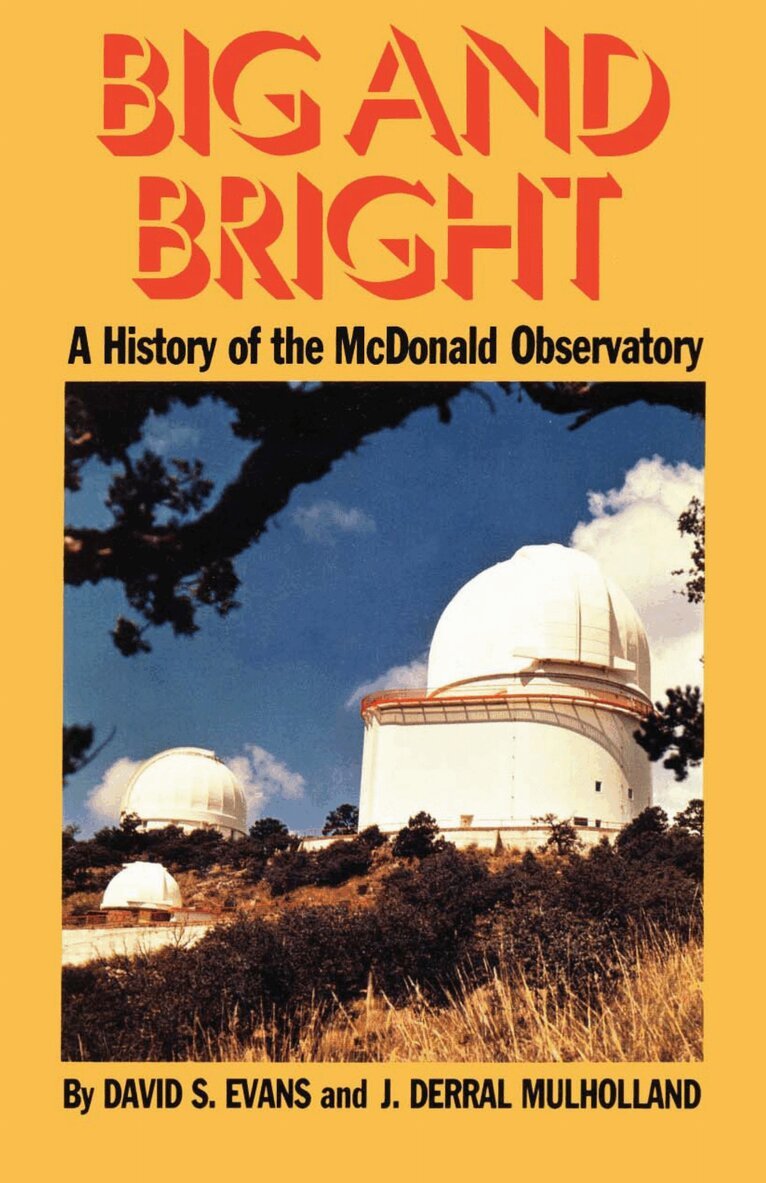
By day, every year over 40,000 visitors pour in. Across the Rio Grande, a hundred miles away, Mexican mountaineers use the white domes as landmarks. By night, perched almost 7,000 feet above the sleeping, earthbound world, astronomers probe the secrets of the night sky. This is the University of Texas McDonald Observatory, one of the world's largest university-operated astronomical installations.Big and Bright: A History of the McDonald Observatory is the story of a remarkable collaboration between two major universities, one a prestigious private school, the other a growing southwestern state institution. The University of Chicago had astronomers, but its Yerkes Observatory was aging and underfunded; the University of Texas had money for an observatory but no working astronomer to staff it. Out of their mutual need, they formed a thirty-year compact for a joint venture. Unusual in its day, the Yerkes-McDonald connection presaged the future. In this arrangement, one can see some of the beginnings of today's consortium "big science."Now the McDonald Observatory's early history can be put in proper perspective. Blessed with a gifted and driving founding director, the world's (then) second-largest telescope, and an isolation that permitted it to be virtually the only major astronomical observatory that continued operations throughout World War II, the staff of McDonald Observatory helped lay the foundations of modern astrophysics during the 1940s. For over a decade after the war, a lonely mountaintop in West Texas was the mecca that drew nearly all the most important astronomers from all over the world.Based on personal reminiscences and archival material, as well as published historical sources, Big and Bright is one of the few histories of a major observatory, unique in its focus on the human side of the story.
351 kr
Skickas inom 10-15 vardagar
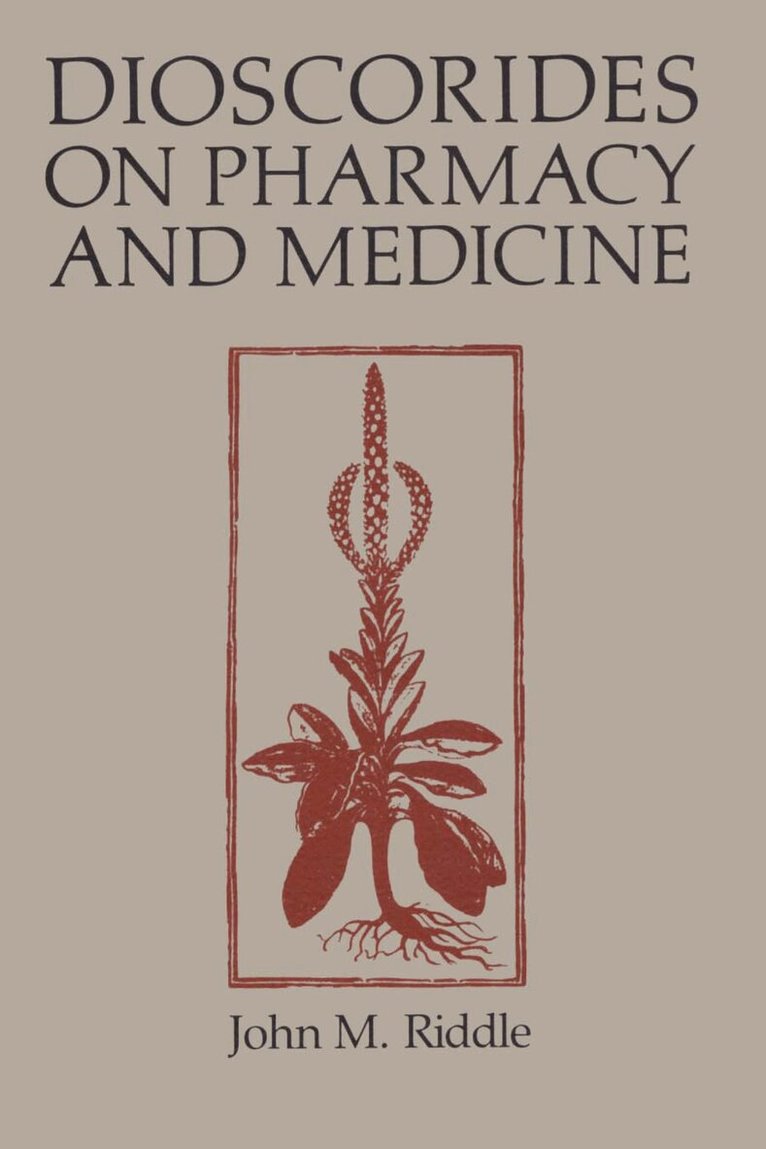
For 1,600 years Dioscorides (ca. AD 40–80) was regarded as the foremost authority on drugs. He knew mild laxatives and strong purgatives, analgesics for headaches, antiseptics for wounds, emetics to rid one of ingested poisons, chemotherapy agents for cancer treatments, and even oral contraceptives. Why, then, have his works remained obscure in recent centuries? Because of one small oversight (Dioscorides himself thought it was self-evident): he failed to describe his method for organizing drugs by their affinities. This omission led medical authorities to use his materials as a guide to pharmacy while overlooking Dioscorides' most valuable contribution-his empirically derived method for observing and classifying drugs by clinical testing.Dioscorides' De materia medica, a five-volume work, was written in the first century. Here revealed for the first time is the thesis that Dioscorides wrote more than a lengthy guide book. He wrote a great work of science. He had said that he discovered the natural order and would demonstrate it by his arrangement of drugs from plants, minerals, and animals. Until John M. Riddle's pathfinding study, no one saw the genius of his system. Botanists from the eighteenth century often attempted to find his unexplained method by identifying the sequences of his plants according to the Linnean system but, while there are certain patterns, there remained inexplicable incoherencies. However, Dioscorides' natural order as set down in De materia medica was determined by drug affinities as detected by his acute, clinical ability to observe drug reactions in and on the body. So remarkable was his ability to see relationships that, in some cases, he saw what we know to be common chemicals shared by plants of the same and related species and other natural product drugs from animal and mineral sources.Western European and Islamic medicine considered Dioscorides the foremost authority on drugs, just as Hippocrates is regarded as the Father of Medicine. They saw him point the way but only described the end of his finger, despite the fact that in the sixteenth century alone there were over one hundred books published on him. If he had explained what he thought to be self-evident, then science, especially chemistry and medicine, would almost certainly have developed differently. In this culmination of over twenty years of research, Riddle employs modern science and anthropological studies innovatively and cautiously to demonstrate the substance to Dioscorides' authority in medicine.