History of the World – Serie
Visar alla böcker i serien History of the World. Handla med fri frakt och snabb leverans.
6 produkter
6 produkter
474 kr
Skickas inom 10-15 vardagar
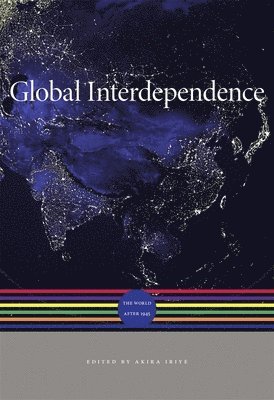
Global Interdependence provides a new account of world history from the end of World War II to the present, an era when transnational communities began to challenge the long domination of the nation-state. In this single-volume survey, leading scholars elucidate the political, economic, cultural, and environmental forces that have shaped the planet in the past sixty years.Offering fresh insight into international politics since 1945, Wilfried Loth examines how miscalculations by both the United States and Soviet Union brought about a Cold War conflict that was not necessarily inevitable. Thomas Zeiler explains how American free-market principles spurred the creation of an entirely new economic order—a global system in which goods and money flowed across national borders at an unprecedented rate, fueling growth for some nations while also creating inequalities in large parts of the Middle East, Latin America, and Africa. From an environmental viewpoint, John McNeill and Peter Engelke contend that humanity has entered a new epoch, the Anthropocene era, in which massive industrialization and population growth have become the most powerful influences upon global ecology. Petra Goedde analyzes how globalization has impacted indigenous cultures and questions the extent to which a generic culture has erased distinctiveness and authenticity. She shows how, paradoxically, the more cultures blended, the more diversified they became as well.Combining these different perspectives, volume editor Akira Iriye presents a model of transnational historiography in which individuals and groups enter history not primarily as citizens of a country but as migrants, tourists, artists, and missionaries—actors who create networks that transcend traditional geopolitical boundaries.
523 kr
Skickas inom 7-10 vardagar
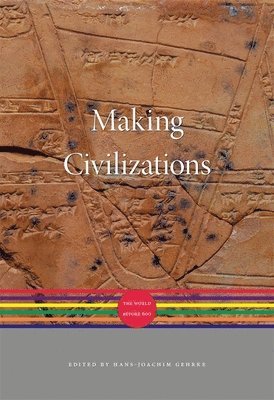
Distinguished historians of the ancient world analyze the earliest developments in human history and the rise of the first major civilizations, from the Middle East to India and China.In this volume of the six-part History of the World series, Hans-Joachim Gehrke, a noted scholar of ancient Greece, leads a distinguished group of historians in analyzing prehistory, the earliest human settlements, and the rise of the world’s first advanced civilizations.The Neolithic period—sometimes called the Agrarian Revolution—marked a turning point in human history. People were no longer dependent entirely on hunting animals and gathering plants but instead cultivated crops and reared livestock. This led to a more settled existence, notably along rivers such as the Nile, Tigris, Euphrates, Ganges, and Yangzi. Increased mastery of metals, together with innovations in tools and technologies, led to economic specialization, from intricate crafts to deadlier weapons, which contributed to the growth of village communities as well as trade networks. Family was the fundamental social unit, its relationships and hierarchies modeled on the evolving relationship between ruler and ruled. Religion, whether polytheist or monotheist, played a central role in shaping civilizations from the Persians to the Israelites. The world was construed in terms of a divinely ordained order: the Chinese imperial title Huangdi expressed divinity and heavenly splendor, while Indian emperor Ashoka was heralded as the embodiment of moral law.From the latest findings about the Neanderthals to the founding of imperial China to the world of Western classical antiquity, Making Civilizations offers an authoritative overview of humanity’s earliest eras.
537 kr
Skickas inom 7-10 vardagar
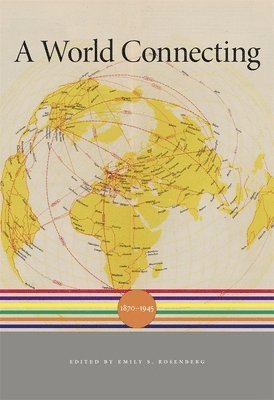
Between 1870 and 1945, advances in communication and transportation simultaneously expanded and shrank the world. New technologies erased distance and accelerated the global exchange of people, products, and ideas on an unprecedented scale. A World Connecting focuses on an era when growing global interconnectedness inspired new ambitions but also stoked anxieties and rivalries that would erupt in two world wars—the most destructive conflicts in human history.In five interpretive essays, distinguished historians Emily S. Rosenberg, Charles S. Maier, Tony Ballantyne, Antoinette Burton, Dirk Hoerder, Steven C. Topik, and Allen Wells illuminate the tensions that emerged from intensifying interconnectedness and attempts to control and shape the effects of sweeping change. Each essay provides an overview of a particular theme: modern state-building; imperial encounters; migration; commodity chains; and transnational social and cultural networks. With the emergence of modern statehood and the fluctuating fate of empires came efforts to define and police territorial borders. As people, products, capital, technologies, and affiliations flowed across uneasily bounded spaces, the world both came together and fell apart in unexpected, often horrifying, and sometimes liberating ways.A World Connecting goes beyond nations, empires, and world wars to capture the era’s defining feature: the profound and disruptive shift toward an ever more rapidly integrating world.
502 kr
Skickas inom 7-10 vardagar
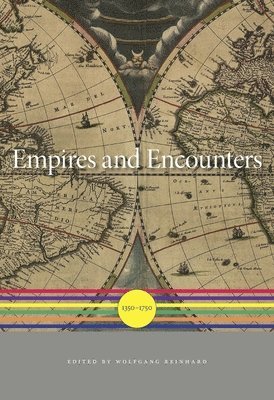
Between 1350 and 1750—a time of empires, exploration, and exposure to radically different lands and cultures—the world reached a tipping point of global connectedness. In this volume of the acclaimed series A History of the World, noted international scholars examine five critical geographical areas during this pivotal period: Eurasia between Russia and Japan; the Muslim world of the Ottoman and Persian empires; Mughal India and the Indian Ocean trading world; maritime Southeast Asia and Oceania; and a newly configured transatlantic rim. While people in many places remained unaware of anything beyond their own village, an intense period of empire building led to expanding political, economic, and cultural interaction on every continent—early signals of a shrinking globe.By the early fourteenth century Eurasia’s Mongol empires were disintegrating. Concurrently, followers of both Islam and Christianity increased exponentially, with Islam exerting a powerful cultural influence in the spreading Ottoman and Safavid empires. India came under Mughal rule, experiencing a significant growth in trade along the Indian Ocean and East African coastlines. In Southeast Asia, Muslims engaged in expansion on the Malay Peninsula, Sumatra, Java, and the Philippines. And both sides of the Atlantic responded to the pressure of European commerce, which sowed the seeds of a world economy based on the resources of the Americas but made possible by the subjugation of Native Americans and the enslavement of Africans.
541 kr
Skickas inom 7-10 vardagar
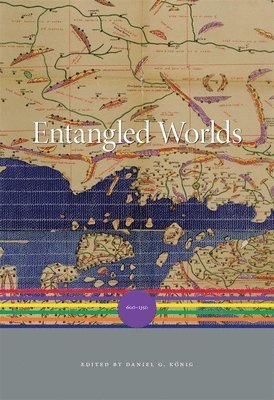
Leading historians and archaeologists offer a comprehensive introduction to the increasingly entangled worlds that spanned the globe between 600 and 1350 CE.The period between the seventh and fourteenth centuries is hardly thought of as an era of globalization. Entire societies in the Americas, Australia, and Oceania developed in relative isolation from other parts of the world. Even on the interconnected landmass of Eurafrasia, many people had little to do with processes of transregional exchange.Yet the period 600–1350 CE in fact witnessed an explosion of connectivity amid the consolidation of sophisticated approaches to human organization. Flows of people, goods, and ideas across regional boundaries intensified, changing lives at all social levels, from rulers to the enslaved. In the Americas, large cities and north-south trade networks took shape. The Arabic-Islamic conquests of the seventh and eighth centuries, along with the Mongol expansion of the thirteenth, tied together diverse polities from southeast Asia to sub-Saharan Africa. Regions also became more culturally and politically integrated: Latin-Christian models of social organization spread across Europe; the Sinitic written language drew eastern Eurasia into a common elite culture; and the accumulation of significant agricultural surpluses in the Indian subcontinent supported the emergence of a settled political order.Entangled Worlds sees the completion of the magisterial six-volume set A History of the World, offering an authoritative introduction to a vibrant era of global history. The distinguished contributors make clear that there never was a stagnant “Middle Ages” wedged between Antiquity and Modernity but instead a period defined by decisive strides toward global connection, urbanization, and the cultural and political formations we live with today.
430 kr
Skickas inom 5-8 vardagar