History of Universities Monographs – Serie
Visar alla böcker i serien History of Universities Monographs. Handla med fri frakt och snabb leverans.
4 produkter
4 produkter
566 kr
Skickas inom 5-8 vardagar
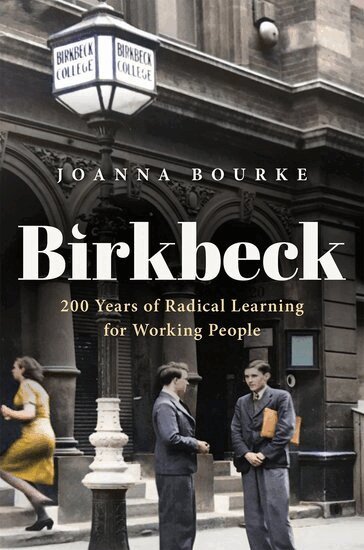
Birkbeck traces the 200-year history of Birkbeck, University of London from its founding at a time when social elites deplored the notion of educated working people to the present day. Joanna Bourke writes a lively history of the institution, and how it contributed to the shaping of modern British higher education.Two hundred years ago, Birkbeck was founded as the London Mechanics' Institution (LMI). When it was established in 1823, one third of all men and half of all women were unable to read or write. British elites were vehemently hostile to educating working people. The country was in political turmoil and it was feared that education would destroy society. This was the context in which the LMI was established. From its foundation, it was unique. Birkbeck traces its history from 1823 to the present, with Joanna Bourke using the history of Birkbeck to reflect on life and culture in London over the past two centuries. What does it mean to be educated? Why have Birkbeck's students been prepared to give up so much in order to study for a higher degree? How does education help us become fully human and self-fulfilled by learning how to use all our faculties - knowledge, imagination, sympathy? The story of Birkbeck contains some blood, oceans of scholarly sweat, and not a few tears. But it is also a story of laughter, intellectual excitement, scholarly eccentricity, collective as well as personal ambition, and, most of all, the quirky passions and personalities that make up the Birkbeck community. It is a story of a unique university but also of higher education of Britain. It shows how knowledge can empower people to better themselves and improve the world.
1 291 kr
Skickas inom 5-8 vardagar
What Happened to the Soviet University? explores how one of the largest geopolitical changes of the twentieth century—the dissolution of the Soviet Union— triggered and inspired the reconfiguration of the Soviet university. The reader is invited to engage in a historical and sociological analysis of radical and incremental changes affecting sixty-nine former Soviet universities since the early 1990s. The study departs from traditional deficit-oriented, internalist explanations of change and illustrates how global flows of ideas, people, and finances have impacted higher education transformations in this region. It also identifies areas of persistence. The processes of marketisation, internationalisation, and academic liberation are analysed to show that universities have maintained certain traditions while adopting and internalising new ways of fulfilling their education and research functions. Soviet universities have survived chaotic processes of post-Soviet transformation and have self-stabilised with time. Most of them remain flagship institutions with large numbers of students and relatively high research productivity. At the same time, the majority of these universities operate in a top-down, one-man management environment with limited institutional autonomy and academic freedom. As the homes of intellectuals, universities represent a duality of opportunity and threat. Universities can nurture collective possibilities, imagining and bringing about different futures. At the same time, or perhaps because of this, the probability is high that universities will continue to be perceived as threats to governments with authoritarian inclinations. One message to take away from this monograph is that the time is ripe for former Soviet universities to loosen their last remaining chains.
Between Scholarship and Church Politics
The Lives of John Prideaux, 1578-1650
Inbunden, Engelska, 2021
1 464 kr
Skickas inom 5-8 vardagar
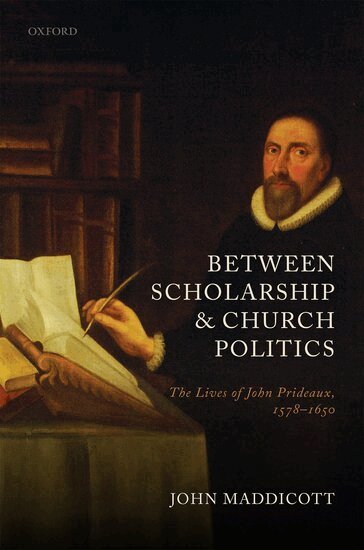
Between Scholarship and Church Politics describes the life and career of John Prideaux, rector of Exeter College, Oxford, 1612-1642, regius professor of divinity, 1615-1642, and bishop of Worcester, 1641-1646. Prideaux was the leading representative of the 'old guard' in the Church of England - Calvinist believers in the doctrines of grace and predestination, who set themselves against the growing power of the Arminian modernisers within the Church, largely the followers of Archbishop Laud. But Prideaux was also an outstandingly successful head of his Oxford college and made it a home for foreign scholars and students. Devoted to teaching, the writers of numerous books for undergraduates and theology students, and thoroughly involved in his College's everyday affairs, he was a model rector. In this study, John Maddicott addresses at length both with Prideaux's political and ecclesiastical career and his role in the College, while also paying particular attention to his personality, his family life (he was twice married and had nine children), and to his wide circle of relatives, colleagues, and allies. Born the son of a Devonshire yeoman and brought up on a farm on the edge of Dartmoor, he rose to occupy some of the highest offices in the university of Oxford and in the church: a result of his intellectual power, his ambition, his learning and scholarship, and his capacity for hard work. Between Scholarship and Church Politics is as much a study of character as a contribution to the political and church history of early Stuart England.
414 kr
Skickas inom 7-10 vardagar
Between Scholarship and Church Politics describes the life and career of John Prideaux, rector of Exeter College, Oxford, 1612–1642, regius professor of divinity, 1615–1642, and bishop of Worcester, 1641–1646. Prideaux was the leading representative of the 'old guard' in the Church of England — Calvinist believers in the doctrines of grace and predestination, who set themselves against the growing power of the Arminian modernisers within the Church, largely the followers of Archbishop Laud. But Prideaux was also an outstandingly successful head of his Oxford college and made it a home for foreign scholars and students. Devoted to teaching, the writer of numerous books for undergraduates and theology students, and thoroughly involved in his College’s everyday affairs, he was a model rector. In this study, John Maddicott addresses at length both Prideaux’s political and ecclesiastical career and his role in the College, while also paying particular attention to his personality, his family life (he was twice married and had nine children), and to his wide circle of relatives, colleagues, and allies. Born the son of a Devonshire yeoman and brought up on a farm on the edge of Dartmoor, he rose to occupy some of the highest offices in the University of Oxford and in the church, a result of his intellectual power, his ambition, his learning and scholarship, and his capacity for hard work. Between Scholarship and Church Politics is as much a study of character as a contribution to the political and church history of early Stuart England.