Information Cultures - Böcker
Visar alla böcker i serien Information Cultures. Handla med fri frakt och snabb leverans.
7 produkter
7 produkter
832 kr
Skickas inom 7-10 vardagar
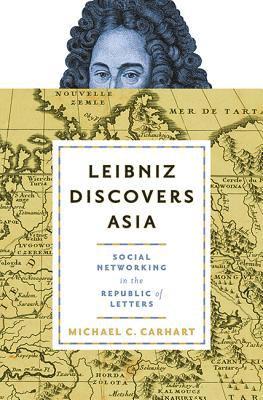
How did early modern scholars—as exemplified by Leibniz—search for their origins in the study of language?Who are the nations of Europe, and where did they come from? Early modern people were as curious about their origins as we are today. Lacking twenty-first-century DNA research, seventeenth-century scholars turned to language—etymology, vocabulary, and even grammatical structure—for evidence. The hope was that, in puzzling out the relationships between languages, the relationships between nations themselves would emerge, and on that basis one could determine the ancestral homeland of the nations that presently occupied Europe.In Leibniz Discovers Asia, Michael C. Carhart explores this early modern practice by focusing on philosopher, scientist, and mathematician Gottfried Wilhelm Leibniz, who developed a vast network of scholars and missionaries throughout Europe to acquire the linguistic data he needed. The success of his project was tied to the Jesuit search for an overland route to China, whose itinerary would take them through the nations from whom Leibniz wanted language samples. Drawing on Leibniz's extensive correspondence with the members of this network, Carhart gives us access to the philosopher's scintillating discussions about astronomy and mapping; ethnology and missionary work; the contest of the Asiatic empires of Muscovy, Persia, the Ottoman, and China for control of the Caucasus, the steppes, and the Far East; and above all, language, as the best indicator of the prehistoric genealogy of the myriad peoples from Central Asia to Western Europe.Placing comparative linguistics within Leibniz's intellectual program, this book offers extensive insight into how Leibniz built his early modern scholarly network, the network's functionality within the international Republic of Letters, and its limitations. We see the scholar, isolated and lonely in little Hanover, with his hands on knowledge trickling in from scientific centers across Europe and around the world. By the end of 1697—the year his network finally began to work—Leibniz laughed to one of his patrons, "I'm putting a sign on my door reading, 'Bureau of Address for China'!" Depicting Leibniz not as a philosophical authority but as a scholar with human limitations and frustrations, Leibniz Discovers Asia is a thrilling and engaging narrative.
691 kr
Skickas inom 7-10 vardagar
Hands-on science in the Age of Exploration.Winner of the John Lyman Book Award in Naval and Maritime Science and Technology by the North American Society for Oceanic History and the Leo Gershoy Prize by the American Historical AssociationThroughout the Age of Exploration, European maritime communities bent on colonial and commercial expansion embraced the complex mechanics of celestial navigation. They developed schools, textbooks, and instruments to teach the new mathematical techniques to sailors. As these experts debated the value of theory and practice, memory and mathematics, they created hybrid models that would have a lasting impact on applied science. In Sailing School, a richly illustrated comparative study of this transformative period, Margaret E. Schotte charts more than two hundred years of navigational history as she investigates how mariners solved the challenges of navigating beyond sight of land. She begins by outlining the influential sixteenth-century Iberian model for training and certifying nautical practitioners. She takes us into a Dutch bookshop stocked with maritime manuals and a French trigonometry lesson devoted to the idea that "navigation is nothing more than a right triangle." The story culminates at the close of the eighteenth century with a young British naval officer who managed to keep his damaged vessel afloat for two long months, thanks largely to lessons he learned as a keen student.This is the first study to trace the importance, for the navigator's art, of the world of print. Schotte interrogates a wide variety of archival records from six countries, including hundreds of published textbooks and never-before-studied manuscripts crafted by practitioners themselves. Ultimately, Sailing School helps us to rethink the relationship among maritime history, the Scientific Revolution, and the rise of print culture during a period of unparalleled innovation and global expansion.
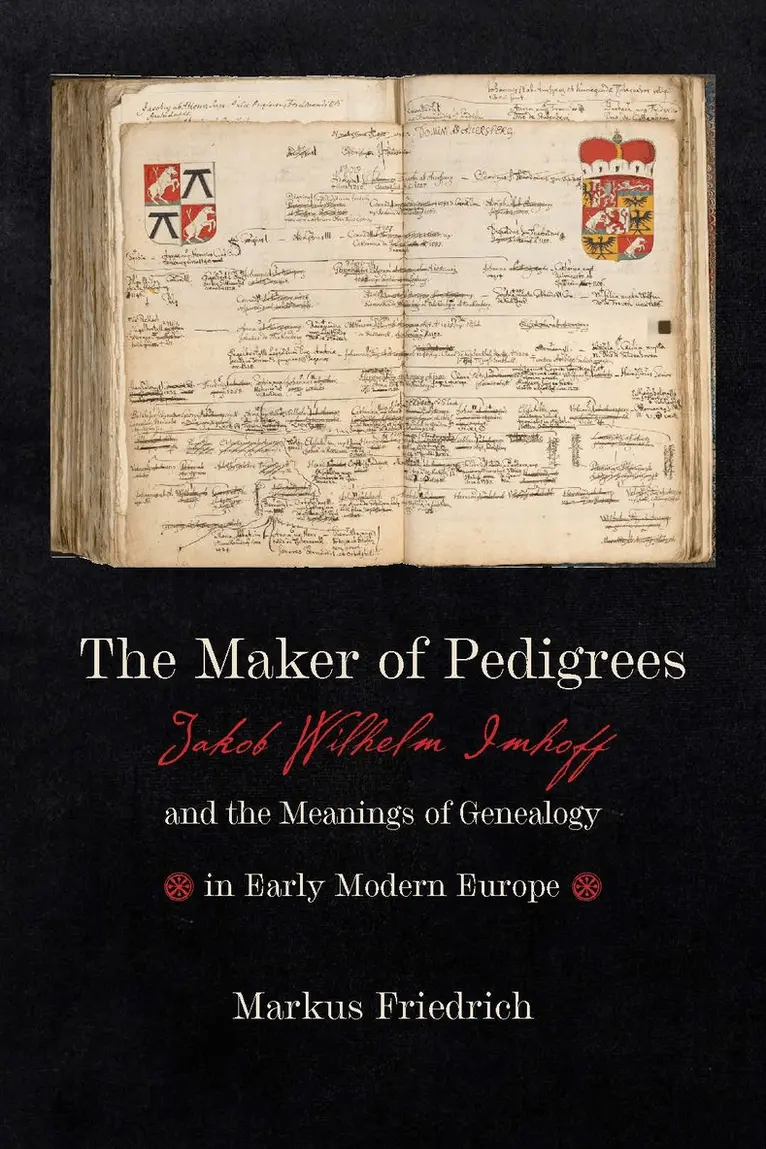
Maker of Pedigrees
Jakob Wilhelm Imhoff and the Meanings of Genealogy in Early Modern Europe
Inbunden, Engelska, 2023
669 kr
Skickas inom 7-10 vardagar
A history of genealogical knowledge-making strategies in the early modern world.In The Maker of Pedigrees, Markus Friedrich explores the complex and fascinating world of central European genealogy practices during the Baroque era. Drawing on archival material from a dozen European institutions, Friedrich reconstructs how knowledge about noble families was created, authenticated, circulated, and published. Jakob Wilhelm Imhoff, a wealthy and well-connected patrician from Nuremberg, built a European community of genealogists by assembling a transnational network of cooperators and informants. Friedrich uses Imhoff as a case study in how knowledge was produced and disseminated during the 17th and 18th centuries.Family lineages were key instruments in defining dynasties, organizing international relations, and structuring social life. Yet in the early modern world, knowledge about genealogy was cumbersome to acquire, difficult to authenticate, and complex to publish. Genealogy's status as a source of power and identity became even more ambivalent as the 17th century wore on, as the field continued to fragment into a plurality of increasingly contradictory formats and approaches. Genealogy became a contested body of knowledge, as a heterogeneous set of actors—including aristocrats, antiquaries, and publishers—competed for authority. Imhoff was closely connected to all of the major genealogical cultures of his time, and he serves as a useful prism through which the complex field of genealogy can be studied in its bewildering richness.
747 kr
Skickas inom 7-10 vardagar
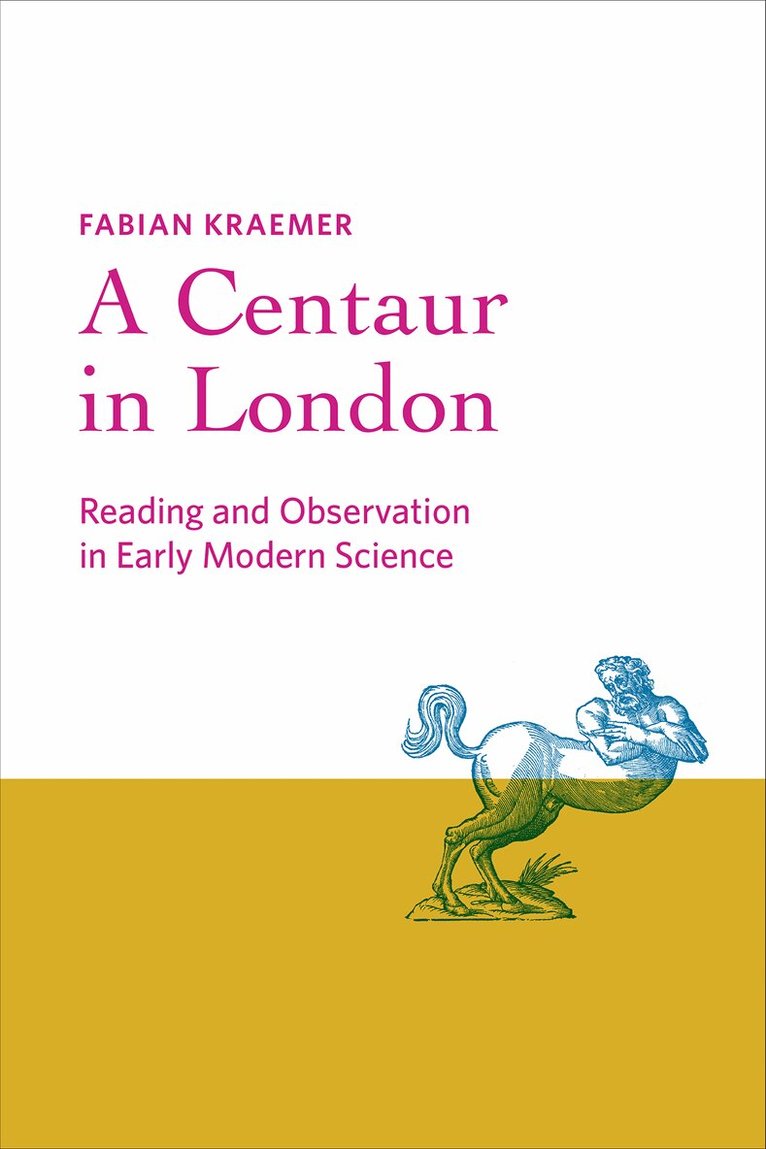
A nuanced reframing of the dual importance of reading and observation for early modern naturalists.Historians traditionally argue that the sciences were born in early modern Europe during the so-called Scientific Revolution. At the heart of this narrative lies a supposed shift from the knowledge of books to the knowledge of things. The attitude of the new-style intellectual broke with the text-based practices of erudition and instead cultivated an emerging empiricism of observation and experiment. Rather than blindly trusting the authority of ancient sources such as Pliny and Aristotle, practitioners of this experimental philosophy insisted upon experiential proof. In A Centaur in London, Fabian Kraemer calls a key tenet of this master narrative into question—that the rise of empiricism entailed a decrease in the importance of reading practices. Kraemer shows instead that the early practices of textual erudition and observational empiricism were by no means so remote from one another as the traditional narrative would suggest. He argues that reading books and reading the book of nature had a great deal in common—indeed, that reading texts was its own kind of observation. Especially in the case of rare and unusual phenomena like monsters, naturalists were dependent on the written reports of others who had experienced the good luck to be at the right place at the right time. The connections between compiling examples from texts and from observation were especially close in such cases. A Centaur in London combines the history of scholarly reading with the history of scientific observation to argue for the sustained importance of both throughout the Renaissance and provides a nuanced, textured portrait of early modern naturalists at work.
413 kr
Skickas inom 7-10 vardagar
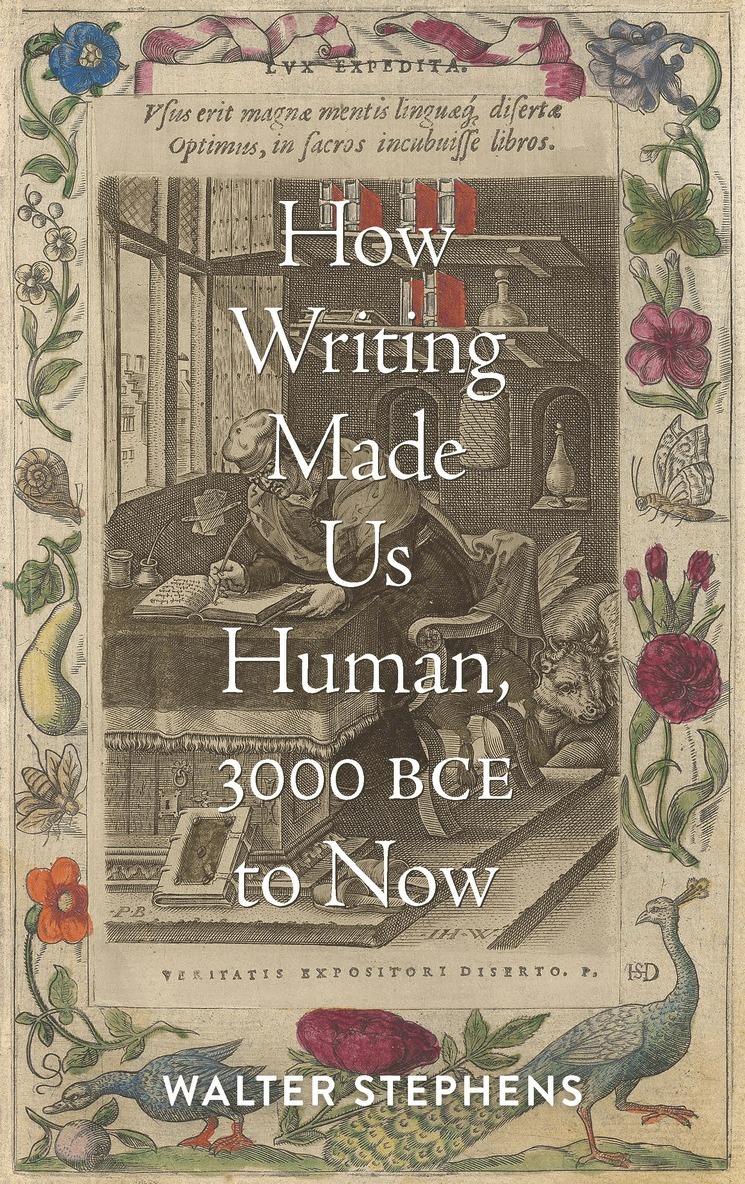
A sweeping history of how writing has preserved cultural practices, traditions, and knowledge throughout human history.In How Writing Made Us Human, 3000 BCE to Now, Walter Stephens condenses the massive history of the written word into an accessible, engaging narrative. The history of writing is not merely a record of technical innovations—from hieroglyphics to computers—but something far richer: a chronicle of emotional engagement with written culture whose long arc intimates why the humanities are crucial to society. For five millennia, myths and legends provided fascinating explanations for the origins and uses of writing. These stories overflowed with enthusiasm about fabled personalities (both human and divine) and their adventures with capturing speech and preserving memory. Stories recounted how and why an ancient Sumerian king, a contemporary of Gilgamesh, invented the cuneiform writing system—or alternatively, how the earliest Mesopotamians learned everything from a hybrid man-fish. For centuries, Jews and Christians debated whether Moses or God first wrote the Ten Commandments. Throughout history, some myths of writing were literary fictions. Plato's tale of Atlantis supposedly emerged from a vast Egyptian archive of world history. Dante's vision of God as one infinite book inspired Borges's fantasy of the cosmos as a limitless library, while the nineteenth century bequeathed Mary Shelley's apocalyptic tale of a world left with innumerable books but only one surviving reader. Stephens presents a comprehensive history of the written word and demonstrates how writing has preserved and shaped human life since the Bronze Age. These stories, their creators, and their preservation have inspired wonder and an endless appetite for historical revelation.
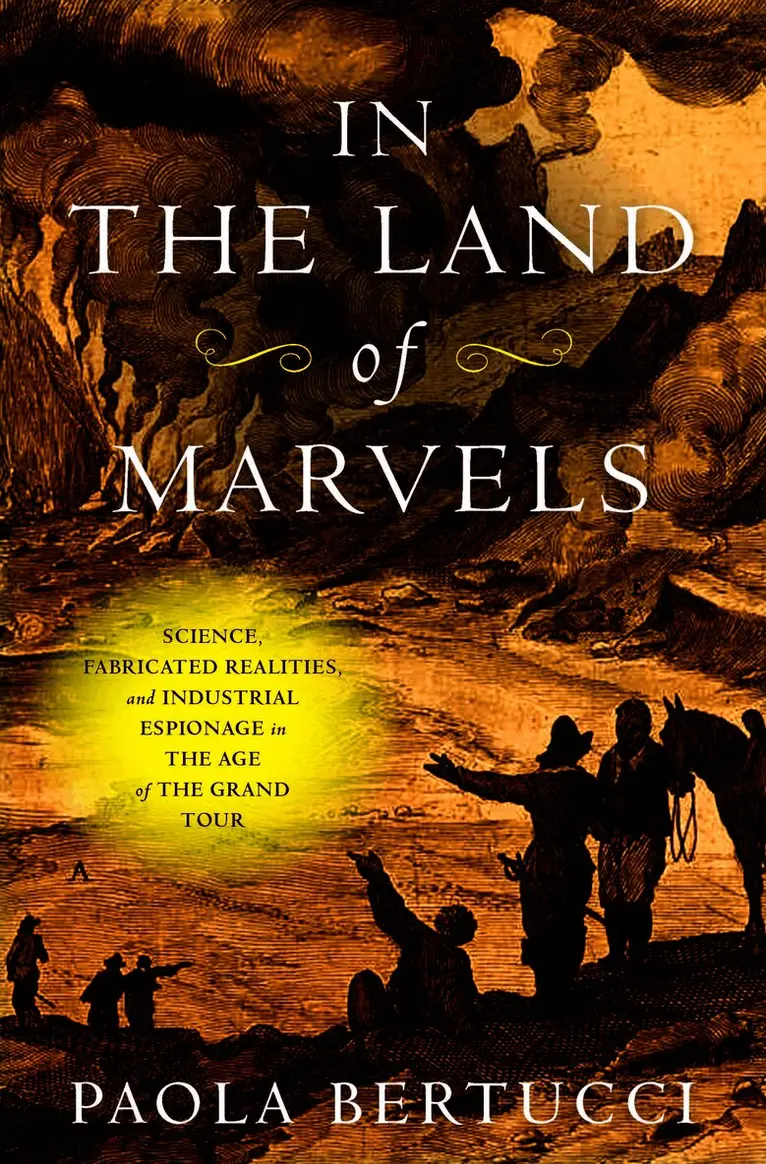
In the Land of Marvels
Science, Fabricated Realities, and Industrial Espionage in the Age of the Grand Tour
Inbunden, Engelska, 2023
604 kr
Skickas inom 7-10 vardagar
How a journey through Italy casts light on secrets, stereotypes, and the manipulation of information in eighteenth-century science.Winner of the Paul Bunge Prize by the German Chemical SocietyIn 1749, the celebrated French physicist Jean-Antoine Nollet set out on a journey through Italy to solve an international controversy over the medical uses of electricity. At the end of his nine-month tour, he published a highly influential account of his philosophical battle with his Italian counterparts, discrediting them as misguided devotees of the marvelous. Paola Bertucci's In the Land of Marvels brilliantly reveals the mysteries of Nollet's journey, uncovering a subterranean world of secretive and ambitious intelligence gathering masked as scientific inquiry.The advent of electricity was a pivotal phenomenon not only in the history of physical experimentation, but also in the cultivation of popular scientific interest. Nollet's journey was supposedly inspired by the need to investigate, and subsequently report on, claims of the use of electrified "medicated tubes" by their Italian inventor Gianfrancesco Pivati. Motivated by economic interests in the silk industry, Nollet's journey was in fact an undercover mission commissioned by the French state to discover the secrets of Italian silk manufacture and possibly supplant its international success. The event that sparked the medical controversy—the unusual cure of a bishop—was a complete fabrication. Bertucci insightfully contrasts published accounts of the event with private documents and discusses how eighteenth-century scientists published fictional events and results to bolster their careers, ultimately leading to long-lasting misrepresentations of scientific practice and enduring stereotypes. In the Land of Marvels reveals the constellation of historical actors, from reputed physicists to travel writers and electrical amateurs, who manipulated information to gain authority and prestige.
813 kr
Skickas inom 5-8 vardagar
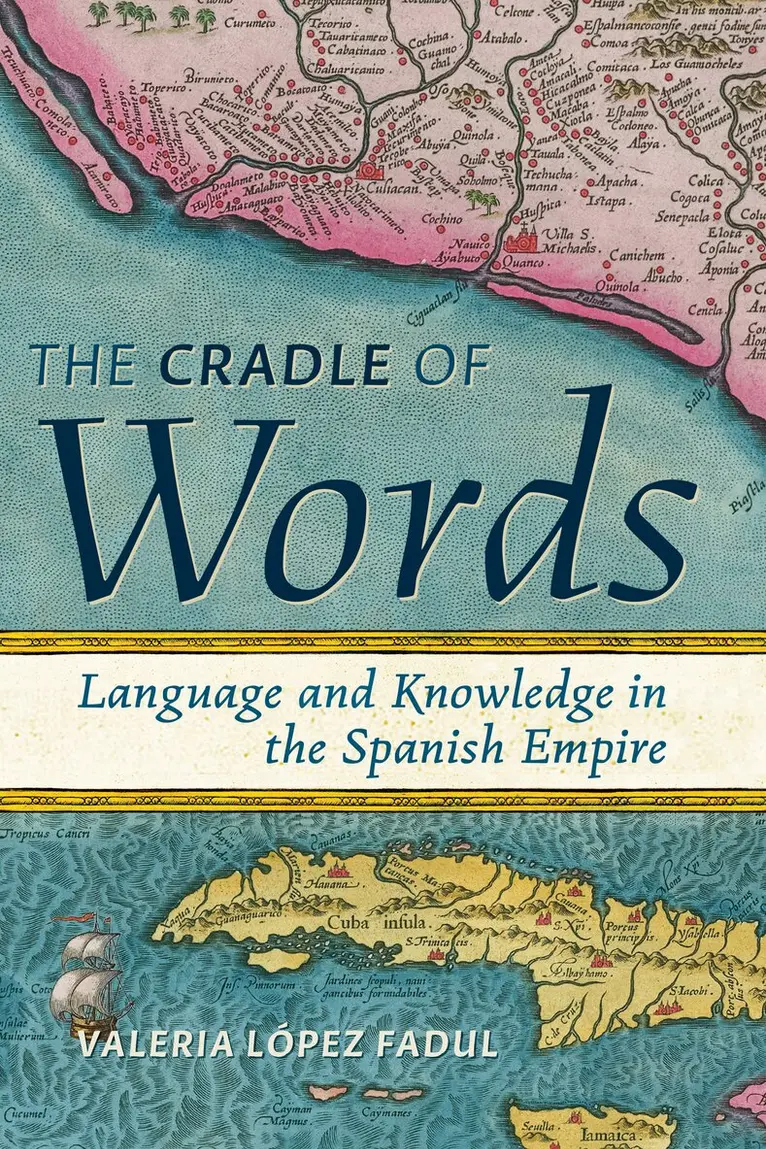
How languages served as archives of local knowledge and a crucial resource for both the human and natural history of the Americas in the Spanish empire.In the sixteenth century, the conquest of the Americas exposed Spanish writers to previously unknown peoples and their many languages. The linguistic multiplicity of the new transatlantic empire presented enormous challenges both in terms of governance and religious conversion. Yet it also became a crucial resource for learning about the new territories' history, both natural and human. In The Cradle of Words, Valeria López Fadul reveals that Spanish scholars, missionaries, and administrators treated the empire's multiple tongues—both at home and abroad—as rich archives of local knowledge. These linguistic resources were exploited alongside the Americas' vast mineral and natural wealth and Indigenous labor. In the process, Spanish scholars made language itself into an object of historical inquiry. Using a wide variety of sources, López Fadul recreates the intellectual networks that crisscrossed Spain's overseas possessions and informed the imperial court's scholars. As linguistic information circulated among different kinds of scholars and local experts in Spain and in Spanish America, the history of language came to serve historical, political, and even legal arguments that were not originally linguistic in nature. By relying on varied methods like the collection of words, etymology, and the elaboration of linguistic genealogies, Spanish writers used the history of language to reconstruct the past, gain knowledge of nature, and explain the profound social transformations of their newly broadened world.