Initiative for Policy Dialogue at Columbia: Challenges in Development and Globalization - Böcker
Visar alla böcker i serien Initiative for Policy Dialogue at Columbia: Challenges in Development and Globalization. Handla med fri frakt och snabb leverans.
16 produkter
16 produkter
419 kr
Skickas inom 3-6 vardagar
The Right to Know is a timely and compelling consideration of a vital question: What information should governments and other powerful organizations disclose? Excessive secrecy corrodes democracy, facilitates corruption, and undermines good public policymaking, but keeping a lid on military strategies, personal data, and trade secrets is crucial to the protection of the public interest. Over the past several years, transparency has swept the world. India and South Africa have adopted groundbreaking national freedom of information laws. China is on the verge of promulgating new openness regulations that build on the successful experiments of such major municipalities as Shanghai. From Asia to Africa to Europe to Latin America, countries are struggling to overcome entrenched secrecy and establish effective disclosure policies. More than seventy now have or are developing major disclosure policies or laws. But most of the world's nearly 200 nations do not have coherent disclosure laws; implementation of existing rules often proves difficult; and there is no consensus about what disclosure standards should apply to the increasingly powerful private sector.As governments and corporations battle with citizens and one another over the growing demand to submit their secrets to public scrutiny, they need new insights into whether, how, and when greater openness can serve the public interest, and how to bring about beneficial forms of greater disclosure. The Right to Know distills the lessons of many nations' often bitter experience and provides careful analysis of transparency's impact on governance, business regulation, environmental protection, and national security. Its powerful lessons make it a critical companion for policymakers, executives, and activists, as well as students and scholars seeking a better understanding of how to make information policy serve the public interest.
986 kr
Skickas inom 3-6 vardagar
The privatization of large state-owned enterprises is one of the most radical policy developments of the last quarter century. Right-wing governments have privatized in an effort to decrease the size of government, while left-wing governments have privatized either to compensate for the failures of state-owned firms or to generate revenues. In this way, privatization has spread from Europe to Latin America, from Asia to Africa, reaching its zenith with Central and Eastern Europe's transition from socialism to capitalism. In many countries state ownership has been an important tool in bringing cheap water, energy, and transport to poorer segments of the population. In other instances, it has sponsored aggressive cutbacks, corruption, and cronyism. Privatization: Successes and Failures evaluates the practices and results of privatization in Eastern Europe, Africa, Latin America, and Asia. Featuring the world's leading economists and experts on privatization, this volume offers a broad and balanced analysis of specific privatization projects and uncovers some surprising trends.Partial privatization, for example, tends to be more widespread than one might think, and the effects of privatization on efficiency are generally mixed but rarely negative. Also, while privatization appears uncontroversial in competitive sectors, it becomes increasingly complex in more monopolistic sectors where good regulation is crucial. Privatization concludes with alternative frameworks for countries in Africa and other regions that seek to develop privatization policy and programs.
292 kr
Skickas inom 7-10 vardagar
The wealth derived from natural resources can have a tremendous impact on the economics and politics of producing countries. In the last quarter century, we have seen the surprising and sobering consequences of this wealth, producing what is now known as the "resource curse." Countries with large endowments of natural resources, such as oil and gas, often do worse than their poorer neighbors. Their resource wealth frequently leads to lower growth rates, greater volatility, more corruption, and, in extreme cases, devastating civil wars. In this volume, leading economists, lawyers, and political scientists address the fundamental channels generated by this wealth and examine the major decisions a country must make when faced with an abundance of a natural resource. They identify such problems as asymmetric bargaining power, limited access to information, the failure to engage in long-term planning, weak institutional structures, and missing mechanisms of accountability.They also provide a series of solutions, including recommendations for contracting with oil companies and allocating revenue; guidelines for negotiators; models for optimal auctions; and strategies to strengthen state-society linkages and public accountability. The contributors show that solutions to the resource curse do exist; yet, institutional innovations are necessary to align the incentives of key domestic and international actors, and this requires fundamental political changes and much greater levels of transparency than currently exist. It is becoming increasingly clear that past policies have not provided the benefits they promised. Escaping the Resource Curse lays out a path for radically improving the management of the world's natural resources.
1 212 kr
Skickas inom 3-6 vardagar
Taxes are a crucial policy issue, especially in developing countries. Just recently, proposals to raise middle-class taxes toppled the Bolivian government, and plans to extend or increase the value-added tax caused political unrest in Ecuador and Mexico. Despite the impact of tax policy on developing countries, a comprehensive study has yet to be written. Treating Argentina, Brazil, India, Kenya, Korea, and Russia as key case studies, this volume outlines the major aspects of current tax codes and explores their economic and political implications. Examples of both the poorest and wealthiest developing countries, Argentina, Brazil, India, Kenya, Korea, and Russia uniquely demonstrate the diverse fiscal problems of tax reform. Each economy relies heavily on indirect and corporate income taxes, though recently some have reduced their tariff rates and have switched from excise to value-added taxes. There is a large, informal economy in most of these countries, and tax evasion by firms is a significant concern. As a result, tax revenue remains low, even though rates are as high as those in developed economies.Also, unconventional methods to collect revenue have been implemented, including bank debit taxes, state ownership of firms, and implicit taxes on individuals in the informal sector. Exploring these and other concerns, as well as changes in tax law, administration, and fiscal pressures, this comprehensive anthology clarifies the current landscape of tax administration and the economic future of the world's poorer economies.
323 kr
Skickas inom 7-10 vardagar
Economic structuralists use a broad, systemwide approach to understanding development, and this textbook assumes a structuralist perspective in its investigation of why a host of developing countries have failed to grow at 2 percent or more since 1960. Sensitive to the wide range of factors that affect an economy's strength and stability, the authors identify the problems that have long frustrated growth in many parts of the developing world while suggesting new strategies and policies to help improve standards of living. After a survey of structuralist methods and post-World War II trends of global economic growth, the authors discuss the role that patterns in productivity, production structures, and capital accumulation play in the growth dynamics of developing countries. Next, it outlines the evolution of trade patterns and the effect of the terms of trade on economic performance, especially for countries that depend on commodity exports. The authors acknowledge the structural limits of macroeconomic policy, highlighting the negative effects of financial volatility and certain financial structures while recommending policies to better manage external shocks.These policies are then further developed through a discussion of growth and structural improvements, and are evaluated according to which policy options-macro, industrial, or commercial--best fit within different kinds of developing economies.
763 kr
Skickas inom 11-20 vardagar
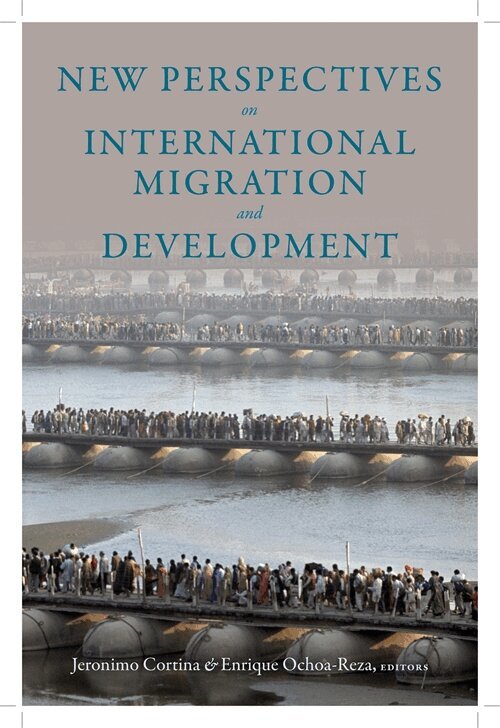
With contributions from leading scholars in international development, economics, political science, and sociology, this collection draws attention to migration's developmental impacts on sending and receiving societies. Through current case studies, contributors examine the interplay among migration, development, culture, family reunification, human rights, and government, all with the aim of advancing more effective solutions to international migration issues. The volume's multidisciplinary perspective combines theoretical discussions with empirical applications, appealing to both academics and policymakers eager to maximize migration's developmental impacts. The collection begins with a discussion detailing when and why migration promotes growth and what kind of indicators beyond GDP should be considered.Challenging a number of misconceptions, such as the assumption that redressing poverty and alleviating underdevelopment in immigrant communities are solely economic pursuits, contributors acknowledge the inherent cultural dimension in the migration-development debate and define the contours of a research program that systematically and comparatively weighs the cultural dynamics of development and migration. They also emphasize the role of human rights in reinforcing positive developmental outcomes, how traditional social roles and its developmental impacts are reshaped by the international migration of women and children, and international migration's developmental impacts within specific geographic regions.
482 kr
Skickas inom 7-10 vardagar
The 1944 Bretton Woods conference created new institutions for international economic governance. Though flawed, the system led to a golden age in postwar reconstruction, sustained economic growth, job creation, and postcolonial development. Yet financial liberalization since the 1970s has involved deregulation and globalization, which have exacerbated instability, rather than sustained growth. In addition, the failure of Bretton Woods to provide a reserve currency enabled the dollar to fill the void, which has contributed to periodic, massive U.S. trade deficits. Our latest global financial crisis, in which all these weaknesses played a part, underscores how urgently we must reform the international financial system. Prepared for the G24 research program, a consortium of developing countries focused on financial issues, this volume argues that such reforms must be developmental. Chapters review historical trends in global liquidity, financial flows to emerging markets, and the food crisis, identifying the systemic flaws that contributed to the recent downturn.They challenge the effectiveness of recent policy and suggest criteria for regulatory reform, keeping in mind the different circumstances, capacities, and capabilities of various economies. Essays follow ongoing revisions in international banking standards, the improved management of international capital flows, the critical role of the World Trade Organization in liberalizing and globalizing financial services, and the need for international tax cooperation. They also propose new global banking and reserve currency arrangements.
Macroeconomics and Development
Roberto Frenkel and the Economics of Latin America
Inbunden, Engelska, 2016
618 kr
Skickas inom 7-10 vardagar
Latin American neo-structuralism is a cutting-edge, regionally focused economic theory with broad implications for macroeconomics and development economics. Roberto Frenkel has spent five decades developing the theory's core arguments and expanding their application throughout the discipline, revolutionizing our understanding of high inflation and hyperinflation, disinflation programs, and the behavior of foreign exchange markets as well as financial and currency crises in emerging economies. The essays in this collection assess Latin American neo-structuralism's theoretical contributions and viability as the world's economies evolve. The authors discuss Frenkel's work in relation to pricing decisions, inflation and stabilization policy, development and income distribution in Latin America, and macroeconomic policy for economic growth. An entire section focuses on finance and crisis, and the volume concludes with a neo-structuralist analysis of general aspects of economic development.For those seeking a comprehensive introduction to contemporary Latin American economic thought, this collection not only explicates the intricate work of one of its greatest practitioners but also demonstrates its impact on the growth of economics.
600 kr
Skickas inom 7-10 vardagar
The revival of economic growth in Sub-Saharan Africa is all the more welcome for having followed one of the worst economic disasters-a quarter century of economic malaise for most of the region-since the industrial revolution. Six of the world's fastest-growing economies in the first decade of this century were African. Yet only in Ethiopia and Rwanda was growth not based on resources and the rising price of oil. Deindustrialization has yet to be reversed, and progress toward creating a modern economy remains limited. This book explores the vital role that active government policies can play in transforming African economies. Such policies pertain not just to industry. They traverse all economic sectors, including finance, information technology, and agriculture. These packages of learning, industrial, and technology (LIT) policies aim to bring vigorous and lasting growth to the region. This collection features case studies of LIT policies in action in many parts of the world, examining their risks and rewards and what they mean for Sub-Saharan Africa.
659 kr
Skickas inom 7-10 vardagar
The current approach to resolving sovereign debt crises does not work: sovereign debt restructurings come too late and address too little. Though unresolved debt crises impose enormous costs on societies, many recent restructurings have not been deep enough to provide the conditions for economic recovery (as illustrated by the Greek debt restructuring of 2012). And if the debtor decides not to accept the terms demanded by the creditors, finalizing a restructuring can be slowed by legal challenges (as illustrated by the recent case of Argentina, deemed as "the trial of the century"). A fresh start for distressed debtors is a basic principle of a well-functioning market economy, yet there is no international bankruptcy framework for sovereign debts. While this problem is not new, the United Nations and the global community are now willing to do something about it. Providing guidance for those who intend to take up reform, this book assesses the relative merits of various debt-restructuring proposals, especially in relation to the main deficiencies of the current nonsystem.With contributions by leading academics and practitioners, Too Little, Too Late reflects the overwhelming consensus among specialists on the need to find workable solutions.
Efficiency, Finance, and Varieties of Industrial Policy
Guiding Resources, Learning, and Technology for Sustained Growth
Inbunden, Engelska, 2016
640 kr
Skickas inom 7-10 vardagar
Industrial policy, once relegated to resource allocation, technological improvements, and the modernization of industries, should be treated as a serious component of sustainability and developmental economics. A rich set of complimentary institutions, shared behavioral norms, and public policies have sustained economic growth from Britain's industrial revolution onwards. This volume revisits the role of industrial policy in the success of these strategies and what it can offer developed and developing economies today. Featuring essays from experts invested in the expansion of industrial policies, topics discussed include the most effective use of industrial policies in learning economies, development finance, and promoting investment in regional and global contexts. Also included are in-depth case studies of Japan and India's experience with industrial policy in the banking and private sector. One essay revisits the theoretical and conceptual foundations of industrial policy from a structural economics perspective and another describes the models, packages, and transformation cycles that constitute a variety of approaches to implementation.The collection concludes with industrial strategies for facilitating quality growth, realizing more sustainable manufacturing development, and encouraging countries to industrialize around their natural resources.
640 kr
Skickas inom 7-10 vardagar
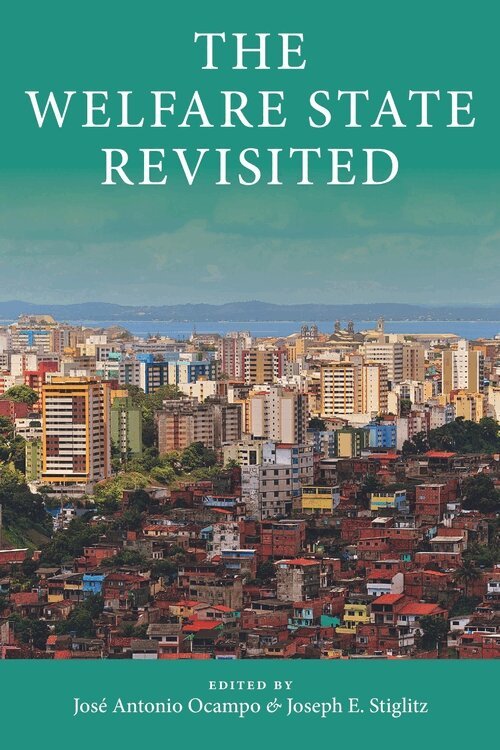
The welfare state has been under attack for decades, but now more than ever there is a need for strong social protection systems—the best tools we have to combat inequality, support social justice, and even improve economic performance. In this book, José Antonio Ocampo and Joseph E. Stiglitz bring together distinguished contributors to examine the global variations of social programs and make the case for a redesigned twenty-first-century welfare state.The Welfare State Revisited takes on major debates about social well-being, considering the merits of universal versus targeted policies; responses to market failures; integrating welfare and economic development; and how welfare states around the world have changed since the neoliberal turn. Contributors offer prescriptions for how to respond to the demands generated by demographic changes, the changing role of the family, new features of labor markets, the challenges of aging societies, and technological change. They consider how strengthening or weakening social protection programs affects inequality, suggesting ways to facilitate the spread of effective welfare states throughout the world, especially in developing countries. Presenting new insights into the functions the welfare state can fulfill and how to design a more efficient and more equitable system, The Welfare State Revisited is essential reading on the most discussed issues in social welfare today.
618 kr
Skickas inom 7-10 vardagar
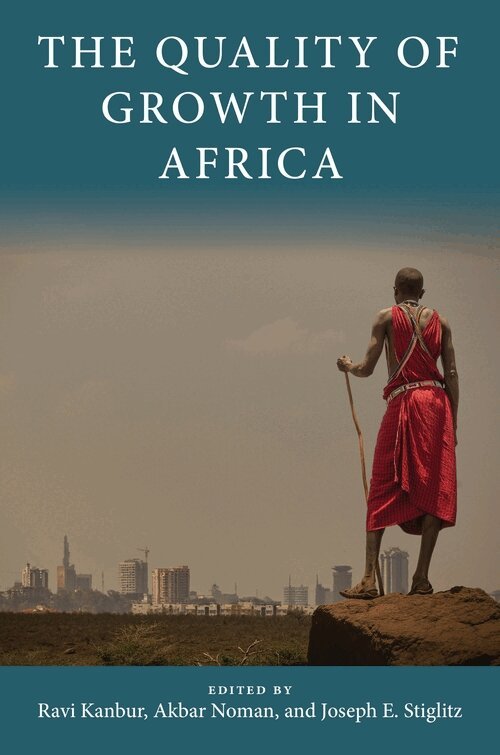
In recent years, concerns about the outcomes and nature of economic growth have given way to a new emphasis on its quality. This volume brings together prominent international contributors to consider a range of interrelated questions concerning the quality of growth in Africa, with a primary focus on sub-Saharan countries.Contributors discuss the measurement of growth, the transformations necessary to sustain it, and issues around equity and well-being. They consider topics such as the distribution of income gains from growth; the extent to which economic growth has resulted in improvements in employment, poverty, and security; structural transformations of the economy and diversification of the sources of growth; environmental sustainability; and management of urbanization. Offering both diagnoses and prescriptions, The Quality of Growth in Africa helps envision a future that goes beyond increasing GDP to ensuring that growth translates into advancements in well-being. Although the book focuses on sub-Saharan Africa, much of the contributors’ incisive analysis has implications for countries outside the region.
561 kr
Skickas inom 7-10 vardagar
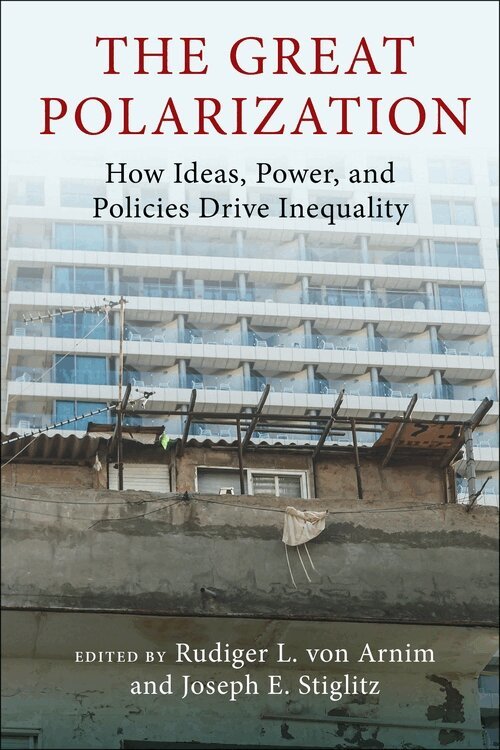
Inequality of income and wealth has skyrocketed since the 1970s. As the super-rich have grasped the vast majority of the gains from economic growth, labor’s share of income has declined. The middle class has stagnated, and those at the bottom have become even worse off. Persistent structural discrimination on the basis of race and gender exacerbates these economic disparities.The Great Polarization brings together scholars from disparate fields to examine the causes and consequences of this dramatic rise in inequality. Contributors demonstrate that institutions, norms, policy, and political power—not the “natural” operation of the market—determine the distribution of wealth and income. The book underscores the role of ideas and ideologies, showing how neoclassical economics and related beliefs have functioned in public debates to justify inequality. Together, these essays bear out an inescapable conclusion: inequality is a choice. The rules of the economy have been rewritten to favor those at the top, entrenching the imbalances of power that widen the gap between the very rich and everyone else.Contributors reconsider the data on inequality, examine the policies that have led to this predicament, and outline potential ways forward. Using both theoretical and empirical analysis and drawing on the knowledge of experts in policy, political economy, economics, and other disciplines, The Great Polarization offers a kaleidoscopic view of the processes that have shaped today’s stark hierarchies.
618 kr
Skickas inom 7-10 vardagar
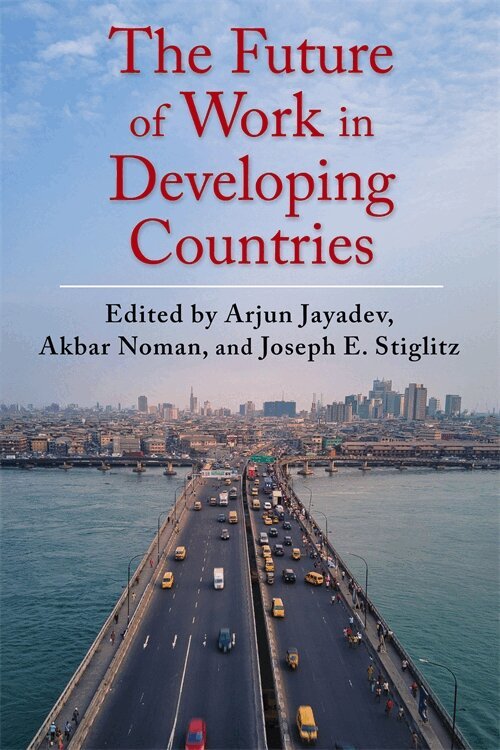
One of the most pressing issues in development today is the employment challenge in low- and middle-income countries. As more young people enter the labor force—and as structural transformation unfolds amid deindustrialization, technological disruption, and global competition—the question of how to create sufficient decent jobs has become central to the economic future of the Global South. Although this is a shared challenge across developing regions, it is particularly acute in Africa, where rapid demographic change and urbanization are colliding with limited industrial expansion.Bringing together leading international scholars, The Future of Work in Developing Countries examines the employment problem from multiple perspectives. Early chapters develop conceptual frameworks around corporations and the global hierarchy of production. Subsequent contributions investigate the dynamics of structural transformation, the role of firms in linking production and labor to surplus, and the design of industrial and technology policies. Later chapters turn to detailed case studies—especially from Africa—that illustrate the possibilities and limits of different growth paths, and comparative insights from Asia and Latin America provide further perspective.By combining rigorous theoretical analysis with grounded empirical research, this book demonstrates that employment creation is not an automatic byproduct of growth but a political and institutional project. It offers fresh insights for scholars of development, political economy, and economic history, as well as for policy makers seeking strategies to promote inclusive transformation in Africa and beyond.
812 kr
Skickas inom 3-6 vardagar
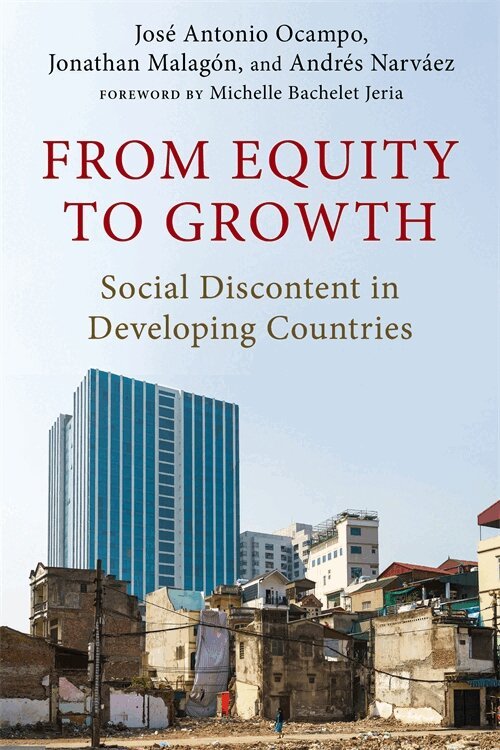
In many emerging economies, impressive progress in reducing poverty has been overshadowed by persistent inequality and growing frustration with political elites. This widespread social discontent has driven governments to respond with short-term policies aimed at increasing equity that run the risk of jeopardizing long-term development. Is it possible to build fairer societies without undermining economic growth?From Equity to Growth explores this dilemma, offering new perspectives on one of the defining challenges of the era. Combining economic theory, political analysis, and real-world case studies, the book contrasts two potential outcomes. In one, poorly designed redistributive policies distort markets, weaken institutions, and trap countries in middle-income stagnation. In the other, well-crafted equity strategies boost investment, strengthen institutional trust, and spur sustainable development.Rejecting simplistic binaries between equity and growth, the authors argue that inclusive development is not only possible but essential. They highlight specific policy choices that can reconcile social demands with macroeconomic stability, providing a road map to escape the middle-income trap without sacrificing fairness. Clear, timely, and rigorous, From Equity to Growth offers both a diagnosis of many countries’ current predicament and a hopeful vision of how to move forward.