Jeronimo Cortina - Böcker
Visar alla böcker från författaren Jeronimo Cortina. Handla med fri frakt och snabb leverans.
6 produkter
6 produkter
763 kr
Skickas inom 11-20 vardagar
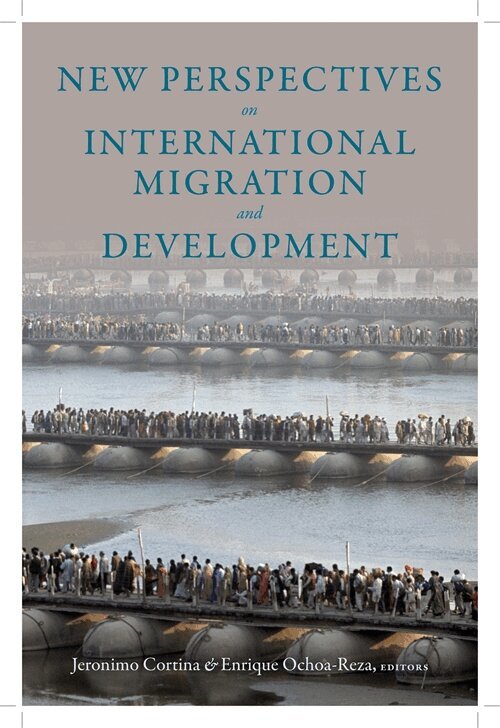
With contributions from leading scholars in international development, economics, political science, and sociology, this collection draws attention to migration's developmental impacts on sending and receiving societies. Through current case studies, contributors examine the interplay among migration, development, culture, family reunification, human rights, and government, all with the aim of advancing more effective solutions to international migration issues. The volume's multidisciplinary perspective combines theoretical discussions with empirical applications, appealing to both academics and policymakers eager to maximize migration's developmental impacts. The collection begins with a discussion detailing when and why migration promotes growth and what kind of indicators beyond GDP should be considered.Challenging a number of misconceptions, such as the assumption that redressing poverty and alleviating underdevelopment in immigrant communities are solely economic pursuits, contributors acknowledge the inherent cultural dimension in the migration-development debate and define the contours of a research program that systematically and comparatively weighs the cultural dynamics of development and migration. They also emphasize the role of human rights in reinforcing positive developmental outcomes, how traditional social roles and its developmental impacts are reshaped by the international migration of women and children, and international migration's developmental impacts within specific geographic regions.
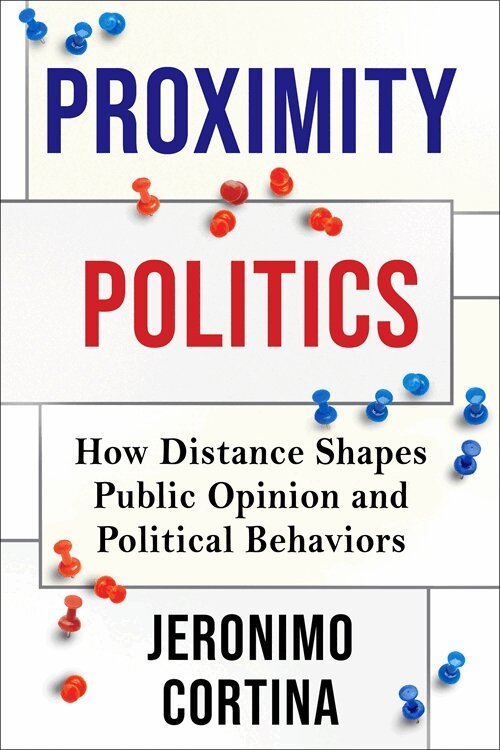
Proximity Politics
How Distance Shapes Public Opinion and Political Behaviors
Inbunden, Engelska, 2024
887 kr
Skickas inom 7-10 vardagar
Republicans who live closer to the U.S.-Mexico border are less likely to support constructing a wall than those who live farther away. After a mass shooting, gun sales and permit applications skyrocket in nearby communities. Experiencing an extreme weather event like a hurricane or flood can encourage someone to attribute climate change to human activity. Why do we react so differently to faraway events and ones that take place on our doorsteps, and what does this reveal about our political landscape?Proximity Politics is a groundbreaking examination of the role of distance in shaping attitudes, behaviors, and understandings of the world. Analyzing geocoded survey data, Jeronimo Cortina documents the crucial ways space and place influence public opinion. He demonstrates that the closer someone is to an event, social group, or policy, the likelier they are to have first-hand, specific, grounded knowledge of the subject. Conversely, distance leads to detachment, making it more likely that decontextualized or unreliable information and individual or group biases will prevail. Considering a range of case studies, from virus outbreaks to protests, Cortina unravels how spatial, emotional, temporal, social, and cultural distances affect public opinion. Bringing together quantitative and qualitative data in an accessible style, Proximity Politics shows that even in today’s interconnected world, we are still profoundly influenced by what happens next door.
215 kr
Skickas inom 7-10 vardagar
Republicans who live closer to the U.S.-Mexico border are less likely to support constructing a wall than those who live farther away. After a mass shooting, gun sales and permit applications skyrocket in nearby communities. Experiencing an extreme weather event like a hurricane or flood can encourage someone to attribute climate change to human activity. Why do we react so differently to faraway events and ones that take place on our doorsteps, and what does this reveal about our political landscape?Proximity Politics is a groundbreaking examination of the role of distance in shaping attitudes, behaviors, and understandings of the world. Analyzing geocoded survey data, Jeronimo Cortina documents the crucial ways space and place influence public opinion. He demonstrates that the closer someone is to an event, social group, or policy, the likelier they are to have first-hand, specific, grounded knowledge of the subject. Conversely, distance leads to detachment, making it more likely that decontextualized or unreliable information and individual or group biases will prevail. Considering a range of case studies, from virus outbreaks to protests, Cortina unravels how spatial, emotional, temporal, social, and cultural distances affect public opinion. Bringing together quantitative and qualitative data in an accessible style, Proximity Politics shows that even in today’s interconnected world, we are still profoundly influenced by what happens next door.
448 kr
Skickas inom 7-10 vardagar
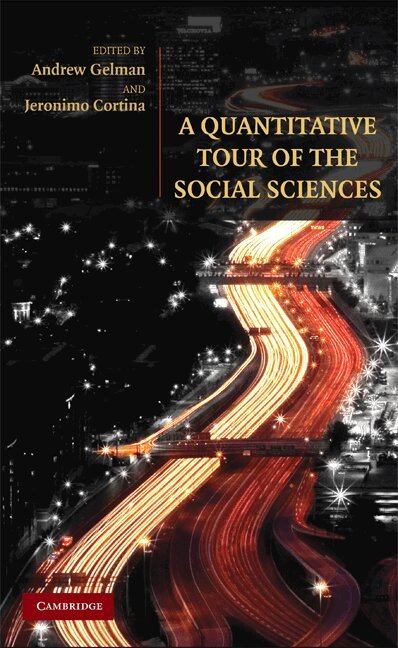
Social scientists become experts in their own disciplines but aren't always familiar with what is going on in neighboring fields. To foster a deeper understanding of the interconnection of the social sciences, economists should know where historical data come from, sociologists should know how to think like economists, political scientists would benefit from understanding how models are tested in psychology, historians should learn how political processes are studied, psychologists should understand sociological theories, and so forth. This overview by prominent social scientists gives an accessible, non-technical sense of how quantitative research is done in different areas. Readers will find out about models and ways of thinking in economics, history, sociology, political science, and psychology, which in turn they can bring back to their own work.
954 kr
Skickas inom 7-10 vardagar
Social scientists become experts in their own disciplines but aren't always familiar with what is going on in neighboring fields. To foster a deeper understanding of the interconnection of the social sciences, economists should know where historical data come from, sociologists should know how to think like economists, political scientists would benefit from understanding how models are tested in psychology, historians should learn how political processes are studied, psychologists should understand sociological theories, and so forth. This overview by prominent social scientists gives an accessible, non-technical sense of how quantitative research is done in different areas. Readers will find out about models and ways of thinking in economics, history, sociology, political science, and psychology, which in turn they can bring back to their own work.
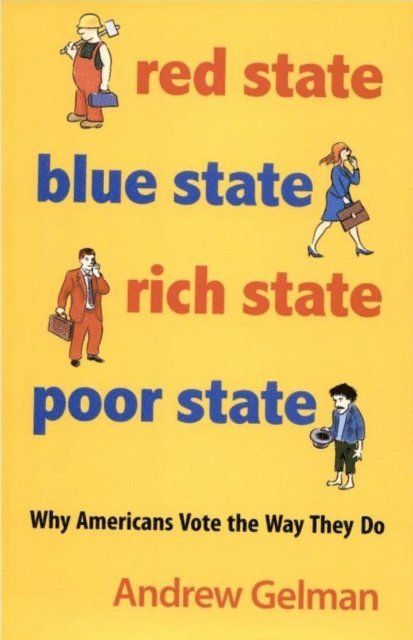
Red State, Blue State, Rich State, Poor State
Why Americans Vote the Way They Do - Expanded Edition
Häftad, Engelska, 2009
167 kr
Skickas inom 7-10 vardagar
On the night of the 2000 presidential election, Americans watched on television as polling results divided the nation's map into red and blue states. Since then the color divide has become symbolic of a culture war that thrives on stereotypes--pickup-driving red-state Republicans who vote based on God, guns, and gays; and elitist blue-state Democrats woefully out of touch with heartland values. With wit and prodigious number crunching, Andrew Gelman debunks these and other political myths. This expanded edition includes new data and easy-to-read graphics explaining the 2008 election. Red State, Blue State, Rich State, Poor State is a must-read for anyone seeking to make sense of today's fractured political landscape.