Insula of the Menander at Pompeii – serie
Visar alla böcker i serien Insula of the Menander at Pompeii. Handla med fri frakt och snabb leverans.
4 produkter
4 produkter
4 912 kr
Skickas inom 7-10 vardagar
This is the first of three volumes which offer a detailed analysis of one of the major city-blocks of ancient Pompeii, destroyed by the eruption of Vesuvius in AD 79. Excavated between 1926 and 1932, the Insula of Menander is so named after the structure that occupies over half the block's total area of 3,500 square metres, the House of the Menander, one of the grandest mansions of the city. Other, smaller houses, notably the House of the Lovers and the House of the Craftsmen, occupy outlying parts, and a number of shops and apartments are interspersed among them. The purpose of the present volume is to document a complete survey of the architecture of the block and thus trace the structural history of the Insula, with its intricate pattern of changing property-boundaries, over the 250-300 years of its existence. Subsequent volumes will examine the decorations (wall-paintings and mosaic pavements) and the objects that were found during excavation. Paradoxically, while Pompeii is one of the best known of all Roman archaeological sites, very few areas of the site have been fully published. This is the first time a global study has been undertaken of one of the major city-blocks and it shows the enormous potential of such investigations to reveal insights into the social history of the city.
2 679 kr
Skickas inom 7-10 vardagar
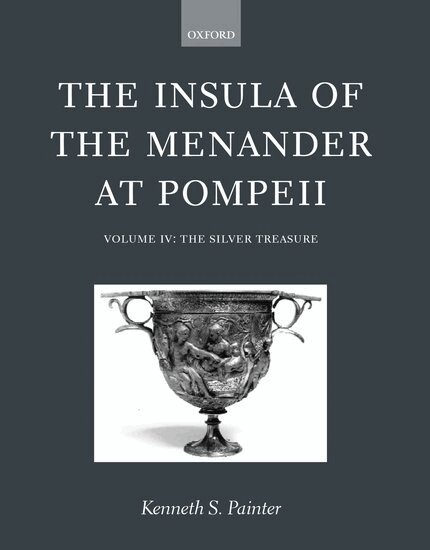
The Casa del Menando hoard was found by Professor Amedeo Maiuri in 1930, in the course of the excavation of the Insula of the Menander. There has been no study of it as a whole since Maiuri's publication of 1933. The silver, one of the three largest groups of Roman plate of the first century AD, is the only one which has been found and recorded under modern conditions, and demonstrates what plate was in use in Pompeii in the period of the disasters of AD 62 and 72.The treasure includes two hoards, hidden in the same chest, one consisting of 118 pieces of silver plate, the other of coins and jewellery. Maiuri thought that the hoards, and therefore the house, belonged to the top level of Roman society; but this study suggests that they belonged to a rich citizen of Pompeii, who may have been a local magistrate.
The Insula of the Menander at Pompeii
Volume III: The Finds, a Contextual Study
Inbunden, Engelska, 2007
5 488 kr
Skickas inom 5-8 vardagar
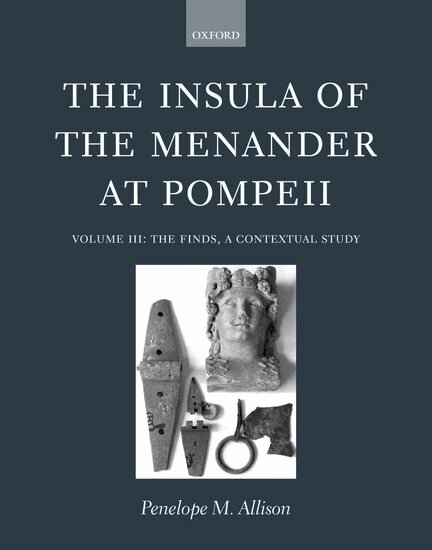
This book contains catalogues, analyses, photographs and drawings of some 2,000 archaeological artefacts excavated from the Insula of the Menander in Pompeii. The catalogues, and analyses are organized by provenance - buildings, rooms, and location within rooms - so that the reader can understand the artefacts as household assemblages. The functions of artefacts and groups of artefacts are discussed, as are the Latin names which are often given to these artefacts, and the relationships of these assemblages to the state of occupancy of the buildings in the Insula during the last years of Pompeii. This study, therefore, provides a wealth of information, not only on the range and use of artefacts in Pompeian houses but also on Roman artefacts, and Roman society, more generally.
8 501 kr
Skickas inom 7-10 vardagar
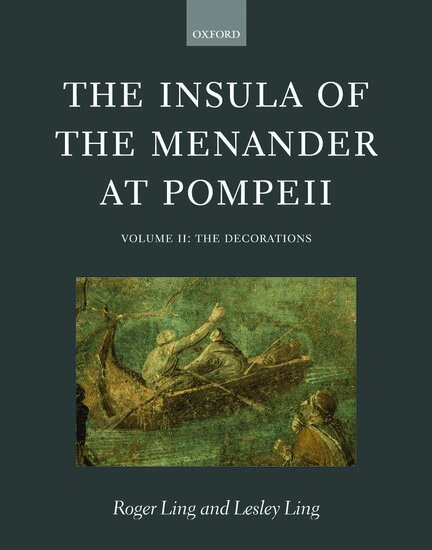
This volume is the second in a series of five on the Insula (city block) of the Menander at Pompeii. The first (on the structures) and the fourth (on the silver treasure) have already been published; the third, on the objects, and the fifth, on the graffiti, are in preparation. The Insula of the Menander, approximately 3500 sq. m. in area, derives its name from the House of the Menander, one of the best-known dwellings of the ancient city. This was evidently the property of one of Pompeii's leading citizens. Renowned for its architectural grandeur and for the hoard of 110 pieces of silver plate found in a cellar, it also yielded room upon room of splendid wall-paintings and mosaic pavements, ranging in date from the first century BC to the eve of the eruption of AD 79. In addition to this dominant house, the block contains several smaller houses - notably the House of the Lovers and the House of the Craftsman - most of which contain further paintings and pavements of interest. The present volume publishes these decorations in full for the first time. Its importance lies in the fact that it covers the whole block, rather than concentrating upon isolated houses (as most previous volumes have done). This enables the reader not only to look at questions of chronology and iconography room by room and house by house, but also to observe broad patterns of taste and social differentiation within a particular neighbourhood of Pompeii.