Roger Ling - Böcker
Visar alla böcker från författaren Roger Ling. Handla med fri frakt och snabb leverans.
7 produkter
7 produkter
4 912 kr
Skickas inom 7-10 vardagar
This is the first of three volumes which offer a detailed analysis of one of the major city-blocks of ancient Pompeii, destroyed by the eruption of Vesuvius in AD 79. Excavated between 1926 and 1932, the Insula of Menander is so named after the structure that occupies over half the block's total area of 3,500 square metres, the House of the Menander, one of the grandest mansions of the city. Other, smaller houses, notably the House of the Lovers and the House of the Craftsmen, occupy outlying parts, and a number of shops and apartments are interspersed among them. The purpose of the present volume is to document a complete survey of the architecture of the block and thus trace the structural history of the Insula, with its intricate pattern of changing property-boundaries, over the 250-300 years of its existence. Subsequent volumes will examine the decorations (wall-paintings and mosaic pavements) and the objects that were found during excavation. Paradoxically, while Pompeii is one of the best known of all Roman archaeological sites, very few areas of the site have been fully published. This is the first time a global study has been undertaken of one of the major city-blocks and it shows the enormous potential of such investigations to reveal insights into the social history of the city.
8 501 kr
Skickas inom 7-10 vardagar
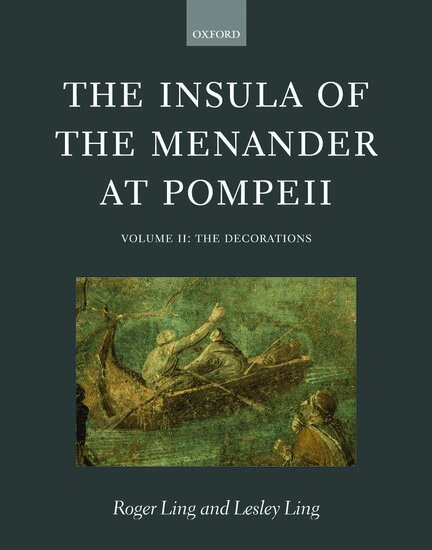
This volume is the second in a series of five on the Insula (city block) of the Menander at Pompeii. The first (on the structures) and the fourth (on the silver treasure) have already been published; the third, on the objects, and the fifth, on the graffiti, are in preparation. The Insula of the Menander, approximately 3500 sq. m. in area, derives its name from the House of the Menander, one of the best-known dwellings of the ancient city. This was evidently the property of one of Pompeii's leading citizens. Renowned for its architectural grandeur and for the hoard of 110 pieces of silver plate found in a cellar, it also yielded room upon room of splendid wall-paintings and mosaic pavements, ranging in date from the first century BC to the eve of the eruption of AD 79. In addition to this dominant house, the block contains several smaller houses - notably the House of the Lovers and the House of the Craftsman - most of which contain further paintings and pavements of interest. The present volume publishes these decorations in full for the first time. Its importance lies in the fact that it covers the whole block, rather than concentrating upon isolated houses (as most previous volumes have done). This enables the reader not only to look at questions of chronology and iconography room by room and house by house, but also to observe broad patterns of taste and social differentiation within a particular neighbourhood of Pompeii.
2 432 kr
Skickas
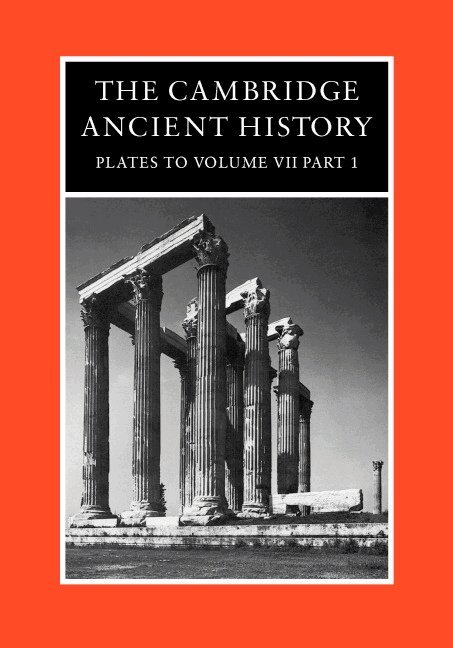
The publication of the Plates Volume to accompany the Cambridge Ancient History Volume III and that for Volume VII Part 1 inaugurates a new style and format for these books. The illustrations are now presented with a descriptive text and commentary, so that each chapter is a self-contained account of matters of archaeological and art-historical interest, relevant to the history of a period and place. The order of illustration is not always that of the chapters in the text volumes, but is determined by the material illustrated and the principal subjects it suggests. The intention is thus both to complement the text volumes and to provide an independent commentary on the material evidence of antiquity. The plates for Volume VII Part 1 covers the history and culture of the Hellenistic period from 323 to the first century B.C. Individual chapters deal with particular areas of the Hellenistic world - Ptolematic Egypt, the Seleucid kingdom, Bactria and India, Asia Minor, Macedonia, Greece and the Cyclades, Sicily and Magna Graecia. Other chapters cover aspects of life and society such as warfare, religion, trade, sport and education. The narrative draws on the evidence of topography, excavation and art-history to provide a well-rounded and coherent survey of the period, illustrating the positive contributions of the Hellenistic world to the story of Greek civilization and thus, through the medium of the Romans, to the modern world.
357 kr
Skickas inom 7-10 vardagar
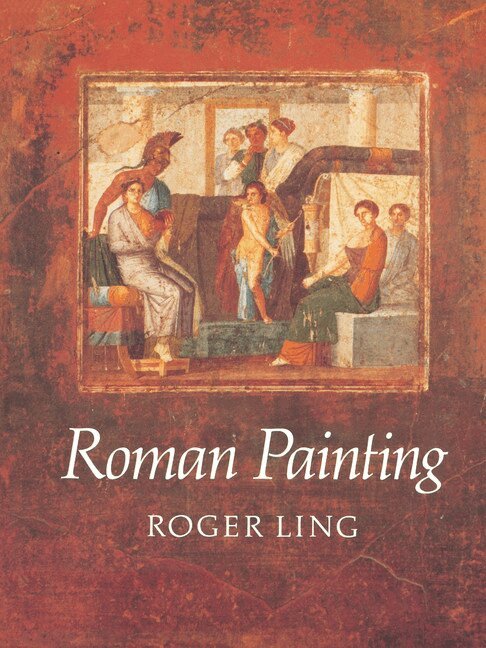
This book, first published in 1991, is a general history of Roman painting written specifically for English-language readers. Large numbers of wall-paintings have survived from the Roman world, and particularly from Rome itself and from the cities of Pompeii, Herculaneum and Stabiae, buried in the eruption of Mount Vesuvius in AD 79. Their influence upon European artists of the Renaissance and Neo-Classical periods has been considerable. Recent research has provided a much clearer idea of the chronology of these paintings, of their sources of inspiration, and of their meaning to the various classes of patrons who commissioned them. All aspects of our knowledge are brought together in this survey. Among other topics the book discusses the so-called Four Pompeian Styles, their spread to the provinces, the broad developments in scheme, style and subject-matter which followed them, the factors which dictated the choice of particular subjects and the way in which they were represented, and what we know about the painters and the organisation of their workshops.
266 kr
Skickas
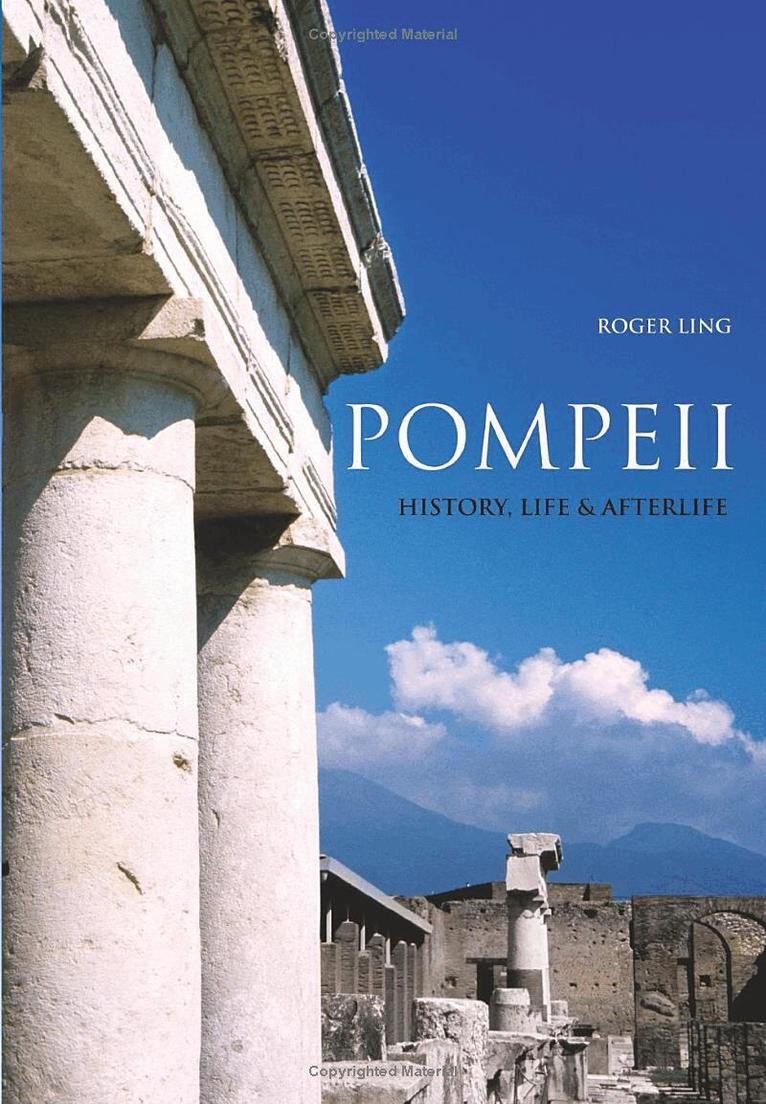
Pompeii, the Roman city buried by the eruption of Mount Vesuvius in August AD 79, is one of the world's most famous archaeological sites. With excavations in progress for more than 250 years, it is also the subject of the world's longest-running archaeological dig. And yet in some ways we know less about Pompeii than we do about many other Roman sites. Because the city is so well preserved, excavations have concentrated upon exposing the remains of AD 79, and the earlier levels have been neglected. Only in recent years has a serious effort been made to trace the history of the city back to its beginnings more than seven centuries before it entombment.This book differs from previous studies in placing an emphasis on Pompeii's history. Using the evidence of the latest archaeological research, the author traces the evolution of the city from its origins as a small Oscan or Etruscan settlement of the seventh and sixth centuries BC to a flourishing urban centre of the early Roman Empire. Further chapters survey aspects of the life of the city in its last years and recount the story of its disappearance and rediscovery.
164 kr
Skickas inom 5-8 vardagar
262 kr
Skickas inom 5-8 vardagar