Interspecific Interactions - Böcker
Visar alla böcker i serien Interspecific Interactions. Handla med fri frakt och snabb leverans.
14 produkter
14 produkter
494 kr
Skickas inom 7-10 vardagar
In nature, the ability to defend against predators is fundamental to an animal's survival. From the giraffes that rely on their spotted coats to blend into the patchy light of their woodland habitats to the South American sea lions that pile themselves in heaps to ward off the killer whales that prey on them in the shallow surf, defense strategies in the animal kingdom are seemingly innumerable. In Antipredator Defenses in Birds and Mammals, Tim Caro ambitiously synthesizes predator defenses in birds and mammals and integrates all functional and evolutionary perspectives on antipredator defenses that have developed over the last century. Structured chronologically along a hypothetical sequence of predation - Caro evokes a gazelle fawn desperate to survive a cheetah attack to illustrate the continuum of the evolution of antipredator defenses - Antipredator Defenses in Birds and Mammals considers the defenses that prey use to avoid detection by predators; the benefits of living in groups; morphological and behavioral defenses in individuals and groups; and, finally, flight and adaptations of last resort.Antipredator Defenses in Birds and Mammals will be of interest to both specialists and general readers interested in ecological issues.
785 kr
Skickas inom 7-10 vardagar
Why do species live where they live? What determines the abundance and diversity of species in a given area? What role do species play in the functioning of entire ecosystems? All of these questions share a single core concept - the ecological niche. Although the niche concept has fallen into disfavour among ecologists in recent years, Jonathan M. Chase and Mathew A. Leibold argue that the niche is an ideal tool with which to unify disparate research and theoretical approaches in contemporary ecology. Chase and Leibold define the niche as including both what an organism needs from its environment and how that organism's activities shape its environment. Drawing on the theory of consumer-resource interactions, as well as its graphical analysis, they develop a framework for understanding niches that is flexible enough to include a variety of small- and large-scale processes, from resource competition, predation and stress to community structure, biodiversity and ecosystem function. Chase and Leibold's synthetic approach should interest ecologists from a wide range of subdisciplines.
266 kr
Skickas inom 7-10 vardagar
Why do species live where they live? What determines the abundance and diversity of species in a given area? What role do species play in the functioning of entire ecosystems? All of these questions share a single core concept - the ecological niche. Although the niche concept has fallen into disfavour among ecologists in recent years, Jonathan M. Chase and Mathew A. Leibold argue that the niche is an ideal tool with which to unify disparate research and theoretical approaches in contemporary ecology. Chase and Leibold define the niche as including both what an organism needs from its environment and how that organism's activities shape its environment. Drawing on the theory of consumer-resource interactions, as well as its graphical analysis, they develop a framework for understanding niches that is flexible enough to include a variety of small- and large-scale processes, from resource competition, predation and stress to community structure, biodiversity and ecosystem function. Chase and Leibold's synthetic approach should interest ecologists from a wide range of subdisciplines.
801 kr
Skickas inom 7-10 vardagar
This text explores the adaptations paprasites have evolved in their intimate interactions with their hosts. The author begins with the biology of parasites, before moving on to discuss genetic interactions between hosts and parasites, and ending with a section on the community ecology of parasites. Updated to reflect developments in research, the book is designed to interest not just parasitologists but also ecologists and others studying community dynamics and co-evolution.
392 kr
Skickas inom 7-10 vardagar
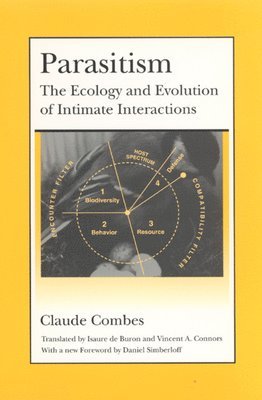
In Parasitism, Claude Combes explores the fascinating adaptations parasites have developed through their intimate interactions with their hosts. He begins with the biology of parasites—their life cycles, habitats, and different types of associations with their hosts. Next he discusses genetic interactions between hosts and parasites, and he ends with a section on the community ecology of parasites and their role in the evolution of their hosts. Throughout the book Combes enlivens his discussion with a wealth of concrete examples of host-parasite interactions.
463 kr
Skickas inom 7-10 vardagar
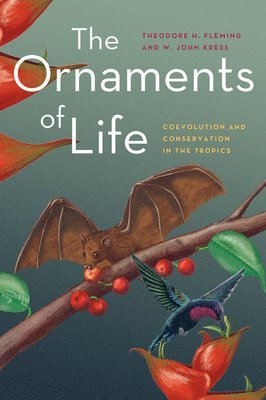
The average kilometer of tropical rainforest is teeming with life; it contains thousands of species of plants and animals. As The Ornaments of Life reveals, many of the most colorful and eye-catching rainforest inhabitants - toucans, monkeys, leaf-nosed bats, and hummingbirds, to name a few - are an important component of the infrastructure that supports life in the forest. These fruit-and-nectar eating birds and mammals pollinate the flowers and disperse the seeds of hundreds of tropical plants, and unlike temperate communities, much of this greenery relies exclusively on animals for reproduction. Synthesizing recent research by ecologists and evolutionary biologists, Theodore H. Fleming and W. John Kress demonstrate the tremendous functional and evolutionary importance of these tropical pollinators and frugivores. They shed light on how these mutually symbiotic relationships evolved and lay out the current conservation status of these essential species. In order to illustrate the striking beauty of these "ornaments" of the rainforest, the authors have included a series of breathtaking color plates and full-color graphs and diagrams.
1 445 kr
Skickas inom 11-20 vardagar
The news that a flowering weed-mousear cress (Arabidopsis thaliana) - can sense the particular chewing noise of its most common caterpillar predator and adjust its chemical defenses in response led to headlines announcing the discovery of the first "hearing" plant. As plants lack central nervous systems (and, indeed, ears), the mechanisms behind this "hearing" are unquestionably very different from those of our own acoustic sense, but the misleading headlines point to an overlooked truth: plants do in fact perceive environmental cues and respond rapidly to them by changing their chemical, morphological, and behavioral traits. In Plant Sensing and Communication, Richard Karban provides the first comprehensive overview of what is known about how plants perceive their environments, communicate those perceptions, and learn. Facing many of the same challenges as animals, plants have developed many similar capabilities: they sense light, chemicals, mechanical stimulation, temperature, electricity, and sound. Moreover, prior experiences have lasting impacts on sensitivity and response to cues; plants, in essence, have memory.Nor are their senses limited to the processes of an individual plant: plants eavesdrop on the cues and behaviors of neighbors and - for example, through flowers and fruits - exchange information with other types of organisms. Far from inanimate organisms limited by their stationery existence, plants, this book makes unquestionably clear, are in constant and lively discourse.
306 kr
Skickas inom 7-10 vardagar
The news that a flowering weed-mousear cress (Arabidopsis thaliana)-can sense the particular chewing noise of its most common caterpillar predator and adjust its chemical defenses in response led to headlines announcing the discovery of the first "hearing" plant. As plants lack central nervous systems (and, indeed, ears), the mechanisms behind this "hearing" are unquestionably very different from those of our own acoustic sense, but the misleading headlines point to an overlooked truth: plants do in fact perceive environmental cues and respond rapidly to them by changing their chemical, morphological, and behavioral traits. In Plant Sensing and Communication, Richard Karban provides the first comprehensive overview of what is known about how plants perceive their environments, communicate those perceptions, and learn. Facing many of the same challenges as animals, plants have developed many similar capabilities: they sense light, chemicals, mechanical stimulation, temperature, electricity, and sound. Moreover, prior experiences have lasting impacts on sensitivity and response to cues; plants, in essence, have memory.Nor are their senses limited to the processes of an individual plant: plants eavesdrop on the cues and behaviors of neighbors and - for example, through flowers and fruits - exchange information with other types of organisms. Far from inanimate organisms limited by their stationery existence, plants, this book makes unquestionably clear, are in constant and lively discourse.
384 kr
Skickas inom 7-10 vardagar
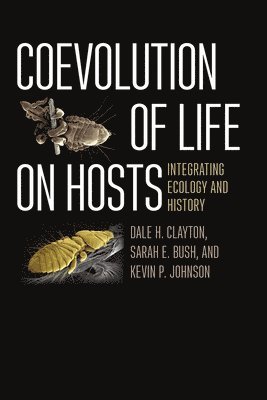
For most, the mere mention of lice forces an immediate hand to the head and recollection of childhood experiences with nits, medicated shampoos, and traumatic haircuts. But for a certain breed of biologist, lice make for fascinating scientific fodder, especially enlightening in the study of coevolution. In this book, three leading experts on host-parasite relationships demonstrate how the stunning coevolution that occurs between such species in microevolutionary, or ecological, time generates clear footprints in macroevolutionary, or historical, time. By integrating these scales, Coevolution of Life on Hosts offers a comprehensive understanding of the influence of coevolution on the diversity of all life. Following an introduction to coevolutionary concepts, the authors combine experimental and comparative host-parasite approaches for testing coevolutionary hypotheses to explore the influence of ecological interactions and coadaptation on patterns of diversification and codiversification among interacting species.Ectoparasites-a diverse assemblage of organisms that ranges from herbivorous insects on plants, to monogenean flatworms on fish, and feather lice on birds-are powerful models for the study of coevolution because they are easy to observe, mark, and count. As lice on birds and mammals are permanent parasites that spend their entire lifecycles on the bodies of their hosts, they are ideally suited to generating a synthetic overview of coevolution-and, thereby, offer an exciting framework for integrating the concepts of coadaptation and codiversification.
Multiplicity in Unity
Plant Subindividual Variation and Interactions with Animals
Häftad, Engelska, 2009
447 kr
Skickas inom 7-10 vardagar
Plants produce a considerable number of structures of one kind, like leaves, flowers, fruits, and seeds, and this reiteration is a quintessential feature of the body plan of higher plants. But since not all structures of the same kind produced by a plant are identical - for instance, different branches on a plant may be male or female, leaf sizes in the sun differ from those in the shade, and fruit sizes can vary depending on patterns of physiological allocation among branches - a single plant genotype generally produces a multiplicity of phenotypic versions of the same organ. "Multiplicity in Unity" uses this subindividual variation to deepen our understanding of the ecological and evolutionary factors involved in plant-animal interactions. On one hand, phenotypic variation at the subindividual scale has diverse ecological implications for animals that eat plants. On the other hand, by choosing which plants to consume, these animals may constrain or modify plant ontogenetic patterns, developmental stability, and the extent to which feasible phenotypic variants are expressed by individuals.An innovative study of the ecology, morphology, and evolution of modular organisms, "Multiplicity in Unity" addresses a topic central to our understanding of the diversity of life and the ways in which organisms have coevolved to cope with variable environments.
763 kr
Tillfälligt slut
Plants face a daunting array of creatures which eat them, bore into them and use virtually every plant part for food or shelter. However, plants are far from defenceless under attack. Although they cannot flee their attackers, they can produce defences, such as thorns, and can actively alter their chemistry and physiology in response to damage. For instance, young potato leaves being eaten by potato beetles respond by producing chemicals which inhibit beetle digestive enzymes. Research on these induced responses to herbivory has proceeded since the 1980s, and this comprehensive evaluation and synthesis of a rapidly-developing field provides state-of-the-discipline reviews, and highlights areas of research which might be productive. This overview should appeal to a wide variety of theoretical and applied researchers in ecology, evolutionary biology, plant biology, entomology and agriculture.
321 kr
Skickas inom 7-10 vardagar
Plants face a daunting array of creatures which eat them, bore into them and use virtually every plant part for food or shelter. However, plants are far from defenceless under attack. Although they cannot flee their attackers, they can produce defences, such as thorns, and can actively alter their chemistry and physiology in response to damage. For instance, young potato leaves being eaten by potato beetles respond by producing chemicals which inhibit beetle digestive enzymes. Research on these induced responses to herbivory has proceeded since the 1980s, and this comprehensive evaluation and synthesis of a rapidly-developing field provides state-of-the-discipline reviews, and highlights areas of research which might be productive. This overview should appeal to a wide variety of theoretical and applied researchers in ecology, evolutionary biology, plant biology, entomology and agriculture.
321 kr
Skickas inom 7-10 vardagar
Ants are probably the most dominant insect group on Earth, representing ten to fifteen percent of animal biomass in terrestrial ecosystems. Flowering plants, meanwhile, owe their evolutionary success to an array of interspecific interactions - such as pollination, seed dispersal, and herbivory - that have helped to shape their great diversity. "The Ecology and Evolution of Ant-Plant Interactions" brings together findings from the scientific literature on the coevolution of ants and plants to provide a better understanding of the unparalleled success of these two remarkable groups, of interspecific interactions in general, and, ultimately, of terrestrial biological communities. "The Ecology and Evolution of Ant-Plant Interactions" synthesizes the dynamics of ant-plant interactions, including the sources of variation in their outcomes. Victor Rico-Gray and Paulo S. Oliveira capture both the emerging appreciation of the importance of these interactions within ecosystems and the developing approaches that place studies of these interactions into a broader ecological and evolutionary context.A collaboration by two internationally renowned scientists, "The Ecology and Evolution of Ant-Plant Interactions" will become a standard reference for understanding the complex interactions between these two taxa.
353 kr
Skickas inom 7-10 vardagar
Coevolution - reciprocal evolutionary change in interacting species driven by natural selection - is one of the most important ecological and genetic processes organizing the earth's biodiversity: most plants and animals require coevolved interactions with other species to survive and reproduce. The Geographic Mosaic of Coevolution analyzes how the biology of species provides the raw material for long-term coevolution, evaluates how local coadaptation forms the basic module of coevolutionary change, and explores how the coevolutionary process reshapes locally coevolving interactions across the earth's constantly changing landscapes. Picking up where his influential The Coevolutionary Process left off, John N. Thompson synthesizes the state of a rapidly developing science that integrates approaches from evolutionary ecology, population genetics, phylogeography, systematics, evolutionary biochemistry and physiology, and molecular biology. Using models, data, and hypotheses to develop a complete conceptual framework, Thompson also draws on examples from a wide range of taxa and environments, illustrating the expanding breadth and depth of research in coevolutionary biology.