James A. Johnson Metro Series - Böcker
Visar alla böcker i serien James A. Johnson Metro Series. Handla med fri frakt och snabb leverans.
12 produkter
12 produkter
354 kr
Skickas inom 10-15 vardagar
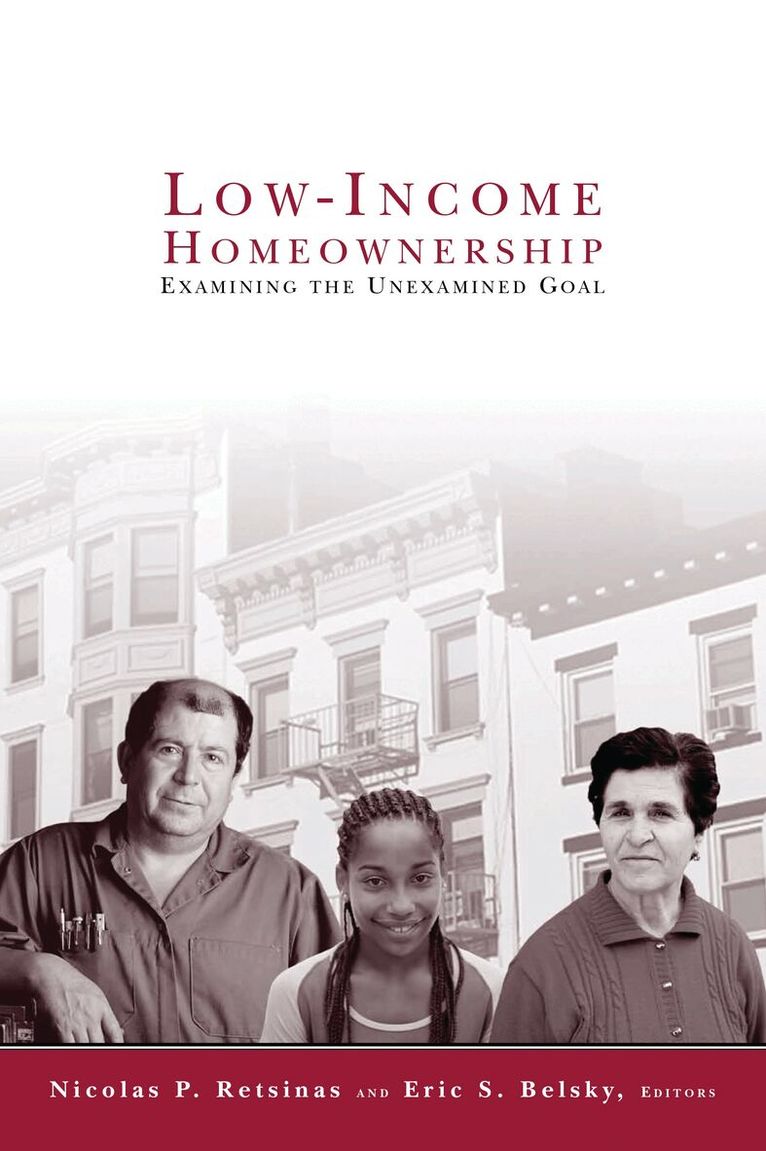
A Brookings Institution Press and Harvard University Joint Center for Housing Studies publicationA generation ago little attention was focused on low-income homeownership. Today homeownership rates among under-served groups, including low-income households and minorities, have risen to record levels. These groups are no longer at the margin of the housing market; they have benefited from more flexible underwriting standards and greater access to credit. However, there is still a racial/ethnic gap and the homeownership rates of minority and low-income households are still well below the national average. This volume gathers the observations of housing experts on low-income homeownership and its effects on households and communities. The book is divided into five chapters which focus on the following subjects: homeownership trends in the 1990s; overcoming borrower constraints; financial returns to low-income homeowners; low-income loan performance; and the socioeconomic impact of homeownership.
354 kr
Skickas inom 10-15 vardagar
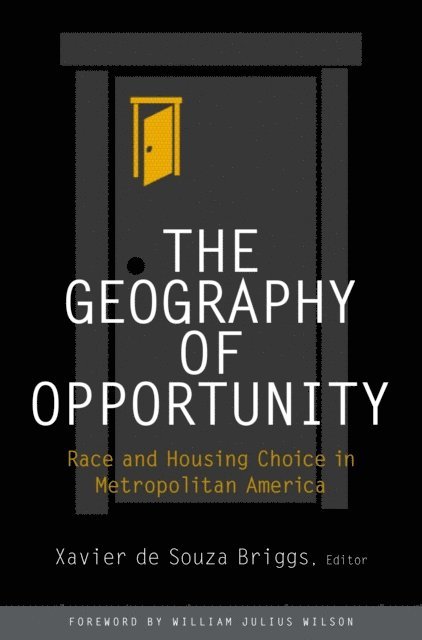
A popular version of history trumpets the United States as a diverse ""nation of immigrants,"" welcome to all. The truth, however, is that local communities have a long history of ambivalence toward new arrivals and minorities. Persistent patterns of segregation by race and income still exist in housing and schools, along with a growing emphasis on rapid metropolitan development (sprawl) that encourages upwardly mobile families to abandon older communities and their problems. This dual pattern is becoming increasingly important as America grows more diverse than ever and economic inequality increases. Two recent trends compel new attention to these issues. First, the geography of race and class represents a crucial litmus test for the new ""regionalism""the political movement to address the linked fortunes of cities and suburbs. Second, housing has all but disappeared as a major social policy issue over the past two decades. This timely book shows how unequal housing choices and sprawling development create an unequal geography of opportunity. It emerges from a project sponsored by the Civil Rights Project at Harvard University in collaboration with the Joint Center for Housing Studies and the Brookings Institution. The contributorspolicy analysts, political observers, social scientists, and urban plannersdocument key patterns, their consequences, and how we can respond, taking a hard look at both successes and failures of the past. Place still matters, perhaps more than ever. High levels of segregation shape education and job opportunity, crime and insecurity, and long-term economic prospects. These problems cannot be addressed effectively if society assumes that segregation will take care of itself. Contributors include William Apgar (Harvard University), Judith Bell (PolicyLink), Angela Glover Blackwell (PolicyLink), Allegra Calder (Harvard), Karen Chapple (Cal-Berkeley), Camille Charles (Penn), Mary Cunningham (Urban Institute), Casey Dawkins (Virginia Tech), Stephanie DeLuca (Johns Hopkins), John Goering (CUNY), Edward Goetz (U. of Minnesota), Bruce Katz (Brookings), Barbara Lukermann (U. of Minnesota), Gerrit Knaap (U. of Maryland), Arthur Nelson (Virginia Tech), Rolf Pendall (Cornell), Susan J. Popkin (Urban Institute), James Rosenbaum (Northwestern), Stephen L. Ross (U. of Connecticut), Mara Sidney (Rutgers), Phillip Tegeler (Poverty and Race Research Action Council), Tammy Tuck (Northwestern), Margery Austin Turner (Urban Institute), William Julius Wilson (Harvard).
354 kr
Skickas inom 10-15 vardagar
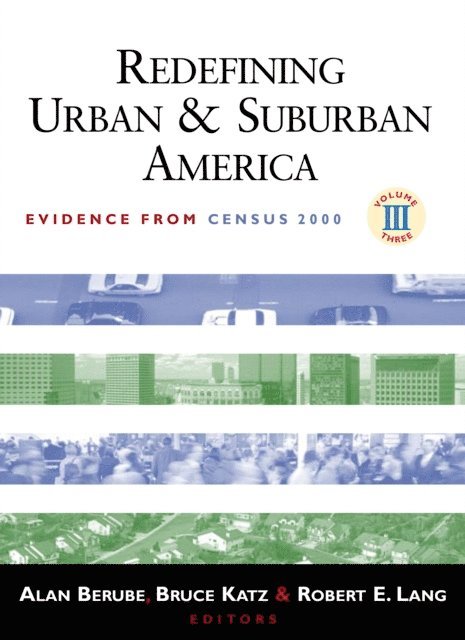
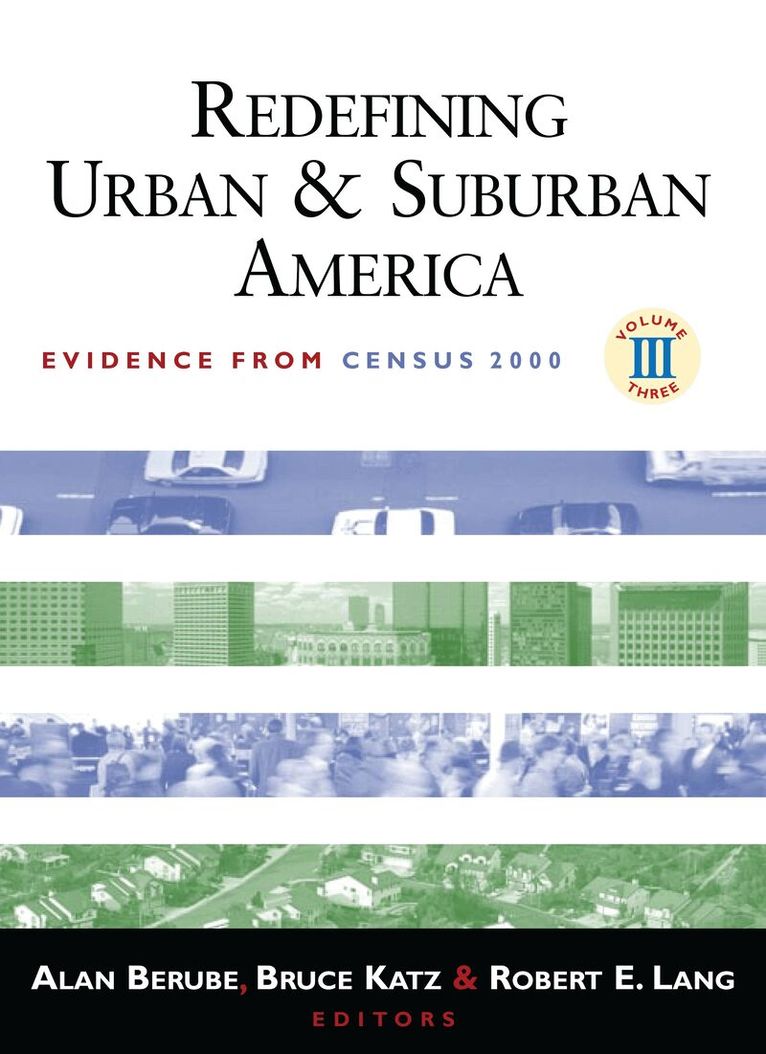
Results from Census 2000 have confirmed that American cities and metropolitan areas lie at the heart of the nation's most pronounced demographic and economic changes. The third volume in the Redefining Urban and Suburban America series describes anew the changing shape of metropolitan American and the consequences for policies in areas such as employment, public services, and urban revitalization. The continued decentralization of population and economic activity in most metropolitan areas has transformed once-suburban places into new engines of metropolitan growth. At the same time, some traditional central cities have enjoyed a population renaissance, thanks to a recent book in "living" downtowns. The contributors to this book probe the rise of these new growth centers and their impacts on the metropolitan landscape, including how recent patterns have affected the government's own methods for reporting information on urban, suburban, and rural areas. Volume 3 also provides a closer look at the social and economic impacts of growth patterns in cities and suburbs. Contributors examine how suburbanization has affected access to employment for minorities and lower-income workers, how housing development trends have fueled population declines in some central cities, and how these patterns are shifting the economic balance between older and newer suburbs. Contributors include Thomas Bier (Cleveland State University), Peter Dreier (Occidental College), William Frey (Brookings), Robert Lang (Virginia Tech), Steven Raphael (University of California, Berkeley), Audrey Singer (Brookings), Michael Stoll (University of California, Los Angeles), Todd Swanstrom (St. Louis University), and Jill Wilson (Brookings).
354 kr
Skickas inom 10-15 vardagar
Congested roads waste commuters' time, cost them money, and degrade the environment. Most Americans agree that traffic congestion is the major problem in their communitiesand it only seems to be getting worse. In this revised and expanded edition of his landmark work Stuck in Traffic, Anthony Downs examines the benefits and costs of various anticongestion strategies. Drawing on a significant body of research by transportation experts and land-use planners, he counters environmentalists and road lobbyists alike by explaining why seemingly simple solutions, such as expanding public transit or expanding roads, have unintended consequences that cancel out their apparent advantages. He argues that while there might be some measurable gains from increasing housing densities, most other land-use strategies have little effect. Indeed, the most powerful solutions, including higher gasoline taxes, increased public funding for transit, and highway tolls, are also the least palatable politically. St ill Stuck in Traffic contains new material on the causes of congestion, its dynamics, and its relative incidence in various parts of the country. In clear and realistic terms, Downs seeks to explore why traffic congestion has become part of modern American life and how it can be kept under control.
301 kr
Skickas inom 10-15 vardagar
Advocates of growth management and smart growth often propose policies that raise housing prices, thereby making housing less affordable to many households trying to buy or rent homes. Such policies include urban growth boundaries, zoning restrictions on multi-family housing, utility district lines, building permit caps, and even construction moratoria. Does this mean there is an inherent conflict between growth management and smart growth on the one hand, and creating more affordable housing on the other? Or can growth management and smart growth promote policies that help increase the supply of affordable housing? These issues are critical to the future of affordable housing because so many local communities are adopting various forms of growth management or smart growth in response to growth-related problems. Those problems include rising traffic congestion, the absorption of open space by new subdivisions, and higher taxes to pay for new infrastructures. This book explores the relationship between growth management and smart growth and affordable housing in depth. It draws from material presented at a symposium on these subjects held at the Brookings Institution in May 2003, sponsored by the U.S. Department of Housing and Urban Development, the National Association of Realtors, and the Fannie Mae Foundation. Contributors seek to inform the debate and provide some useful answers to help the nation accommodate the curtailment of growth in urban and suburban domains while still ensuring a supply of affordable housing. Contributors include Karen Destorel Brown (Brookings), Robert Burchell, (Rutgers University), Daniel Carlson (University of Washington), David L. Crawford (Econsult Corporation), Anthony Downs (Brookings), Ingrid Gould Ellen (New York University), William Fischel (Dartmouth College), George C. Galster (Wayne State University), Jill Khadduri (Abt Associates), Gerrit J. Knaap (University of Maryland), Robert Lang (Virginia Polytechnic
287 kr
Skickas inom 10-15 vardagar
Academics, community activists, and politicians have rediscovered regionalism, insisting that regions are critical functional units in a world-wide economy and, just as important, critical functional units in individual American lives. More and more of us travel across city, county, even state borders every morning on our way to work. Our television, radio, and print media rely on a regional marketplace. Our businesses, large and small, depend on suppliers, workers, and customers who rarely reside in a single jurisdiction. The parks, riverfronts, stadiums, and museums we visit draw from, and provide an identity to, an area much larger than a single city. The fumes, gases, chemicals, and run-off that pollute our air and water have no regard for municipal boundaries.This book lays out a variety of opinions on regionalism, its history and its future. While the essays do not comprise a debate, pro and con, about regionalism, they do provide a wide array of perspectives, based on the authors' diverse backgrounds and experience. Some contributors have made close academic studies of how regional action occurs, in various states like Minnesota, California, and Oregon; others give an historical account of a particular region like that surrounding New York City; and yet others point out aspects of regionalism--race, especially-- that should not be ignored.Why did past efforts at regional collaboration fall apart? What did regionalist efforts of decades ago leave undone, and what new goals should regionalists set? Without an understanding of these questions, policymakers and advocates may find themselves "reinventing the region." This book provides an important understanding of how regionalism has played out in the past, how policies shape places, and the possibilities and limits of regional action.Bruce J. Katz, director of the Brookings Institution Center on Urban and Metropolitan Policy, was formerly chief of staff at the U.S. Department of Housing and Urban Development.
301 kr
Skickas inom 10-15 vardagar
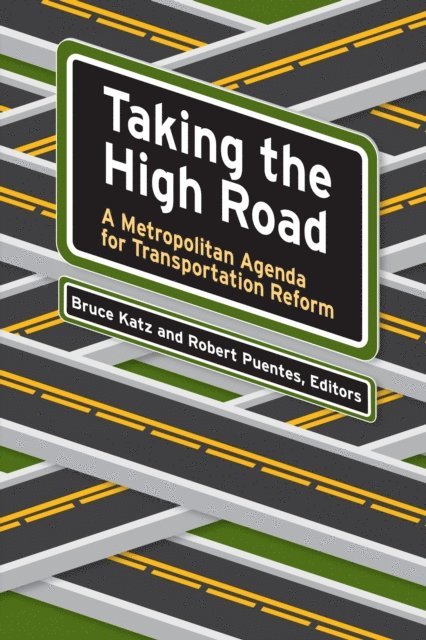
Since the early 1990s, federal transportation laws have slowly started to level the playing field between highway and alternative transportation strategies, as well as between older and newer communities. The Intermodal Surface Transportation Efficiency Act of 1991 and the Transportation Equity Act for the 21st Century made substantial changes in transportation practices. These laws devolved greater responsibility for planning and implementation to urban development organizations and introduced more flexibility in the spending of federal highway and transit funds. They also created a series of special programs to carry out important national objectives, and they tightened the linkages between transportation spending and issues such as metropolitan air quality. Taking the High Road examines the most pressing transportation challenges facing American cities, suburbs, and metropolitan areas. The authors focus on the central issues in the ongoing debate and deliberations about the nation's transportation policy. They go beyond the federal debate, however, to lay out an agenda for reform that responds directly to those responsible for putting these policies into practiceleaders at the state, metropolitan, and local levels. This book presents public officials with options for reform. Hoping to build upon the progress and momentum of earlier transportation laws, it ensures a better understanding of the problems and provides policymakers, journalists, and the public with a comprehensive guide to the numerous issues that must be addressed. Topics include A wide-ranging policy framework that addresses the reauthorization debate An examination of transportation finance and how it affects cities and suburbs An analysis of metropolitan decisionmaking in transportation The challenges of transportation access for working families and the elderly The problems of increasing traffic congestion and the lack of adequate alternatives Contributors include Scott Bernstein (Center for Neighborhood Technology), Edward Biemborn (University of Wisconsin), Evelyn Blumenberg (UCLA), John Brennan (Cleveland State University), Anthony Downs (Brookings), Billie K. Geyer (Cleveland State), Edward W. Hill (Cleveland State), Arnold Howitt (Harvard University), Kevin E. O'Brien (Cleveland State), Ryan Prince (Brookings), Claudette Robey (Cleveland State), Sandra Rosenbloom (University of Arizona), Thomas Sanchez (Virginia Tech), Martin Wachs (University of California, Berkeley), and Margy Waller (Brookings).
354 kr
Skickas inom 10-15 vardagar
The early returns from Census 2000 data show that the United States continued to undergo dynamic changes in the 1990s, with cities and suburbs providing the locus of most of the volatility. Metropolitan areas are growing more diverseespecially with the influx of new immigrantsthe population is aging, and the make-up of households is shifting. Singles and empty-nesters now surpass families with children in many suburbs. The contributors to this book review data on population, race and ethnicity, and household composition, provided by the Census's "short form," and attempt to respond to three simple queries: Are cities coming back? Are all suburbs growing? Are cities and suburbs becoming more alike? Regional trends muddy the picture. Communities in the Northeast and Midwest are generally growing slowly, while those in the South and West are experiencing explosive growth ("Warm, dry places grew. Cold, wet places declined," note two authors). Some cities are robust, others are distressed. Some suburbs are bedroom communities, others are hot employment centers, while still others are deteriorating. And while some cities' cores may have been intensely developed, including those in the Northeast and Midwest, and seen population increases, the areas surrounding the cores may have declined significantly. Trends in population confirm an increasingly diverse population in both metropolitan and suburban areas with the influx of Hispanic and Asian immigrants and with majority populations of central cities for the first time being made up of minority groups. Census 2000 also reveals that the overall level of black-to-nonblack segregation has reached its lowest point since 1920, although high segregation remains in many areas. Redefining Urban and Suburban America explores these demographic trends and their complexities, along with their implications for the policies and politics shaping metropolitan America. The shifts discussed here have significant influence in demand for housing and schools, childcare and healthcare, as well as private goods and services. Contributors include: Alan Berube (Brookings Institution); Benjamin Forman(Massachusetts Institute of Technology); William H. Frey (University of Michigan, Milken Institute); Edward L. Glaeser (Harvard University); John R. Logan (University at Albany, State University of New York), William H. Lucy (University of Virginia); David L. Phillips (University of Virginia); Jesse M. Shapiro (Harvard University), Patrick A. Simmons (Fannie Mae Foundationa); Audrey Singer (Brookings Institution); Rebecca R. Sohmer (Fannie Mae Foundation); Roberto Suro (Pew Hispanic Center); Jacob L. Vigdor (Duke University. Brookings Metro Series
354 kr
Skickas inom 10-15 vardagar
Compared with other developed nations, the United States is unique in its high rates of both gun ownership and murder. Although widespread gun ownership does not have much effect on the overall crime rate, gun use does make criminal violence more lethal and has a unique capacity to terrorize the public. Gun crime accounts for most of the costs of gun violence in the United States, which are on the order of $100 billion per year. But that is not the whole story. Guns also provide recreational benefits and sometimes are used virtuously in fending off or forestalling criminal attacks. Given that guns may be used for both good and ill, the goal of gun policy in the United States has been to reduce the flow of guns to the highest-risk groups while preserving access for most people. There is no lack of opinions on policies to regulate gun commerce, possession, and use, and most policy proposals spark intense controversy. Whether the current system achieves the proper balance between preserving access and preventing misuse remains the subject of considerable debate. Evaluating Gun Policy provides guidance for a pragmatic approach to gun policy using good empirical research to help resolve conflicting assertions about the effects of guns, gun control, and law enforcement. The chapters in this volume do not conform neatly to the claims of any one political position. The book is divided into five parts. In the first section, contributors analyze the connections between rates of gun ownership and two outcomes of particular interest to societysuicide and burglary. Regulating ownership is the focus of the second section, where contributors investigate the consequences a large-scale combined gun ban and buy-back program in Australia, as well as the impact of state laws that prohibit gun ownership to those with histories of domestic violence. The third section focuses on efforts to restrict gun carrying and includes a critical examination of efforts in Pit
241 kr
Skickas inom 10-15 vardagar
For decades, concerns have been raised about the consequences of relentless suburban expansion in the United States. But so far, government programs to control urban sprawl have had little effect in slowing it down, much less stopping it. In this book, Pietro S. Nivola raises important questions about the continued suburbanization of America: Is suburban growth just the result of market forces, or have government policies helped induce greater sprawl? How much of the government intervention has been undesirable, and what has been beneficial? And, if suburban growth is to be controlled, what changes in public policies would be not only effective, but practical?Nivola addresses these questions by comparing sprawling U.S. metropolitan areas to compact development patterns in Europe. He contrasts the effects of traditional urban programs, as well as ""accidental urban policies"" that have a profound if commonly unrecognized impact on cities, including national tax systems, energy conservation efforts, agricultural supports, and protection from international commerce.Nivola also takes a hard look at the traditional solutions of U.S. urban policy agenda involving core-area reconstruction projects, mass transit investments, ""smart"" growth controls, and metropolitan organizational rearrangements, and details the reasons why they often don't work. He concludes by recommending reforms for key U.S. policies--from taxes to transportation to federal regulations--based on the successes and failures of the European experience.Brookings Metropolitan Series
348 kr
Skickas inom 7-10 vardagar
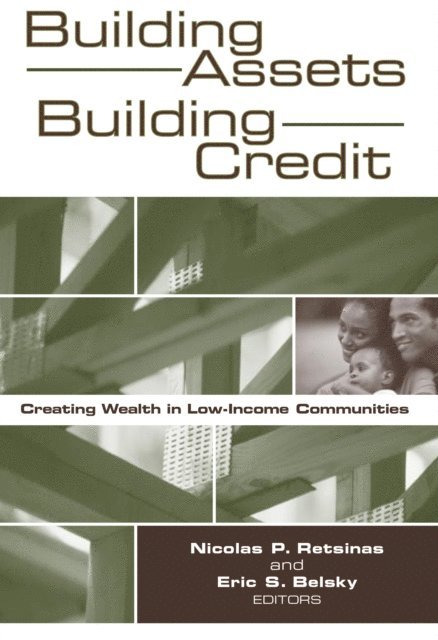
Poor people spend their money living day to day. How can they accumulate wealth? In the United States, homeownership is often the answer. Homes not only provide shelter but also are assets, and thus a means to create equity. Mortgage credit becomes a crucial factor. More Americans than ever now have some access to credit. However. thanks in large part to the growth of global capital markets and greater use of ""credit scores,"" not all homeowners have benefited equally from the opened spigots. Different terms and conditions mean that some applicants are overpaying for mortgage credit, while some are getting in over their heads. And the door is left wide open for predatory lenders. In this important new volume, accomplished analysts examine the situation, illustrate its ramifications, and recommend steps to improve it. Today, low-income Americans have more access to credit than ever before. The challenge is to increase the chances that homeownership becomes the new pathway to asset-building that everyone hopes it will be.
274 kr
Skickas inom 10-15 vardagar
Beginning this year, federal payment recipients will receive their government benefits through electronic funds transfer (EFT)-- what most of us call direct deposit. Although cost-cutting is the driving force behind the move to a virtually all-electronic federal payment system, Michael Stegman believes the initiative has a far broader potential: to bring poor Americans into the banking mainstream. In this book Stegman outlines how many families will enter the mainstream banking system through EFT '99, as the program is called. He explains in careful detail the thinking behind the shift to EFT and the implementation of the program this year. He also argues that, for maximum success, EFT '99 should be combined with a program of national Individual Development Accounts (IDAs), dedicated savings accounts for low-income people that can be used for purchasing a first home, acquiring more education or job training, or starting a small-business. Essentially, EFT '99 will bring people into the banking system, and IDAs will give them an incentive to use the system to its fullest in order to make their money work for them and their children. There are other steps that the government can take to boost EFT's ability to help public aid recipients achieve self-sufficiency. It can: add a direct deposit option to state benefits payments programs; give banks significant additional Community Reinvestment Act Credit for establishing accounts for EFT recipients; and regulate fees for cashing government benefits and voluntary accounts so that people are not charged excessively for accessing their money. This book demonstrates that with careful planning and a relatively small investment the government's EFT initiative can have a major payoff in real assets and improved prospects for those who have been, for far too long, on the fringes of the country's mainstream banking system. Brookings Metro Series