Robert E. Lang – författare
Visar alla böcker från författaren Robert E. Lang. Handla med fri frakt och snabb leverans.
8 produkter
8 produkter
Häftad, Engelska, 2006
361 kr
Skickas inom 10-15 vardagar
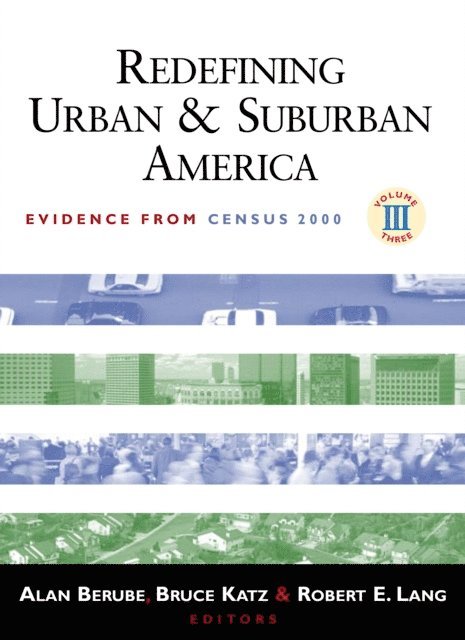
Results from Census 2000 have confirmed that American cities and metropolitan areas lie at the heart of the nation's most pronounced demographic and economic changes. The third volume in the Redefining Urban and Suburban America series describes anew the changing shape of metropolitan American and the consequences for policies in areas such as employment, public services, and urban revitalization. The continued decentralization of population and economic activity in most metropolitan areas has transformed once-suburban places into new engines of metropolitan growth. At the same time, some traditional central cities have enjoyed a population renaissance, thanks to a recent book in "living" downtowns. The contributors to this book probe the rise of these new growth centers and their impacts on the metropolitan landscape, including how recent patterns have affected the government's own methods for reporting information on urban, suburban, and rural areas. Volume 3 also provides a closer look at the social and economic impacts of growth patterns in cities and suburbs. Contributors examine how suburbanization has affected access to employment for minorities and lower-income workers, how housing development trends have fueled population declines in some central cities, and how these patterns are shifting the economic balance between older and newer suburbs. Contributors include Thomas Bier (Cleveland State University), Peter Dreier (Occidental College), William Frey (Brookings), Robert Lang (Virginia Tech), Steven Raphael (University of California, Berkeley), Audrey Singer (Brookings), Michael Stoll (University of California, Los Angeles), Todd Swanstrom (St. Louis University), and Jill Wilson (Brookings).
E-bok
PDF, Engelska, 2007380 kr
Läs direkt efter köp
Results from Census 2000 have confirmed that American cities and metropolitan areas lie at the heart of the nation's most pronounced demographic and economic changes. The third volume in the Redefining Urban and Suburban America series describes anew the changing shape of metropolitan American and the consequences for policies in areas such as employment, public services, and urban revitalization. The continued decentralization of population and economic activity in most metropolitan areas has transformed once-suburban places into new engines of metropolitan growth. At the same time, some traditional central cities have enjoyed a population renaissance, thanks to a recent book in "living" downtowns. The contributors to this book probe the rise of these new growth centers and their impacts on the metropolitan landscape, including how recent patterns have affected the government's own methods for reporting information on urban, suburban, and rural areas. Volume 3 also provides a closer look at the social and economic impacts of growth patterns in cities and suburbs. Contributors examine how suburbanization has affected access to employment for minorities and lower-income workers, how housing development trends have fueled population declines in some central cities, and how these patterns are shifting the economic balance between older and newer suburbs. Contributors include Thomas Bier (Cleveland State University), Peter Dreier (Occidental College), William Frey (Brookings), Robert Lang (Virginia Tech), Steven Raphael (University of California, Berkeley), Audrey Singer (Brookings), Michael Stoll (University of California, Los Angeles), Todd Swanstrom (St. Louis University), and Jill Wilson (Brookings).
Häftad, Engelska, 2020
361 kr
Skickas inom 10-15 vardagar
Assessing where the red/blue political line lies in swing states and how it is shiftingDemocratic-leaning urban areas in states that otherwise lean Republican is an increasingly important phenomenon in American politics, one that will help shape elections and policy for decades to come. Blue Metros, Red States explores this phenomenon by analyzing demographic trends, voting patterns, economic data, and social characteristics of twenty-seven major metropolitan areas in thirteen swing states that will ultimately decide who is elected president and the party that controls each chamber of Congress.The book's key finding is a sharp split between different types of suburbs in swing states. Close-in suburbs that support denser mixed use projects and transit such as light rail mostly vote for Democrats. More distant suburbs that feature mainly large-lot, single-family detached houses and lack mass transit often vote for Republicans. The book locates the red/blue dividing line and assesses the electoral state of play in every swing state. This red/blue political line is rapidly shifting, however, as suburbs urbanize and grow more demographically diverse. Blue Metros, Red States is especially timely as the 2020 elections draw near.
380 kr
Läs direkt efter köp
Assessing where the red/blue political line lies in swing states and how it is shiftingDemocratic-leaning urban areas in states that otherwise lean Republican is an increasingly important phenomenon in American politics, one that will help shape elections and policy for decades to come. Blue Metros, Red States explores this phenomenon by analyzing demographic trends, voting patterns, economic data, and social characteristics of twenty-seven major metropolitan areas in thirteen swing states that will ultimately decide who is elected president and the party that controls each chamber of Congress.The book''s key finding is a sharp split between different types of suburbs in swing states. Close-in suburbs that support denser mixed use projects and transit such as light rail mostly vote for Democrats. More distant suburbs that feature mainly large-lot, single-family detached houses and lack mass transit often vote for Republicans. The book locates the red/blue dividing line and assesses the electoral state of play in every swing state. This red/blue political line is rapidly shifting, however, as suburbs urbanize and grow more demographically diverse. Blue Metros, Red States is especially timely as the 2020 elections draw near.
E-bok
PDF, Engelska, 2004380 kr
Läs direkt efter köp
The early returns from Census 2000 data show that the United States continued to undergo dynamic changes in the 1990s, with cities and suburbs providing the locus of most of the volatility. Metropolitan areas are growing more diverseespecially with the influx of new immigrantsthe population is aging, and the make-up of households is shifting. Singles and empty-nesters now surpass families with children in many suburbs. The contributors to this book review data on population, race and ethnicity, and household composition, provided by the Census's "short form," and attempt to respond to three simple queries: Are cities coming back? Are all suburbs growing? Are cities and suburbs becoming more alike? Regional trends muddy the picture. Communities in the Northeast and Midwest are generally growing slowly, while those in the South and West are experiencing explosive growth ("Warm, dry places grew. Cold, wet places declined," note two authors). Some cities are robust, others are distressed. Some suburbs are bedroom communities, others are hot employment centers, while still others are deteriorating. And while some cities' cores may have been intensely developed, including those in the Northeast and Midwest, and seen population increases, the areas surrounding the cores may have declined significantly. Trends in population confirm an increasingly diverse population in both metropolitan and suburban areas with the influx of Hispanic and Asian immigrants and with majority populations of central cities for the first time being made up of minority groups. Census 2000 also reveals that the overall level of black-to-nonblack segregation has reached its lowest point since 1920, although high segregation remains in many areas. Redefining Urban and Suburban America explores these demographic trends and their complexities, along with their implications for the policies and politics shaping metropolitan America. The shifts discussed here have significant influence in demand for housing and schools, childcare and healthcare, as well as private goods and services. Contributors include: Alan Berube (Brookings Institution); Benjamin Forman(Massachusetts Institute of Technology); William H. Frey (University of Michigan, Milken Institute); Edward L. Glaeser (Harvard University); John R. Logan (University at Albany, State University of New York), William H. Lucy (University of Virginia); David L. Phillips (University of Virginia); Jesse M. Shapiro (Harvard University), Patrick A. Simmons (Fannie Mae Foundationa); Audrey Singer (Brookings Institution); Rebecca R. Sohmer (Fannie Mae Foundation); Roberto Suro (Pew Hispanic Center); Jacob L. Vigdor (Duke University. Brookings Metro Series
Häftad, Engelska, 2003
361 kr
Skickas inom 10-15 vardagar
The early returns from Census 2000 data show that the United States continued to undergo dynamic changes in the 1990s, with cities and suburbs providing the locus of most of the volatility. Metropolitan areas are growing more diverseespecially with the influx of new immigrantsthe population is aging, and the make-up of households is shifting. Singles and empty-nesters now surpass families with children in many suburbs. The contributors to this book review data on population, race and ethnicity, and household composition, provided by the Census's "short form," and attempt to respond to three simple queries: Are cities coming back? Are all suburbs growing? Are cities and suburbs becoming more alike? Regional trends muddy the picture. Communities in the Northeast and Midwest are generally growing slowly, while those in the South and West are experiencing explosive growth ("Warm, dry places grew. Cold, wet places declined," note two authors). Some cities are robust, others are distressed. Some suburbs are bedroom communities, others are hot employment centers, while still others are deteriorating. And while some cities' cores may have been intensely developed, including those in the Northeast and Midwest, and seen population increases, the areas surrounding the cores may have declined significantly. Trends in population confirm an increasingly diverse population in both metropolitan and suburban areas with the influx of Hispanic and Asian immigrants and with majority populations of central cities for the first time being made up of minority groups. Census 2000 also reveals that the overall level of black-to-nonblack segregation has reached its lowest point since 1920, although high segregation remains in many areas. Redefining Urban and Suburban America explores these demographic trends and their complexities, along with their implications for the policies and politics shaping metropolitan America. The shifts discussed here have significant influence in demand for housing and schools, childcare and healthcare, as well as private goods and services. Contributors include: Alan Berube (Brookings Institution); Benjamin Forman(Massachusetts Institute of Technology); William H. Frey (University of Michigan, Milken Institute); Edward L. Glaeser (Harvard University); John R. Logan (University at Albany, State University of New York), William H. Lucy (University of Virginia); David L. Phillips (University of Virginia); Jesse M. Shapiro (Harvard University), Patrick A. Simmons (Fannie Mae Foundationa); Audrey Singer (Brookings Institution); Rebecca R. Sohmer (Fannie Mae Foundation); Roberto Suro (Pew Hispanic Center); Jacob L. Vigdor (Duke University. Brookings Metro Series
E-bok
Engelska, 2007292 kr
Läs direkt efter köp
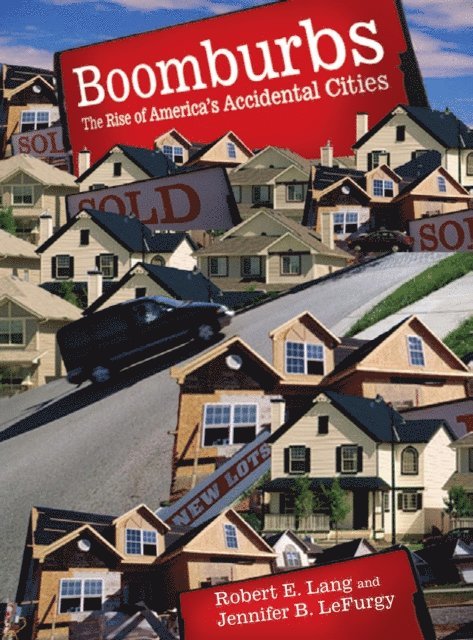
A glance at a list of America's fastest growing ""cities"" reveals quite a surprise: most are really overgrown suburbs. Places such as Anaheim, California, Coral Springs, Florida, Naperville, Illinois, North Las Vegas, Nevada, and Plano, Texas, have swelled to big-city size with few people really noticingincluding many of their ten million residents. These ""boomburbs"" are large, rapidly growing, incorporated communities of more than 100,000 residents that are not the biggest city in their region. Here, Robert E. Lang and Jennifer B. LeFurgy explain who lives in them, what they look like, how they are governed, and why their rise calls into question the definition of urban.Located in over twenty-five major metro areas throughout the United States, numerous boomburbs have doubled, tripled, even quadrupled in size between census reports. Some are now more populated than traditional big cities. The population of the biggest boomburbMesa, Arizonarecently surpassed that of Minneapolis and Miami.Typically large and sprawling, boomburbs are ""accidental cities,"" but not because they lack planning. Many are made up of master-planned communities that have grown into one another. Few anticipated becoming big cities and unintentionally arrived at their status. Although boomburbs possess elements found in cities such as housing, retailing, offices, and entertainment, they lack large downtowns. But they can contain high-profile industries and entertainment venues: the Los Angeles Angels of Anaheim and Arizona Cardinals are among over a dozen major-league sports teams who play in the boomburbs.Urban in fact but not in feel, these drive-by cities of highways, office parks, and shopping malls are much more horizontally built and less pedestrian friendly than most older suburbs. And, contrary to common perceptions of suburbia, they are not rich and elitist. Poverty is often seen in boomburb communities of small single-family homes, neighborhoods that once represented the American dream.Boomburbs are a quintessential American landscape, embodying much of the nation's complexity, expansiveness, and ambiguity. This fascinating look at the often contradictory world of boomburbs examines why America's suburbs are thriving and how they are shaping the lives of millions of residents.
E-bok
PDF, Engelska, 2005333 kr
Läs direkt efter köp
Results from Census 2000 continue to reveal the striking changes taking place in the nation's cities and suburbs during the 1990s. Thanks to a decade of strong economic growth, concentrated poverty in inner cities declined dramatically, homeownership rose among young minority households, and workers from abroad settled in growing metropolitan areas that had experienced little immigration to date. This second volume in the Redefining Urban and Suburban America series makes clear, however, that regional differences add texture to these broader social and economic trends. Using data from the Census "long form," the contributors to this book probe migration, income and poverty, and housing trends in the nation's largest cities and metropolitan areas. Economically, the fast-growing Sunbelt and the Midwest performed well in the 1990s, enjoying declining poverty rates, rising homeownership, and the evolution of a solid middle-class population. Cities like San Antonio, Chicago, Houston, and Columbus saw stunning declines in high-poverty neighborhoods. The story was more mixed in the coastal areas of the Northeast and West, where poverty rates rose in cities such as Boston, New York, Washington, and Los Angeles. On net, their metro areas lost residents to other parts of the United States, even as they gained workers and families from abroad. This volume provides a closer look at the unprecedented social and economic changes taking place in the nation's oldest and newest communities, and explores the implications for a diverse set of policy areas, including metropolitan development patterns, immigrant incorporation, and the promotion of affordable housing and homeownership.