Johns Hopkins Introductory Studies in the History of Technology – serie
Visar alla böcker i serien Johns Hopkins Introductory Studies in the History of Technology. Handla med fri frakt och snabb leverans.
8 produkter
8 produkter
537 kr
Tillfälligt slut
Patrick M. Malone demonstrates how innovative engineering helped make Lowell, Massachusetts, a potent symbol of American industrial prowess in the 19th century. Waterpower spurred the industrialization of the early United States and was the principal power for textile manufacturing until well after the Civil War. Industrial cities therefore grew alongside many of America's major waterways. Ideally located at Pawtucket Falls on the Merrimack River, Lowell was one such city-a rural village rapidly transformed into a booming center for textile production and machine building. Malone explains how engineers created a complex canal and lock system in Lowell which harnessed the river and powered mills throughout the city. James B. Francis, arguably the finest engineer in 19th-century America, played a key role in the history of Lowell's urban industrial development. An English immigrant who came to work for Lowell's Proprietors of Locks and Canals as a young man, Francis rose to become both the company's chief engineer and its managing executive.Linking Francis's life and career with the larger story of waterpower in Lowell, Malone offers the only complete history of the design, construction, and operation of the Lowell canal system. Waterpower in Lowell informs broader understanding of urban industrial development, American scientific engineering, and the environmental impacts of technology. Its clear and instructional discussions of hydraulic technology and engineering principles make it a useful resource for a range of courses, including the history of technology, urban history, and American business history.
363 kr
Skickas
Patrick M. Malone demonstrates how innovative engineering helped make Lowell, Massachusetts, a potent symbol of American industrial prowess in the 19th century. Waterpower spurred the industrialization of the early United States and was the principal power for textile manufacturing until well after the Civil War. Industrial cities therefore grew alongside many of America's major waterways. Ideally located at Pawtucket Falls on the Merrimack River, Lowell was one such city-a rural village rapidly transformed into a booming center for textile production and machine building. Malone explains how engineers created a complex canal and lock system in Lowell which harnessed the river and powered mills throughout the city. James B. Francis, arguably the finest engineer in 19th-century America, played a key role in the history of Lowell's urban industrial development. An English immigrant who came to work for Lowell's Proprietors of Locks and Canals as a young man, Francis rose to become both the company's chief engineer and its managing executive.Linking Francis's life and career with the larger story of waterpower in Lowell, Malone offers the only complete history of the design, construction, and operation of the Lowell canal system. Waterpower in Lowell informs broader understanding of urban industrial development, American scientific engineering, and the environmental impacts of technology. Its clear and instructional discussions of hydraulic technology and engineering principles make it a useful resource for a range of courses, including the history of technology, urban history, and American business history.
326 kr
Tillfälligt slut
In September 1878, Thomas Alva Edison brashly-and prematurely-proclaimed his breakthrough invention of a workable electric light. That announcement was followed by many months of intense experimentation that led to the successful completion of his Pearl Street station four years later. Edison was not alone-nor was he first-in developing an incandescent light bulb, but his was the most successful of all competing inventions. Drawing from the documents in the Edison archives, Robert Friedel and Paul Israel explain how this came to be. They explore the process of invention through the Menlo Park notes, discussing the full range of experiments, including the testing of a host of materials, the development of such crucial tools as the world's best vacuum pump, and the construction of the first large-scale electrical generators and power distribution systems. The result is a fascinating story of excitement, risk, and competition.Revised and updated from the original 1986 edition, this definitive study of the most famous invention of America's most famous inventor is completely keyed to the printed and electronic versions of the Edison Papers, inviting the reader to explore further the remarkable original sources.
Lessons amid the Rubble
An Introduction to Post-Disaster Engineering and Ethics
Inbunden, Engelska, 2010
574 kr
Tillfälligt slut
The aftermath of September 11, 2001, brought the subject of engineering-failure forensics to public attention as had no previous catastrophe. In keeping with the engineering profession's long tradition of building a positive future out of disasters, Lessons amid the Rubble uses the collapse of the World Trade Center towers to explore the nature and future of engineering education in the United States. Sarah K. A. Pfatteicher draws on historical and current practice in engineering design, construction, and curricula to discuss how engineers should conceive, organize, and execute a search for the reasons behind the failure of man-made structures. Her survey traces the analytical journey engineers take after a disaster and discusses the technical, social, and moral implications of their work. After providing an overview of the investigations into the collapse of the Twin Towers, Pfatteicher explores six related events to reveal deceptively simple lessons about the engineering enterprise, each of which embodies an ethical dilemma at the heart of the profession.In tying these themes together, Pfatteicher highlights issues of professionalism and professional identity infused in engineering education and encourages an explicit, direct conversation about their meaning. Sophisticated and engagingly written, this volume combines history, engineering, ethics, and philosophy to provoke a deep discussion about the symbolic meaning of buildings and other structures and the nature of engineering.
Lessons amid the Rubble
An Introduction to Post-Disaster Engineering and Ethics
Häftad, Engelska, 2010
333 kr
Skickas inom 7-10 vardagar
The aftermath of September 11, 2001, brought the subject of engineering-failure forensics to public attention as had no previous catastrophe. In keeping with the engineering profession's long tradition of building a positive future out of disasters, Lessons amid the Rubble uses the collapse of the World Trade Center towers to explore the nature and future of engineering education in the United States. Sarah K. A. Pfatteicher draws on historical and current practice in engineering design, construction, and curricula to discuss how engineers should conceive, organize, and execute a search for the reasons behind the failure of man-made structures. Her survey traces the analytical journey engineers take after a disaster and discusses the technical, social, and moral implications of their work. After providing an overview of the investigations into the collapse of the Twin Towers, Pfatteicher explores six related events to reveal deceptively simple lessons about the engineering enterprise, each of which embodies an ethical dilemma at the heart of the profession.In tying these themes together, Pfatteicher highlights issues of professionalism and professional identity infused in engineering education and encourages an explicit, direct conversation about their meaning. Sophisticated and engagingly written, this volume combines history, engineering, ethics, and philosophy to provoke a deep discussion about the symbolic meaning of buildings and other structures and the nature of engineering.
322 kr
Skickas inom 7-10 vardagar
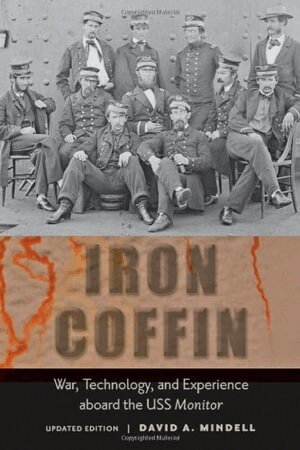
The USS Monitor famously battled the CSS Virginia (the armored and refitted USS Merrimack) at Hampton Roads in March 1862. This updated edition of David A. Mindell's classic account of the ironclad warships and the human dimension of modern warfare commemorates the 150th anniversary of this historic encounter. Mindell explores how mariners-fighting "blindly", below the waterline-lived in and coped with the metal monster they called the "iron coffin". He investigates how the ironclad technology, new to war in the nineteenth century, changed not only the tools but also the experience of combat and anticipated today's world of mechanized, pushbutton warfare. The writings of William Frederick Keeler, the ship's paymaster, inform much of this book, as do the experiences of everyman sailor George Geer, who held Keeler in some contempt. Mindell uses their compelling stories, and those of other shipmates, to recreate the thrills and dangers of living and fighting aboard this superweapon. Recently, pieces of the Monitor wreck have been raised from their watery grave, and with them, information about the ship continues to be discovered.A new epilogue describes the recovery of the Monitor turret and its display at the USS Monitor Museum in Newport News, Virginia. This sensitive and enthralling history of the USS Monitor ensures that this fateful ship, and the men who served on it, will be remembered for generations to come.
537 kr
Tillfälligt slut
The fame, talent, and success of the Beatles need no introduction. Nor does the world need another book exploring the band's skill and its influence on music and society in the United States, Britain, and the rest of the world. Andre Millard instead studies the Beatlemania phenomenon from an original perspective - the relationship among the music business, recording technologies, and teens and young adult culture of the era. Millard argues that, despite the Beatles' indisputable skill, they would not have attained the global recognition and been as influential without the convergence of significant developments in the way music was produced, recorded, sold, and consumed. As the Second Industrial Revolution hit full swing and baby boomers came of age, the reel-to-reel recorder and other technological advances sped the evolution of the music business. Musicians, recording studios and record labels, and music fans used and interacted with music-making and - playing technology in new ways. Higher quality machines made listening to records and the radio an experience that one could easily share with others, even if they weren't in the same physical space.At the same time, an increase in cross-Atlantic commerce - especially of entertainment products - led to a freer exchange of ideas and styles of expression, notably among the middle and lower classes in the U.S. and the UK. At that point, Millard argues, the Beatles rode their remarkable musicianship and cultural savvy to an unprecedented bond with their fans-and spawned Beatlemania. Refreshing and insightful, "Beatlemania" offers a deeper understanding the days of the Fab Four and the band's long-term effects on the business and culture of pop music.
262 kr
Tillfälligt slut
The fame, talent, and success of the Beatles need no introduction. Nor does the world need another book exploring the band's skill and its influence on music and society in the United States, Britain, and the rest of the world. Andre Millard instead studies the Beatlemania phenomenon from an original perspective - the relationship among the music business, recording technologies, and teens and young adult culture of the era. Millard argues that, despite the Beatles' indisputable skill, they would not have attained the global recognition and been as influential without the convergence of significant developments in the way music was produced, recorded, sold, and consumed. As the Second Industrial Revolution hit full swing and baby boomers came of age, the reel-to-reel recorder and other technological advances sped the evolution of the music business. Musicians, recording studios and record labels, and music fans used and interacted with music-making and -playing technology in new ways. Higher quality machines made listening to records and the radio an experience that one could easily share with others, even if they weren't in the same physical space.At the same time, an increase in cross-Atlantic commerce - especially of entertainment products - led to a freer exchange of ideas and styles of expression, notably among the middle and lower classes in the U.S. and the UK. At that point, Millard argues, the Beatles rode their remarkable musicianship and cultural savvy to an unprecedented bond with their fans-and spawned Beatlemania. Refreshing and insightful, "Beatlemania" offers a deeper understanding the days of the Fab Four and the band's long-term effects on the business and culture of pop music.