Judicial Systems of the World – Serie
Visar alla böcker i serien Judicial Systems of the World. Handla med fri frakt och snabb leverans.
4 produkter
4 produkter
1 480 kr
Skickas inom 3-6 vardagar
The Judicial System of Russia paints a portrait of the courts of the Russian Federation under Putin, how they work in practice, and what shapes the behaviour of its judges. It stresses the dual nature of a judicial system, where ordinary cases are for the most part handled fairly, but where cases of interest to powerful persons are subject to influence--a common situation in authoritarian states. In so doing, the authors trace the origins of some contemporary practices to the Soviet past, but also identify novelties. They pay close attention to the struggles of reformers to make the courts fairer and more efficient, along with the measures taken to ensure that judges conform to the expectations of their political masters. This means dealing with the evolution of judicial governance, including the selection, promotion, and disciplining of judges.In studying the actual operation of the courts, the authors take a socio-legal approach, emphasizing how different players (petitioners, respondents, lawyers, prosecutors, accused, judges) behave and why. This means dealing with the full gamut of courts from justices of the peace through the Supreme and Constitutional Courts and analysing their conduct in ordinary civil disputes, criminal cases, business disputes, administrative justice (claims against state officials), and constitutional matters. The authors also examine the relation of the public to the courts, including its readiness to litigate disputes despite generally negative views of the courts. This analysis of the administration of justice in Russia covers both the Constitutional Amendments of 2020 and developments relating to the first months of the 2022 War in Ukraine. It is a must read for academics, practitioners, and all those with an interest in comparative courts and Russia's judicial system.
319 kr
Skickas inom 5-8 vardagar
The Judicial System of Russia paints a portrait of the courts of the Russian Federation under Putin, how they work in practice, and what shapes the behaviour of its judges. It stresses the dual nature of a judicial system, where ordinary cases are for the most part handled fairly, but where cases of interest to powerful persons are subject to influence--a common situation in authoritarian states. In so doing, the authors trace the origins of some contemporary practices to the Soviet past, but also identify novelties. They pay close attention to the struggles of reformers to make the courts fairer and more efficient, along with the measures taken to ensure that judges conform to the expectations of their political masters. This means dealing with the evolution of judicial governance, including the selection, promotion, and disciplining of judges.In studying the actual operation of the courts, the authors take a socio-legal approach, emphasizing how different players (petitioners, respondents, lawyers, prosecutors, accused, judges) behave and why. This means dealing with the full gamut of courts from justices of the peace through the Supreme and Constitutional Courts and analysing their conduct in ordinary civil disputes, criminal cases, business disputes, administrative justice (claims against state officials), and constitutional matters. The authors also examine the relation of the public to the courts, including its readiness to litigate disputes despite generally negative views of the courts. This analysis of the administration of justice in Russia covers both the Constitutional Amendments of 2020 and developments relating to the first months of the 2022 War in Ukraine. It is a must read for academics, practitioners, and all those with an interest in comparative courts and Russia's judicial system.
318 kr
Skickas inom 7-10 vardagar
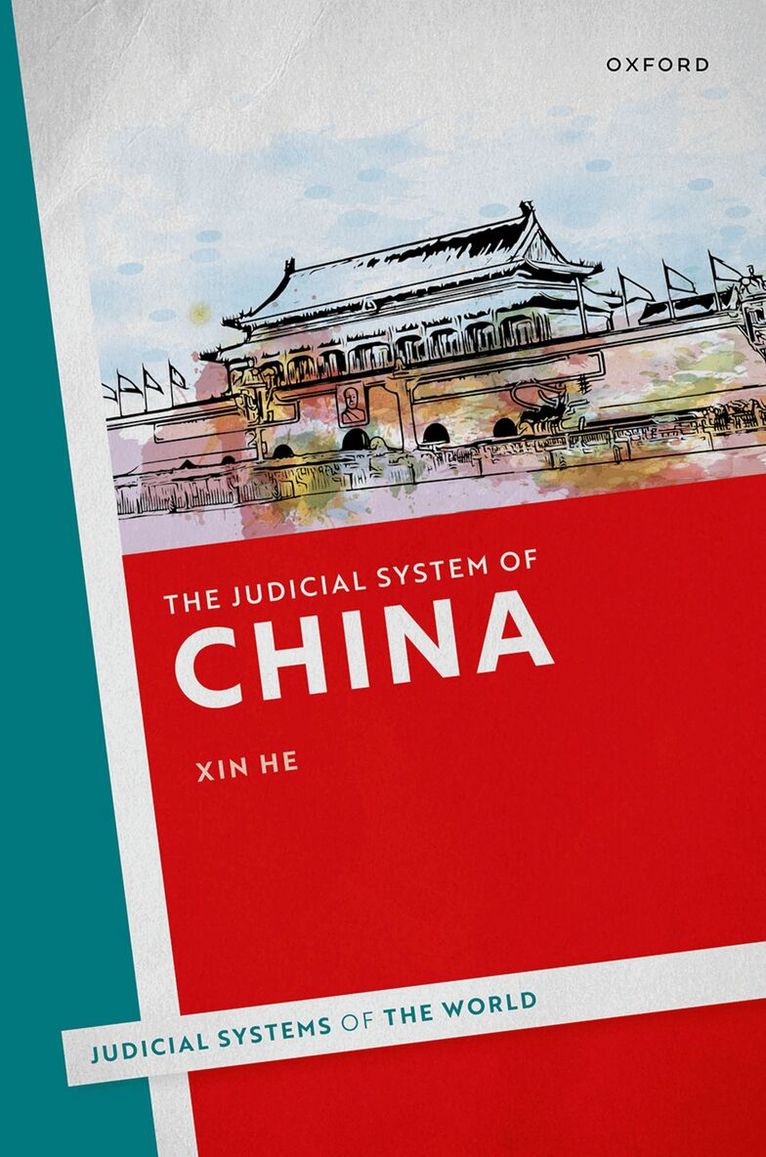
Grounded in both English- and Chinese-language sources, The Judicial System of China is a systematic study of Chinese courts after Xi Jinping took power and thoroughly reformed its judiciary. It draws upon extensive empirical scholarship in both Chinese and English languages, complementing it with fresh research based on court statistics, public opinion polling, and interviews with judges, lawyers, and litigants. The book addresses a range of timely subjects, including how Chinese courts have come to their present shape, how decisions are made on civil, criminal, and administrative cases, and what explains the behaviour of the judges. It documents not only the institutional rules, but also the behavioral patterns of the judges and other players revolving around the courts.This book presents a governance model for understanding the operation of the Chinese court system. The courts have two overarching characteristics under this model: supporting the state's goals of policy implementation and legitimacy enhancement. The various policies that the courts are tasked with implementing and the approaches the courts use for enhancing the judiciary's legitimacy--and by extension, that of the state--have played key roles in the courts' evolution. The model sheds light on the rationales that have underlain the changes in the system over time. Engaging extensively with the literature in law and politics, law and society, and institutional economics, The Judicial System of China provides readers with a deeper understanding of the inner workings and day-to-day realities of the Chinese judicial system.
1 544 kr
Skickas inom 3-6 vardagar
Grounded in both English- and Chinese-language sources, The Judicial System of China is a systematic study of Chinese courts after Xi Jinping took power and thoroughly reformed its judiciary. It draws upon extensive empirical scholarship in both Chinese and English languages, complementing it with fresh research based on court statistics, public opinion polling, and interviews with judges, lawyers, and litigants. The book addresses a range of timely subjects, including how Chinese courts have come to their present shape, how decisions are made on civil, criminal, and administrative cases, and what explains the behaviour of the judges. It documents not only the institutional rules, but also the behavioral patterns of the judges and other players revolving around the courts.This book presents a governance model for understanding the operation of the Chinese court system. The courts have two overarching characteristics under this model: supporting the state's goals of policy implementation and legitimacy enhancement. The various policies that the courts are tasked with implementing and the approaches the courts use for enhancing the judiciary's legitimacy--and by extension, that of the state--have played key roles in the courts' evolution. The model sheds light on the rationales that have underlain the changes in the system over time. Engaging extensively with the literature in law and politics, law and society, and institutional economics, The Judicial System of China provides readers with a deeper understanding of the inner workings and day-to-day realities of the Chinese judicial system.