Peter H. Solomon, Jr. – författare
Visar alla böcker från författaren Peter H. Solomon, Jr.. Handla med fri frakt och snabb leverans.
5 produkter
5 produkter
1 480 kr
Skickas inom 3-6 vardagar
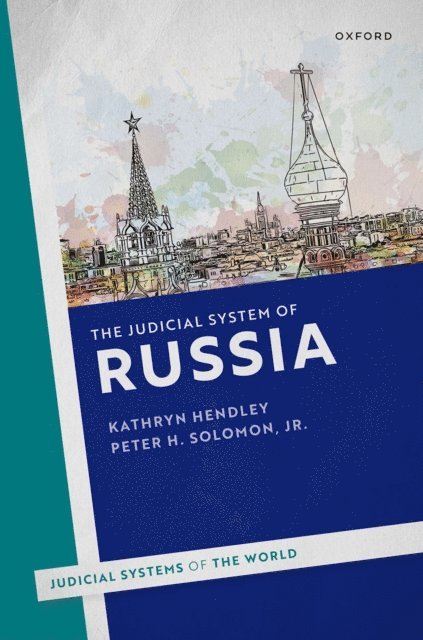
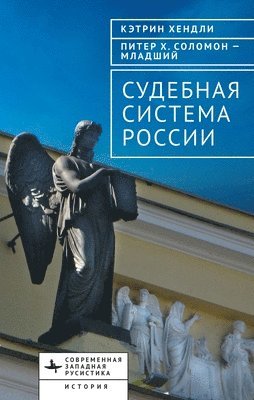
The Judicial System of Russia paints a portrait of the courts of the Russian Federation under Putin, how they work in practice, and what shapes the behaviour of its judges. It stresses the dual nature of a judicial system, where ordinary cases are for the most part handled fairly, but where cases of interest to powerful persons are subject to influence--a common situation in authoritarian states. In so doing, the authors trace the origins of some contemporary practices to the Soviet past, but also identify novelties. They pay close attention to the struggles of reformers to make the courts fairer and more efficient, along with the measures taken to ensure that judges conform to the expectations of their political masters. This means dealing with the evolution of judicial governance, including the selection, promotion, and disciplining of judges.In studying the actual operation of the courts, the authors take a socio-legal approach, emphasizing how different players (petitioners, respondents, lawyers, prosecutors, accused, judges) behave and why. This means dealing with the full gamut of courts from justices of the peace through the Supreme and Constitutional Courts and analysing their conduct in ordinary civil disputes, criminal cases, business disputes, administrative justice (claims against state officials), and constitutional matters. The authors also examine the relation of the public to the courts, including its readiness to litigate disputes despite generally negative views of the courts. This analysis of the administration of justice in Russia covers both the Constitutional Amendments of 2020 and developments relating to the first months of the 2022 War in Ukraine. It is a must read for academics, practitioners, and all those with an interest in comparative courts and Russia's judicial system.
319 kr
Skickas inom 5-8 vardagar
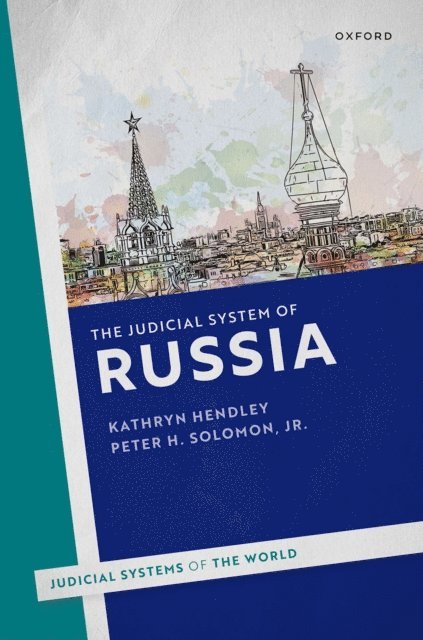
The Judicial System of Russia paints a portrait of the courts of the Russian Federation under Putin, how they work in practice, and what shapes the behaviour of its judges. It stresses the dual nature of a judicial system, where ordinary cases are for the most part handled fairly, but where cases of interest to powerful persons are subject to influence--a common situation in authoritarian states. In so doing, the authors trace the origins of some contemporary practices to the Soviet past, but also identify novelties. They pay close attention to the struggles of reformers to make the courts fairer and more efficient, along with the measures taken to ensure that judges conform to the expectations of their political masters. This means dealing with the evolution of judicial governance, including the selection, promotion, and disciplining of judges.In studying the actual operation of the courts, the authors take a socio-legal approach, emphasizing how different players (petitioners, respondents, lawyers, prosecutors, accused, judges) behave and why. This means dealing with the full gamut of courts from justices of the peace through the Supreme and Constitutional Courts and analysing their conduct in ordinary civil disputes, criminal cases, business disputes, administrative justice (claims against state officials), and constitutional matters. The authors also examine the relation of the public to the courts, including its readiness to litigate disputes despite generally negative views of the courts. This analysis of the administration of justice in Russia covers both the Constitutional Amendments of 2020 and developments relating to the first months of the 2022 War in Ukraine. It is a must read for academics, practitioners, and all those with an interest in comparative courts and Russia's judicial system.
Del 100 - Cambridge Russian, Soviet and Post-Soviet Studies
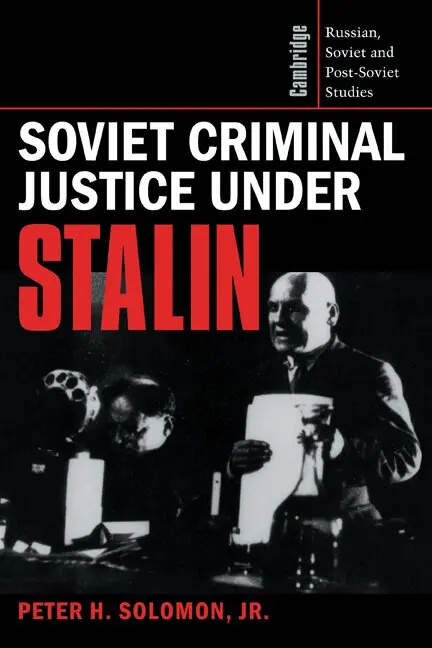
Soviet Criminal Justice under Stalin
Inbunden, Engelska, 1996
1 581 kr
Skickas inom 7-10 vardagar
Soviet Criminal Justice under Stalin, first published in 1997, is a comprehensive account of Stalin's struggle to make criminal law in the USSR a reliable instrument of rule. Using recently declassified archives, Peter Solomon tells the revealing story of non-political justice, on the local scene as well as in the center. Contrary to conventional wisdom, Solomon emphasizes the initial weakness of the Soviet state and the limits of Stalin's capacity to rule. Solomon's study also offers new perspectives on collectivization, the Great Terror, the politics of abortion and the disciplining of the labour force. This book should appeal to anyone interested in the political, social, or legal history of the USSR, judicial reform in post-Soviet states, law in authoritarian regimes, or comparative legal development.
Del 100 - Cambridge Russian, Soviet and Post-Soviet Studies
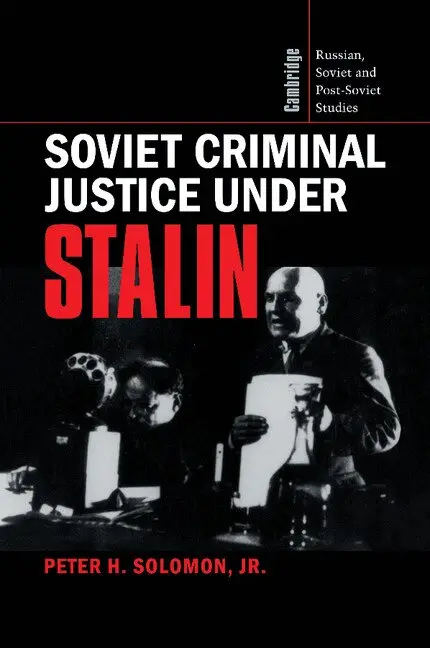
Soviet Criminal Justice under Stalin
Häftad, Engelska, 1996
649 kr
Skickas inom 7-10 vardagar
Soviet Criminal Justice under Stalin, first published in 1997, is a comprehensive account of Stalin's struggle to make criminal law in the USSR a reliable instrument of rule. Using recently declassified archives, Peter Solomon tells the revealing story of non-political justice, on the local scene as well as in the center. Contrary to conventional wisdom, Solomon emphasizes the initial weakness of the Soviet state and the limits of Stalin's capacity to rule. Solomon's study also offers new perspectives on collectivization, the Great Terror, the politics of abortion and the disciplining of the labour force. This book should appeal to anyone interested in the political, social, or legal history of the USSR, judicial reform in post-Soviet states, law in authoritarian regimes, or comparative legal development.
427 kr
Skickas inom 5-8 vardagar
ENG:The Judicial System of Russia paints a portrait of the courts of the Russian Federation under Putin, how they work in practice, and what shapes the behaviour of its judges. It stresses the dual nature of a judicial system, where ordinary cases are for the most part handled fairly, but where cases of interest to powerful persons are subject to influence--a common situation in authoritarian states. In so doing, the authors trace the origins of some contemporary practices to the Soviet past, but also identify novelties. They pay close attention to the struggles of reformers to make the courts fairer and more efficient, along with the measures taken to ensure that judges conform to the expectations of their political masters. This means dealing with the evolution of judicial governance, including the selection, promotion, and disciplining of judges.In studying the actual operation of the courts, the authors take a socio-legal approach, emphasizing how different players (petitioners, respondents, lawyers, prosecutors, accused, judges) behave and why. This means dealing with the full gamut of courts from justices of the peace through the Supreme and Constitutional Courts and analysing their conduct in ordinary civil disputes, criminal cases, business disputes, administrative justice (claims against state officials), and constitutional matters. The authors also examine the relation of the public to the courts, including its readiness to litigate disputes despite generally negative views of the courts.This analysis of the administration of justice in Russia covers both the Constitutional Amendments of 2020 and developments relating to the first months of the 2022 War in Ukraine. It is a must read for academics, practitioners, and all those with an interest in comparative courts and Russia's judicial system.RUS:В книге «Судебная система России» описывается деятельность судов Российской Федерации, их практическая работа и факторы, влияющие на поведение судей. Авторы находят истоки некоторых современных практик в советском прошлом, но также выявляют новшества последних десятилетий. Придерживаясь социально-правового подхода, Соломон и Хендли уделяют особое внимание поведению различных субъектов (заявителей, ответчиков, адвокатов, прокуроров, обвиняемых, судей) и причинам такого поведения.