Kentucky Remembered: An Oral History Series – serie
Visar alla böcker i serien Kentucky Remembered: An Oral History Series. Handla med fri frakt och snabb leverans.
16 produkter
16 produkter
1 137 kr
Skickas inom 3-6 vardagar
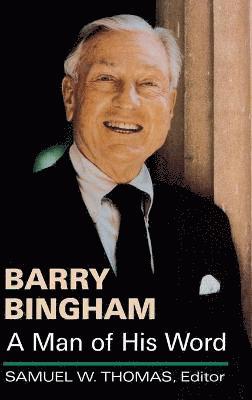
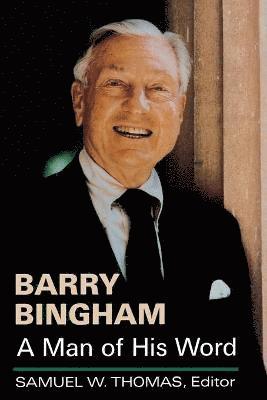
Barry Bingham, Sr., was one of this country's most influential journalists. Under his half-century of leadership, the Louisville Courier-Journal became one of America's leading newspapers, as attested by six Pulitzer Prizes. In this illuminating oral history, Samuel Thomas weaves together excerpts from more than a dozen interviews with Bingham, along with selections from his writings and comments by his wife, Mary Caperton Bingham.Barry Bingham's influence was voiced principally through newspaper journalism, but, besides owning the Courier-Journal and its evening companion, the Louisville Times, the family enterprises included WHAS radio and television and Standard Gravure Corporation, which also produced Sunday supplements for dozens of newspapers. Bingham's enterprises laid on the doorsteps of Kentuckians, and brought to them over the airwaves, insightful reporting and examination of state and local matters as well as in-depth coverage of national and world events.Bingham espoused many causes, including mental health, military preparedness, press freedom, and liberal politics. He championed civil rights, the performing arts, better education, historic preservation, and land conservation.By training and predilection, Bingham was first and foremost a writer, but he was equally articulate as a conversationalist and public speaker. His recorded interviews, excerpted here, are clear and concise, expressive and informative. From these selections emerges a portrait of a man of extraordinary vision who used his wealth and power for the good of his community, his state, and his nation.
652 kr
Skickas inom 3-6 vardagar
In this sequel to Conversations with Kentucky Writers, L. Elisabeth Beattie brings together in-depth interviews with sixteen of the state's premiere wordsmiths. This new volume offers the perspectives of poets, journalists, and scholars as they discuss their views on creativity, the teaching of writing, and the importance of Kentucky in their work. They talk frankly about how and why they do what they do. The writers speak for themselves, and their thoughts come alive on the page. Beattie's interviews reveal the allegiances and alliances among Kentucky writers that have shaped literary trends by bringing together people with shared interests, values, subjects, and styles. The interviewees include authors who are captivated in other writers and in what they have to say about the process and craft of writing; educators who are interested in Kentucky writers and what their work reveals about the nature of creativity; and historians who are concerned with Kentucky's literary and cultural heritage. The interviews reveal patterns in Kentucky literature from mid-century to the millennium, as authors talk about how their sense of place has changed over the decades and reveal the ways in which the roots of Kentucky writing have produced a literary flowering at the century's end. Includes: Sallie Bingham, Joy Bale Boone, Thomas D. Clark, John Egerton, Sarah Gorham, Lynwood Montell, Maureen Morehead, John Ed Pearce, Ameilia Blossom Pegram, Karen Robards, Jeffrey Skinner, Frederick Smock, Frank Steele, Martha Bennett Stiles, Richard Taylor, and Michael Williams.
836 kr
Skickas inom 3-6 vardagar
At the end of World War II, many thousands of Jewish Holocaust survivors immigrated to the United States from Europe in search of a new beginning. Most settled in major metropolitan areas, usually in predominantly Jewish communities, where proximity to co-religionists offered a measure of cultural and social support. However, some survivors settled in rural areas throughout the country, including in Kentucky, where they encountered an entirely different set of circumstances. Although much scholarship has been devoted to Holocaust survivors living in urban contexts, little has been written about them in the context of their experiences in rural America. Approximately forty Holocaust survivors currently live in Kentucky. Using excerpts from oral history interviews and documentary portrait photography, author Arwen Donahue and photographer Rebecca Gayle Howell tell the fascinating stories of nine of these survivors in a unique work of history and contemporary art. The book focuses on the survivors' lives after their liberation from Nazi concentration camps, illuminating their reasons for settling in Kentucky, their initial reactions to American culture, and their reflections on integrating into rural American life.
512 kr
Skickas inom 3-6 vardagar
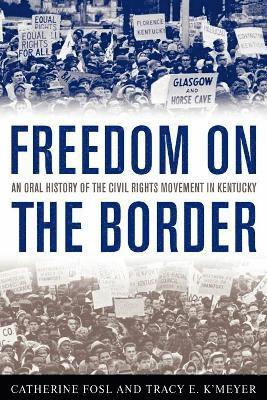
Memories fade, witnesses pass away, and the stories of how social change took place are often lost. Many of those stories, however, have been preserved thanks to the dozens of civil rights activists across Kentucky who shared their memories in the wide-ranging oral history project from which this volume arose. Through their collective memories and the efforts of a new generation of historians, the stories behind the marches, vigils, court cases, and other struggles to overcome racial discrimination are finally being brought to light. In Freedom on the Border: An Oral History of the Civil Rights Movement in Kentucky, Catherine Fosl and Tracy E. K'Meyer gather the voices of more than one hundred courageous crusaders for civil rights, many of whom have never before spoken publicly about their experiences. Their stories vividly describe pivotal moments such as the 1964 March on Frankfort, led by Martin Luther King Jr., while unearthing less familiar episodes that challenge official narratives of the movement. In vivid detail, Freedom on the Border brings this mosaic of experiences to life and presents a new, compelling picture of a vital and little-understood era in the history of Kentucky and the nation.
727 kr
Skickas inom 3-6 vardagar
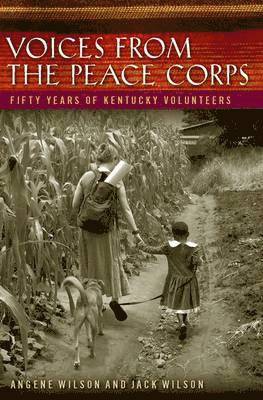
President John F. Kennedy established the Peace Corps on March 1, 1961. In the fifty years since, nearly 200,000 Americans have served in 139 countries, providing technical assistance, promoting a better understanding of American culture, and bringing the world back to the United States. In Voices from the Peace Corps: Fifty Years of Kentucky Volunteers, Angene Wilson and Jack Wilson, who served in Liberia from 1962 to 1964, follow the experiences of volunteers as they make the decision to join, attend training, adjust to living overseas and the job, make friends, and eventually return home to serve in their communities. They also describe how the volunteers made a difference in their host countries and how they became citizens of the world for the rest of their lives. Among many others, the interviewees include a physics teacher who served in Nigeria in 1961, a smallpox vaccinator who arrived in Afghanistan in 1969, a nineteen-year-old Mexican American who worked in an agricultural program in Guatemala in the 1970s, a builder of schools and relationships who served in Gabon from 1989 to 1992, and a retired office administrator who taught business in Ukraine from 2000 to 2002. Voices from the Peace Corps emphasizes the value of practical idealism in building meaningful cultural connections that span the globe.
760 kr
Skickas inom 3-6 vardagar
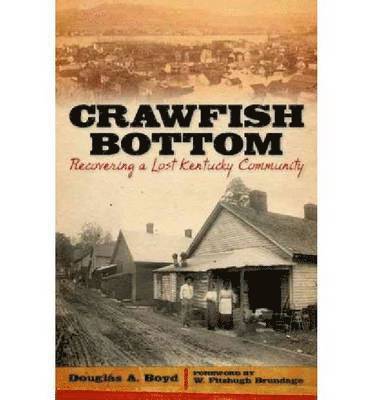
A small neighborhood in northern Frankfort, Kentucky, Crawfish Bottom was located on fifty acres of swampy land along the Kentucky River. "Craw's" reputation for vice, violence, moral corruption, and unsanitary conditions made it a target for urban renewal projects that replaced the neighborhood with the city's Capital Plaza in the mid-1960s. Douglas A. Boyd's Crawfish Bottom: Recovering a Lost Kentucky Community traces the evolution of the controversial community that ultimately saw four-hundred families displaced. Using oral histories and firsthand memories, Boyd not only provides a record of a vanished neighborhood and its culture but also demonstrates how this type of study enhances the historical record. A former Frankfort police officer describes Craw's residents as a "rough class of people, who didn't mind killing or being killed." In Crawfish Bottom, the former residents of Craw acknowledge the popular misconceptions about their community but offer a richer and more balanced view of the past.
636 kr
Skickas inom 3-6 vardagar
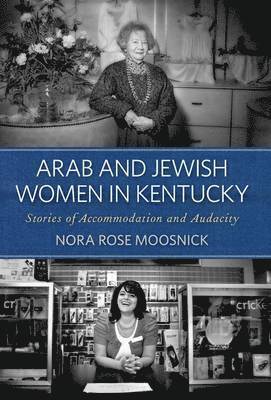
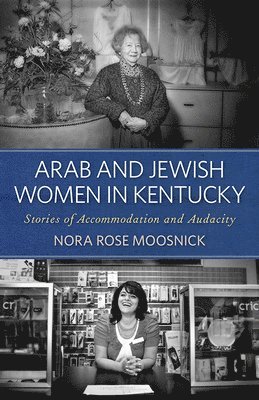
Outwardly it would appear that Arab and Jewish immigrants comprise two distinct groups with differing cultural backgrounds and an adversarial relationship. Yet, as immigrants who have settled in communities at a distance from metropolitan areas, both must negotiate complex identities. Growing up in Kentucky as the granddaughter of Jewish immigrants, Nora Rose Moosnick observed this traditionally mismatched pairing firsthand, finding that, Arab and Jewish immigrants have been brought together by their shared otherness and shared fears. Even more intriguing to Moosnick was the key role played by immigrant women of both cultures in family businesses -- a similarity which brings the two groups close together as they try to balance the demands of integration into American society.In Arab and Jewish Women in Kentucky: Stories of Audacity and Accomodation, Moosnick reveals how Jewish and Arab women have navigated the intersection of tradition, assimilation, and Kentucky's cultural landscape. The stories of ten women's experiences as immigrants or the children of immigrants join around common themes of public service to their communities, intergenerational relationships, running small businesses, and the difficulties of juggling family and work. Together, their compelling narratives challenge misconceptions and overcome the invisibility of Arabs and Jews in out of the way places in America.
986 kr
Skickas inom 3-6 vardagar
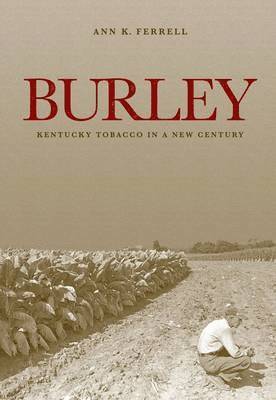
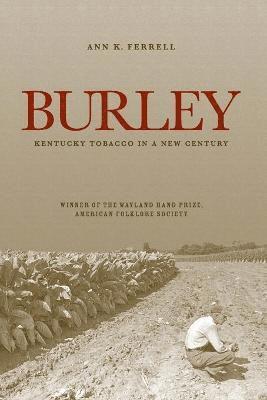
Once iconic American symbols, tobacco farms are gradually disappearing. It is difficult for many people to lament the loss of a crop that has come to symbolize addiction, disease, and corporate deception; yet, in Kentucky, the plant has played an important role in economic development and prosperity. Burley tobacco -- a light, air-cured variety used in cigarette production -- has long been the Commonwealth's largest cash crop and an important aspect of regional identity, along with bourbon, bluegrass music, and Thoroughbred horses.In Burley: Kentucky Tobacco in a New Century, Ann K. Ferrell investigates the rapidly transforming process of raising and selling tobacco by chronicling her conversations with the farmers who know the crop best. She demonstrates that although the 2004 "buyout" ending the federal tobacco program is commonly perceived to be the most significant change that growers have had to negotiate, it is, in reality, only one new factor among many. Burley reveals the tangible and intangible challenges tobacco farmers face today, from the logistics of cultivation to the growing stigma against the crop.Ferrell uses ethnography, archival research, and rhetorical analysis to tell the complex story of burley tobacco production in twenty-first-century Kentucky. Not only does she give a voice to the farmers who persevere in this embattled industry, but she also sheds light on their futures, contesting the widely held assumption that they can easily replace the crop by diversifying their operations with alternative crops. As tobacco fades from both the physical and economic landscapes, this nuanced volume documents and explores the culture and practices of burley production today.
440 kr
Skickas inom 3-6 vardagar
A small neighborhood in northern Frankfort, Kentucky, Crawfish Bottom was located on fifty acres of swampy land along the Kentucky River. "Craw's" reputation for vice, violence, moral corruption, and unsanitary conditions made it a target for urban renewal projects that replaced the neighborhood with the city's Capital Plaza in the mid-1960s. Douglas A. Boyd's Crawfish Bottom: Recovering a Lost Kentucky Community traces the evolution of the controversial community that ultimately saw four-hundred families displaced. Using oral histories and firsthand memories, Boyd not only provides a record of a vanished neighborhood and its culture but also demonstrates how this type of study enhances the historical record. A former Frankfort police officer describes Craw's residents as a "rough class of people, who didn't mind killing or being killed." In Crawfish Bottom, the former residents of Craw acknowledge the popular misconceptions about their community but offer a richer and more balanced view of the past.
216 kr
Skickas
Outwardly it would appear that Arab and Jewish immigrants comprise two distinct groups with differing cultural backgrounds and an adversarial relationship. Yet, as immigrants who have settled in communities at a distance from metropolitan areas, both must negotiate complex identities. Growing up in Kentucky as the granddaughter of Jewish immigrants, Nora Rose Moosnick observed this traditionally mismatched pairing firsthand, finding that, Arab and Jewish immigrants have been brought together by their shared otherness and shared fears. Even more intriguing to Moosnick was the key role played by immigrant women of both cultures in family businesses - a similarity which brings the two groups close together as they try to balance the demands of integration into American society. In Arab and Jewish Women in Kentucky: Stories of Audacity and Accomodation, Moosnick reveals how Jewish and Arab women have navigated the intersection of tradition, assimilation, and Kentucky's cultural landscape. The stories of ten women's experiences as immigrants or the children of immigrants join around common themes of public service to their communities, intergenerational relationships, running small businesses, and the difficulties of juggling family and work. Together, their compelling narratives challenge misconceptions and overcome the invisibility of Arabs and Jews in out of the way places in America.
528 kr
Skickas inom 3-6 vardagar
Barry Bingham, Sr., was one of this country's most influential journalists. Under his half-century of leadership, the Louisville Courier-Journal became one of America's leading newspapers, as attested by six Pulitzer Prizes. In this illuminating oral history, Samuel Thomas weaves together excerpts from more than a dozen interviews with Bingham, along with selections from his writings and comments by his wife, Mary Caperton Bingham.Barry Bingham's influence was voiced principally through newspaper journalism, but, besides owning the Courier-Journal and its evening companion, the Louisville Times, the family enterprises included WHAS radio and television and Standard Gravure Corporation, which also produced Sunday supplements for dozens of newspapers. Bingham's enterprises laid on the doorsteps of Kentuckians, and brought to them over the airwaves, insightful reporting and examination of state and local matters as well as in-depth coverage of national and world events.Bingham espoused many causes, including mental health, military preparedness, press freedom, and liberal politics. He championed civil rights, the performing arts, better education, historic preservation, and land conservation.By training and predilection, Bingham was first and foremost a writer, but he was equally articulate as a conversationalist and public speaker. His recorded interviews, excerpted here, are clear and concise, expressive and informative. From these selections emerges a portrait of a man of extraordinary vision who used his wealth and power for the good of his community, his state, and his nation.
512 kr
Skickas inom 3-6 vardagar
Once iconic American symbols, tobacco farms are gradually disappearing. It is difficult for many people to lament the loss of a crop that has come to symbolize addiction, disease, and corporate deception; yet, in Kentucky, the plant has played an important role in economic development and prosperity. Burley tobacco -- a light, air-cured variety used in cigarette production -- has long been the Commonwealth's largest cash crop and an important aspect of regional identity, along with bourbon, bluegrass music, and Thoroughbred horses.In Burley: Kentucky Tobacco in a New Century, Ann K. Ferrell investigates the rapidly transforming process of raising and selling tobacco by chronicling her conversations with the farmers who know the crop best. She demonstrates that although the 2004 "buyout" ending the federal tobacco program is commonly perceived to be the most significant change that growers have had to negotiate, it is, in reality, only one new factor among many. Burley reveals the tangible and intangible challenges tobacco farmers face today, from the logistics of cultivation to the growing stigma against the crop.Ferrell uses ethnography, archival research, and rhetorical analysis to tell the complex story of burley tobacco production in twenty-first-century Kentucky. Not only does she give a voice to the farmers who persevere in this embattled industry, but she also sheds light on their futures, contesting the widely held assumption that they can easily replace the crop by diversifying their operations with alternative crops. As tobacco fades from both the physical and economic landscapes, this nuanced volume documents and explores the culture and practices of burley production today.
572 kr
Skickas inom 3-6 vardagar
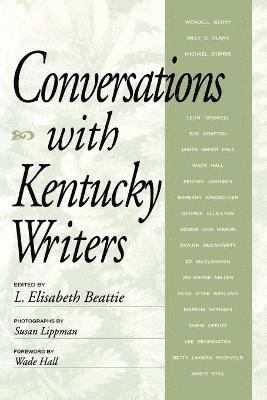
Kentucky and Kentuckians are full of stories, which may be why so many present-day writers have Kentucky roots. Whether they left and returned, like Wendell Berry and Bobbie Ann Mason, or adopted Kentucky as home, like James Still and Jim Wayne Miller, or grew up and left for good, like Michael Dorris and Barbara Kingsolver, they have one connection: Kentucky has influenced their writing and their lives. L. Elisabeth Beattie explores this influence in twenty intimate interviews.Conversations with Kentucky Writers was more than three years in the making, as Beattie traveled across the state and beyond to capture oral histories on tape. Her exhaustive knowledge of these authors helped her draw out personal revelations about their work, their lives, and the nature of writing. When Still concludes his interview with "I believe I've told you more than anybody," he could be speaking for any of Beattie's subjects.Aspiring writers will learn that Mason submitted twenty stories to the New Yorker before one was accepted, and that Still wrote articles for Sunday school magazines. There's plenty of advice: Dorris tells budding authors to get real jobs, keep journals, and read everything, even cereal boxes, and Marsha Norman reminds playwrights that "it is not the business of the theater to provide writers with a living." Kingsolver advises, "Read good stuff and write bad stuff until eventually what you're writing begins to approximate what you're reading."Beattie's collection includes striking self-portraits of such writers as Sue Grafton, Leon Driskell, James Baker Hall, Fenton Johnson, George Ella Lyon, Taylor McCafferty, Ed McClanahan, Sena Naslund, Chris Offutt, Lee Pennington, and Betty Layman Receveur.What most distinguishes these moving conversations from other author interviews is their focus on creativity, on the teaching of writing, and on the authors' strong sense of place.As Wade Hall writes in his foreword, all twenty writers recognize that their works have been significantly influenced by their "Kentucky experience." This collection offers insights into Kentucky's rich and flowering literary heritage.
440 kr
Skickas inom 3-6 vardagar
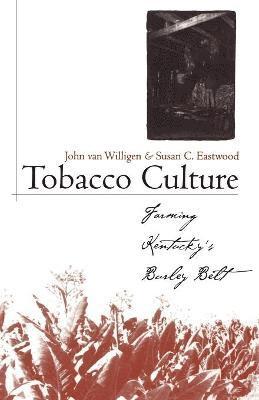
Whereas most crops drive farmers apart as they compete for the best prices, the price controls on tobacco bring growers together. The result is a culture unlike any other in America, one often forgotten or overlooked as federal and state governments fight over the spoils of the tobacco settlement. Tobacco Culture describes the process of raising a crop of burley from the perspective and experience of the farmers themselves. In the process of gathering information for the book, the authors performed most steps in the tobacco production process, from dropping plants, burning seedbeds, topping, and cutting to stripping and baling the finished product. Van Willigen and Eastwood document both present practices and historical developments in tobacco farming at the very moment a way of life stands poised for dramatic change. In addition to growing practices, the authors found other common threads linking growers and tobacco producing regions. Where tobacco is grown, it often becomes the major cash crop and carries the health of the economy. Farmer Oscar Richardson states, "It's bread and butter. It's the industry of the community, the state as a whole.... You take tobacco out of Kentucky and this farmland wouldn't be worth a nickel." Combining cultural anthropology and oral history, John van Willigen and Susan Eastwood have created a remarkable portrait of the heart of the burley belt in Central Kentucky.
498 kr
Skickas inom 3-6 vardagar
Bert T. Combs was governor of Kentucky from 1959 to 1963, but his impact on the Commonwealth continues to be felt. The state sales tax, toll road expansion, and extensive aid to public education are only a few examples of the enduring significance of his administration. This is the story of Combs's political life as remembered by him and by some sixty others who shared with him parts of that experience. Based on a two-year oral history project, this study shows how Combs emerged from an Eastern Kentucky background to become an outstanding jurist and a progressive political force in Kentucky.Not merely a recitation of Combs's achievements, this book reveals dramatically the processes by which many of them were accomplished. Describing political maneuvering, patterns of compromise, and inside stories behind important decisions, the interviewees add an otherwise missing flavor to the Combs story. This book will be attractive to political practitioners as well as to students of Kentucky history and appreciators of oral history.
497 kr
Skickas inom 3-6 vardagar
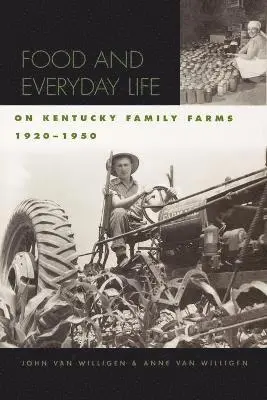
Based on interviews conducted by the University of Kentucky's Family Farm Project and supplemented by archival research, photographs, and recipes, Food and Everyday Life on Kentucky Family Farms, 1920--1950 recalls a vanishing way of life in rural Kentucky. Focusing on the family farm in the first half of the twentieth century, John van Willigen and Anne van Willigen illuminate how the revolutionary change from subsistence to market-based agricultural production that was prompted by economic stress and government policy altered not only the production, preparation, and consumption of food in Kentucky, but the social relations within the state's rural communities.