Language and the Human Lifespan (LHLS) - Böcker
Visar alla böcker i serien Language and the Human Lifespan (LHLS). Handla med fri frakt och snabb leverans.
6 produkter
6 produkter
1 694 kr
Skickas inom 5-8 vardagar
This book pioneers the study of bilingualism across the lifespan and in all its diverse forms. In framing the newest research within a lifespan perspective, the editors highlight the importance of considering an individual's age in researching how bilingualism affects language acquisition and cognitive development. A key theme is the variability among bilinguals, which may be due to a host of individual and sociocultural factors, including the degree to which bilingualism is valued within a particular context.Thus, this book is a call for language researchers, psychologists, and educators to pursue a better understanding of bilingualism in our increasingly global society.
1 630 kr
Skickas inom 7-10 vardagar
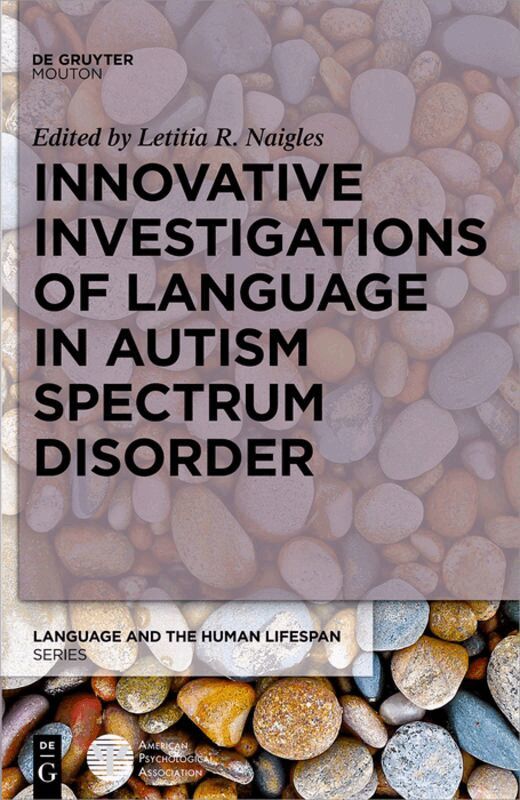
In recent decades, a growing number of children have been diagnosed with autism spectrum disorder (ASD), a condition characterized by, among other features, social interaction deficits and language impairment. Yet the precise nature of the disorder’s impact on language development is not well understood, in part because of the language variability among children across the autism spectrum. The contributors to this volume — experts in fields ranging from communication disorders to developmental and clinical psychology to linguistics — use innovative techniques to address two broad questions: Is the variability of language development and use in children with ASD a function of the language, such that some linguistic domains are more vulnerable to ASD than others? Or is the variability a function of the individual, such that some characteristics predispose those with ASD to have varying levels of difficulty with language development and use? Contributors investigate these questions across linguistic levels, from lexical semantics and single-clause syntax, to computationally complex phonology and the syntax-pragmatics interface. Authors address both spoken and written domains within the wider context of language acquisition. This timely and broadly accessible volume will be of interest to a broad range of specialists, including linguists, psychologists, sociologists, behavioral neurologists, and cognitive neuroscientists.
1 666 kr
Skickas inom 5-8 vardagar
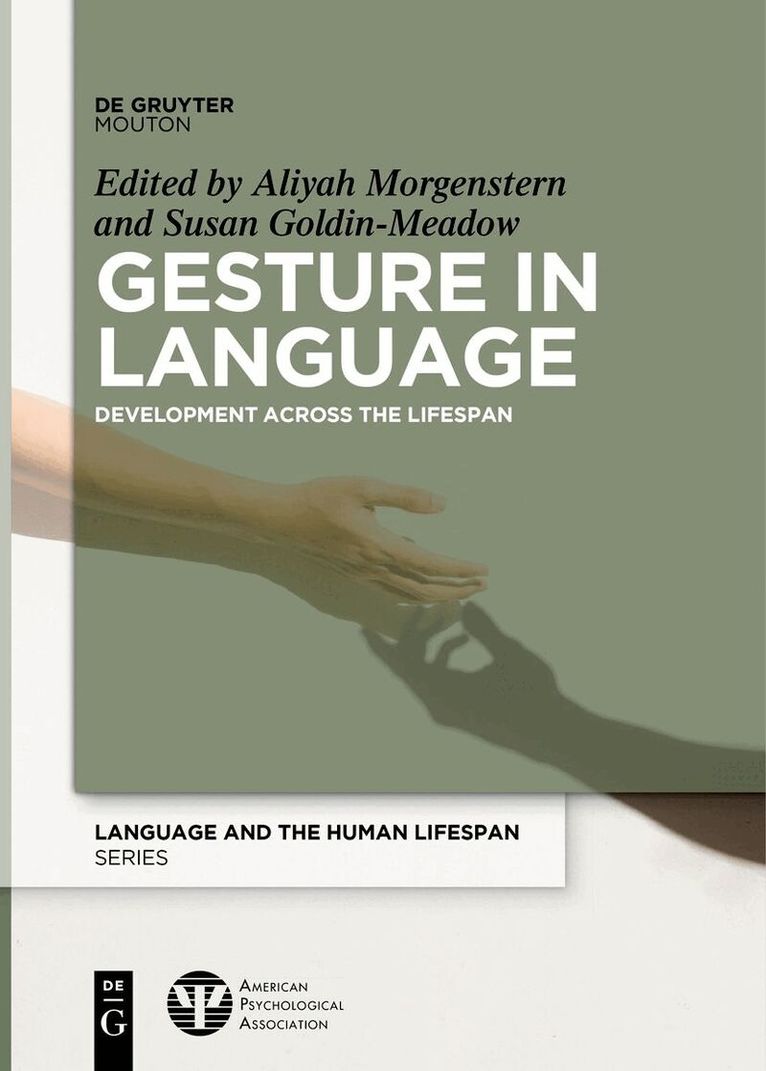
Through constant exposure to adult input in interaction, children’s language gradually develops into rich linguistic constructions containing multiple cross-modal elements subtly used together for communicative functions. Sensorimotor schemas provide the "grounding" of language in experience and lead to children’s access to the symbolic function. With the emergence of vocal or signed productions, gestures do not disappear but remain functional and diversify in form and function as children become skilled adult multimodal conversationalists. This volume examines the role of gesture over the human lifespan in its complex interaction with speech and sign. Gesture is explored in the different stages before, during, and after language has fully developed and a special focus is placed on the role of gesture in language learning and cognitive development. Specific chapters are devoted to the use of gesture in atypical populations. CONTENTS Contributors Aliyah Morgenstern and Susan Goldin-Meadow1 Introduction to Gesture in Language Part I: An Emblematic Gesture: Pointing Kensy Cooperrider and Kate Mesh2 Pointing in Gesture and Sign Aliyah Morgenstern3 Early Pointing Gestures Part II: Gesture Before Speech Meredith L. Rowe, Ran Wei, and Virginia C. Salo4 Early Gesture Predicts Later Language Development Olga Capirci, Maria Cristina Caselli, and Virginia Volterra5 Interaction Among Modalities and Within Development Part III: Gesture With Speech During Language Learning Eve V. Clark and Barbara F. Kelly6 Constructing a System of Communication With Gestures and Words Pauline Beaupoil-Hourdel7 Embodying Language Complexity: Co-Speech Gestures Between Age 3 and 4 Casey Hall, Elizabeth Wakefield, and Susan Goldin-Meadow8 Gesture Can Facilitate Children’s Learning and Generalization of Verbs Part IV: Gesture After Speech Is Mastered Jean-Marc Colletta9 On the Codevelopment of Gesture and Monologic Discourse in Children Susan Wagner Cook10 Understanding How Gestures Are Produced and Perceived Tilbe Göksun, Demet Özer, and Seda AkbIyık11 Gesture in the Aging Brain Part V: Gesture With More Than One Language Elena Nicoladis and Lisa Smithson12 Gesture in Bilingual Language Acquisition Marianne Gullberg13 Bimodal Convergence: How Languages Interact in Multicompetent Language Users’ Speech and Gestures Gale Stam and Marion Tellier14 Gesture Helps Second and Foreign Language Learning and Teaching Aliyah Morgenstern and Susan Goldin-MeadowAfterword: Gesture as Part of Language or Partner to Language Across the Lifespan IndexAbout the Editors
478 kr
Skickas inom 5-8 vardagar
This book pioneers the study of bilingualism across the lifespan and in all its diverse forms. In framing the newest research within a lifespan perspective, the editors highlight the importance of considering an individual's age in researching how bilingualism affects language acquisition and cognitive development. A key theme is the variability among bilinguals, which may be due to a host of individual and sociocultural factors, including the degree to which bilingualism is valued within a particular context.Thus, this book is a call for language researchers, psychologists, and educators to pursue a better understanding of bilingualism in our increasingly global society.
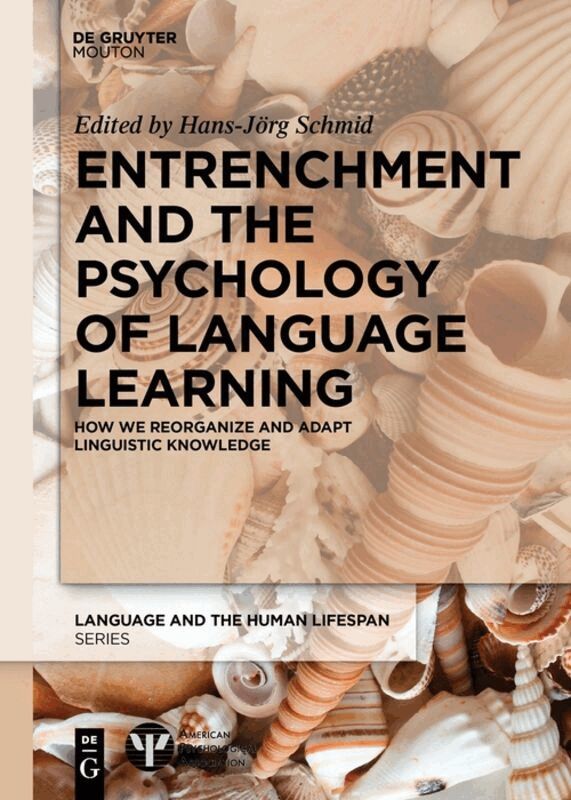
Entrenchment and the Psychology of Language Learning
How We Reorganize and Adapt Linguistic Knowledge
Häftad, Engelska, 2018
478 kr
Skickas inom 5-8 vardagar
In recent years, linguists have increasingly turned to the cognitive sciences to broaden their investigation into the roots and development of language. With the advent of cognitive-linguistic, usage-based and complex-adaptive models of language, linguists today are utilizing approaches and insights from cognitive psychology, neuropsychology, social psychology and other related fields. A key result of this interdisciplinary approach is the concept of entrenchment—the ongoing reorganization and adaptation of communicative knowledge. Entrenchment posits that our linguistic knowledge is continuously refreshed and reorganized under the influence of social interactions. It is part of a larger, ongoing process of lifelong cognitive reorganization whose course and quality is conditioned by exposure to and use of language, and by the application of cognitive abilities and processes to language. This volume enlists more than two dozen experts in the fields of linguistics, psycholinguistics, neurology, and cognitive psychology in providing a realistic picture of the psychological and linguistic foundations of language. Contributors examine the psychological foundations of linguistic entrenchment processes, and the role of entrenchment in first-language acquisition, second language learning, and language attrition. Critical views of entrenchment and some of its premises and implications are discussed from the perspective of dynamic complexity theory and radical embodied cognitive science.
307 kr
Skickas inom 3-6 vardagar
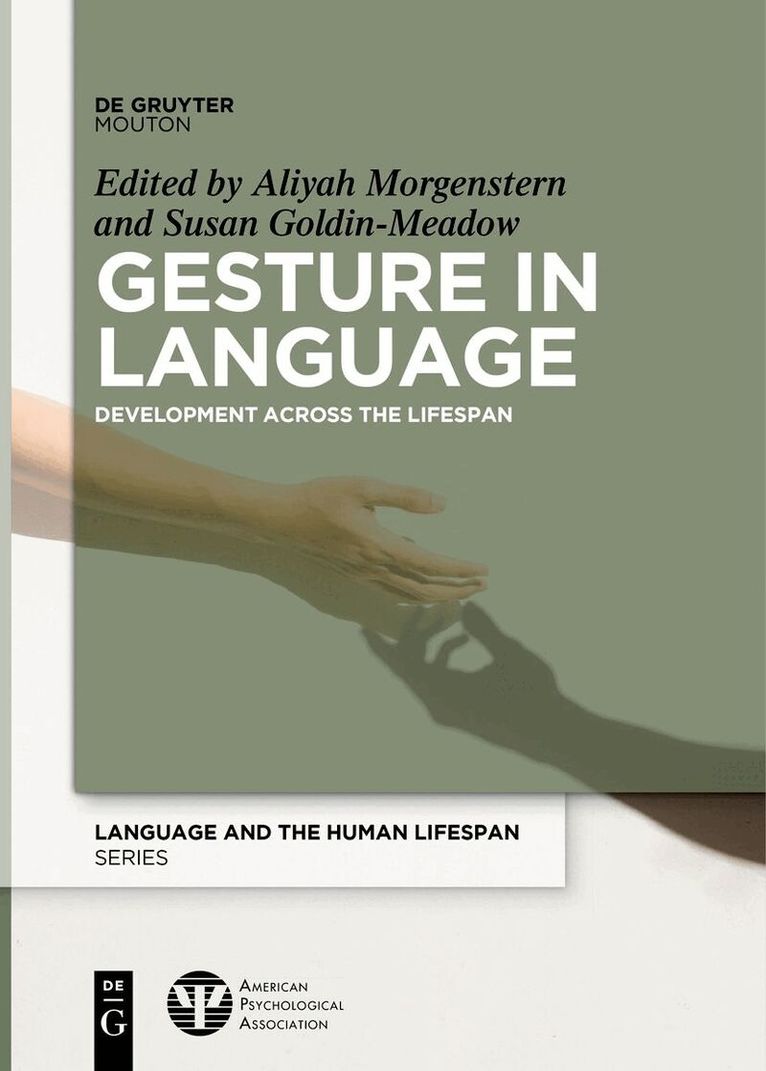
Through constant exposure to adult input in interaction, children’s language gradually develops into rich linguistic constructions containing multiple cross-modal elements subtly used together for communicative functions. Sensorimotor schemas provide the "grounding" of language in experience and lead to children’s access to the symbolic function. With the emergence of vocal or signed productions, gestures do not disappear but remain functional and diversify in form and function as children become skilled adult multimodal conversationalists. This volume examines the role of gesture over the human lifespan in its complex interaction with speech and sign. Gesture is explored in the different stages before, during, and after language has fully developed and a special focus is placed on the role of gesture in language learning and cognitive development. Specific chapters are devoted to the use of gesture in atypical populations. CONTENTS Contributors Aliyah Morgenstern and Susan Goldin-Meadow1 Introduction to Gesture in Language Part I: An Emblematic Gesture: Pointing Kensy Cooperrider and Kate Mesh2 Pointing in Gesture and Sign Aliyah Morgenstern3 Early Pointing Gestures Part II: Gesture Before Speech Meredith L. Rowe, Ran Wei, and Virginia C. Salo4 Early Gesture Predicts Later Language Development Olga Capirci, Maria Cristina Caselli, and Virginia Volterra5 Interaction Among Modalities and Within Development Part III: Gesture With Speech During Language Learning Eve V. Clark and Barbara F. Kelly6 Constructing a System of Communication With Gestures and Words Pauline Beaupoil-Hourdel7 Embodying Language Complexity: Co-Speech Gestures Between Age 3 and 4 Casey Hall, Elizabeth Wakefield, and Susan Goldin-Meadow8 Gesture Can Facilitate Children’s Learning and Generalization of Verbs Part IV: Gesture After Speech Is Mastered Jean-Marc Colletta9 On the Codevelopment of Gesture and Monologic Discourse in Children Susan Wagner Cook10 Understanding How Gestures Are Produced and Perceived Tilbe Göksun, Demet Özer, and Seda AkbIyık11 Gesture in the Aging Brain Part V: Gesture With More Than One Language Elena Nicoladis and Lisa Smithson12 Gesture in Bilingual Language Acquisition Marianne Gullberg13 Bimodal Convergence: How Languages Interact in Multicompetent Language Users’ Speech and Gestures Gale Stam and Marion Tellier14 Gesture Helps Second and Foreign Language Learning and Teaching Aliyah Morgenstern and Susan Goldin-MeadowAfterword: Gesture as Part of Language or Partner to Language Across the Lifespan IndexAbout the Editors