Latinos in American Society and Culture – serie
Visar alla böcker i serien Latinos in American Society and Culture. Handla med fri frakt och snabb leverans.
7 produkter
7 produkter
Del 4 - Latinos in American Society and Culture
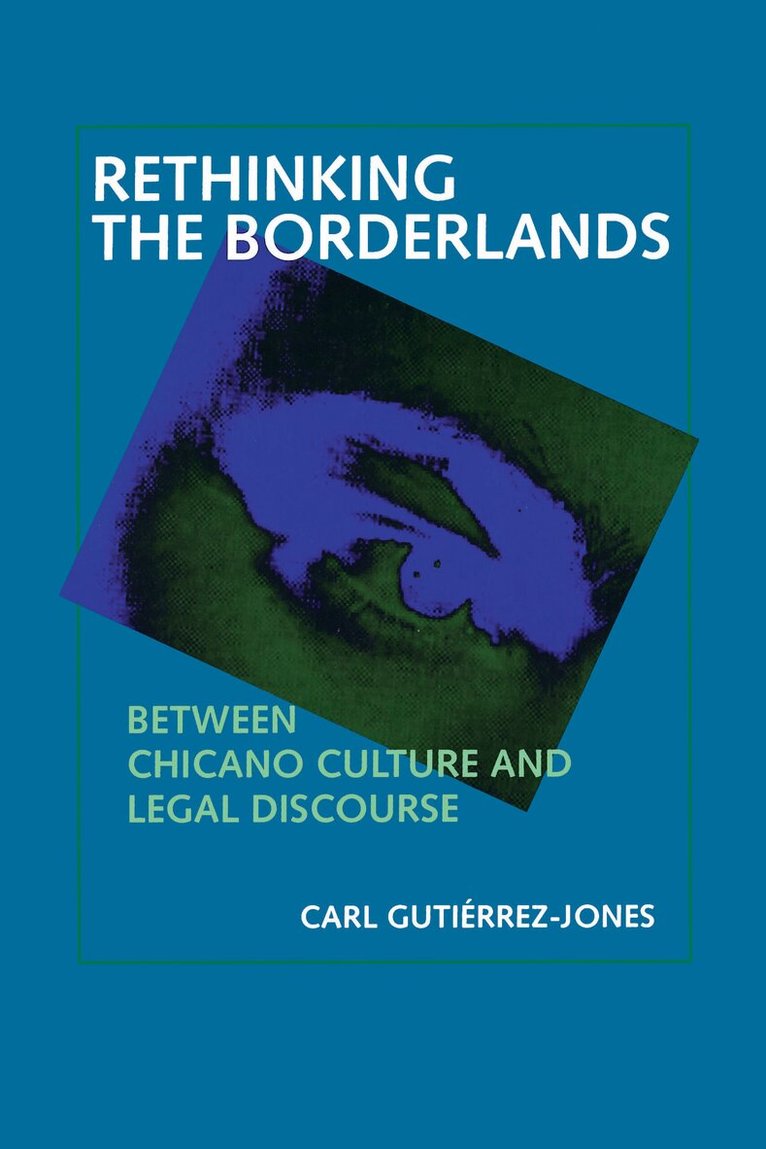
Rethinking the Borderlands
Between Chicano Culture and Legal Discourse
Häftad, Engelska, 1995
518 kr
Skickas inom 3-6 vardagar
Challenging the long-cherished notion of legal objectivity in the United States, Carl Gutierrez-Jones argues that Chicano history has been consistently shaped by racially biased, combative legal interactions. "Rethinking the Borderlands" is an insightful and provocative exploration of the ways Chicano and Chicana artists, writers, musicians, and filmmakers engage this history in order to resist the disenfranchising effects of legal institutions, including the prison and the court. Gutierrez-Jones examines the process by which Chicanos have become associated with criminality in both our legal institutions and our mainstream popular culture and thereby offers a new way of understanding minority social experience. Drawing on gender studies and psychoanalysis, as well as critical legal and race studies, Gutierrez-Jones' approach to the law and legal discourse reveals the high stakes involved when concepts of social justice are fought out in the home, in the workplace and in the streets.
Del 2 - Latinos in American Society and Culture
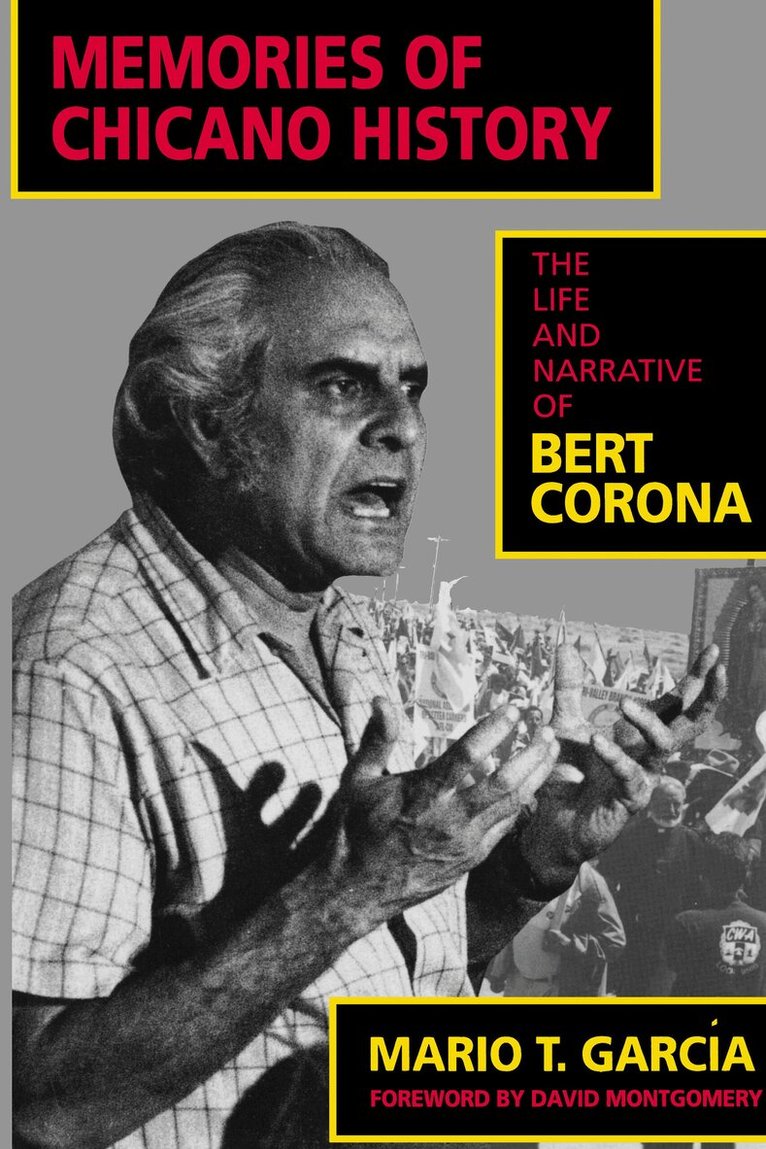
Memories of Chicano History
The Life and Narrative of Bert Corona
Häftad, Engelska, 1994
564 kr
Skickas inom 3-6 vardagar
Who is Bert Corona? Though not readily identified by most Americans, nor indeed by many Mexican Americans, Corona is a man of enormous political commitment whose activism has spanned much of this century. Now his voice can be heard by the wide audience it deserves. In this landmark publication - the first autobiography by a major figure in Chicano history - Bert Corona relates his life story. Corona was born in El Paso in 1918. Inspired by his parents' participation in the Mexican Revolution, he dedicated his life to fighting economic and social injustice. An early labor organizer among ethnic communities in southern California, Corona has agitated for labor and civil rights since the 1940s. His efforts continue today in campaigns to organize undocumented immigrants. This book evolved from a three-year oral history project between Bert Corona and historian Mario T. Garcia. The result is a testimonio, a collaborative autobiography in which historical memories are preserved more through oral traditions than through written documents. Corona's story represents a collective memory of the Mexican-American community's struggle against discrimination and racism.His narration and Garcia's analysis together provide a journey into the Mexican-American world. Bert Corona's reflections offer us an invaluable glimpse at the lifework of a major grass-roots American leader. His story is further enriched by biographical sketches of others whose names have been little recorded during six decades of American labor history.
Del 3 - Latinos in American Society and Culture
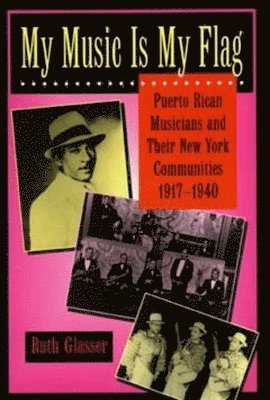
My Music Is My Flag
Puerto Rican Musicians and Their New York Communities, 1917-1940
Häftad, Engelska, 1997
564 kr
Skickas inom 3-6 vardagar
Puerto Rican music in New York is given center stage in Ruth Glasser's original and lucid study. Exploring the relationship between the social history and forms of cultural expression of Puerto Ricans, she focuses on the years between the two world wars. Her material integrates the experiences of the mostly working-class Puerto Rican musicians who struggled to make a living during this period with those of their compatriots and the other ethnic groups with whom they shared the cultural landscape. Through recorded songs and live performances, Puerto Rican musicians were important representatives for the national consciousness of their compatriots on both sides of the ocean. Yet they also played with African-American and white jazz bands, Filipino or Italian-American orchestras, and with other Latinos. Glasser provides an understanding of the way musical subcultures could exist side by side or even as a part of the mainstream, and she demonstrates the complexities of cultural nationalism and cultural authenticity within the very practical realm of commercial music.Illuminating a neglected epoch of Puerto Rican life in America, Glasser shows how ethnic groups settling in the United States had choices that extended beyond either maintenance of their homeland traditions or assimilation into the dominant culture. Her knowledge of musical styles and performance enriches her analysis, and a discography offers a helpful addition to the text.
Del 7 - Latinos in American Society and Culture
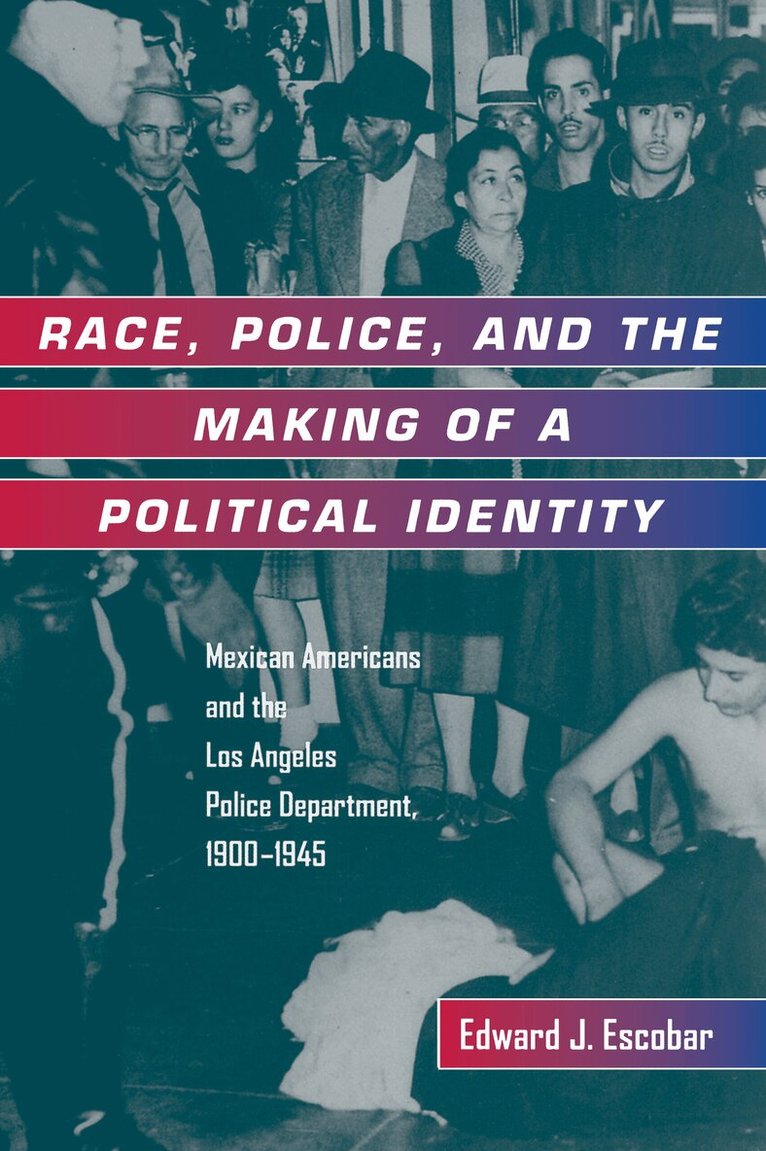
Race, Police, and the Making of a Political Identity
Mexican Americans and the Los Angeles Police Department, 1900-1945
Häftad, Engelska, 1999
564 kr
Skickas inom 3-6 vardagar
In June 1943, the city of Los Angeles was wrenched apart by the worst rioting it had seen to that point in the twentieth century. Incited by sensational newspaper stories and the growing public hysteria over allegations of widespread Mexican American juvenile crime, scores of American servicemen, joined by civilians and even police officers, roamed the streets of the city in search of young Mexican American men and boys wearing a distinctive style of dress called a Zoot Suit. Once found, the Zoot Suiters were stripped of their clothes, beaten, and left in the street. Over 600 Mexican American youths were arrested. The riots threw a harsh light upon the deteriorating relationship between the Los Angeles Mexican American community and the Los Angeles Police Department in the 1940s. In this study, Edward J. Escobar examines the history of the relationship between the Los Angeles Police Department and the Mexican American community from the turn of the century to the era of the Zoot Suit Riots.Escobar shows the changes in the way police viewed Mexican Americans, increasingly characterizing them as a criminal element, and the corresponding assumption on the part of Mexican Americans that the police were a threat to their community. The broader implications of this relationship are, as Escobar demonstrates, the significance of the role of the police in suppressing labor unrest, the growing connection between ideas about race and criminality, changing public pe
Del 1 - Latinos in American Society and Culture
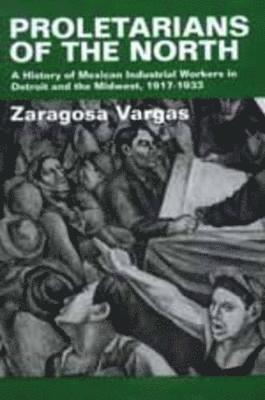
Proletarians of the North
A History of Mexican Industrial Workers in Detroit and the Midwest, 1917-1933
Häftad, Engelska, 1999
591 kr
Skickas inom 3-6 vardagar
Between the end of World War I and the Great Depression, over 58,000 Mexicans journeyed to the Midwest in search of employment. Many found work in agriculture, but thousands more joined the growing ranks of the industrial proletariat. Throughout the northern Midwest, and especially in Detroit, Mexican workers entered steel mills, packing houses, and auto plants, becoming part of the modern American working class. Zaragosa Vargas's work focuses on this little-known feature in the history of Chicanos and American labor. In relating the experiences of Mexicans in workplace and neighborhood, and in showing the roles of Mexican women, the Catholic Church, and labor unions, Vargas enriches our knowledge of immigrant urban life. His is an important work that will be welcomed by historians of Chicano Studies and American labor.
Del 6 - Latinos in American Society and Culture
Border Correspondent
Selected Writings, 1955-1970
Häftad, Engelska, 2018
764 kr
Skickas inom 3-6 vardagar
This first major collection of former Los Angeles Times reporter and columnist Ruben Salazar's writings, is a testament to his pioneering role in the Mexican American community, in journalism, and in the evolution of race relations in the U.S. Taken together, the articles serve as a documentary history of the Chicano Movement of the 1960s and of the changing perspective of the nation as a whole.Since his tragic death while covering the massive Chicano antiwar moratorium in Los Angeles on August 29, 1970, Ruben Salazar has become a legend in the Chicano community. As a reporter and later as a columnist for the Los Angeles Times, Salazar was the first journalist of Mexican American background to cross over into the mainstream English-language press. He wrote extensively on the Mexican American community and served as a foreign correspondent in Latin America and Vietnam. This first major collection of Salazar's writing is a testament to his pioneering role in the Mexican American community, in journalism, and in the evolution of race relations in the United States. Taken together, the articles serve as a documentary history of the Chicano Movement of the 1960s and of the changing perspective of the nation as a whole.Border Correspondent presents selections from each period of Salazar's career. The stories and columns document a growing frustration with the Kennedy administration, a young César Chávez beginning to organize farm workers, the Vietnam War, and conflict between police and community in East Los Angeles. One of the first to take investigative journalism into the streets and jails, Salazar's first-hand accounts of his experiences with drug users and police, ordinary people and criminals, make compelling reading.Mario García's introduction provides a biographical sketch of Salazar and situates him in the context of American journalism and Chicano history.This title is part of UC Press's Voices Revived program, which commemorates University of California Press’s mission to seek out and cultivate the brightest minds and give them voice, reach, and impact. Drawing on a backlist dating to 1893, Voices Revived makes high-quality, peer-reviewed scholarship accessible once again using print-on-demand technology. This title was originally published in 1996.
Del 6 - Latinos in American Society and Culture
Border Correspondent
Selected Writings, 1955-1970
Inbunden, Engelska, 2024
1 690 kr
Skickas inom 3-6 vardagar
This first major collection of former Los Angeles Times reporter and columnist Ruben Salazar's writings, is a testament to his pioneering role in the Mexican American community, in journalism, and in the evolution of race relations in the U.S. Taken together, the articles serve as a documentary history of the Chicano Movement of the 1960s and of the changing perspective of the nation as a whole.Since his tragic death while covering the massive Chicano antiwar moratorium in Los Angeles on August 29, 1970, Ruben Salazar has become a legend in the Chicano community. As a reporter and later as a columnist for the Los Angeles Times, Salazar was the first journalist of Mexican American background to cross over into the mainstream English-language press. He wrote extensively on the Mexican American community and served as a foreign correspondent in Latin America and Vietnam. This first major collection of Salazar's writing is a testament to his pioneering role in the Mexican American community, in journalism, and in the evolution of race relations in the United States. Taken together, the articles serve as a documentary history of the Chicano Movement of the 1960s and of the changing perspective of the nation as a whole.Border Correspondent presents selections from each period of Salazar's career. The stories and columns document a growing frustration with the Kennedy administration, a young César Chávez beginning to organize farm workers, the Vietnam War, and conflict between police and community in East Los Angeles. One of the first to take investigative journalism into the streets and jails, Salazar's first-hand accounts of his experiences with drug users and police, ordinary people and criminals, make compelling reading.Mario García's introduction provides a biographical sketch of Salazar and situates him in the context of American journalism and Chicano history.This title is part of UC Press's Voices Revived program, which commemorates University of California Press’s mission to seek out and cultivate the brightest minds and give them voice, reach, and impact. Drawing on a backlist dating to 1893, Voices Revived makes high-quality, peer-reviewed scholarship accessible once again using print-on-demand technology. This title was originally published in 1996.