Law and Change - Böcker
Visar alla böcker i serien Law and Change. Handla med fri frakt och snabb leverans.
8 produkter
8 produkter
502 kr
Skickas inom 10-15 vardagar
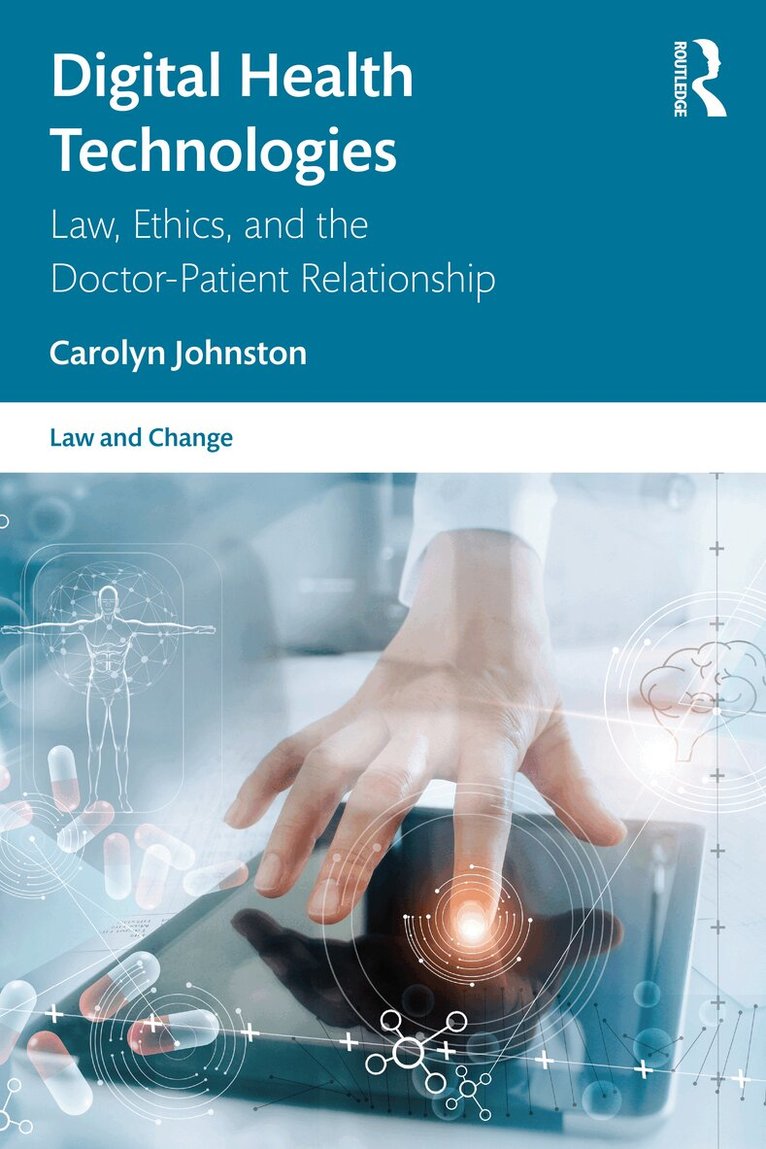
Increasingly digital technologies are used in healthcare. This book explores eight digital health technologies, situated the context of a life span, from high-throughput genomic sequencing technologies and do-it-yourself (DIY) insulin delivery for diabetes management in paediatrics, to the use of robotic care assistants for older adults and digital advance care decisions. A scene-setting case scenario at the start of each chapter describes the digital technology and identifies the sometimes competing interests of the key stakeholders. Broad themes of resource allocation, access to technologies, informed consent, privacy of health data and ethical concerns are considered in context, alongside analysis of legal duties owed by healthcare professionals to act in their patients’ best interests. This book addresses legal and ethical issues arising from the use of emerging digital health technologies and is of interest to academics, clinicians and regulators and anyone interested in the development of health technologies and the challenges they may present. It focusses on the Australian legal framework, with some comparison to other jurisdictions.
1 742 kr
Skickas inom 10-15 vardagar
Increasingly digital technologies are used in healthcare. This book explores eight digital health technologies, situated the context of a life span, from high-throughput genomic sequencing technologies and do-it-yourself (DIY) insulin delivery for diabetes management in paediatrics, to the use of robotic care assistants for older adults and digital advance care decisions. A scene-setting case scenario at the start of each chapter describes the digital technology and identifies the sometimes competing interests of the key stakeholders. Broad themes of resource allocation, access to technologies, informed consent, privacy of health data and ethical concerns are considered in context, alongside analysis of legal duties owed by healthcare professionals to act in their patients’ best interests. This book addresses legal and ethical issues arising from the use of emerging digital health technologies and is of interest to academics, clinicians and regulators and anyone interested in the development of health technologies and the challenges they may present. It focusses on the Australian legal framework, with some comparison to other jurisdictions.
Recreating Creativity, Reinventing Inventiveness
AI and Intellectual Property Law
Inbunden, Engelska, 2024
1 804 kr
Skickas inom 10-15 vardagar
As artificial intelligence (AI) is increasingly used to generate inventions and creative works, a critical question to be addressed is whether intellectual property (IP) laws should protect such works. This book examines the critical question of whether intellectual property laws should protect works generated by artificial intelligence.If we do not wish to use IP laws to protect such works, how can we still support research, development, and innovation in society? If we do wish to use IP laws to protect such works, should the copyright, patents, and other IP rights attach to the human creator of the AI technology or the AI system? The book explores these compelling societal, economic, and legal issues. The authors evaluate the continuing relevance of existing laws, explore the divergent approaches being debated by nations around the world, and present visions for change.The book will enable both lawyers and non-lawyers to reimagine governance frameworks to create laws that equitably balance the interests of creators, investors, and end users of AI-generated works.
1 928 kr
Skickas inom 10-15 vardagar
Digital revolution demands new approaches to regulating work. The ‘Uberisation’ of work is not, in reality, a new phenomenon. It reintroduces the practices of ‘on-demand’ engagement of labour, common prior to the development of continuing employment. What is new, however, is the capacity of digital technology to engage labour in ways that avoid characterisation as employment according to the legal tests developed in the 20th century.This book tackles the challenge of ensuring that the emerging tribes of ‘gig’ workers in labour markets across the globe are afforded decent standards of work. This book discusses how to provide decent conditions and safe working standards for on-demand workers engaged through digital platforms. It interrogates the rise of gig work, and the legal strategies that might be engaged to deal with the risk that on-demand work will fall and remain outside of employment protections. It draws on observations of practices across the globe but focusses particularly on regulatory solutions developed in Australia.The book will be a useful reference to policy making and legal reforms to address vulnerabilities of gig workers.
577 kr
Skickas inom 10-15 vardagar
Digital revolution demands new approaches to regulating work. The ‘Uberisation’ of work is not, in reality, a new phenomenon. It reintroduces the practices of ‘on-demand’ engagement of labour, common prior to the development of continuing employment. What is new, however, is the capacity of digital technology to engage labour in ways that avoid characterisation as employment according to the legal tests developed in the 20th century.This book tackles the challenge of ensuring that the emerging tribes of ‘gig’ workers in labour markets across the globe are afforded decent standards of work. This book discusses how to provide decent conditions and safe working standards for on-demand workers engaged through digital platforms. It interrogates the rise of gig work, and the legal strategies that might be engaged to deal with the risk that on-demand work will fall and remain outside of employment protections. It draws on observations of practices across the globe but focusses particularly on regulatory solutions developed in Australia.The book will be a useful reference to policy making and legal reforms to address vulnerabilities of gig workers.
UN Human Rights Treaty System
Implementation of Recommendations in South Korea and Japan
Inbunden, Engelska, 2025
2 103 kr
Skickas inom 10-15 vardagar
Through a use of both qualitative and quantitative methodologies, Won provides a nuanced analysis and discussion of the factors and domestic processes influencing the implementation of United Nations Human Rights Committee (UNHRC) recommendations in South Korea and Japan, as well as across the globe.Won’s research entangles the theoretical debate on whether the UN human rights treaty system is effective in prompting the implementation of HRC recommendations. Based on interviews with activists, lawyers, scholars, judges, and other practitioners in South Korea and Japan, her findings reveal contrasting domestic dynamics: South Korea's vibrant institutional landscape enables more active implementation, while Japan's stable but centralized political system leads to more incremental change. In addition, Won creates a novel empirical dataset to assess the key variables associated with improvement in human rights action across 103 countries. The findings suggest that institutional mechanisms enhance implementation in new democracies, while civil society plays a crucial role even in authoritarian regimes. Ultimately, frequent and constructive dialogue between states, treaty bodies, and civil society, supported by institutional protections, is key to turning recommendations into human rights change.A unique empirical analysis of international human rights action as driven by UN recommendations, this book will be of interest to scholars and students of international law, human rights, and international relations, as well as human rights lawyers and the NGO Human Rights Communities.
1 932 kr
Skickas inom 10-15 vardagar
This book addresses how private law liability should be assigned in contexts where modern forms of AI are deployed.AI as a technology holds the potential to radically improve global society, yet the pace of its advancement far outstrips the pace at which legal systems are responding. This book explores legal approaches to AI, how AI should be legally characterised, and proposes an overarching theoretical liability framework termed the Tri-Phase AI Liability Model. This framework is flexible in nature and considers the type of AI, the context in which it is deployed, who has the most control over the AI system and the capacity of a deployed AI. In response, this book brings greatly needed clarity to the evolving landscape of AI governance, aiding in resolving existing and emerging private law challenges.This book is a timely response to the urgent need to resolve private law liabilities and will appeal to legal professionals, policy makers, and scholars looking to understand or contribute to the current and future governance of AI within private law.
1 944 kr
Kommande
Is it lawful for generative AI to draw on protected works without permission? The question sits at the heart of today’s most urgent debates on AI, and the answer is anything but simple. This book takes a comparative and interdisciplinary approach to unpack how copyright exceptions apply—or fail to apply—in the age of generative AI. It examines how major jurisdictions, including the United States, China, the European Union, Japan, the United Kingdom, and Singapore, are confronting these challenges.The book begins by explaining the basic principles of copyright law and why they matter for both AI training and AI-generated content. It then surveys the key copyright exceptions and licensing routes currently available, highlighting how legal uncertainty has complicated efforts to regulate the way generative AI systems access and use protected material. To make sense of this uncertainty, the book looks beyond the law and examines the broader forces shaping the debate: emerging norms around AI ethics and copyright, the evolving business models built on generative AI, concerns about the market impact of AI-generated products, and the technical realities of generative models, from the black-box problem to the structure of latent space. These dynamics show why existing copyright exceptions, designed for an earlier technological era, often struggle to keep pace with generative AI. The book concludes with a framework for rethinking copyright exceptions that integrates legal, economic, normative, and technological considerations.By bringing together insights across jurisdictions and disciplines, this book offers a clear and timely account of how legal systems are trying to adapt copyright rules to the rise of generative AI without stifling innovation. It will appeal to scholars of intellectual property and artificial intelligence, as well as policymakers, regulators, and AI developers navigating this fast-changing landscape.